

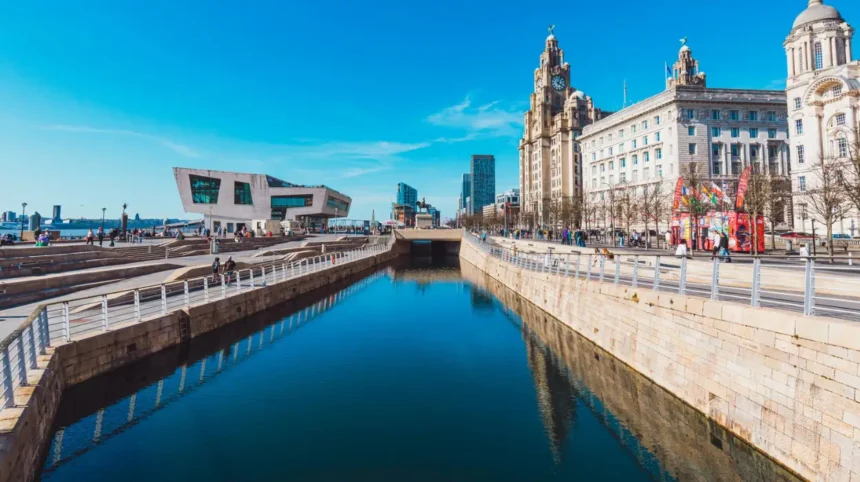
Liverpool is one of Britain’s most historically significant cities. Located on the eastern side of the River Mersey in North West England, it developed from a medieval borough into one of the world’s busiest ports. Today, visitors encounter a city defined by maritime heritage, music, architecture, sport, and cultural institutions. Planning a first visit effectively requires understanding both Liverpool’s history and its modern neighbourhoods.
- What makes Liverpool different from other British cities?
- When is the best time to visit Liverpool?
- Which historic areas should first-time visitors prioritise?
- How should visitors understand Liverpool’s maritime history?
- Why is The Beatles story important to a first visit?
- What museums and heritage institutions deserve priority?
- How can visitors explore Liverpool like a local resident?
- What role does football play in Liverpool’s identity?
- How does Liverpool’s architecture reveal its history?
- Georgian Expansion
- Victorian Prosperity
- Religious Architecture
- Industrial Heritage
- Contemporary Regeneration
- How should a first-time visitor organise a practical itinerary?
- Why does Liverpool remain historically relevant today?
Unlike many destinations that concentrate attractions in a single district, Liverpool’s identity is distributed across waterfront spaces, commercial streets, residential communities, museums, football venues, and historic landmarks. A local approach focuses on understanding how these places connect rather than simply visiting individual attractions.
This guide explains how to organise a first visit to Liverpool through historical context, practical planning, neighbourhood exploration, transport knowledge, and cultural understanding.
What makes Liverpool different from other British cities?
Liverpool combines maritime history, global trade heritage, industrial development, music culture, sporting traditions, and architectural significance within a compact urban area that can be explored efficiently on foot and through public transport networks.
Liverpool received its royal charter in 1207 from King John. For several centuries it remained a relatively small settlement. Its transformation accelerated during the seventeenth and eighteenth centuries as maritime trade expanded across the Atlantic.
The city became one of Britain’s most important ports. By the nineteenth century, Liverpool handled substantial proportions of the country’s international trade. Goods, passengers, and migrants passed through its docks, connecting Britain with North America, Africa, Asia, and Australia.
This commercial success shaped the city’s built environment. Grand civic buildings, warehouses, commercial exchanges, and dock infrastructure emerged throughout the nineteenth century. Many survive today and remain central to the visitor experience.
Liverpool’s modern identity also rests on cultural achievements. The city produced globally influential music through the success of The Beatles. Football institutions developed international followings. Museums and galleries preserve local and national heritage collections.
These layers of history create a destination where visitors can explore medieval origins, Georgian expansion, Victorian prosperity, twentieth-century cultural influence, and contemporary regeneration within a single trip.
When is the best time to visit Liverpool?
The most practical periods for a first visit are spring and early autumn because daylight hours are long, visitor numbers remain manageable, and outdoor exploration of Liverpool’s waterfront, neighbourhoods, and historic sites is more comfortable.
Liverpool experiences a temperate maritime climate. Summers are generally mild rather than excessively hot. Winters are cool and wetter, although major attractions remain open year-round.
Spring offers opportunities to explore parks, waterfront routes, and historic districts with favourable weather conditions. Early autumn provides similar advantages while avoiding peak summer visitor volumes.
Seasonal timing also affects major events. Football schedules influence activity around stadium districts. Cultural festivals, exhibitions, and music events increase visitor numbers during specific periods.
A first-time visitor benefits from allocating at least three full days. This duration allows exploration of the waterfront, museums, historic districts, football heritage sites, and cultural venues without excessive time pressure.
Longer stays provide opportunities to explore suburban heritage locations and nearby regional attractions connected to Merseyside’s broader history.
Which historic areas should first-time visitors prioritise?
The waterfront, city centre, Georgian Quarter, Albert Dock, and Ropewalks district provide the most comprehensive introduction to Liverpool’s historical development, architectural heritage, commercial growth, and cultural identity.
Liverpool’s historic core reflects different phases of urban development.
The Waterfront
The waterfront represents Liverpool’s maritime legacy. It contains some of the city’s most recognised architectural landmarks and demonstrates the importance of port activity to Britain’s economic history.
The historic waterfront includes commercial buildings constructed during periods of international trade expansion. These structures illustrate the wealth generated through maritime commerce during the eighteenth, nineteenth, and early twentieth centuries.
Albert Dock
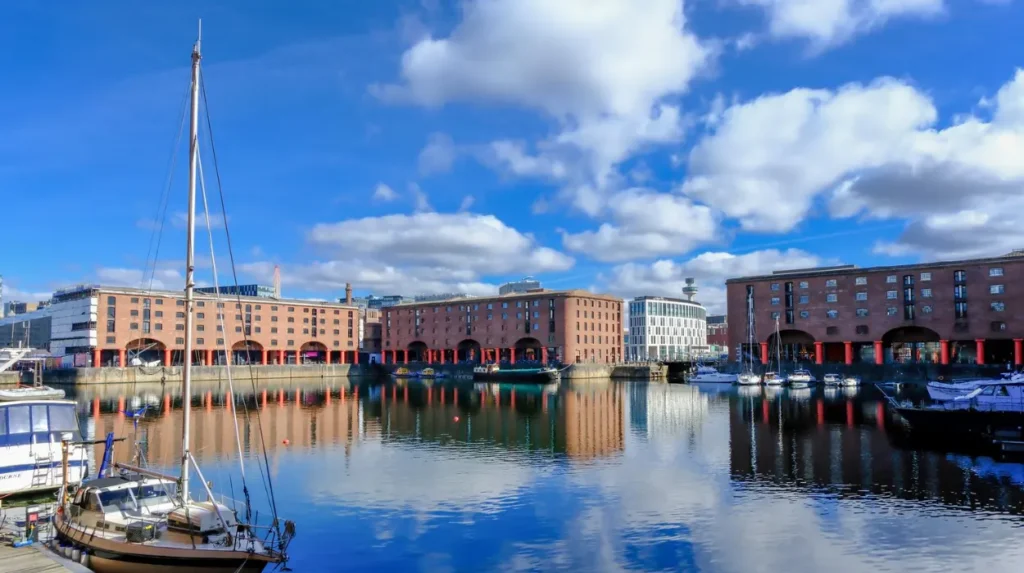
Opened in 1846, the Royal Albert Dock represented a major engineering achievement. It became one of the world’s first enclosed dock systems built largely from iron, brick, and stone.
Today, the dock complex houses museums, galleries, restaurants, and visitor attractions while preserving important industrial architecture.
The Georgian Quarter
The Georgian Quarter reflects Liverpool’s eighteenth- and early nineteenth-century expansion. Elegant terraces, civic buildings, and cultural institutions illustrate the city’s growing prosperity during this period.
The district contains significant examples of Georgian urban planning and architecture.
Ropewalks
Historically associated with rope manufacturing for maritime industries, Ropewalks demonstrates how industrial functions shaped Liverpool’s urban geography.
The area has undergone regeneration while maintaining links to its historic origins.
To experience these historic districts in person today, consult our comprehensive 15 Best Things to Do in Liverpool for First-Time Visitors for itineraries and visiting parameters.
How should visitors understand Liverpool’s maritime history?
Liverpool’s maritime history explains the city’s growth from a small settlement into a global port, shaping its economy, architecture, population, and international influence across several centuries of commercial development.
Maritime activity formed the foundation of Liverpool’s historical importance.
During the eighteenth century, transatlantic trade expanded rapidly. Liverpool became a major commercial centre connecting Britain with overseas markets. Merchant activity stimulated infrastructure investment, dock construction, and urban growth.
The nineteenth century witnessed extraordinary expansion. Dock systems extended along the Mersey waterfront. Rail connections linked Liverpool with manufacturing regions throughout Britain.
Immigration also shaped the city. Millions of people passed through Liverpool while travelling to North America and other destinations. Irish migration during the nineteenth century significantly influenced the city’s demographic composition.
Maritime heritage institutions preserve evidence of these developments. Museum collections include shipping records, navigational equipment, passenger histories, and dock engineering artefacts.
Modern regeneration projects continue to balance preservation and development, ensuring that historic maritime landscapes remain accessible to future generations.
Why is The Beatles story important to a first visit?
The Beatles transformed Liverpool into a globally recognised cultural destination, linking local music venues, neighbourhoods, recording history, and twentieth-century popular culture with international audiences.
Liverpool’s musical heritage extends beyond a single band, but The Beatles remain the city’s most internationally recognised cultural ambassadors.
The group emerged during the early 1960s from Liverpool’s vibrant music scene. Their global success brought unprecedented international attention to the city.
Several locations connected to their early development remain important visitor destinations.
Cavern Club Heritage
The original music scene centred around venues including the historic The Cavern Club area. These venues provided opportunities for emerging musicians to perform regularly and build local audiences.
Cultural Impact
The Beatles influenced global music, fashion, media, and youth culture. Their success altered perceptions of Liverpool and contributed to the city’s modern tourism economy.
Heritage Preservation
Museums, exhibitions, archives, and cultural institutions preserve artefacts, recordings, photographs, and historical records associated with Liverpool’s music history.
Understanding this heritage helps visitors appreciate why music remains a central component of Liverpool’s identity.
What museums and heritage institutions deserve priority?
Liverpool’s leading museums provide comprehensive insight into maritime history, social development, archaeology, global trade, migration, art, and cultural achievements through nationally significant collections and research programmes.
Liverpool contains one of the United Kingdom’s most important concentrations of museums outside London.
Merseyside Maritime Museum
The Merseyside Maritime Museum documents shipping, trade, immigration, naval history, and waterfront development.
Its collections help explain Liverpool’s role within national and global historical processes.
Museum of Liverpool
The Museum of Liverpool focuses specifically on local history, culture, communities, transport systems, and social change.
Visitors gain an overview of Liverpool’s evolution from medieval settlement to modern city.
International Slavery Museum
The International Slavery Museum examines transatlantic slavery, its historical consequences, and contemporary legacies.
This institution addresses a critical aspect of Liverpool’s historical development through research-based interpretation.
Walker Art Gallery
The Walker Art Gallery houses significant collections representing several centuries of artistic production.
Together, these institutions provide historical context that enhances exploration of the city’s physical landscape.
How can visitors explore Liverpool like a local resident?
Local-style exploration prioritises neighbourhoods, markets, public spaces, community venues, independent businesses, and everyday urban experiences rather than focusing exclusively on major tourist attractions.
Residents often experience Liverpool through distinct neighbourhood identities.
The city centre functions as a commercial and cultural hub. Neighbourhood districts reveal additional dimensions of local life.
Local exploration often includes walking rather than relying exclusively on transport. Liverpool’s compact central area supports pedestrian movement between major attractions.
Parks also play an important role. Historic green spaces provide evidence of Victorian urban planning and public health initiatives.
Markets and independent commercial areas reflect contemporary community life. These environments reveal how historic districts continue adapting to changing economic conditions.
A local perspective also emphasises understanding the relationship between residential areas, waterfront zones, educational institutions, sporting venues, and cultural districts.
What role does football play in Liverpool’s identity?
Football functions as a major social, cultural, and historical institution in Liverpool, influencing community identity, international recognition, local traditions, and visitor experiences throughout the city.
Few cities possess football traditions as influential as Liverpool’s.
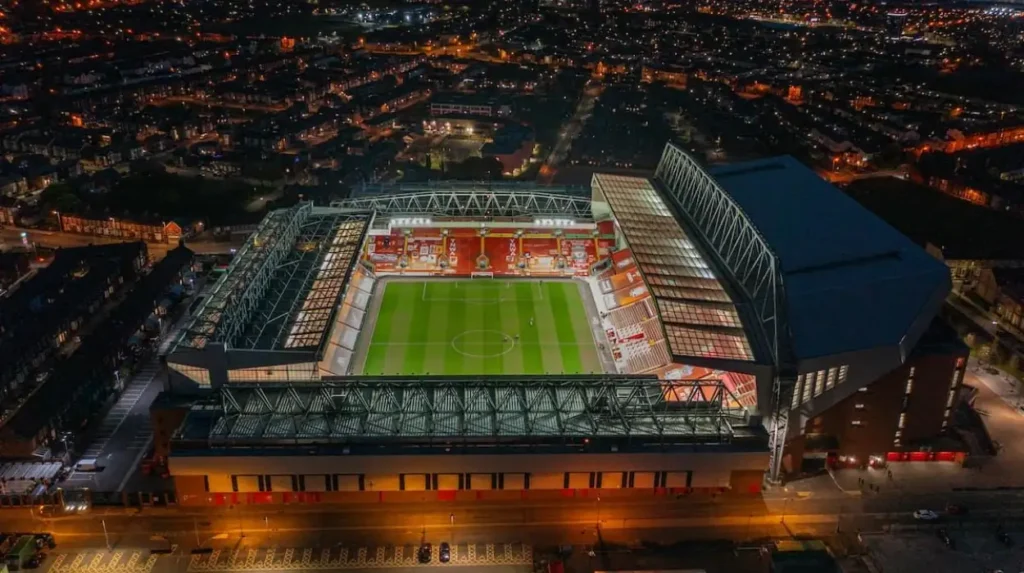
The city is home to Liverpool FC and uk/sports/everton-fc/">Everton FC. Both clubs possess long histories and substantial international followings.
Football’s significance extends beyond sporting competition.
Club histories reflect broader social developments including industrialisation, community organisation, neighbourhood identity, and urban change.
Matchdays influence transportation systems, commercial activity, and visitor movement patterns.
Stadium tours and football museums provide historical context even outside competitive seasons.
Understanding football culture helps first-time visitors appreciate an important dimension of Liverpool’s modern character.
How does Liverpool’s architecture reveal its history?
Liverpool’s architecture records successive periods of growth through medieval remnants, Georgian planning, Victorian commercial expansion, dock engineering, religious buildings, and modern regeneration projects.
Architecture serves as a visible historical record.
Liverpool contains structures representing multiple centuries of development.
Georgian Expansion
Eighteenth-century growth generated residential terraces and civic buildings demonstrating emerging commercial prosperity.
Victorian Prosperity
Nineteenth-century wealth financed ambitious construction projects. Commercial buildings displayed confidence associated with Liverpool’s position as a major global port.
Religious Architecture
Churches and cathedrals illustrate changing population patterns, religious institutions, and architectural styles.
Industrial Heritage
Dock infrastructure, warehouses, and transport facilities demonstrate engineering innovation associated with maritime commerce.
Contemporary Regeneration
Modern developments coexist alongside historic buildings, reflecting ongoing adaptation of the urban landscape.
Architectural diversity allows visitors to observe historical change directly through the built environment.
How should a first-time visitor organise a practical itinerary?
An effective first visit combines waterfront exploration, museum visits, neighbourhood walking, cultural experiences, and historical interpretation across three or more days to achieve a balanced understanding of Liverpool.
Day one should focus on the waterfront, Albert Dock, maritime heritage sites, and major museums.
Day two should concentrate on cultural attractions, music heritage locations, architectural landmarks, and city-centre districts.
Day three should include neighbourhood exploration, football heritage experiences, parks, and additional museums or galleries.
This sequence follows Liverpool’s historical development. Visitors begin with maritime foundations, continue through cultural achievements, and conclude with contemporary community life.
Walking remains the most effective method for exploring central districts. Public transport extends access to locations beyond the city centre.
Combining historical interpretation with physical exploration creates a deeper understanding of how Liverpool developed over more than eight centuries.
Why does Liverpool remain historically relevant today?
Liverpool remains historically relevant because its maritime heritage, migration history, cultural influence, architectural legacy, and preservation efforts continue informing scholarship, tourism, education, and public understanding of British history.
Researchers study Liverpool to understand trade networks, industrialisation, migration, urban development, and cultural change.
Educational institutions use the city as a case study for examining economic history, social history, architecture, and heritage management.
Preservation programmes protect historic buildings, archives, museum collections, and archaeological resources. These initiatives ensure continued access to evidence of Liverpool’s past.
Tourism also contributes to preservation by supporting institutions responsible for conserving historical assets.
Modern Liverpool demonstrates how cities can retain historical character while adapting to contemporary economic and social realities.
For first-time visitors, understanding these connections transforms sightseeing into historical interpretation. The city becomes more than a collection of attractions. It becomes a living record of British maritime expansion, industrial growth, migration, cultural innovation, and urban transformation.
Planning a visit like a local therefore means recognising the links between neighbourhoods, buildings, museums, communities, and historical events. Liverpool’s enduring significance emerges from those connections. They continue shaping the city today and ensure its place among Britain’s most important historical destinations.
Is Liverpool worth visiting for first-time visitors?
Yes. Liverpool offers a unique combination of maritime history, world-famous music heritage, major museums, historic architecture, football culture, and waterfront attractions, making it one of the most rewarding city-break destinations in the United Kingdom.