
Liverpool is one of the United Kingdom’s most historically significant cities. Located on the eastern side of the River Mersey in North West England, Liverpool developed from a medieval port into one of the world’s most influential maritime, commercial, musical, and cultural centres. The city played a central role in Atlantic trade, industrial expansion, migration, and modern popular culture.
- Why is Liverpool one of the most important historic cities in Britain?
- What should first-time visitors see at Liverpool’s waterfront?
- Why is the Royal Albert Dock considered Liverpool’s most important visitor attraction?
- What makes the Three Graces a defining symbol of Liverpool?
- Why should visitors explore Liverpool’s museums?
- What can visitors learn at the Museum of Liverpool?
- Why is the Merseyside Maritime Museum essential for understanding Liverpool?
- Why does Liverpool hold such an important place in music history?
- What are the most important Beatles landmarks for first-time visitors?
- Why is Liverpool Cathedral worth visiting?
- What makes the Metropolitan Cathedral architecturally unique?
- Why should visitors explore Liverpool’s historic commercial district?
- What makes St George’s Hall one of Britain’s finest civic buildings?
- Why should football fans include Liverpool’s stadiums in their itinerary?
- What role does Liverpool’s maritime heritage play today?
- How can visitors plan a first trip to Liverpool like a local?
For first-time visitors, Liverpool offers a concentrated collection of historic landmarks, museums, waterfront attractions, architectural masterpieces, and cultural institutions. Many of these sites are located within walking distance of one another, making the city particularly accessible for travellers seeking both historical depth and practical exploration.
This guide explains how to plan a first visit to Liverpool like a local while highlighting fifteen essential experiences that provide historical context, cultural understanding, and direct access to the city’s most important landmarks.
Why is Liverpool one of the most important historic cities in Britain?
Liverpool developed into Britain’s principal Atlantic port during the eighteenth and nineteenth centuries. Its maritime infrastructure, commercial wealth, migration history, cultural influence, and architectural heritage created a city that significantly shaped global trade networks, transportation systems, music history, and urban development.
Liverpool received its first royal charter in 1207 from King John. For several centuries, it remained a relatively small port settlement. Rapid expansion occurred during the eighteenth century as maritime trade increased across the Atlantic.
The opening of extensive dock systems transformed Liverpool into one of the world’s busiest ports. By the nineteenth century, the city handled enormous volumes of goods, passengers, and industrial materials. Liverpool became a major gateway connecting Britain with North America, Ireland, Africa, Asia, and Australia.
The city’s historic significance extends beyond commerce. Millions of migrants departed from Liverpool during the nineteenth century. The city later became globally recognised as the birthplace of The Beatles and an important centre for football, education, architecture, and cultural innovation.
Understanding this historical background helps visitors appreciate why Liverpool’s landmarks remain nationally and internationally significant today.
What should first-time visitors see at Liverpool’s waterfront?
Liverpool’s waterfront contains the city’s most recognisable landmarks, including historic dock complexes, cultural institutions, and architectural icons. The waterfront demonstrates Liverpool’s maritime heritage while providing direct access to museums, galleries, public spaces, and preserved commercial infrastructure.
The Liverpool waterfront forms the historical and visual centre of the city. Stretching along the River Mersey, it showcases centuries of maritime development.
The area was once part of a vast dock network that facilitated global trade. Today, preserved sections allow visitors to understand how maritime commerce shaped Liverpool’s growth.
One of the most notable attractions is the Royal Albert Dock. Opened in 1846, it represented a major engineering achievement. The dock was among the first structures in Britain constructed from cast iron, brick, and stone without using structural timber.
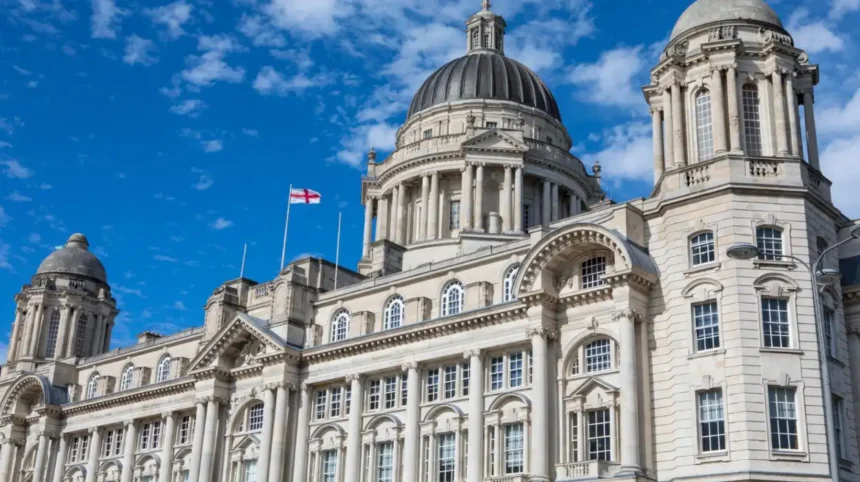
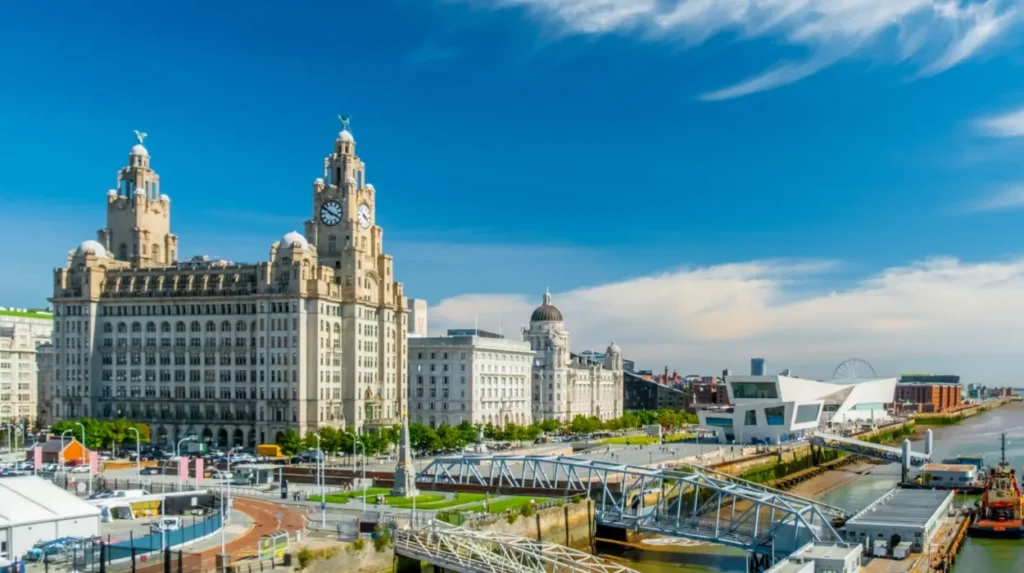
Visitors can also view the famous Three Graces. These buildings dominate the waterfront skyline and symbolize Liverpool’s commercial power during the late nineteenth and early twentieth centuries.
To experience this historic waterfront in person today, consult our comprehensive How to Plan Your First Visit to Liverpool Like a Local for itineraries and visiting parameters.
Why is the Royal Albert Dock considered Liverpool’s most important visitor attraction?
The Royal Albert Dock preserves one of the world’s most significant historic dock systems. Its warehouses, maritime infrastructure, museums, and commercial spaces demonstrate nineteenth-century engineering innovation while illustrating Liverpool’s role as a global trading port.
Designed by Jesse Hartley and Philip Hardwick, the Royal Albert Dock opened in 1846.
The dock complex introduced fireproof construction methods that reduced risks associated with storing valuable cargo. The design improved efficiency while accommodating growing trade volumes.
Today, the site contains several major attractions, including museums, galleries, restaurants, and public spaces. The dock’s warehouses remain largely intact, allowing visitors to experience authentic nineteenth-century industrial architecture.
Its preservation provides valuable evidence of Britain’s industrial and maritime history.
What makes the Three Graces a defining symbol of Liverpool?
The Three Graces represent Liverpool’s commercial prosperity during the late Victorian and Edwardian periods. The buildings combine architectural excellence with historical significance, illustrating the city’s importance as an international shipping, insurance, and port-management centre.
The Three Graces consist of the Royal Liver Building, Cunard Building, and Port of Liverpool Building.
The Royal Liver Building was completed in 1911 and became one of Britain’s earliest large reinforced-concrete buildings. Its twin Liver Birds remain iconic symbols of the city.
The Cunard Building served as headquarters for the Cunard Line, one of the world’s leading passenger shipping companies.
The Port of Liverpool Building housed administrative operations that managed maritime activity across the port.
Together, these structures form one of the United Kingdom’s most celebrated waterfront ensembles.
Why should visitors explore Liverpool’s museums?
Liverpool’s museums preserve extensive collections relating to maritime history, archaeology, migration, science, natural history, and social development. These institutions provide evidence-based interpretation of the events, industries, and communities that shaped the city across multiple centuries.
Liverpool contains one of the highest concentrations of national museums outside London.
Museum collections help visitors understand local history within broader international contexts. Subjects include industrialisation, migration, trade, warfare, transportation, and scientific advancement.
The city’s museum network preserves millions of artefacts and archival records that document Liverpool’s evolution from medieval settlement to modern metropolitan centre.
These institutions also support ongoing academic research and heritage conservation.
What can visitors learn at the Museum of Liverpool?
The Museum of Liverpool explains the city’s social, economic, and cultural development through extensive collections, interactive exhibits, and historical artefacts. It presents Liverpool’s history from its medieval origins to its contemporary role as a major cultural destination.
Opened in 2011, the Museum of Liverpool became the largest newly built national museum in Britain for more than a century.
Its exhibitions explore themes such as migration, transportation, industry, sports, music, and civic life.
Visitors encounter objects connected to Liverpool’s communities, businesses, and cultural achievements. The museum also highlights the city’s role in national and global historical developments.
The institution provides a comprehensive introduction for first-time visitors seeking historical context.
Why is the Merseyside Maritime Museum essential for understanding Liverpool?
The Merseyside Maritime Museum documents Liverpool’s maritime history through collections related to shipping, naval activity, migration, commerce, and port operations. Its exhibits explain how maritime networks connected Liverpool with regions throughout the world.
Located within the Albert Dock complex, the museum preserves extensive maritime collections.
Exhibitions examine merchant shipping, naval conflicts, passenger travel, and maritime technology. Historical records demonstrate Liverpool’s influence on international trade and transportation systems.
The museum also explores the city’s connections to transatlantic migration and global commercial networks.
Its collections provide important evidence for understanding Liverpool’s economic development.
Why does Liverpool hold such an important place in music history?
Liverpool achieved global cultural influence through its music industry, particularly during the twentieth century. The city’s music scene produced internationally significant artists, transformed popular culture, and established Liverpool as one of the world’s leading centres of musical heritage.
Liverpool’s musical traditions developed through interactions among diverse communities and international influences arriving through the port.
The city’s most famous contribution emerged during the 1960s through The Beatles. Their success transformed global popular music and permanently linked Liverpool with modern cultural history.
Music tourism now forms a major component of Liverpool’s visitor economy.
Historic venues, museums, and preserved locations continue to attract visitors from across the world.
What are the most important Beatles landmarks for first-time visitors?
Beatles landmarks connect visitors with locations associated with the group’s formation, development, and international success. These sites preserve evidence of Liverpool’s cultural history while illustrating the city’s influence on twentieth-century music.
Several locations remain closely associated with the band’s history.
The Cavern Club site reflects Liverpool’s vibrant music scene during the early 1960s. Although reconstructed, it remains a significant cultural landmark.
Penny Lane and Strawberry Field became internationally recognised through Beatles recordings.
The Beatles Story exhibition at Albert Dock provides detailed information about the band’s formation, recordings, tours, and cultural impact.
Together, these sites form one of the world’s most important music heritage landscapes.
Why is Liverpool Cathedral worth visiting?
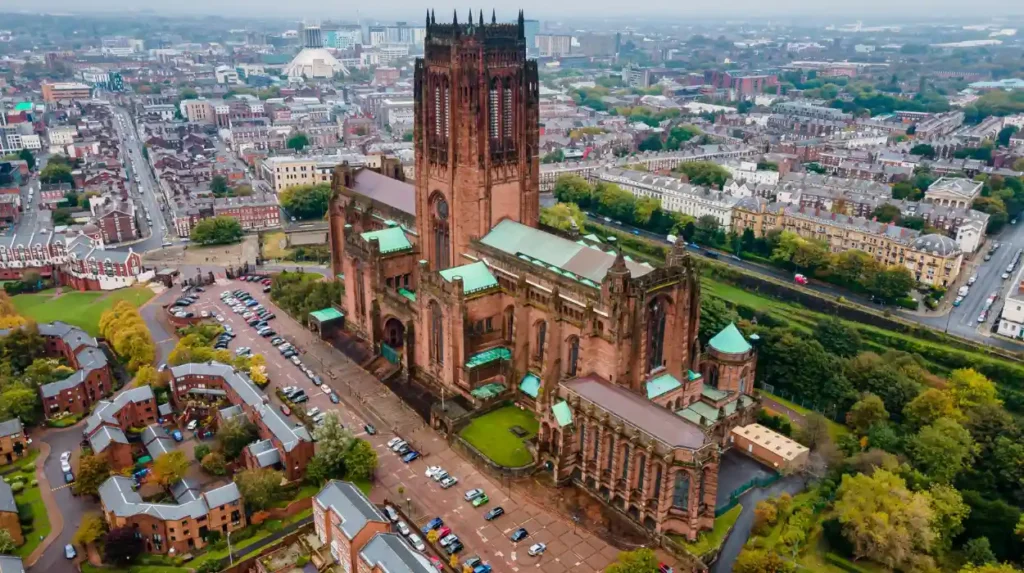
Liverpool Cathedral represents one of the largest religious buildings in Britain. Its architecture, engineering, historical significance, and panoramic city views make it an essential destination for visitors interested in heritage, design, and urban history.
Construction began in 1904 under architect Giles Gilbert Scott.
The cathedral combines Gothic architectural traditions with twentieth-century engineering techniques. It took decades to complete and remains one of the largest cathedrals in Europe.
Visitors can explore extensive interior spaces, stained glass installations, memorials, and tower viewpoints.
The building also serves as an important example of modern ecclesiastical architecture.
What makes the Metropolitan Cathedral architecturally unique?
The Metropolitan Cathedral demonstrates post-war architectural innovation through its modern design, distinctive structure, and symbolic role within Liverpool’s religious landscape. It represents a significant departure from traditional cathedral architecture in Britain.
Officially known as the Metropolitan Cathedral of Christ the King, the building opened in 1967.
Designed by Frederick Gibberd, the cathedral features a circular plan and dramatic lantern tower.
Its modernist appearance contrasts sharply with the Gothic style of Liverpool Cathedral.
The structure reflects changing architectural approaches during the mid-twentieth century and remains one of Britain’s most recognisable religious buildings.
Why should visitors explore Liverpool’s historic commercial district?
Liverpool’s commercial district preserves architectural evidence of the city’s economic expansion during the eighteenth, nineteenth, and twentieth centuries. Streets, offices, warehouses, and civic buildings demonstrate how maritime wealth influenced urban development and public infrastructure.
The city centre contains numerous listed buildings associated with commerce and administration.
Castle Street, Dale Street, and surrounding areas illustrate Liverpool’s emergence as a major financial and trading centre.
Visitors encounter examples of Georgian, Victorian, Edwardian, and modern architecture.
These districts reveal how commercial prosperity shaped Liverpool’s urban landscape over several centuries.
What makes St George’s Hall one of Britain’s finest civic buildings?
St George’s Hall combines exceptional architecture, engineering, and civic symbolism. The building represents Liverpool’s nineteenth-century prosperity while serving as a major example of Neoclassical public architecture in the United Kingdom.
Completed in 1854, St George’s Hall was designed by Harvey Lonsdale Elmes.
The structure contains grand public rooms, concert facilities, and legal chambers.
Its Great Hall features one of the world’s largest pipe organs from the nineteenth century.
Architectural historians frequently regard St George’s Hall as one of Britain’s most impressive civic buildings due to its scale, design quality, and preservation.
Why should football fans include Liverpool’s stadiums in their itinerary?
Liverpool’s football heritage reflects more than a century of sporting development, community identity, and international recognition. Historic stadiums illustrate the city’s cultural traditions while demonstrating football’s social significance within local communities.
Football occupies a central position in Liverpool’s cultural identity.
uk/local/anfield/">Anfield, home of Liverpool Football Club, has operated since 1884. Goodison Park, historically associated with Everton Football Club, represents another significant sporting landmark.
Stadium tours explain the evolution of professional football and its relationship with local communities.
These sites attract millions of visitors annually and contribute substantially to Liverpool’s cultural reputation.
What role does Liverpool’s maritime heritage play today?
Liverpool’s maritime heritage remains visible through preserved docks, museums, waterfront architecture, educational initiatives, and conservation programmes. These assets continue supporting tourism, research, cultural engagement, and public understanding of Britain’s maritime history.
Many former docklands have been adapted for contemporary use while preserving historic features.
Museums, archives, universities, and heritage organisations continue researching Liverpool’s maritime past.
Conservation projects protect surviving infrastructure and interpret its significance for new generations.
These efforts ensure that Liverpool’s historic relationship with global trade and transportation remains accessible and relevant.
How can visitors plan a first trip to Liverpool like a local?
Successful first-time visits combine waterfront exploration, museum visits, historic architecture, cultural landmarks, and neighbourhood discovery. Local travel patterns prioritise walking, public transportation, and flexible itineraries that connect major attractions with everyday urban experiences.
Most major attractions are concentrated within the city centre and waterfront areas.
Visitors benefit from beginning at the waterfront before exploring museums, cathedrals, commercial districts, and cultural sites. Walking routes reveal architectural details and historical connections often overlooked during vehicle-based travel.
Local residents frequently combine heritage attractions with public parks, independent businesses, and neighbourhood districts that reflect contemporary Liverpool life.
This approach creates a balanced understanding of Liverpool as both a historic city and a modern cultural centre.
Liverpool’s historical significance extends far beyond its reputation as the home of The Beatles and elite football clubs. The city represents centuries of maritime innovation, commercial expansion, architectural achievement, migration, and cultural development.
For first-time visitors, the most rewarding experiences combine waterfront landmarks, museums, religious architecture, music heritage, civic buildings, and historic districts. Together, these attractions explain how Liverpool evolved from a medieval port into one of Britain’s most influential cities.
Understanding these sites within their historical context transforms a simple city break into a comprehensive exploration of one of the United Kingdom’s most important urban heritage destinations.
Is Liverpool worth visiting for first-time visitors?
Yes. Liverpool offers a unique combination of maritime heritage, world-famous music history, historic architecture, museums, waterfront attractions, and cultural landmarks, making it one of the most rewarding cities to visit in the United Kingdom.