

Key Points
- An individual involved in dealing heroin via county lines in Liverpool has received prison time.
- Cumbria Police carried out an arrest of the individual at M6 in Cumbria.
- The arrest disrupted a county line which was distributing heroin from Liverpool.
- This particular case demonstrates that the police target networks of drug dealers who operate across county boundaries.
- The arrest was reported in The Westmorland Gazette.
- Information regarding the identity of the defendant, his sentencing, and police operation should be verified in the original report.
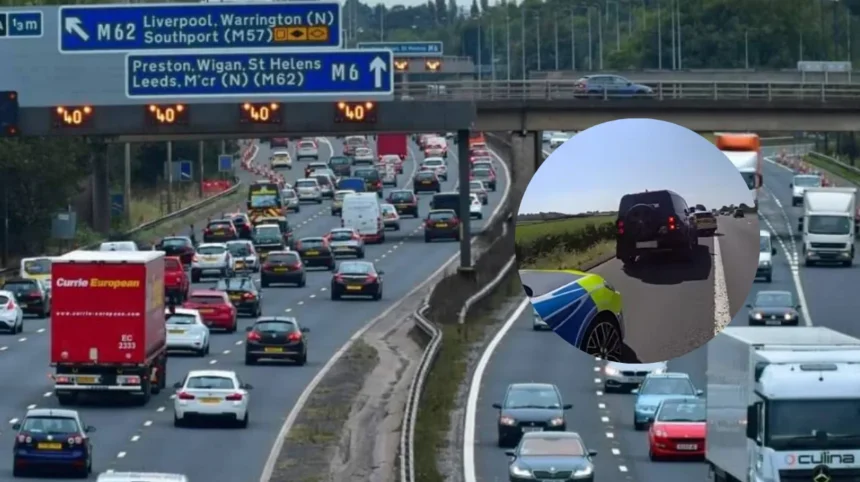
Liverpool Crime (Liverpool standard) September 15, 2026 – The Westmorland Gazette reported that a Liverpool drug dealer connected with a heroin county lines operation was jailed after police officers stopped and arrested him on the M6 in Cumbria.
- Key Points
- What did police discover in the county lines case?
- What is a county lines drug operation?
- Why was the M6 arrest important?
- What did the court decide?
- How do county lines networks affect communities?
- What did The Westmorland Gazette report?
- What does the arrest mean for Cumbria?
- Background: What is the wider county lines issue?
- Prediction: How could this affect Cumbria residents?
The case involved an alleged drug supply network operating between Liverpool and Cumbria. County lines operations typically involve organised criminal groups using mobile phones to arrange the supply of drugs in areas away from their base. In this case, the investigation centred on the movement of heroin from Liverpool into Cumbria.
According to the headline and summary supplied by The Westmorland Gazette, the man was stopped by Cumbria Police officers while travelling on the M6. Officers arrested him during the operation, which helped police prevent the continuation of the heroin supply route.
The report stated that the defendant was later jailed. The available information identifies him as a Liverpool drug dealer who ran a heroin county lines operation, but the supplied article extract does not include his name, the exact prison sentence, the court where he was sentenced, or the date of the hearing.
What did police discover in the county lines case?
The reported case concerned the supply of heroin through a county lines network. Such operations are generally organised across different locations, with drugs transported from an urban base to a smaller town or rural area where they are distributed.
The Westmorland Gazette’s report linked the defendant to Liverpool and Cumbria. Police action on the M6 was therefore significant because the motorway forms part of the road network connecting the North West with Cumbria and other parts of northern England.
The available article information does not state precisely what officers found during the stop. It also does not confirm whether drugs, cash, mobile phones or other evidence were recovered from the vehicle. Those details should not be added unless they are confirmed by the original police statement, court report or a complete version of the newspaper article.
Similarly, the available material does not specify how long the investigation lasted or whether other people were arrested or charged. The confirmed information is that officers stopped the defendant on the M6, arrested him, and that he was subsequently jailed in connection with a heroin county lines operation.
What is a county lines drug operation?
A county lines operation is a drug-supply arrangement in which an organised criminal group uses a dedicated telephone number to take orders and coordinate deliveries. The name comes from the telephone “line” used by the group and the movement of drugs between areas.
These networks often involve a central urban location supplying drugs to towns or communities elsewhere. The group may use vehicles and public transport to move drugs, while local addresses can be used to store substances or facilitate dealing.
County lines investigations can involve several police forces because the people organising the supply may be based in one area while the drugs are sold in another. This can make enforcement more complex and requires officers to share intelligence and coordinate operations.
The case reported by The Westmorland Gazette reflects that cross-border aspect. The defendant was associated with Liverpool, while Cumbria Police carried out the stop and arrest on the M6 in Cumbria.
Why was the M6 arrest important?
The reported arrest shows how police can intervene while suspected suppliers are travelling between areas. Stopping a person on a major route can disrupt the transport stage of a county lines operation before drugs reach their intended destination.
The M6 is an important route through north-west England, connecting areas including Merseyside, Lancashire and Cumbria. A person travelling from Liverpool towards Cumbria could use the motorway as part of a wider supply journey, although the available report does not provide the defendant’s precise route or destination.
It is important to distinguish between confirmed facts and wider context. The confirmed facts from the supplied material are that the defendant was a Liverpool-based drug dealer, that the operation involved heroin, that officers stopped and arrested him on the M6 in Cumbria, and that he was later jailed.
The report does not, based on the extract provided, establish the quantity of heroin involved, the value of the drugs, the exact circumstances of the stop, or whether the defendant had previous convictions.
What did the court decide?
The defendant was jailed after the police operation and court proceedings. However, the extract supplied with the article does not provide the full sentencing details.
A complete court report would normally be expected to include the defendant’s name, age, address or area of residence, the charges admitted or proved, the sentence imposed, and any comments made by the judge or prosecution. It may also include evidence about how the county lines network operated and the role attributed to the defendant.
Those details should be included only after checking the full article or an official court or police source. Publishing unverified details could create inaccuracies, particularly in a criminal case involving allegations, evidence and sentencing.
The available information supports the following account: the defendant was prosecuted in connection with a heroin county lines operation, his involvement was linked to Liverpool, police arrested him after stopping him on the M6 in Cumbria, and the court imposed a prison sentence.
How do county lines networks affect communities?
County lines drug networks can affect both the areas where drugs are organised and the communities where they are sold. Drug supply can contribute to violence, intimidation, exploitation and wider public-safety concerns.
Some people involved in county lines activity may be vulnerable or coerced. Children and adults can be exploited to carry drugs, collect money or allow criminals to use their homes. This means police investigations can involve both enforcement and safeguarding work.
The reported case focuses on the prosecution of an adult drug dealer rather than providing details about any vulnerable people. There is no information in the supplied article summary confirming whether exploitation or the use of a vulnerable person formed part of the evidence.
The distinction matters because county lines cases can vary considerably. Some involve threats and violence, while others focus on transport, telephone coordination and the distribution of controlled drugs across police-force boundaries.
What did The Westmorland Gazette report?
The Westmorland Gazette reported that a Liverpool drug dealer who ran a heroin county lines operation had been jailed after officers stopped and arrested him on the M6 in Cumbria.
The supplied material does not identify the journalist who wrote the article. For legal and editorial accuracy, the author’s name should be credited only after it has been confirmed on the original article page. The same applies to the defendant’s identity, sentence length and any direct quotations.
The headline and standfirst provide the central facts, but they do not contain every detail that may appear in the full court report. A final published version should therefore be checked against the complete article before including additional claims or quotations.
What does the arrest mean for Cumbria?
The arrest demonstrates that police activity against drug networks can extend beyond the place where drugs are sold. Cumbria Police officers acted on a major road and detained a suspect linked to a Liverpool-based supply operation.
For Cumbria residents, the case indicates that county lines investigations can involve people travelling into the county from other parts of the country. It also shows the importance of cooperation between police forces when alleged drug activity crosses regional boundaries.
The case does not, by itself, establish the scale of heroin supply in Cumbria or indicate that similar activity is occurring in every local community. It confirms one prosecution connected with a specific operation and a specific arrest on the M6.
Background: What is the wider county lines issue?
County lines drug supply has become a major focus for UK law-enforcement agencies because the model allows organised groups to distribute drugs across police and local-authority boundaries. Criminal groups may use dedicated phones, rented vehicles, short-term accommodation and local contacts to maintain supply.
Police forces often use intelligence-led patrols, vehicle stops, surveillance, searches and information-sharing to identify suspected couriers and organisers. Roads such as the M6 can be important to investigations because they connect major towns and cities with smaller communities.
However, not every person found in possession of drugs has the same role within a network. Courts assess the evidence relating to each defendant, including the quantity of drugs, communications, travel arrangements, financial evidence and the person’s alleged position in the organisation.
The Liverpool-to-Cumbria case reported by The Westmorland Gazette fits the broader pattern of a suspected urban-based supply operation reaching another county. Its confirmed outcome is that the defendant was arrested by Cumbria Police after being stopped on the M6 and later jailed.
Prediction: How could this affect Cumbria residents?
The development is likely to encourage continued police attention on vehicles and travel routes associated with suspected county lines activity. For Cumbria residents, that could mean further enforcement operations on major roads and closer cooperation between Cumbria Police and forces in neighbouring regions.
The case may also prompt greater public awareness of warning signs linked to drug exploitation, including unusual visitors, threats, unexplained money, or the use of a property by people who do not normally live there. Residents should report concerns through official police channels rather than confronting suspected dealers themselves.
The long-term effect will depend on whether the prosecution disrupts the wider network or only removes one participant. A single arrest and imprisonment can interrupt supply, but broader disruption may require further investigations into organisers, couriers, premises and financial flows.
This report is based on the information supplied from The Westmorland Gazette. The original article should be checked before publication for the defendant’s name, sentencing details, author credit and any additional police or court statements.