Key Points
- Paul Drew, aged 41, was charged with murdering Robbie Lawlor in Belfast, April 2020.
- Drew was arrested in Liverpool on 23 September 2026, by the Merseyside Police and was handed to Northern Ireland Police Service (PSNI) for questioning.
- The man is being accused of murder, and of possessing a firearm or ammunition with the intent of putting a life in danger.
- On 25 September 2026, Paul Drew appeared at Belfast Magistrates’ Court and was remanded in custody until 28 September.
- Data obtained from EncroChat encrypted communication service and from CCTV investigations, is the evidence that the police has gathered against Drew.
- Two other men were charged in relation to the murder of Lawlor; extradition hearings for two more suspects who are in the Republic of Ireland are taking place.
Liverpool Crime (Liverpool standard) September 25, 2026 – A man has been charged with the murder of Dublin gangster Robbie Lawlor following his arrest in Liverpool earlier this week.
- Key Points
- What charges has Paul Drew faced in connection with Robbie Lawlor’s murder?
- What evidence links Paul Drew to the 2020 Belfast shooting?
- Who was Robbie Lawlor and what happened in April 2020?
- How many other suspects have been charged in the Lawlor murder investigation?
- Background of the development
- Prediction: How this development can affect the audience
Paul Drew, 41, of Whitebrook Park in Tallaght, Dublin, was detained by Merseyside Police on Wednesday, 23 September, as part of an investigation carried out by the Police Service of Northern Ireland (PSNI) into the killing of Lawlor in north Belfast more than six years ago.
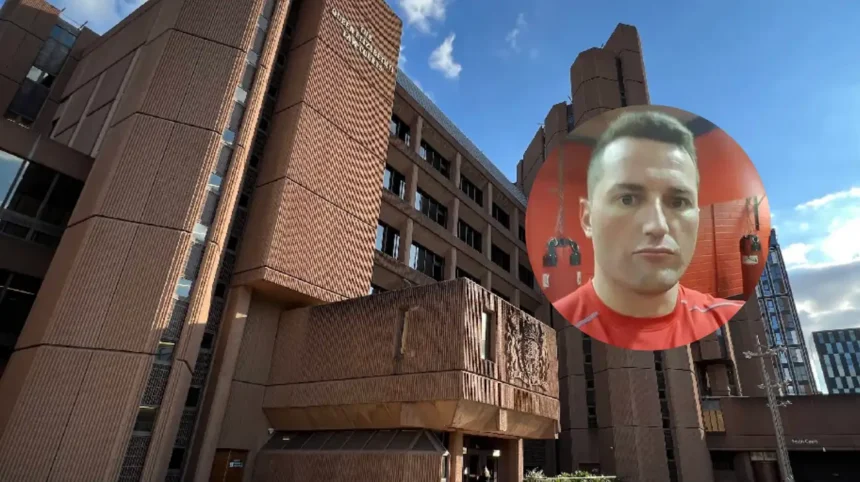
The suspect was transferred back to Northern Ireland and was charged on Thursday night with murder and possession of a firearm or ammunition with intent to endanger life. Following his appearance at Belfast Magistrates’ Court on Friday, Drew spoke only to confirm he understood the charges against him, as reported by the BBC.
Judge Steven Keown remanded Drew in custody until 28 September, when he is expected to mount a bid to be released from prison. No application for bail was made during the brief hearing.
What charges has Paul Drew faced in connection with Robbie Lawlor’s murder?
Paul Drew has been charged with two offences in connection with the death of Robbie Lawlor. The PSNI announced on Thursday night that the 41-year-old, who was arrested in Liverpool on Wednesday, 23 September, has been charged with murder, and possession of a firearm or ammunition with intent to endanger life or cause serious damage to property.
As reported by Diarmuid Pepper of The Journal, the man was arrested in Liverpool on Wednesday by Merseyside Police in connection to Lawlor’s murder, then transported to Northern Ireland for questioning by the PSNI before being charged. The PSNI said:
“Detectives from the Police Service of Northern Ireland’s Major Investigation Team investigating the murder of Robert Lawlor have charged a man to court this evening, Thursday 24th September.”
“Mr Lawlor was shot dead outside a house in Etna Drive in north Belfast on 4th April 2020,” the PSNI statement continued.
“He is due to appear before Belfast Magistrates’ Court on Friday, 25th September. As is usual procedure, the charges will be reviewed by the Public Prosecution Service.”
What evidence links Paul Drew to the 2020 Belfast shooting?
Police claimed Paul Drew, 41, was involved in the assassination in north Belfast based on information within the EncroChat platform and CCTV inquiries, as reported by Belfast Live. Data obtained from an encrypted communications network features in the case against a man charged with the murder of Irish crime boss Robbie Lawlor, a court heard today.
A detective constable from the PSNI’s Serious Crime Team told Belfast Magistrates’ Court she could connect Drew to both alleged offences. Questioned by a defence lawyer, she confirmed the evidence against Drew in connection with the murder relates to data obtained from the EncroChat network.
“Also, the correlation of other CCTV and telecom inquiries within the whole investigation,” the detective disclosed. According to Drew’s solicitor, up to a dozen other suspects have been interviewed but not yet charged based on the same data.
Who was Robbie Lawlor and what happened in April 2020?
Robbie Lawlor, 36, who was from Dublin and believed to have been involved in organised crime in the Republic of Ireland, was shot multiple times outside a house in Etna Drive in Ardoyne in April 2020, as reported by the BBC. Lawlor was gunned down in broad daylight outside a house at Etna Drive in the Ardoyne area on 4 April 2020.
The shooting took place during a violent drugs feud between rival factions in the Republic of Ireland. As reported by the Irish Mirror, Lawlor, 35, was blamed for at least five murders including the savage killing and dismemberment of 17-year-old Keane Mulready-Woods in Drogheda, Co Louth in January 2020 – and was himself shot dead just four months later.
He was gunned down after being lured to a meeting in April of that year at Etna Drive in Ardoyne in north Belfast – and it is believed he was targeted by a coalition of criminals from Dublin, Drogheda and Sligo. Lawlor had been a suspect in the abduction and murder of Drogheda teenager Keane Mulready-Woods in January 2020, and is believed to have travelled to Northern Ireland because he feared an attempt on his own life.
How many other suspects have been charged in the Lawlor murder investigation?
Two men have already been charged by the PSNI in connection with the murder of Lawlor, with investigators having moved to extradite the two suspects from Ireland as part of their probe. Two other men have already been charged with the murder as part of an alleged joint plot to kill the gangland figure.
In July, Dubliner Jonathan Gill lost his fight against extradition from Dublin to Belfast, as reported by the Irish Mirror. The PSNI alleged in court that Mr Gill was “instrumental in all aspects” to the murder of Lawlor. He is now appealing that extradition decision and will have a hearing at the High Court in Dublin next month.
Mr Gill, 44, with an address at Malahide Road, Clontarf, north Dublin, appeared before a sitting of Dublin’s High Court earlier this year, on the foot of a UK warrant seeking his arrest over the murder of Lawlor in Belfast and for the alleged possession of a 9mm pistol in April 2020.
And in June, the PSNI made a similar extradition request against notorious Sligo crime boss Barry Young – and claimed he was ‘instrumental’ in the planning of the murder of Lawlor. Young, 41, of Geldof Drive, Cranmore, Co Sligo, was taken from his cell in Portlaoise Prison in Co Laois to the High Court in Dublin on Monday 22 June, having been arrested on the foot of a warrant from Northern Ireland.
Background of the development
The murder of Robbie Lawlor in April 2020 occurred during a period of intense gangland violence in the Republic of Ireland, particularly in Drogheda and Dublin, where multiple killings were linked to a drugs feud. Lawlor himself was a suspect in the murder of teenager Keane Mulready-Woods, who was kidnapped, killed and dismembered in January 2020, with parts of his body dumped across Dublin.
The PSNI’s Major Investigation Team has been pursuing the case for more than six years, with arrests and charges spanning jurisdictions in Northern Ireland, the Republic of Ireland and England. The use of data from the EncroChat encrypted communications network has been central to the investigation, with police alleging that conversations on the platform contain evidence of planning and coordination of the killing.
The extradition of suspects from the Republic of Ireland to Northern Ireland has been a significant aspect of the investigation, with legal challenges mounted by those sought by the PSNI. Jonathan Gill and Barry Young are both awaiting extradition to the north, with Gill appealing his extradition order and Young currently serving an 11-year prison sentence in the Republic for directing a criminal organisation.
Prediction: How this development can affect the audience
For readers following organised crime coverage in Ireland and the UK, the charging of Paul Drew represents a significant development in a high-profile case that has spanned multiple jurisdictions and years. The use of EncroChat data as evidence may set a precedent for how encrypted communications are treated in serious crime prosecutions, potentially affecting future investigations into gangland violence.
For communities in north Belfast, Drogheda and Dublin affected by the violence of 2020, the continued progress of the investigation may provide some measure of accountability, though the full resolution of the case awaits the outcome of extradition proceedings and any future trials. For law enforcement agencies, the cross-border cooperation demonstrated in this case – involving Merseyside Police, the PSNI and authorities in the Republic – may serve as a model for future investigations into organised crime that spans multiple jurisdictions.