

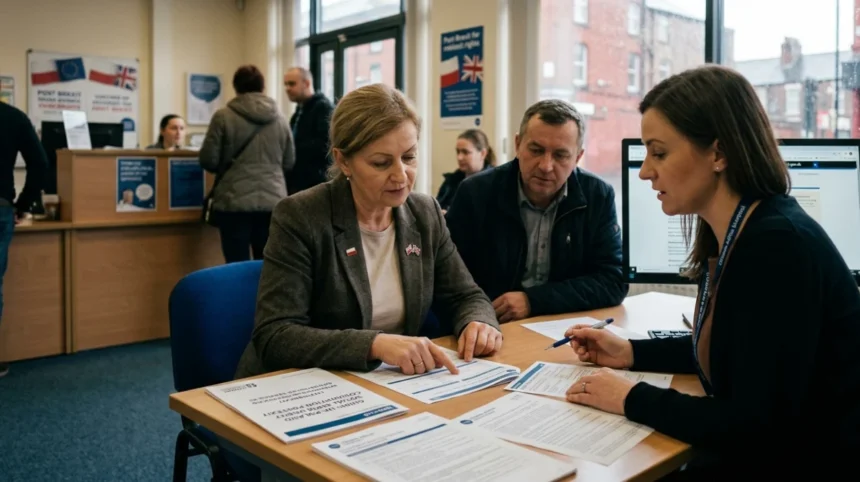
The withdrawal of the United Kingdom of Great Britain and Northern Ireland from the European Union on January 31, 2020, structurally transformed the administrative framework governing cross-border social security. For Polish nationals residing within British territory, and British expatriates living in the Republic of Poland, understanding how to coordinate welfare allocations requires navigating a precise intersection of bilateral treaties, domestic legislation, and transitional agreements. This comprehensive analytical guide by the Liverpool Standard details the operational mechanisms, statutory requirements, and direct pathways necessary to claim, transfer, or safeguard critical social welfare benefits across both jurisdictions under the contemporary regulatory parameters of 2026.
- What Laws Govern Social Security Coordination Between Poland and the UK?
- Can Polish Citizens Export Jobseeker’s Allowance When Returning Home from the UK?
- How Do UK National Insurance Contributions Combine with Polish ZUS Periods?
- What Are the Rules for Exporting a UK State Pension to Poland?
- How Does Universal Credit Apply to Polish Citizens Living in Liverpool?
- What Healthcare Rights Exist for Pensioners Moving Between Both Countries?
- How Are Family and Child Benefits Handled on a Cross-Border Basis?
- What Are the Tax Implications for Cross-Border Benefit Recipients?
What Laws Govern Social Security Coordination Between Poland and the UK?
Bilateral social security coordination between Poland and the UK is structurally dictated by the EU-UK Trade and Cooperation Agreement of December 2020 and the statutory protections preserved under the European Union Withdrawal Agreement’s Citizens’ Rights provisions.
The Statutory Framework
The primary legal architecture protecting transnational social security rights rests on Protocol on Social Security Coordination within the EU-UK Trade and Cooperation Agreement (TCA). This protocol replicates many of the historic coordination principles previously established under European Union Regulation (EC) No 883/2004. However, its protections are divided chronologically based on the residency status of the individual.
Individuals who legally resided in either the United Kingdom or the Republic of Poland prior to December 31, 2020, fall under the protective scope of the formal Withdrawal Agreement. In the United Kingdom, this status is codified via the EU Settlement Scheme (EUSS), which grants either settled status (indefinite leave to remain) or pre-settled status (limited leave to remain). For individuals migrating between these sovereign nations for the first time after January 1, 2021, the rules of the TCA apply. The TCA limits the cross-border portability of specific non-contributory, cash-based welfare allocations, making it critical to identify which statutory tier governs an individual’s personal circumstances.
Core Legal Principles of the Treaties
The administration of social security claims across Poland and the United Kingdom operates under four structural legal concepts designed to prevent systemic exploitation while protecting mobile workers:
- Aggregation of Insurance Periods: This mechanism ensures that qualifying periods of employment, national insurance contributions, or residency completed in one country are legally counted by the other country to meet statutory thresholds for benefit eligibility.
- Equal Treatment: Under this statutory mandate, a Polish national legally residing and working in the United Kingdom possesses identical rights and obligations regarding social security as a British citizen, and vice versa.
- Exportability of Benefits: This specific legal provision permits an individual to continue receiving certain cash benefits, such as old-age pensions, even if they transfer their habitual residence from the paying state to the other jurisdiction.
- Single Applicable Legislation: This prevents dual taxation and dual insurance coverage by ensuring that an active worker is subject to the social security legislation of only one country at a time, typically the nation where the employment activity occurs (lex loci laboris).
Can Polish Citizens Export Jobseeker’s Allowance When Returning Home from the UK?
Polish citizens who possess settled or pre-settled status under the EU Settlement Scheme can export British Jobseeker’s Allowance to Poland for a maximum duration of three months to look for work, provided they meet strict Department for Work and Pensions criteria.
The Portability Mechanism (Form U2)
The export of unemployment benefits from the United Kingdom to the Republic of Poland represents a highly structured legal process. The Department for Work and Pensions (DWP) in the United Kingdom administers this process in tandem with the Ministry of Family, Labour and Social Policy (Ministerstwo Rodziny, Pracy i Polityki Społecznej) in Poland. To execute this portability pathway, a claimant must actively receive contribution-based Jobseeker’s Allowance (JSA) in the United Kingdom for a minimum period of four consecutive weeks prior to their scheduled departure date.
The claimant must formally request a Form U2 (Retention of Unemployment Benefit Entitlement) from the DWP. This document serves as the official multilateral passport for the benefit. Upon arrival in Poland, the individual must present this form and register as a job seeker with the local District Labour Office (Powiatowy Urząd Pracy or PUP) within exactly seven calendar days of leaving the United Kingdom.
Operational Parameters and Financial Limits
Once the PUP confirms registration, the DWP continues to fund the contribution-based JSA, which is transferred directly into the claimant’s bank account in British Pounds Sterling (GBP). The funds are then converted to Polish Złoty (PLN) based on prevailing market exchange rates. The statutory export window is strictly limited to 12 weeks (84 days).
During this timeframe, the claimant must actively participate in the Polish labor market control procedures, attending all scheduled interviews and submitting monthly proof of job-seeking activities to the PUP. If the claimant fails to secure employment within the 12-week period, they must return to the United Kingdom to maintain their ongoing benefit entitlement. Failure to return before the expiration of the Form U2 results in the immediate termination of the claim and can jeopardize the individual’s future immigration status if they hold pre-settled status.

How Do UK National Insurance Contributions Combine with Polish ZUS Periods?
UK National Insurance contributions combine with Polish social security periods via the principle of aggregation, which permits the Social Insurance Institution of Poland to add British contributions to local history to satisfy minimum state pension thresholds.
The Institutional Liaison Architecture
The Social Insurance Institution of Poland (Zakład Ubezpieczeń Społecznych, commonly abbreviated as ZUS) is the state entity responsible for gathering social security contributions and dispersing pensions. The corresponding authority in the United Kingdom is His Majesty’s Revenue and Customs (HMRC) for contribution records, and the DWP for pension payments. When an individual has split their professional career between both territories, their contributions are monitored via Form U1 or Form E205. These documents provide an official statement of insurance periods, verifying the precise number of weeks or months an individual has contributed to each respective national scheme.
Step-by-Step State Pension Calculation
When a mobile worker reaches the statutory retirement age, they do not receive a single unified pension; instead, they receive a pro-rata pension from each individual state. The calculation sequence proceeds through three clear administrative stages:
- Independent Assessment: ZUS evaluates the claimant’s record strictly under Polish law. If the individual has achieved the minimum qualifying insurance period—which stands at 20 years for women and 25 years for men in Poland—ZUS calculates an independent pension amount based entirely on Polish contributions.
- Pro-Rata Aggregation: If the claimant lacks sufficient years in Poland to qualify independently, ZUS requests the British contribution history from HMRC. ZUS then calculates a theoretical pension amount as if all the insurance periods across both nations had been completed exclusively in Poland.
- Proportional Distribution: ZUS reduces this theoretical sum to match the exact proportion of time the individual actually worked in Poland. For instance, if an individual worked 10 years in Poland and 20 years in the United Kingdom, Poland will pay precisely one-third ($1/3$) of the theoretical aggregate Polish pension.
Simultaneously, the International Pension Centre (IPC) in the United Kingdom executes an identical pro-rata calculation using the British state pension framework. The current requirement to receive any British state pension is a minimum of 10 qualifying years, while the full state pension requires 35 qualifying years. Through aggregation, an individual with 5 years of UK contributions and 30 years of Polish contributions will successfully unlock their pro-rata British pension, which would otherwise be entirely forfeited due to falling below the 10-year UK threshold.
What Are the Rules for Exporting a UK State Pension to Poland?
The UK state pension can be fully exported to Poland, and under the current terms of the EU-UK Trade and Cooperation Agreement, recipients receive annual cost-of-living increases exactly matching those applied within the UK.
Direct Financial Delivery to Poland
The International Pension Centre, a specialized division within the DWP, oversees the administration and distribution of British retirement funds to individuals residing outside UK borders. Individuals living in Poland have the statutory right to choose where their monthly pension payments are sent. They can maintain a UK bank or building society account, or they can have the funds deposited directly into a Polish bank account denominated in Polish Złoty (PLN) or Euros (EUR).
To facilitate international transfers, the pensioner must supply their Polish bank’s International Bank Account Number (IBAN) and Bank Identifier Code (BIC/SWIFT). The DWP processes the conversion using commercial exchange rates on the date of transaction, meaning the final monthly income fluctuates based on foreign currency market volatility.
Protection Against Pension Freezing
A critical advantage of the current post-Brexit agreement for expatriates living in Poland is the explicit preservation of the annual pension uprating mechanism, commonly referred to in British politics as the “Triple Lock.” Unlike British pensioners who relocate to countries without reciprocal agreements—such as Canada or Australia, where pensions are permanently frozen at the rate of initial claim—pensioners residing in Poland are legally entitled to receive annual cost-of-living adjustments.
This absolute parity ensures that the purchasing power of a UK state pension spent within the Polish economy is insulated against long-term inflationary pressures.
How Does Universal Credit Apply to Polish Citizens Living in Liverpool?
Polish citizens living in Liverpool can claim Universal Credit only if they maintain a valid right to reside under UK immigration law and satisfy the statutory Habitual Residence Test conducted by the DWP.
Right to Reside and the Habitual Residence Test
Universal Credit is the primary means-tested, non-contributory welfare benefit in England, Scotland, and Wales, consolidating six historic legacy benefits into a single monthly payment. For a Polish national residing in Liverpool to qualify, they must first establish a legal “Right to Reside.” This is automatically satisfied if the individual holds full settled status under the EUSS. However, for those holding pre-settled status or migrating under the post-Brexit points-based visa system, holding an immigration status does not automatically grant access to public funds.
The claimant must pass the two-stage Habitual Residence Test (HRT). The first stage is a legal evaluation of their right to reside as an active economic agent, such as a registered employed worker or a self-employed business owner. The second stage is a factual assessment of their “habitual residence,” which requires proving that the claimant’s main center of interest is firmly established within the United Kingdom.
Administrative Verification Evidence
During the HRT interview at a local Liverpool Jobcentre Plus office, DWP decision-makers require verifiable documentary evidence to confirm the claimant’s integration into the local economy. The evaluation relies on five specific categories of documentation:
- Employment Documentation: Signed contracts of employment, consecutive wage slips covering the prior three months, and formal P60 tax summaries.
- Residential Tenancy Agreements: Valid tenancy contracts for properties situated within the Liverpool City Region, alongside consistent utility bills.
- Financial Records: Comprehensive statements from UK banking institutions displaying local daily transactions, rent payments, and income deposits.
- Local Infrastructure Integration: Official documentation proving registration with a local General Practitioner (GP) surgery and enrollment of dependent children in local schools.
- Immigration Confirmations: Digital share codes generated via the Home Office online portal to verify settled or pre-settled status.
If a Polish citizen with pre-settled status becomes involuntarily unemployed, they can temporarily retain their “worker status” and maintain access to Universal Credit for a limited period, provided they register immediately with the national job-seeking systems and demonstrate a genuine chance of re-entering employment.
What Healthcare Rights Exist for Pensioners Moving Between Both Countries?
Pensioners moving between Poland and the UK retain reciprocal healthcare rights funded by their home country through the S1 healthcare form scheme, which grants full access to local state medical treatment.
The S1 Form Mechanism
Medical coverage for cross-border pensioners is managed through the S1 form system, an administrative protocol designed to allocate financial liability between national healthcare networks. If an individual receives a British state pension but chooses to permanently relocate their primary residence to Poland, they are entitled to have their healthcare covered by the United Kingdom. The pensioner must apply to the NHS Business Services Authority (NHS BSA) for an S1 certificate.
Upon receipt, this certificate must be formally registered with the Polish National Health Fund (Narodowy Fundusz Zdrowia or NFZ). Once registered, the British pensioner receives an NFZ medical card, granting them access to Polish state doctors, specialists, and public hospitals on exactly the same terms as a native Polish citizen. The NFZ tracks all medical costs incurred by the individual and bills the UK government directly for reimbursement.
S2 Form and GHIC Provisions for Temporary Travel
The Global Health Insurance Card (GHIC) or a valid European Health Insurance Card (EHIC) covers necessary, state-provided medical treatment that cannot reasonably wait until the traveler returns home. This includes emergency room visits, acute illness treatment, and routine management of pre-existing chronic conditions.
Conversely, if an individual wishes to travel specifically to receive planned medical care in the other country, they must obtain an S2 Certificate prior to departure. The S2 is a formal authorization granted only if the specific medical treatment is available under the home country’s state system but cannot be provided within a medically justifiable timeframe.

How Are Family and Child Benefits Handled on a Cross-Border Basis?
Family and child benefits cannot be claimed simultaneously from both countries for the same child; priority rules dictate which country pays the primary benefit, while the secondary country provides a differential supplement if applicable.
Anti-Cumulation Priority Rules
To prevent the overlapping duplication of state funds for dependent minors, the UK and Poland apply strict anti-cumulation regulations. In the United Kingdom, child assistance is administered via HMRC Child Benefit, whereas in Poland, the primary child allocation is the “Family 800 Plus” (Rodzina 800+) program, managed by ZUS. When a family is split across both borders—for instance, one parent works in Liverpool while the other parent resides in Warsaw with the children—priority status is determined by the following sequence:
- Employment Status Priority: The country where the parents’ income is derived from active employment or self-employment holds primary financial responsibility.
- Place of Habitual Residence: If both parents are employed, or if both parents are unemployed, the country where the children habitually reside holds the primary obligation to pay.
Calculation of the Differential Supplement
If the primary country’s statutory child allowance is financially lower than the allowance offered by the secondary country, the secondary country must pay a “differential supplement” (dodatek dyferencyjny). This supplement bridge the precise financial gap between the two welfare systems.
For example, if the primary country’s benefit evaluates to an equivalent of £100 per month, and the secondary country’s benefit stands at £160 per month, the secondary nation’s social security office will issue a monthly payment of exactly £60. This guarantees that the family receives the maximum possible financial support available under either framework without violating international anti-fraud regulations.
What Are the Tax Implications for Cross-Border Benefit Recipients?
The UK-Poland Double Taxation Agreement of 2006 dictates that state pensions and welfare benefits are taxed strictly based on the recipient’s ultimate country of fiscal residence, preventing dual income taxation.
Determining Fiscal Residence under the Treaty
The allocation of taxing rights between the United Kingdom and the Republic of Poland is governed by the bilateral Convention for the Avoidance of Double Taxation. To determine which sovereign entity has the lawful right to tax a transnational benefit or pension, authorities assess individual fiscal residence using Article 4 of the treaty.
An individual is deemed a tax resident of Poland if their primary home, center of vital interests (economic and personal ties), or habitual abode is within Polish territory for a period exceeding 183 days in a given calendar year. If an individual meets these criteria, their global income—including state benefits and pensions emitted by the UK DWP—falls under the tax jurisdiction of the Polish Ministry of Finance (Ministerstwo Finansów).
Tax Treatment of Specific Benefits
Under the current double taxation rules, a British expatriate residing permanently in Poland must declare their UK State Pension on their annual Polish tax return (PIT). ZUS typically deducts health insurance contributions and advance income tax directly if the pension is routed through a synchronized Polish bank account. Conversely, non-contributory, means-tested welfare allocations like Universal Credit or the Polish 800+ benefit are explicitly exempted from income tax calculations in both nations, ensuring that vulnerable individuals receive the full cash value of their allocated social safety net.
Can Polish citizens still claim UK social security benefits after Brexit?
Yes. Polish citizens can still claim eligible UK social security benefits if they meet the relevant immigration, residence, and contribution requirements. The rules depend on whether they are protected by the EU Withdrawal Agreement or are covered by the UK–EU Trade and Cooperation Agreement (TCA).