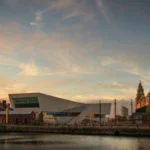

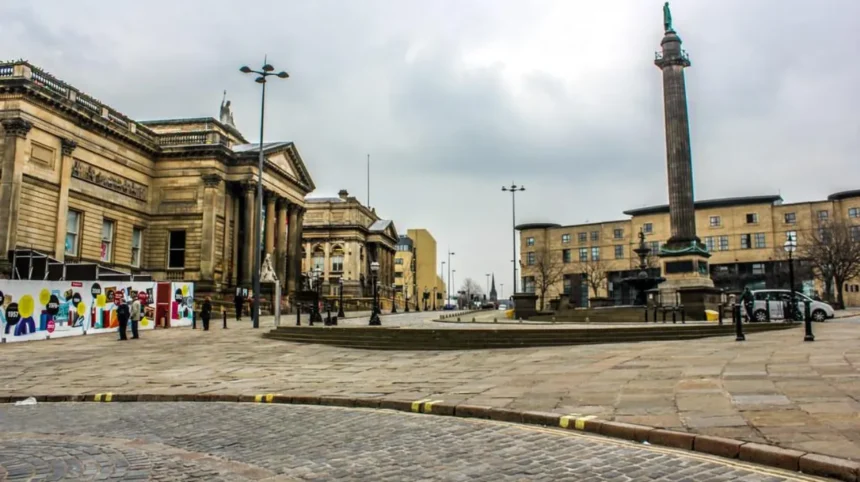
Liverpool is internationally known for its maritime heritage, musical legacy, and iconic waterfront. Most visitors concentrate on major attractions such as the Royal Albert Dock, the Cavern Quarter, and Liverpool Cathedral. However, the city contains a much broader historical landscape that extends into lesser-known streets, districts, parks, cemeteries, industrial sites, and community heritage locations. Understanding these hidden gems provides a deeper view of Liverpool’s development from a medieval borough into one of Britain’s most influential port cities.
- What are Liverpool’s hidden gems, and why are they historically significant?
- How did Liverpool’s historic neighborhoods develop beyond the city centre?
- Which lesser-known historic buildings reveal Liverpool’s architectural heritage?
- Why do Liverpool’s historic parks and cemeteries contain important heritage assets?
- How can visitors uncover Liverpool’s maritime history beyond the waterfront?
- What role do museums, archives, and local heritage organizations play in discovering hidden history?
- How does Liverpool’s multicultural history appear in overlooked locations?
- What archaeological discoveries help explain Liverpool’s past?
- How are Liverpool’s hidden historic sites preserved for future generations?
- Why does exploring Liverpool’s hidden gems provide a deeper understanding of the city?
Exploring Liverpool beyond established tourist routes reveals surviving evidence of social change, industrial expansion, migration, architecture, religion, commerce, and cultural transformation. These locations preserve important historical narratives that remain visible in the modern city.
What are Liverpool’s hidden gems, and why are they historically significant?
Liverpool’s hidden gems are lesser-known historic sites, neighborhoods, buildings, parks, and cultural landmarks that preserve evidence of the city’s development from the medieval period through the industrial age. These places reveal social, economic, architectural, and cultural histories often overlooked by mainstream tourism.
The term “hidden gems” refers to places that receive fewer visitors than Liverpool’s major attractions but possess substantial historical value. These sites often retain authentic architectural features, local traditions, and community connections that provide direct insight into Liverpool’s past.
Liverpool received its first royal charter in 1207 from King John. For centuries, it remained a relatively small settlement. Rapid growth began during the seventeenth century and accelerated throughout the eighteenth and nineteenth centuries as maritime trade expanded.
Many hidden locations preserve evidence of this transformation. Former merchant residences, industrial infrastructure, religious institutions, and workers’ housing illustrate how Liverpool evolved into a global trading center.
These sites also reflect broader historical themes, including migration, empire, industrialization, public health reform, urban planning, and heritage preservation. Examining them together creates a more complete understanding of the city than focusing solely on major tourist destinations.
How did Liverpool’s historic neighborhoods develop beyond the city centre?
Liverpool’s historic neighborhoods developed through centuries of trade, industrial growth, migration, and urban expansion. Districts outside the city centre preserve distinct architectural styles, social histories, and cultural identities that illustrate different phases of Liverpool’s development between the eighteenth and twentieth centuries.
The city expanded significantly during the Industrial Revolution. Population growth created demand for housing, churches, schools, transport systems, and commercial infrastructure.
Areas such as Toxteth, Everton, Wavertree, Garston, and West Derby developed distinct identities based on their economic functions and demographics.
Toxteth and Migration History
Toxteth originated as a royal hunting forest during the medieval period. By the nineteenth century, it had become one of Liverpool’s most diverse districts.
Migration from Ireland increased dramatically during the Great Famine of 1845–1852. Additional migration from Wales, China, Africa, the Caribbean, and South Asia contributed to Liverpool’s multicultural character.
Historic streets in Toxteth preserve Victorian architecture and demonstrate patterns of urban development linked to port-related employment.
West Derby and Medieval Origins
West Derby predates Liverpool itself. Historical records indicate that West Derby served as an important administrative center during the Anglo-Saxon period.
The area contains surviving historic buildings, ancient street layouts, and conservation zones that reflect centuries of continuous occupation.
These features offer evidence of settlement patterns that existed before Liverpool emerged as a major port.
Everton and Urban Expansion
Everton developed rapidly during the nineteenth century. Population growth led to extensive residential construction.
The district provides examples of Victorian urban planning, public housing initiatives, and religious architecture that supported expanding communities.
Today, surviving structures continue to illustrate Liverpool’s industrial-era growth.
Which lesser-known historic buildings reveal Liverpool’s architectural heritage?
Liverpool’s lesser-known historic buildings reveal the city’s architectural evolution through Georgian townhouses, Victorian civic structures, industrial facilities, religious institutions, and preserved residential developments. Together, these buildings document changing design trends, economic prosperity, and social priorities across several centuries.
Liverpool possesses more listed buildings than any English city outside London. Historic England identifies thousands of protected structures throughout the metropolitan area.
Many significant buildings remain outside major tourist itineraries.
Georgian Liverpool
The eighteenth century brought substantial wealth through maritime commerce.
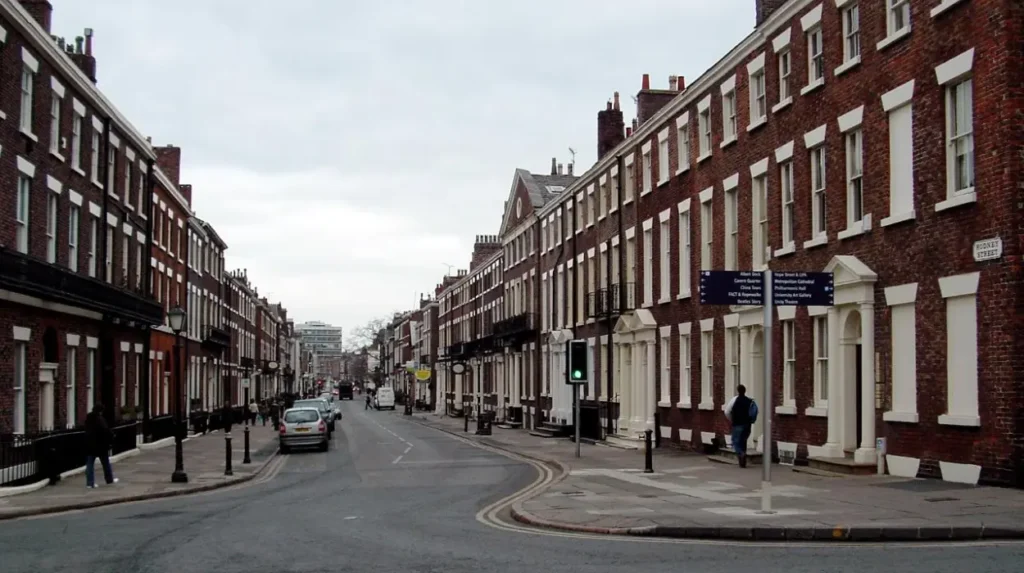
Georgian districts contain elegant terraces characterized by symmetry, brick construction, sash windows, and classical detailing.
Rodney Street exemplifies Georgian urban planning. Developed during the late eighteenth century, the street contains numerous listed buildings that demonstrate architectural standards associated with affluent merchants and professionals.
Victorian Religious Architecture
The nineteenth century witnessed extensive church construction.
Religious buildings reflected population growth and denominational diversity. Anglican, Catholic, Methodist, and Nonconformist congregations established substantial places of worship across expanding neighborhoods.
Many lesser-known churches preserve original interiors, stained glass collections, and memorials connected to local history.
Industrial Structures
Warehouses, railway facilities, dock-related buildings, and manufacturing sites formed the backbone of Liverpool’s economy.
Surviving industrial architecture demonstrates engineering innovations that supported commercial expansion throughout the nineteenth century.
These structures provide tangible evidence of Liverpool’s role within global trade networks.
Why do Liverpool’s historic parks and cemeteries contain important heritage assets?
Liverpool’s historic parks and cemeteries contain important heritage assets because they preserve Victorian landscape design, commemorative monuments, archaeological evidence, ecological diversity, and records of social history. These spaces reveal changing attitudes toward public health, recreation, remembrance, and urban planning.
Public green spaces became increasingly important during the nineteenth century as industrial cities expanded.
Municipal authorities recognized the need for recreation, sanitation, and public wellbeing.
Princes Park
Princes Park opened in 1842 and was designed by landscape architect Joseph Paxton.
The park represented a pioneering approach to urban planning. Curving pathways, ornamental lakes, and carefully designed vistas reflected contemporary landscape principles.
Many later public parks adopted similar design concepts.
St James Cemetery
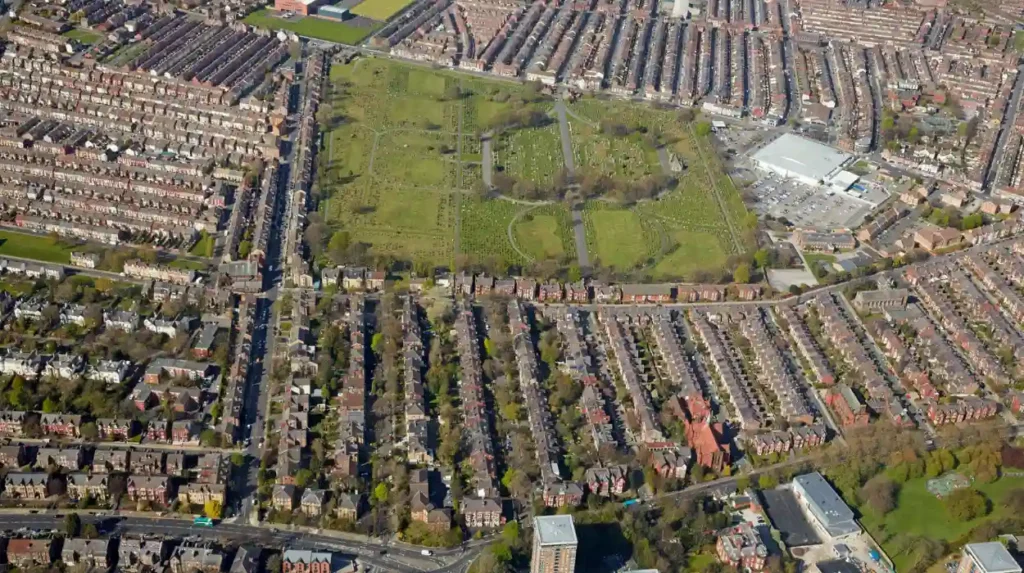
Located within a former quarry beneath Liverpool Cathedral, St James Cemetery contains thousands of nineteenth-century burials.
The cemetery preserves monuments, inscriptions, and funerary art that document local social history.
Researchers frequently use cemetery records to investigate family histories, migration patterns, and demographic change.
Victorian Public Health Reform
Parks and cemeteries emerged alongside public health initiatives.
Rapid urbanization created overcrowded living conditions. Green spaces and organized burial grounds addressed concerns regarding sanitation and quality of life.
These locations therefore represent both cultural and public health history.
How can visitors uncover Liverpool’s maritime history beyond the waterfront?
Visitors can uncover Liverpool’s maritime history beyond the waterfront by exploring former dock communities, merchant districts, industrial transport routes, workers’ neighborhoods, and surviving infrastructure linked to global trade. These locations reveal the wider economic and social impact of maritime activity across the city.
Liverpool’s maritime heritage extends far beyond the famous docks.
The city became one of the world’s busiest ports during the eighteenth and nineteenth centuries. Maritime commerce influenced nearly every aspect of urban development.
Former Dock Communities
Residential districts housed dockworkers, sailors, merchants, and associated industries.
Many streets preserve original building forms that illustrate how maritime employment shaped community life.
Housing density, commercial premises, and public institutions reflected the needs of port-related populations.
Canal Infrastructure
The Leeds and Liverpool Canal played a critical role in transporting goods between inland manufacturing regions and the port.
Opened progressively between 1770 and 1816, the canal facilitated movement of coal, textiles, agricultural products, and industrial materials.
Surviving canal features demonstrate the engineering achievements that supported economic growth.
Merchant Networks
Liverpool merchants established extensive commercial relationships across Europe, Africa, Asia, and the Americas.
Former offices, warehouses, and commercial buildings preserve evidence of these networks.
These structures illustrate how international trade contributed to local prosperity and urban expansion.
To experience this historic legacy in person today, consult our comprehensive [Hidden Gems and Unique Things to Do Around Liverpool] for itineraries and visiting parameters.
What role do museums, archives, and local heritage organizations play in discovering hidden history?
Museums, archives, and local heritage organizations preserve documents, artifacts, photographs, maps, and oral histories that help researchers and visitors understand Liverpool’s lesser-known historical narratives. Their collections provide evidence that supports interpretation, preservation, and educational outreach.
Historical understanding depends upon reliable evidence.
Liverpool benefits from extensive archival and museum resources that document centuries of development.
Archival Records
Municipal archives preserve census records, planning documents, business records, shipping manifests, and property information.
These materials allow historians to reconstruct patterns of settlement, employment, and social change.
Genealogical researchers frequently use archival collections to trace family histories connected to Liverpool.
Museum Collections
Local museums preserve archaeological discoveries, maritime artifacts, industrial equipment, artworks, and cultural materials.
These collections provide physical evidence supporting historical interpretation.
Objects help explain how people lived, worked, traded, and interacted across different periods.
Community Heritage Projects
Community organizations conduct oral history initiatives, building surveys, and conservation programs.
These projects often document histories that receive limited attention within national narratives.
Their work strengthens public understanding of local heritage.
How does Liverpool’s multicultural history appear in overlooked locations?
Liverpool’s multicultural history appears in overlooked locations through religious institutions, residential neighborhoods, community buildings, cemeteries, and commercial districts associated with immigrant communities. These sites demonstrate centuries of migration, cultural exchange, and social integration within the city.
Liverpool has long functioned as an international gateway.
Its port attracted migrants, merchants, sailors, and workers from diverse regions.
Chinese Heritage
Liverpool contains the oldest established Chinese community in Europe.
Chinese seafarers and traders settled in the city during the nineteenth century.
Historic locations associated with this community preserve evidence of long-standing cultural connections between Liverpool and China.
Irish Heritage
Irish migration profoundly influenced Liverpool’s development.
Population growth during the nineteenth century transformed many districts.
Churches, schools, charitable institutions, and residential neighborhoods continue to reflect this heritage.
African and Caribbean Connections
Liverpool’s maritime economy created longstanding connections with Africa and the Caribbean.
Migration during the nineteenth and twentieth centuries contributed to the city’s cultural diversity.
Historic community institutions preserve important evidence of these experiences.
What archaeological discoveries help explain Liverpool’s past?
Archaeological discoveries help explain Liverpool’s past by providing physical evidence of medieval settlement, industrial activity, trade networks, domestic life, and urban development. Excavations reveal information unavailable through written records alone and improve understanding of historical change.
Archaeology complements documentary research.
Excavations throughout Liverpool have uncovered material evidence spanning several centuries.
Medieval Evidence
Archaeologists have identified remains associated with Liverpool’s early development following the 1207 charter.
Artifacts including pottery, building materials, and household objects help reconstruct daily life during the medieval period.
Industrial Archaeology
Industrial sites contain machinery foundations, transport infrastructure, and manufacturing remains.
These discoveries illustrate production methods and technological innovation during the Industrial Revolution.
Waterfront Excavations
Excavations near former docklands have revealed evidence of maritime commerce, warehousing, and ship-related activity.
Such findings contribute to understanding Liverpool’s role within international trade systems.
Research published by archaeological organizations continues to refine knowledge of the city’s historical development.
How are Liverpool’s hidden historic sites preserved for future generations?
Liverpool’s hidden historic sites are preserved through legal protection, conservation planning, heritage funding, community engagement, academic research, and public education. These mechanisms safeguard buildings, landscapes, archives, and archaeological resources while supporting continued public access and historical understanding.
Heritage preservation involves coordinated efforts among government agencies, educational institutions, community organizations, and conservation specialists.
Listed Building Protection
Many historic structures receive statutory protection through listing systems.
Listed status regulates alterations and helps preserve architectural significance.
Thousands of protected buildings contribute to Liverpool’s historic character.
Conservation Areas
Conservation areas protect broader historic environments rather than individual structures alone.
These designations preserve streetscapes, architectural consistency, and historic settings.
Liverpool contains numerous conservation areas representing different periods of urban development.
Educational Initiatives
Universities, museums, schools, and heritage organizations promote public awareness through exhibitions, publications, and research projects.
Education strengthens support for preservation efforts.
Greater public understanding contributes directly to long-term heritage protection.
Why does exploring Liverpool’s hidden gems provide a deeper understanding of the city?
Exploring Liverpool’s hidden gems provides a deeper understanding of the city because these sites reveal the interconnected histories of trade, migration, industry, architecture, religion, community development, and cultural exchange. Together they present a comprehensive picture of Liverpool’s evolution across eight centuries.
Major attractions highlight important aspects of Liverpool’s history, but they represent only part of the historical record.
Lesser-known neighborhoods, buildings, landscapes, and heritage sites preserve evidence of everyday life and long-term social transformation.
These locations demonstrate how local communities responded to economic growth, industrialization, migration, public health challenges, and urban expansion.
They also reveal the complexity of Liverpool’s historical identity. Maritime commerce influenced development, but so did education, religion, civic reform, architecture, and multicultural exchange.
For educators, hidden gems provide valuable case studies in urban history. For researchers, they offer access to underexplored historical evidence. For cultural tourists, they create opportunities to engage with authentic local heritage beyond crowded attractions.
Liverpool’s historical significance extends far beyond its most famous landmarks. Its hidden gems preserve centuries of human activity and remain essential resources for understanding one of Britain’s most influential cities. Continued preservation, research, and public engagement ensure that these overlooked places remain part of Liverpool’s historical landscape for future generations.
What are some hidden gems in Liverpool beyond the main tourist attractions?
Liverpool’s hidden gems include historic neighborhoods such as Toxteth and West Derby, St James Cemetery, Princes Park, the Leeds and Liverpool Canal, lesser-known churches, heritage buildings, and community cultural sites that reveal the city’s rich social and industrial history.