

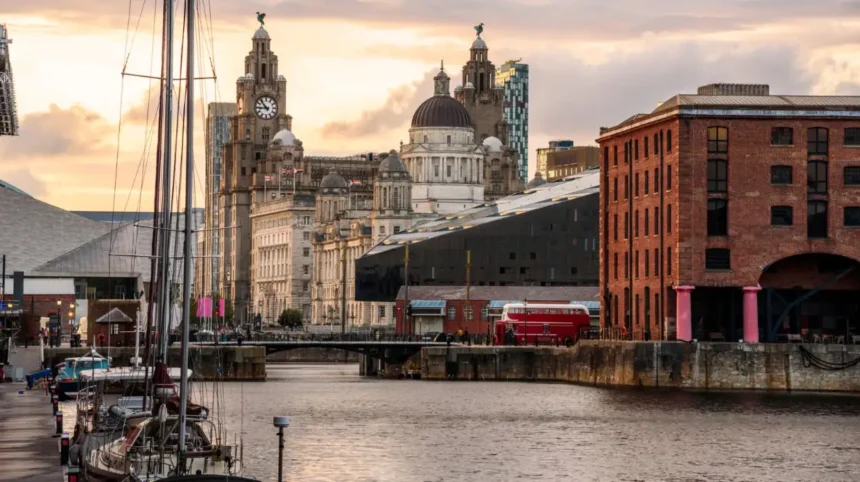
Liverpool combines more than 800 years of history with world-famous music, maritime heritage, architecture, sport, and modern entertainment. The city developed from a small medieval settlement into one of Britain’s most important ports, leaving behind a concentration of museums, waterfront landmarks, historic districts, theatres, public parks, and cultural venues that make it an ideal destination for groups of friends.
- Why is Liverpool one of the best UK cities for a day out with friends?
- What historic attractions should friends visit together in Liverpool?
- How does Liverpool’s music heritage create memorable group experiences?
- Which museums offer the best shared experiences for groups?
- What outdoor places are ideal for friends spending time together?
- Where can friends enjoy Liverpool’s food, cafés, and entertainment districts?
- How can friends include football heritage in their Liverpool itinerary?
- What seasonal events make Liverpool enjoyable throughout the year?
- How can friends organise an efficient one-day Liverpool itinerary?
- Why does Liverpool remain one of Britain’s most rewarding destinations for groups of friends?
A successful day out in Liverpool balances heritage with contemporary experiences. Historic attractions stand within walking distance of restaurants, independent cafés, waterfront leisure spaces, live music venues, and sporting landmarks. This compact geography allows visitors to experience multiple aspects of the city’s identity in a single day.
Whether visiting for the first time or returning to explore overlooked districts, Liverpool offers activities that appeal to history enthusiasts, cultural tourists, students, and local residents alike.
Why is Liverpool one of the best UK cities for a day out with friends?
Liverpool offers an exceptional combination of UNESCO-recognised heritage, nationally important museums, iconic music history, major sporting culture, public waterfront spaces, independent food districts, and compact walkability. These characteristics enable groups to experience diverse attractions efficiently within a single day.
Liverpool’s modern identity reflects centuries of commercial growth. King John granted Liverpool its royal charter in 1207, establishing a borough that gradually expanded into one of Europe’s busiest ports during the eighteenth and nineteenth centuries.
The city became central to Britain’s Atlantic trade networks. Dock construction transformed the waterfront into an international commercial centre, while migration connected Liverpool with Ireland, North America, Africa, and the wider British Empire.
These historical developments shaped today’s visitor experience. Former warehouses became museums, dock buildings became cultural venues, and industrial districts evolved into entertainment quarters.
Groups benefit from this concentration because attractions remain close together. Walking routes connect the waterfront, commercial centre, cultural quarter, and shopping districts without requiring lengthy travel.
Liverpool also contains one of the United Kingdom’s largest collections of Grade I and Grade II listed buildings. Examples include St George’s Hall, the Royal Liver Building, and the Albert Dock warehouses.
To experience these historic locations in person today, consult our comprehensive [How to Organise a Memorable Day Out With Friends in Liverpool] for itineraries and visiting parameters.
What historic attractions should friends visit together in Liverpool?
Liverpool preserves internationally significant maritime, civic, religious, and musical heritage. Friends can visit museums, historic docks, Victorian civic architecture, cathedrals, and cultural landmarks that collectively explain the city’s transformation from medieval borough to global port and creative centre.
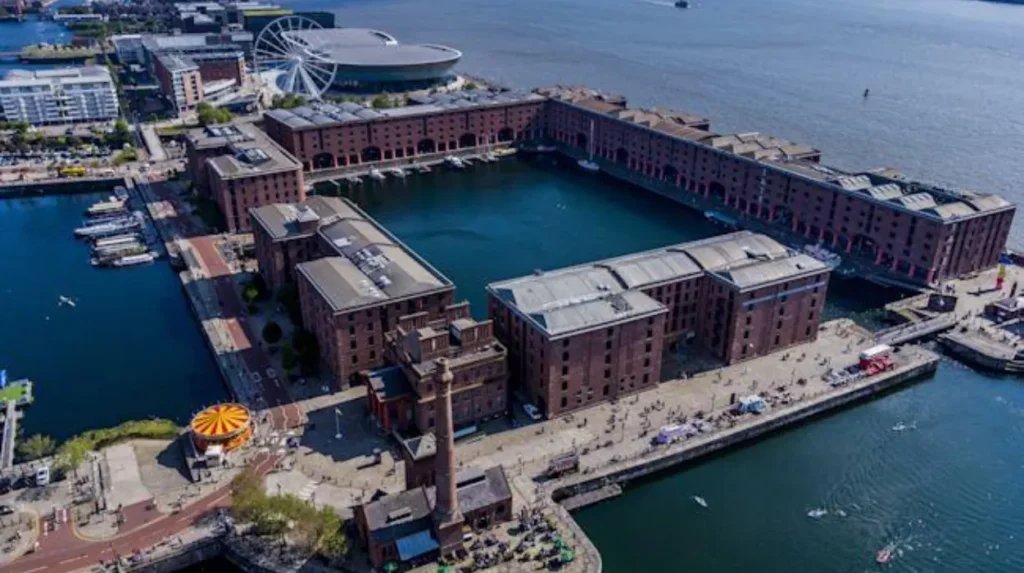
The Royal Albert Dock remains Liverpool’s best-known heritage destination. Opened in 1846, it introduced fireproof warehouse construction using cast iron, brick, and stone instead of structural timber. This engineering innovation influenced dock design internationally.
Today, the dock contains museums, galleries, restaurants, and public spaces while preserving its original nineteenth-century appearance.
Explore Liverpool’s waterfront
Liverpool’s waterfront records successive phases of commercial expansion.
Visitors encounter:
- Royal Albert Dock
- Pier Head
- The Three Graces
- Historic dock infrastructure
- Ferry terminals
The waterfront demonstrates how maritime trade financed Liverpool’s civic expansion during the Industrial Revolution.
Visit St George’s Quarter
St George’s Hall, completed in 1854, represents one of Britain’s finest examples of Neoclassical architecture.
Nearby cultural institutions include:
- World Museum
- Walker Art Gallery
- Central Library
Together these institutions form one of England’s most significant civic cultural precincts.
Discover Liverpool’s cathedrals
Liverpool possesses two remarkable cathedrals representing different architectural traditions.
Liverpool Cathedral, designed principally by Giles Gilbert Scott, ranks among the world’s largest Anglican cathedrals.
The Metropolitan Cathedral, completed in 1967, reflects modern twentieth-century ecclesiastical architecture with its distinctive circular design.
Visiting both demonstrates the evolution of religious architecture across more than one century.
How does Liverpool’s music heritage create memorable group experiences?
Liverpool’s musical legacy extends beyond The Beatles through recording studios, performance venues, museums, festivals, and live entertainment districts. Friends experience both preserved heritage and an active contemporary music scene throughout the city centre.
Liverpool became internationally recognised during the Merseybeat movement of the early 1960s.
The Beatles transformed popular music while placing Liverpool at the centre of global cultural history.
The city subsequently preserved many locations connected with this musical revolution.
Visit The Beatles Story
Located at Royal Albert Dock, The Beatles Story documents:
- Childhood backgrounds
- Formation of the band
- International success
- Recording history
- Cultural influence
Interactive exhibitions help visitors understand Liverpool’s contribution to twentieth-century popular culture.
Explore Mathew Street
Mathew Street developed into Liverpool’s best-known entertainment district.
The Cavern Club occupies the location where The Beatles performed numerous early concerts before achieving international fame.
Although rebuilt after demolition, the venue remains an internationally recognised symbol of Liverpool’s musical identity.
Experience live music
Liverpool continues producing successful musicians while supporting hundreds of annual performances.
Independent venues across Ropewalks, Baltic Triangle, and the city centre host emerging artists alongside established performers.
This continuity demonstrates that Liverpool’s musical importance extends beyond historical preservation.
Which museums offer the best shared experiences for groups?
Liverpool’s museums combine maritime history, archaeology, decorative arts, social history, natural science, and international exhibitions. Most major museums provide free admission, allowing groups to explore nationally significant collections without admission costs.
National Museums Liverpool operates several major institutions.
These museums preserve millions of artefacts documenting regional, national, and international history.
Museum of Liverpool
Opened in 2011, the Museum of Liverpool interprets the city’s social development.
Permanent galleries explain:
- Urban expansion
- Sporting traditions
- Immigration
- Popular culture
- Industrial development
Interactive displays encourage collaborative exploration among visiting groups.
Merseyside Maritime Museum
Liverpool’s maritime history shaped global commerce.
The museum documents:
- Merchant shipping
- Emigration
- Naval history
- Dock engineering
- Transatlantic trade
Exhibitions examine both economic achievements and difficult historical subjects, including Britain’s involvement in the transatlantic slave trade.
International Slavery Museum
Located within the same dock complex, this museum explores slavery from historical and contemporary perspectives.
Its collections examine:
- African societies
- European colonial expansion
- Resistance movements
- Abolition campaigns
- Modern human rights issues
These exhibitions provide historical context essential to understanding Liverpool’s development.
What outdoor places are ideal for friends spending time together?
Liverpool contains extensive Victorian parks, waterfront promenades, gardens, and open civic spaces. These landscapes combine recreational opportunities with important examples of nineteenth-century urban planning and landscape architecture.
Liverpool recognised public health benefits associated with green space during the Victorian era.
Municipal authorities invested heavily in landscaped parks that continue serving residents and visitors today.
Sefton Park
Opened in 1872, Sefton Park covers approximately 235 acres.
Important features include:
- Palm House
- Ornamental lakes
- Historic bridges
- Curving walking routes
- Victorian planting schemes
The park provides one of Liverpool’s largest recreational landscapes.
Princes Park
Designed by Joseph Paxton, Princes Park introduced innovative landscape principles later applied elsewhere.
Its winding paths and lakes reflected changing attitudes toward public recreation during industrial urbanisation.
Waterfront walking
The River Mersey promenade offers uninterrupted views across the estuary.
Walking routes connect major attractions while illustrating Liverpool’s relationship with maritime commerce.
These open spaces become particularly attractive during spring and summer.
Where can friends enjoy Liverpool’s food, cafés, and entertainment districts?
Liverpool’s historic commercial districts have evolved into vibrant destinations containing independent cafés, restaurants, food markets, theatres, and evening entertainment while preserving significant architectural character from previous centuries.
Commercial adaptation forms an important aspect of heritage conservation.
Rather than abandoning historic buildings, Liverpool increasingly repurposes warehouses, offices, and industrial premises.
Bold Street
Bold Street developed during Liverpool’s Georgian expansion.
Today it supports independent businesses representing cuisines from numerous countries.
Its historic architecture remains largely intact despite changing commercial uses.
Baltic Triangle
Former industrial warehouses now accommodate:
- Independent cafés
- Creative studios
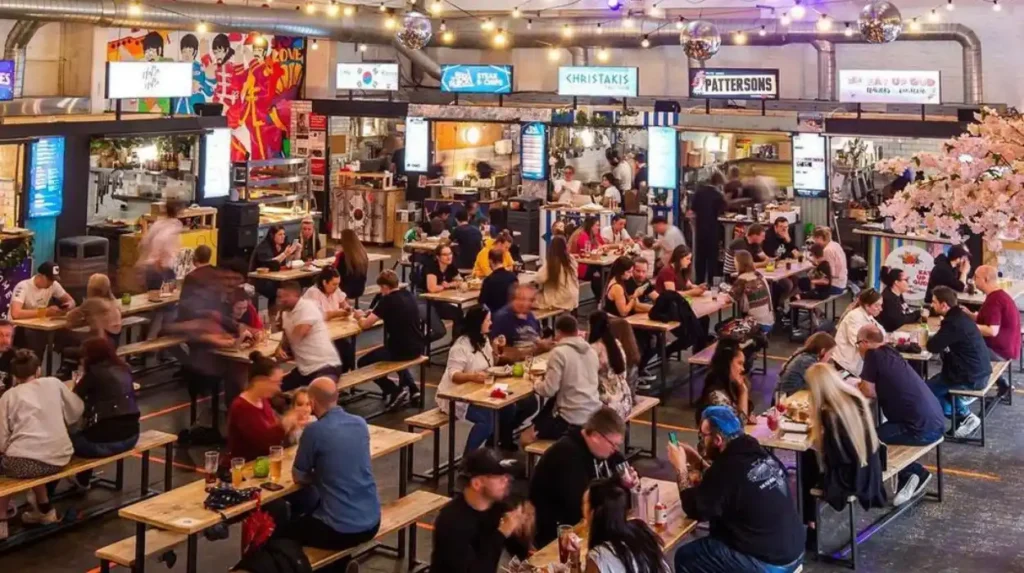
- Street food venues
- Event spaces
- Cultural businesses
This regeneration demonstrates adaptive reuse of historic industrial infrastructure.
Ropewalks
Originally associated with rope manufacturing for sailing ships, Ropewalks evolved into one of Liverpool’s principal nightlife districts.
Historic street patterns survive despite changing commercial functions.
How can friends include football heritage in their Liverpool itinerary?
Football forms an essential component of Liverpool’s cultural identity. Stadium tours, museums, statues, and sporting districts explain how football shaped community life, international recognition, and local identity across more than 130 years.
Liverpool supports two historic football clubs.
Their influence extends beyond sport into urban identity, tourism, charitable initiatives, and international recognition.
Visit Anfield
Anfield has hosted Liverpool Football Club since 1892.
Guided tours explain:
- Stadium development
- Club history
- Major trophies
- Architectural expansion
- Community programmes
The museum preserves artefacts documenting sporting achievements.
Explore Everton heritage
Everton Football Club traces its origins to 1878.
The club’s history reflects broader developments in professional football during the late Victorian era.
Its continuing presence illustrates Liverpool’s long-standing sporting traditions.
Football tourism now contributes substantially to Liverpool’s visitor economy throughout the year.
What seasonal events make Liverpool enjoyable throughout the year?
Liverpool hosts recurring cultural festivals, sporting events, music performances, heritage celebrations, and Christmas activities that provide friends with varied reasons to revisit the city across every season.
The city’s annual calendar reflects its cultural diversity.
Major events strengthen tourism while celebrating local traditions.
Spring introduces outdoor cultural programmes alongside increasing visitor activity.
Summer features waterfront festivals and open-air performances.
Autumn includes heritage events celebrating architecture and local history.
Winter transforms the city centre through seasonal markets, festive lighting, concerts, and public celebrations.
These recurring programmes ensure Liverpool remains an attractive destination regardless of travel season.
How can friends organise an efficient one-day Liverpool itinerary?
A well-planned itinerary combines historic landmarks, museums, waterfront exploration, local dining, music heritage, and evening entertainment. Liverpool’s compact city centre allows groups to minimise travel time while experiencing multiple aspects of the city’s cultural identity.
Begin at the Royal Albert Dock during the morning.
Explore museums before visitor numbers increase.
Walk north toward Pier Head to view the Three Graces.
Continue into St George’s Quarter during the afternoon.
Visit either Liverpool Cathedral or the Metropolitan Cathedral depending upon available time.
Enjoy dinner around Bold Street or the Baltic Triangle.
Finish the evening with live music or theatre.
This sequence follows a logical geographical progression while reducing unnecessary walking.
Why does Liverpool remain one of Britain’s most rewarding destinations for groups of friends?
Liverpool succeeds because centuries of maritime history, architectural preservation, musical innovation, sporting tradition, and cultural investment created an accessible city where heritage and modern leisure complement one another throughout every season.
Unlike destinations focused upon a single attraction, Liverpool presents multiple interconnected historical narratives.
Its medieval origins explain urban foundations.
Its Georgian expansion reflects commercial prosperity.
Its Victorian architecture demonstrates civic ambition.
Its maritime infrastructure records international trade.
Its musical heritage transformed twentieth-century popular culture.
Its football institutions achieved worldwide recognition.
Modern regeneration preserved these historical assets while introducing contemporary restaurants, galleries, creative industries, and public spaces.
National Museums Liverpool collectively care for millions of collection objects, while listed buildings, conservation areas, and restored waterfront infrastructure preserve the city’s architectural legacy for future generations.
For groups seeking memorable shared experiences, Liverpool offers an unusual combination of education, entertainment, accessibility, and historical significance. Friends can explore museums, admire internationally recognised architecture, enjoy waterfront scenery, experience live music, discover independent food districts, and learn about more than eight centuries of urban development within a single visit.
This enduring blend of heritage and contemporary culture ensures Liverpool remains one of the United Kingdom’s most rewarding cities for memorable days out with friends, both this year and for generations to come.
What are the best things to do in Liverpool with friends?
Some of the best activities include exploring the Royal Albert Dock, visiting The Beatles Story, walking along the waterfront, touring Liverpool’s museums, enjoying live music on Mathew Street, visiting the cathedrals, and dining in Bold Street or the Baltic Triangle.