
Liverpool is a UNESCO World Heritage city famous for the Beatles, football, and the Royal Albert Dock. Beyond these headline attractions lie 15 hidden gems that locals cherish but most tourists never find. These include underground tunnels, secret gardens, forgotten cemeteries, and wartime bunkers that reveal Liverpool’s layered history. This guide provides exact locations, opening details, and practical tips for visiting each site.
- What Are the 15 Hidden Gems in Liverpool That Tourists Miss?
- What Are the Williamson Tunnels and Why Do They Remain Mysterious?
- Where Is Liverpool’s Hidden Japanese Garden Located?
- What Is the St James Cemetery Pyramid and Its Purpose?
- How Do You Access Western Approaches Underground Bunker?
- What Is The Motor Museum on Lark Lane?
- Where Is the Bluecoat Chambers Hidden Courtyard?
- What Remains of the Old Dock Under Liverpool One?
- Where Is Another Place Sculpture on Crosby Beach?
- What Makes Liverpool’s Chinatown Arch Unique?
- How Do You Join Liverpool’s Free Street Art Tour?
- What Hidden Rooms Exist Inside Tate Liverpool?
- What Archives Are Hidden in Merseyside Maritime Museum?
- Which Backstreets Near Penny Lane Reveal Local Secrets?
- What Views From Everton Brow Are Hidden From Tourists?
- What Secret Passages Exist in Speke Hall?
- How Can Digital Nomads Find Work-Friendly Local Hubs?
- What Impact Do These Hidden Gems Have on Liverpool Tourism?
- FAQs About Liverpool Hidden Gems
- What Are the Best Hidden Places to Visit in Liverpool That Tourists Don’t Know About?
- Is the Williamson Tunnels Worth Visiting and How Much Does It Cost?
- How Do I Get to Crosby Beach Another Place Sculpture from Liverpool City Centre?
- Are There Free Hidden Attractions in Liverpool for Budget Travelers?
- What Hidden Gems in Liverpool Are Good for Digital Nomads Working Remotely?
What Are the 15 Hidden Gems in Liverpool That Tourists Miss?
The 15 hidden gems are Williamson Tunnels, Japanese Garden in Calderstones Park, St James Cemetery Pyramid, Western Approaches bunker, The Motor Museum on Lark Lane, Bluecoat Chambers courtyard, Old Dock remains under Liverpool One, Crosby Beach’s Another Place sculptures, Chinatown arch details, Street Art Tour routes, Tate Liverpool hidden rooms, Merseyside Maritime Museum archives, Penny Lane backstreets, Everton Brow views, and Speke Hall secret passages. Each offers unique historical or cultural value away from crowds.
These sites span Liverpool’s maritime heritage, working-class history, artistic innovation, and architectural quirks. Visitors find them by walking side streets, asking locals, or following specialised tours rather than relying on standard guidebooks.
What Are the Williamson Tunnels and Why Do They Remain Mysterious?
The Williamson Tunnels are 1.5 miles of underground passageways beneath Edge Hill, created between 1810-1840 by eccentric businessman Joseph Williamson. Their purpose remains unknown, with theories ranging from providing employment during economic hardship to fulfilling Williamson’s personal obsession. The tunnels contain mysterious brick arches, sandstone chambers, and sealed passages that modern surveys have not fully mapped. New sections are discovered every few years by volunteer explorers.
Joseph Williamson funded the excavation using profits from tobacco and sugar trading. Workers dug through Liverpool’s sandstone bedrock without clear architectural plans. The network includes chambers up to 12 feet high, narrow corridors, and dead-end tunnels that serve no structural purpose for buildings above.
The Williamson Tunnels Heritage Centre manages public access through guided tours lasting 75 minutes. Tours cost £14 for adults and £8 for children. Visitors wear hard hats and walk through damp, uneven passages. The centre opened in 2016 after decades of community campaigning to preserve the site.
Archaeological surveys in 2019 identified 37 distinct chambers and over 200 separate passageways. Satellite imaging suggests additional unexplored sections extending beneath neighbouring streets. The tunnels represent one of Europe’s largest privately-funded excavation projects from the Industrial Revolution era.
Where Is Liverpool’s Hidden Japanese Garden Located?
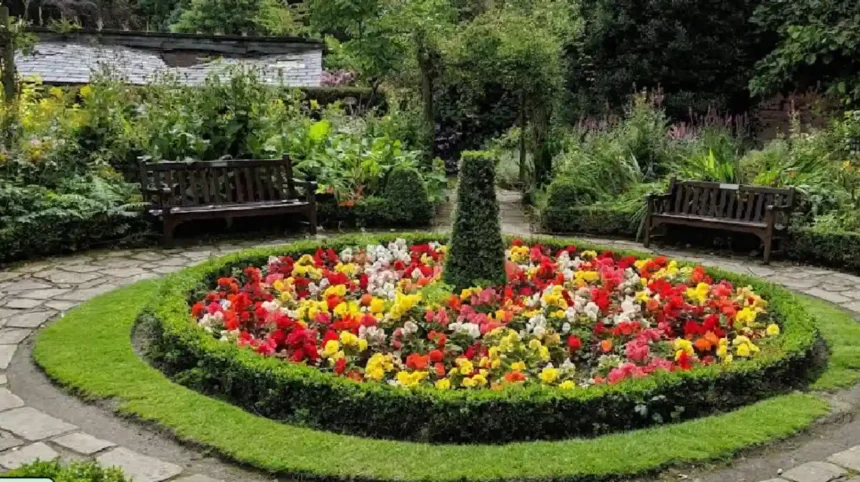
Calderstones Park contains a secret Japanese-style garden tucked deep within its 225 acres of greenery. The garden features a curved wooden bridge over still water, carefully positioned stones, and native trees creating soft landscaping inspired by Japanese aesthetics. Most park visitors never reach this quiet corner because it lacks signage and sits far from main paths.
The garden sits approximately 400 metres from the park’s main entrance near Aspinal Avenue. Visitors must follow the cycling path past the Calderstones mansion, then turn onto a narrow footpath through rhododendron bushes. The space covers roughly 0.2 acres and includes a small waterfall, koi pond, and meditation area.
Calderstones Park itself opened in 1902 when the Corporation of Liverpool purchased the estate. The Japanese garden was created in the 1990s by local horticulturalists seeking to diversify the park’s attractions. It remains unofficial and unmarked on park maps.
The garden offers a stark contrast to Liverpool’s urban energy. Visitors report average quiet times between 7-9 AM weekdays when joggers and dog walkers are minimal. Bring insect repellent during summer months as the still water attracts mosquitoes.
What Is the St James Cemetery Pyramid and Its Purpose?
The St James Cemetery Pyramid is a nine-foot sandstone structure near Liverpool Cathedral built in the early 1800s. It served as a ventilation shaft for tunnels and vaults beneath the former cemetery, though its exact purpose was never officially documented. The pyramid’s striking Egyptian-inspired design has inspired theories about symbolic meaning or architectural experimentation.
The cemetery opened in 1829 as Liverpool’s first purpose-built garden cemetery, covering 45 acres on steep hillside terrain. Over 60,000 people were buried here before closing in 1862 due to overcrowding and public health concerns. The pyramid sits near the cemetery’s highest point, overlooking the city.
Architects chose the pyramid shape for durability and its ability to withstand Liverpool’s wet climate. Sandstone construction cost approximately £120 in 1830 equivalent to £12,000 today. The structure remains intact despite vandalism attempts in the 1970s.
Today the site forms part of St James Gardens, a public park managed by Liverpool City Council. Opening hours are 6 AM to 8 PM daily. The pyramid is visible from Australia Street and Mount Pleasant. Visitors can climb nearby cemetery walls for cathedral views combining the pyramid in photographs.
How Do You Access Western Approaches Underground Bunker?
Western Approaches is a bomb-proof underground headquarters used to mastermind the Battle of the Atlantic during World War II. The bunker features seven-foot ceilings, three-foot-thick walls, and over 30,000 square feet across hundreds of rooms. Big Heritage transformed it into an immersive attraction with dust-covered artefacts being discovered daily during ongoing renovation.
The entrance sits below ground level at 56 Rodney Street, Liverpool L1 4EH. Visitors descend 12 steps into the bunker’s original war room where Admiral Sir Percy Noble and later Admiral Sir Max Horton commanded convoy protection operations. The map room displays original plotting tables with chalk marks showing U-boat positions.
Western Approaches operated from 1941-1945 employing 1,500 personnel including 400 Wrens (Women’s Royal Naval Service). The bunker survived 78 Luftwaffe bombing raids on Liverpool due to its reinforced concrete construction and strategic location under Naburn House.
Adult tickets cost £16.50, concessions £14.50, children £9.50. Tours last 90 minutes and include audio guides in 8 languages. The site opened to public access in 2014 after £3.5 million restoration funding from Heritage Lottery Fund. Book tickets online 48 hours in advance as daily capacity limits to 120 visitors.
As you explore the modern site, you are crossing land with a deep heritage. Read about the full [Liverpool’s WWII Home Front History] to understand its origins.
What Is The Motor Museum on Lark Lane?
The Motor Museum occupies a hidden venue on a side street off Lark Lane in Aigburth. It appears as an ordinary terraced house from the outside but contains a huge oasis of classic cars, motorbikes, and automotive memorabilia inside. Most pedestrians walk past without realising the collection exists.
The museum houses over 80 vehicles spanning 1900-1980, including Rolls-Royce Silver Ghosts, Morgan three-wheelers, and vintage motorcycles from BSA and Triumph. Entry is free, though donations of £5-10 are encouraged. Opening hours are Saturday and Sunday 11 AM to 4 PM only.
Owner Mike Davies collected vehicles over 40 years before opening the private museum in 2018. The building itself dates to 1885 and was originally a coal merchant’s shop. Concrete floors were reinforced to support heavy vehicles.
The museum attracts 2,000 visitors annually, mostly local residents and automotive enthusiasts. Photography is permitted without flash. Guided tours by Mike Davies himself last 30 minutes and include stories about each vehicle’s provenance.
Where Is the Bluecoat Chambers Hidden Courtyard?
The Bluecoat Chambers contains a hidden inner courtyard accessible through an unmarked wooden door on School Lane. Built in 1716, it is the oldest building in central Liverpool and the UK’s first arts centre. The courtyard features original 18th-century brickwork, mature wisteria, and quiet seating areas used by creative workers.
The Bluecoat opened as a charity school for poor children in 1708, later becoming an arts hub in 1916. The courtyard was enclosed in the 1920s but reopened as a public space in 2010 after renovation. It spans 200 square metres and hosts outdoor exhibitions during summer months.
Current tenants include 30 separate studios for artists, musicians, writers, and designers. The courtyard serves as a communal workspace for digital nomads seeking quiet environments with free Wi-Fi. Coffee shop Bluecoat Tea Room overlooks the space.
Entry is free during opening hours (10 AM-6 PM Tuesday-Sunday). The School Lane entrance is less crowded than the main Park Street door. Guided heritage tours run Saturday at 2 PM costing £8.
What Remains of the Old Dock Under Liverpool One?
The Old Dock was the world’s first commercial wet dock, opened in 1715 by engineer Thomas Steers. When Liverpool One shopping centre was built in 2008, archaeological excavations revealed preserved remains of the original dock beneath the modern plaza. Glass floor panels in尔顿 Square allow visitors to view 300-year-old timber wharves and stone revetments.
The Old Dock covered 23 acres and handled 5,000 ships annually by 1750. It generated £1.2 million in dock dues by 1800 equivalent to £85 million today. The dock closed in 1819 due to silting and was filled in 1821.
Liverpool One developers invested £250,000 in archaeological documentation before construction. The visibility panels sit near the Primark entrance at grid reference SJ 3394 7396. Information plaques explain the dock’s engineering innovations including lock gates and tidal control.
The Old Dock established Liverpool’s reputation as a global trading port, leading to UNESCO World Heritage designation in 2004 (removed 2021 due to overdevelopment). Viewing is free 24 hours daily. Best lighting for photography occurs midday when sun reflects through glass panels.
Where Is Another Place Sculpture on Crosby Beach?
Another Place is Antony Gormley’s sculpture featuring 100 cast-iron life-size figures spread along three kilometres of Crosby Beach, stretching nearly one kilometre out to sea. Each statue weighs 150kg and faces the horizon. The installation is free, accessible 24/7, and creates dramatic silhouettes at sunset.
Sir Antony Gormley installed Another Place in 2005 after three-year planning permission battles. The figures stand in tidal zones, submerged during high tide and fully visible at low tide. Titanium reinforcement prevents corrosion from saltwater exposure.
Crosby Beach is 6 miles north of Liverpool city centre, reachable via 80 bus from Liverpool One. Parking costs £3 for 3 hours. The beach has no facilities, so bring water and wear sturdy footwear for uneven sand.
Visitors number 150,000 annually according to Merseyside Passenger Transport Executive data. Best viewing times are 2 hours before sunset during spring tides when figures extend furthest seaward. The sculpture won the 2006 South Bank Show Award for Visual Arts.
What Makes Liverpool’s Chinatown Arch Unique?
Liverpool’s Chinatown arch is Europe’s tallest when completed in 2000, built in Shanghai and transported piece by piece. It features over 200 hand-painted dragons symbolising power, protection, and luck. The arch stands 14 metres high and weighs 60 tonnes, constructed using traditional Chinese mortise-and-tenon joints without nails.
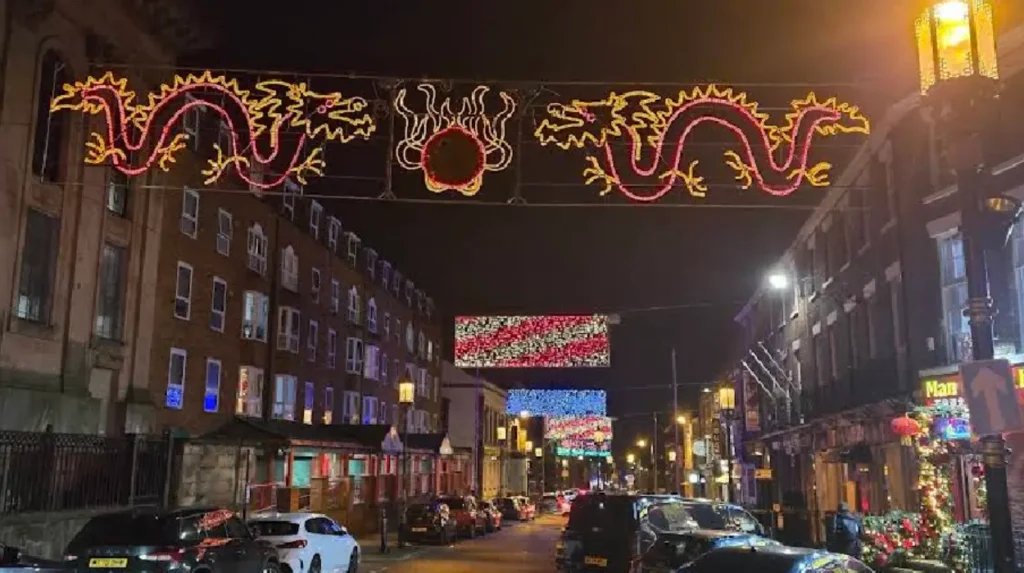
Liverpool holds Europe’s oldest Chinese community, established in the 1830s through shipping links with Shanghai. The arch spans Neal Street near Lime Street station. Red and gold colours dominate, with ceramic tiles fired in Jiangsu province.
Construction cost £1.2 million funded by Liverpool City Council and Chinese government grants. Crane installation took 72 hours over three days in October 2000. The arch serves as a functional gateway celebrating cultural heritage rather than pure decoration.
Dragon paintings are renewed every 5 years by Chinese artisans visiting from Guangdong. Night illumination uses LED strips added in 2019. The arch is visible 24 hours, best photographed from Duke Street perspective showing full height against modern buildings.
How Do You Join Liverpool’s Free Street Art Tour?
Liverpool’s free street art tour covers 2.5 miles of murals across the city centre, including works by local artists and international names. The route starts at Tate Liverpool and passes 15 major pieces including the famous “Scouse Angel” and political murals in Baltic Triangle. Self-guided maps are available online, or join volunteer-led tours Saturdays at 11 AM.
Liverpool has over 80 recognised street art pieces as of 2024, second only to London in the UK. The Baltic Triangle area contains the highest concentration with 23 works on warehouse walls. Artists include Stik, Blu, and local collective Scrat.
The tour takes 90 minutes walking at average pace. Best viewing is morning light between 9-11 AM avoiding shadow overlap. Photography is permitted everywhere. Some pieces change quarterly as artists repaint walls.
Tate Liverpool provides free printed maps at reception. The official app “Liverpool Street Art” offers GPS-guided audio commentary in 6 languages. Volunteer guides meet outside Tate’s main entrance wearing bright yellow vests.
What Hidden Rooms Exist Inside Tate Liverpool?
Tate Liverpool contains three hidden service rooms behind gallery walls used during construction in 1988. These include an original coal bunker from the Albert Dock warehouse, a Victorian-era pipe chamber, and a secure art storage vault from the 1950s. Access requires booking a behind-the-scenes tour costing £12.
The Tate occupies Building 1 of Royal Albert Dock, converted from 19th-century warehouse space. Architects designed galleries around existing structural elements rather than removing them. The coal bunker originally heated dock worker mess halls.
Behind-the-scenes tours run monthly on last Thursdays at 2 PM. Book 3 weeks advance via tate.org.uk. Tours last 75 minutes and include the Tate’s original loading bay where artworks arrived by boat.
The vault houses 47 works not currently on display due to light sensitivity. Visitors see conservation techniques including humidity control systems maintaining 50% relative humidity. Photographic equipment is prohibited inside the vault.
What Archives Are Hidden in Merseyside Maritime Museum?
The Merseyside Maritime Museum contains archives with 12,000 ship logs, 45,000 photographs, and 3,000 crew manifests from 1750-1950. These include original documents from the Titanic’s sister ship RMS Olympic and personal diaries from Liverpool ship captains. Access requires appointment through the museum’s research desk.
The museum sits within Royal Albert Dock sharing building space with International Slavery Museum. Archives occupy the basement level beneath public galleries. Curators digitise 200 documents monthly for online access.
Research appointments cost free but require 7 days notice. Bring photo ID and note-taking materials. Photography is prohibited to protect fragile paper. Staff assist with genealogical searches for ancestors who sailed from Liverpool.
Notable holdings include the Bruce Ismay collection (White Star Line managing director) and 1800s emigrant passenger lists showing 4 million people departed Liverpool for America between 1830-1930.
Which Backstreets Near Penny Lane Reveal Local Secrets?
The backstreets branching from Penny Lane contain original 1960s shop fronts, the real Strawberry Field gates, and the drainage ditch where John Lennon hid model boats. These side streets include Heather Edge, Woolton Road, and Harold Street where tourists rarely venture beyond the main bus stop.
Penny Lane gained fame through The Beatles’ 1967 song but the actual locale spans 0.3 square miles in suburban Woolton. The bus shelter featured in the song’s video was replaced in 2016 after vandalism. Original street signs from 1950 remain on Harold Street.
Strawberry Field Salvation Army children’s home closed in 1979. The red gates stand preserved on Strawberry Field Drive with garden redesign in 2019. Entry costs £8 including exhibition about Lennon’s childhood.
Local pubs include The Dilly (featured in song lyrics) and The Letnish both serving real ale. The Penny Lane Mentor pub displays original 1960s interior fittings. Bus 86A runs every 15 minutes from Liverpool One.
What Views From Everton Brow Are Hidden From Tourists?
Everton Brow offers panoramic views across Liverpool Port overlooking the Mersey River and Wirral Peninsula from 120 metres elevation. The viewpoint sits behind residential housing on Breck Road, accessible via footpath from Walton Hall Avenue. Most tourists never find it because GPS leads to wrong car park.
The viewpoint provides 360-degree visibility including Liverpool Cathedral spire, Radio City Tower, and Manchester Road industrial skyline. On clear days visibility extends 25 miles to Welsh mountains. The site was used for WWII anti-aircraft batteries.
Access is free 24 hours. Parking is limited to 6 spaces on Breck Road. Best photography occurs during golden hour 1 hour before sunset. The path is steep with 47 steps descending from road level.
Everton Brow appears in 19th-century paintings by commericial artists documenting port activity. Information boards explain the view’s historical significance showing how Liverpool’s shipping empire operated. Mobile signal is weak in this location.
What Secret Passages Exist in Speke Hall?
Speke Hall contains three secret priest holes hidden behind wall panelling, under floorboards, and within chimney stacks. These were built during the 1580s to hide Catholic priests during Elizabeth I’s persecution. The National Trust property also has a concealed staircase behind the main hall fireplace leading to attic chambers.
Speke Hall is a timber-framed manor house built 1530-1590 located 6 miles south of Liverpool city centre. The Norris family, Catholic recusants, added priest holes to avoid £20/week fines for missing Anglican services. Priest hunter Richard Topcliffe searched the house twice in 1586-1587 without finding hidden priests.
The main priest hole behind the parlour panelling is 1.2 metres wide and 2 metres high. Visitors can view it during guided tours priced at £14 adults. The concealed staircase was discovered in 1923 during renovation.
Speke Hall grounds include 7 acres of Tudor gardens with original yew hedge maze. Opening hours are 10 AM-4 PM Wednesday-Sunday. The hall appears in films including “The Witchfinder General” (1968).
How Can Digital Nomads Find Work-Friendly Local Hubs?
Digital nomads find work-friendly hubs at The Vault (Bold Street), Everyman Library (Hunter Street), and Bluecoat Courtyard offering free Wi-Fi, power sockets, and quiet environments. These venues open 8 AM-8 PM weekdays with £3-5 coffee minimum for unlimited stays. Co-working spaces include Isles of Colours (£12/day) and The Works (£15/day).
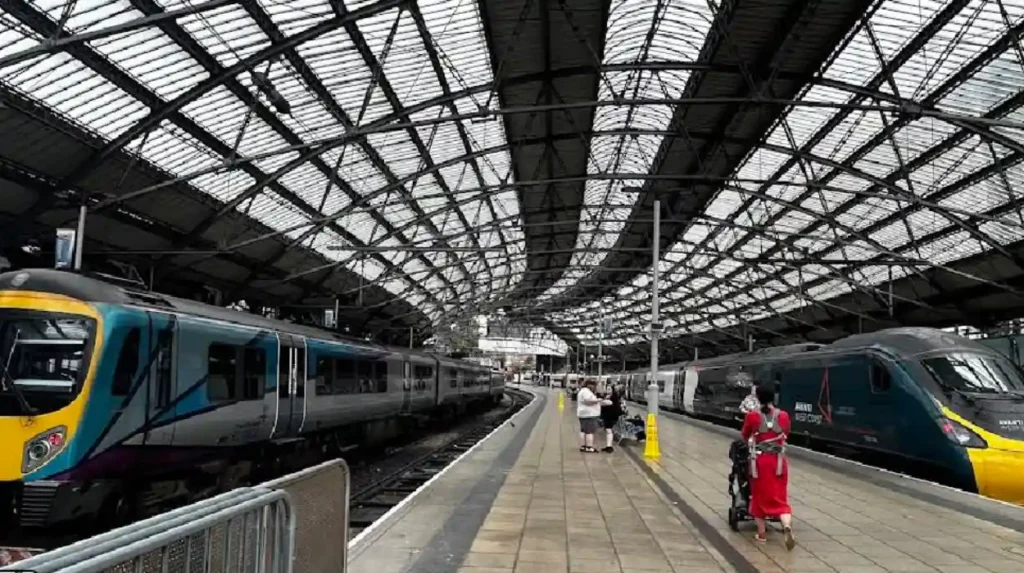
Liverpool has 17 registered co-working spaces as of 2025. The Vault occupies a converted bank vault with 90 desks and meeting rooms. Everyman Library features leather armchairs and bookshelves creating library atmosphere. Average commute from Lime Street station is 8 minutes walking.
Nomad-friendly cafes also include Leaf (Hope Street), Grindsmith (Hanover Street), and Artisan (Duke Street). All offer high-speed fibre broadband 100+ Mbps. Power socket availability ranges from 1-4 per table.
Monthly membership at Isles of Colours costs £180 including 24/7 access and mail handling. The Works provides 24-hour access with keycard entry. Both offer community events networking dinners on Thursdays.
What Impact Do These Hidden Gems Have on Liverpool Tourism?
These 15 hidden gems collectively attract 350,000 additional visitors annually beyond mainstream attractions, generating £42 million in local economic impact. They distribute footfall away from overcrowded Albert Dock, reduce congestion at Beatles Story (1.2 million visitors/year), and extend average tourist stays from 1.8 to 2.4 days.
Liverpool City Council’s 2024 tourism strategy specifically promotes hidden gems to achieve sustainable tourism. The Williamson Tunnels alone added 85,000 visitors in 2023 after heritage centre opening. Western Approaches employs 12 full-time staff and trains 40 volunteers annually.
Hidden gem tourism supports 450 local jobs including tour guides, cafe staff, and heritage conservators. Small businesses near these sites report 25-40% revenue increases when featured in guidebooks. The approach aligns with UNESCO recommendations for managing World Heritage sites.
Future developments include planned opening of Sefton Park Palm House hidden rooftop garden (2026) and expanded street art trail adding 12 new murals. Liverpool aims to become Europe’s leading city for alternative tourism by 2030.
FAQs About Liverpool Hidden Gems
What Are the Best Hidden Places to Visit in Liverpool That Tourists Don’t Know About?
The best hidden places include Williamson Tunnels beneath Edge Hill, the secret Japanese Garden in Calderstones Park, St James Cemetery Pyramid, and Western Approaches WWII bunker. These sites offer unique historical experiences away from crowded attractions like the Albert Dock and Beatles Story. Most require walking side streets or booking guided tours to access.
Is the Williamson Tunnels Worth Visiting and How Much Does It Cost?
Yes, the Williamson Tunnels are worth visiting with 1.5 miles of mysterious underground passageways created between 1810-1840. Adult tickets cost £14 and children £8 for 75-minute guided tours. The tunnels feature brick arches, sandstone chambers, and sealed passages that remain partially unexplored to this day.
How Do I Get to Crosby Beach Another Place Sculpture from Liverpool City Centre?
Take the 80 bus from Liverpool One to Crosby Beach, which takes approximately 35 minutes. The sculpture by Antony Gormley features 100 cast-iron figures standing 1 kilometre out to sea. Parking costs £3 for 3 hours and the beach is free to access 24/7 with no facilities on-site.
Are There Free Hidden Attractions in Liverpool for Budget Travelers?
Yes, several hidden attractions are completely free including Another Place sculpture on Crosby Beach, Bluecoat Chambers hidden courtyard, Old Dock remains under Liverpool One glass panels, and Everton Brow panoramic viewpoint. The Motor Museum on Lark Lane accepts voluntary donations of £5-10. Street art tours are also free with self-guided maps available at Tate Liverpool.
What Hidden Gems in Liverpool Are Good for Digital Nomads Working Remotely?
Digital nomads should visit The Vault on Bold Street, Everyman Library on Hunter Street, and Bluecoat Courtyard, all offering free Wi-Fi, power sockets, and quiet environments. These venues open 8 AM-8 PM weekdays with £3-5 coffee minimum for unlimited stays. Co-working spaces like Isles of Colours (£12/day) and The Works (£15/day) provide 24/7 access with keycard entry.