
Liverpool is a major metropolitan city in North West England, situated along the eastern channel of the Mersey Estuary. The municipality spans a geographic area of 111.8 square kilometres and functions as the commercial, maritime, and cultural anchor of the Liverpool City Region. Historically established as a borough in 1207 by King John, the locality evolved from a small fishing settlement into one of the most prominent international trading ports in the world.
- Why Is the Liverpool Waterfront the Best Place to Start Your Visit?
- How Do You Navigate the Cultural Hubs of Day One?
- Where Can You Experience the Musical Heritage of Liverpool on Day Two?
- How Does the Day Two Retail and Architectural Route Connect to the Central Districts?
- What Monumental Landmarks Define the Day Three Cultural Itinerary?
- How Do the World Museum and Walker Art Gallery Conclude the Tour?
- What Transportation and Practical Systems Should First-Time Visitors Utilize?
- FAQs About First-Time Visitor’s Guide to Liverpool
- What’s the best time of year to visit Liverpool for good weather and fewer crowds?
- How much walking is involved in a 3-day Liverpool itinerary and are there mobility-friendly options?
- Is one day enough to see The Beatles sites, or should I dedicate a full day?
- Which transport ticket or pass is best for tourists staying 72 hours?
- Are Liverpool city centre museums free, and should I pre-book tickets?
Data from the 2024 Scarborough Tourism Economic Activity Monitor (STEAM) report indicates that the Liverpool City Region visitor economy generates £6.251 billion annually and attracts 57.07 million visitors per year. The city contains the largest collection of Grade I listed buildings in the United Kingdom outside of London, alongside major cultural institutions dedicated to music, industrial history, and fine arts. This structural itinerary provides a definitive, high-density operational framework for navigating the primary transit corridors, historic waterfront architecture, and central business districts over a 72-hour period.
Why Is the Liverpool Waterfront the Best Place to Start Your Visit?
The waterfront zone is anchored by the Pier Head, which features the architectural ensemble known as the Three Graces. This trio consists of the Royal Liver Building, completed in 1911; the Cunard Building, constructed in 1917; and the Port of Liverpool Building, erected in 1907. These commercial structures represent the historical administrative headquarters of global shipping lines and transatlantic passenger networks. At the pinnacle of the Royal Liver Building stand two 5.5-metre-tall copper representations of the mythical Liver Bird, which serve as the official symbol of the municipality.
As you explore the modern site, you are crossing land with a deep heritage. Read about the full [historical development of the Port of Liverpool] to understand its origins.
Adjacent to the Pier Head sits the Royal Albert Dock, an industrial complex designed by structural engineers Jesse Hartley and Philip Hardwick. Opened officially in 1846 by Prince Albert, the complex covers a 7.75-acre water basin enclosed by five-story masonry warehouses. The engineering incorporates a structural frame made exclusively of cast iron, brick, and stone, eliminating the use of structural timber to create the first entirely non-combustible warehouse system in the world.
The structural mechanics of the Royal Albert Dock altered global cargo logistics by introducing the world’s first hydraulic cargo handling hoist system in 1848. This innovation allowed cargo ships to unload goods directly into high-security brick warehouses, reducing vessel turnaround times by 50 percent compared to open-wharf designs. The spatial configuration of the dock warehouses currently houses several national museum properties. These institutions include the Maritime Museum, which documents transatlantic migration and mercantile shipping, and the International Slavery Museum, which provides historical analysis of the transatlantic slave trade.
How Do You Navigate the Cultural Hubs of Day One?
The baseline itinerary for the first 24 hours focuses entirely on this waterfront corridor to eliminate unnecessary transit costs and maximize time inside cultural institutions. The morning phase requires a minimum of three hours within the Royal Albert Dock complex. This period accommodates visits to The Beatles Story, an immersive exhibition documenting the chronological history of the musical group from their 1957 formation to their 1970 dissolution, and Tate Liverpool, a major gallery dedicated to modern British and international art.
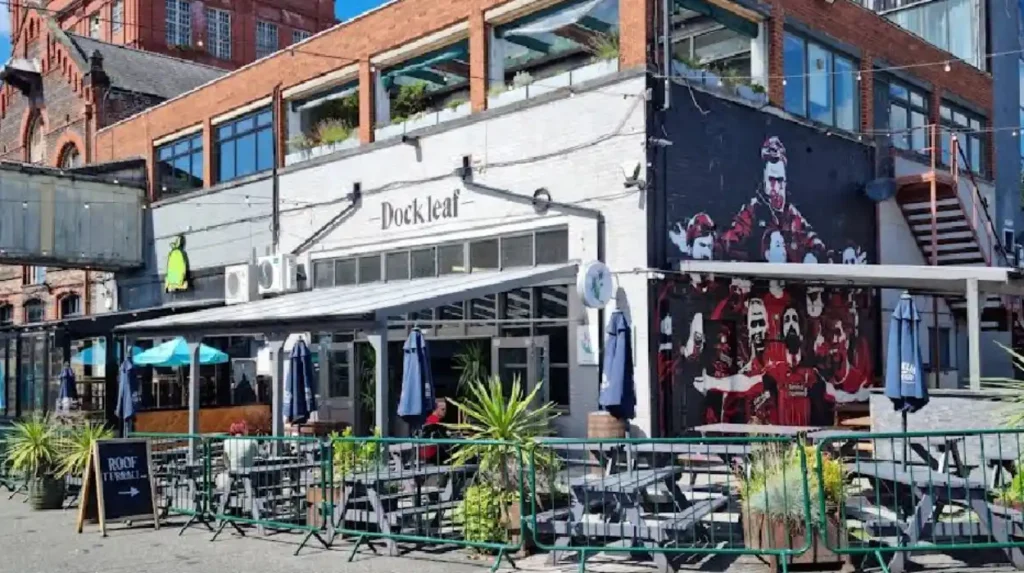
The geographic progression moves southward into the Baltic Triangle district, located exactly one kilometre from the dock gates. The Baltic Triangle is a former nineteenth-century industrial warehouse zone that underwent urban regeneration starting in 2006. The area functions as the primary digital, creative, and independent hospitality hub of Liverpool, supporting over 500 independent businesses, digital agencies, and co-working spaces.
julian wilkinson
The practical mechanism of this district relies on adaptive reuse architectural principles. Large brick structures, such as the former Cains Brewery founded in 1858, now function as multi-use market halls, retail spaces, and food halls. For digital nomads and business travellers, the Baltic Triangle provides numerous work-friendly coffee houses and creative hubs equipped with high-speed fiber-optic infrastructure and public hot-desking zones. This spatial density allows visitors to transition directly from morning maritime history to afternoon creative culture without utilizing mechanical transit.
Where Can You Experience the Musical Heritage of Liverpool on Day Two?
The musical identity of Liverpool is directly linked to the development of the Merseybeat genre, a stylistic fusion of American rock and roll, rhythm and blues, and traditional British skiffle music. The geographic epicenter of this heritage is Mathew Street, located within the central business district. The most prominent structural entity within this quarter is the Cavern Club, which originally opened as a jazz venue in January 1957 before becoming a rock and roll establishment. The original club structure was demolished in 1973 during underground rail construction but was meticulously reconstructed in 1984 using 15,000 original bricks on the exact same geographic footprint.
The historical data confirms that The Beatles performed 292 times at the Cavern Club between February 1961 and August 1963, establishing the venue as an international cultural landmark. The modern streetscape operates as an outdoor museum environment. It features the Liverpool Beatles Museum, which contains over 300 authentic items of historical memorabilia across three floors, including original musical instruments, stage clothing, and unpublished photographs.
The broader systemic implication of this musical heritage is its sustained economic impact on the municipality. Tourism data indicates that Beatles-related tourism contributes over £90 million annually to the local economy and directly supports approximately 2,500 permanent jobs. The preservation of the Cavern Quarter ensures that the micro-history of mid-century British pop music remains an active, revenue-generating urban asset.
How Does the Day Two Retail and Architectural Route Connect to the Central Districts?
The commercial transition begins at Liverpool ONE, an open-air retail and leisure complex that covers 42 acres of the city centre. Completed in 2008 under a major urban regeneration initiative, the development effectively integrated separate shopping streets into a unified architectural layout. The site layout preserves historic street lines while introducing contemporary glass-and-steel retail units, a five-acre public park named Chavasse Park, and specific transport interchanges.
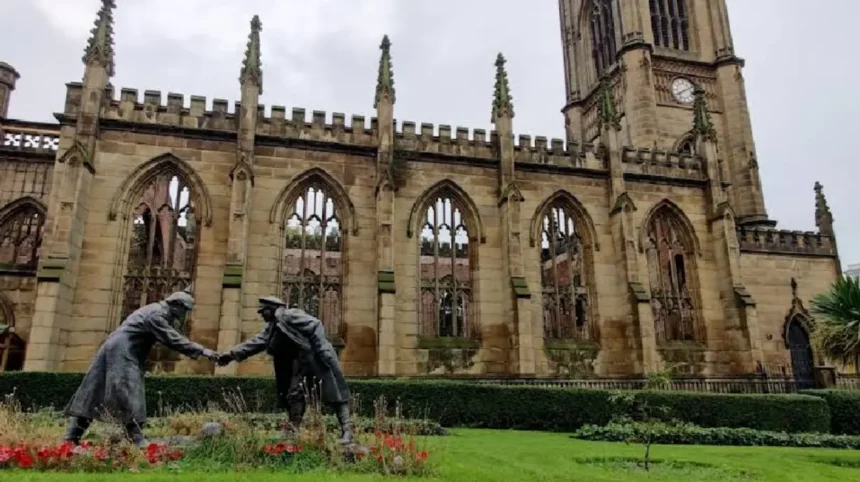
Progressing southeast leads directly to Bold Street, a linear thoroughfare renowned for its architectural heritage and concentration of independent retail businesses. Bold Street sits at a distinct geographic incline, terminating at the prominent monument of St Luke’s Church. Built between 1811 and 1832, the building was severely damaged by incendiary bombs during the May Blitz of 1941, a sustained aerial bombardment by the German Luftwaffe that destroyed over 4,000 houses and killed 1,741 individuals across the city region.
The structural carcass of St Luke’s Church was intentionally left without a roof to serve as a permanent memorial to those who lost their lives in World War II. The site is known locally as the Bombed Out Church and functions as an open-air arts venue, community space, and historic monument. This specific route provides an immediate cross-section of Liverpool’s evolution, showing how modern retail developments coexist with preserved wartime ruins.
What Monumental Landmarks Define the Day Three Cultural Itinerary?
The final 24 hours of the itinerary focus on the elevated ridge that borders the eastern edge of the city centre. This zone is anchored by Hope Street, a 750-metre-long urban corridor that links the city’s two distinct cathedrals. At the southern terminus sits the Liverpool Cathedral, an Anglican institution constructed on St James’ Mount. Designed by architect Sir Giles Gilbert Scott, construction commenced in 1904 and concluded in 1978. The building is constructed from local New Red Sandstone and ranks as the largest cathedral in the United Kingdom and the eighth-largest Christian church building in the world.
The structural metrics of the Anglican Cathedral are significant. The building features an external length of 188 metres, a total floor area of 9,687 square metres, and a central tower that rises to a height of 101 metres. The tower houses the highest and heaviest ringing peal of bells in the world, weighing a combined total of 31.5 tonnes. The interior architecture utilizes monumental Gothic Revival proportions with soaring pointed arches and extensive stained-glass installations, such as the Great West Window.
At the northern terminus of Hope Street stands the Metropolitan Cathedral of Christ the King, the primary Roman Catholic cathedral for the region. Designed by Sir Frederick Gibberd and completed in 1967, the building presents a distinct modernist design. The structure features a circular concrete frame with a diameter of 595 metres, tapering upward to a central lantern lined with stained glass. This circular layout ensures that the altar is positioned at the geometric center of the congregation, a design requirement mandated by the liturgical reforms of the Second Vatican Council.
How Do the World Museum and Walker Art Gallery Conclude the Tour?
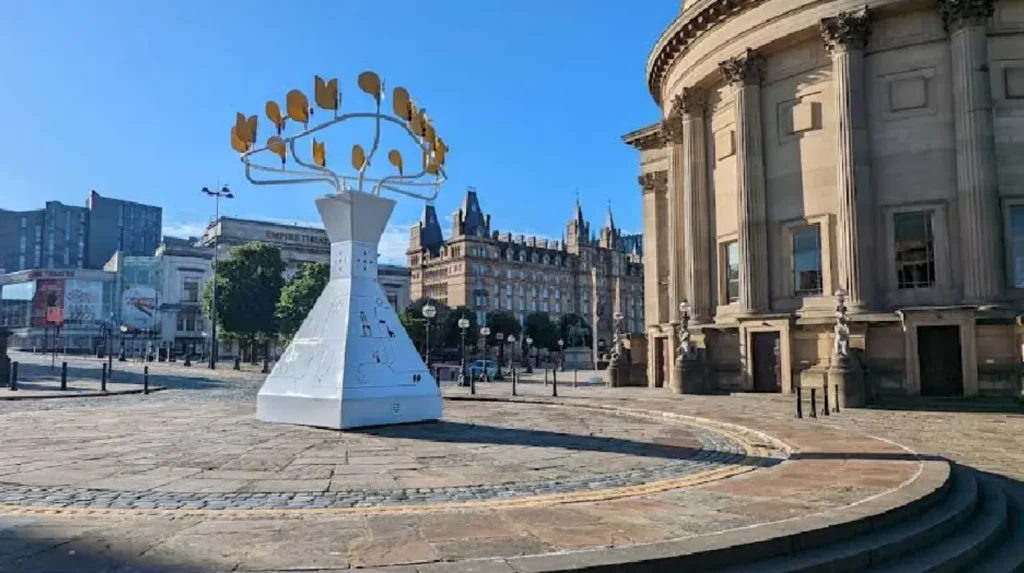
William Brown Street is a unique urban space because it consists entirely of public museums, libraries, and civic buildings designed in the Neoclassical architectural style. This quarter represents the civic investments made by nineteenth-century industrial philanthropists who sought to establish Liverpool as a major center of learning and fine arts. The World Museum, established in 1853, serves as a multi-disciplinary institution housing large collections across natural history, physical sciences, and ancient archaeology.
The internal structure of the World Museum features five distinct public floors. These levels include a dedicated planetarium opened in 1970, a public aquarium focusing on indigenous marine species, and an extensive collection of ancient Egyptian antiquities that ranks among the largest in Europe. The scientific exhibits utilize systematic taxonomy to demonstrate ecological and physical mechanisms to a broad public audience.
Directly adjacent to the museum sits the Walker Art Gallery, popularly referred to as the National Gallery of the North. Opened in 1877 by Sir Andrew Barclay Walker, the gallery contains an extensive collection of European paintings, sculptures, and drawings dating from 1300 to the present day. The permanent collection is particularly noted for its holdings of Pre-Raphaelite masterpieces by artists such as William Holman Hunt and John Everett Millais, alongside High Renaissance oil paintings and contemporary British works. This high-density institutional environment allows visitors to finish their three-day tour with a comprehensive overview of global art and natural history.
What Transportation and Practical Systems Should First-Time Visitors Utilize?
The logistics of navigating Liverpool are simplified by the compact geographic layout of the central core. The majority of primary cultural landmarks sit within a 2.5-kilometre radius, making foot travel the most reliable mode of transit for tourists and business professionals. For longer journeys across the metropolitan region, the principal mechanical transport mechanism is Merseyrail, an urban electric rail network operating 68 stations across two main lines: the Northern Line and the Wirral Line.
The central core is served by four subterranean stations:
- Lime Street Station: The primary terminal for national intercity rail services connecting Liverpool to London, Manchester, and Birmingham.
- Central Station: The busiest underground hub on the network, handling over 15 million passengers annually and providing direct transfers between the Northern and Wirral lines.
- Moorfields Station: Located in the commercial and financial district, serving business travellers and digital nomads accessing local corporate hubs.
- James Street Station: Positioned adjacent to the Pier Head and Royal Albert Dock, providing immediate access to the historic waterfront zone.
The operational efficiency of the city’s transport network is supported by the Merseytravel multi-modal ticketing system. Visitors can purchase a daily “Saveaway” ticket, which provides unlimited off-peak travel on all trains, local buses, and the historic Mersey Ferry services. This structural integration ensures seamless movement between the waterfront, central business districts, and outer tourist hubs like the Anfield Stadium tour in the northern suburb of Anfield or the childhood homes of John Lennon and Paul McCartney in the southern suburbs of Woolton and Allerton. By understanding these transport mechanisms, first-time visitors can execute this three-day itinerary precisely and efficiently.
FAQs About First-Time Visitor’s Guide to Liverpool
What’s the best time of year to visit Liverpool for good weather and fewer crowds?
Spring (April–June) and early autumn (September) strike the best balance: milder weather, longer daylight, and fewer tourists than peak summer. Major events (e.g., football fixtures, festivals) can still spike crowds, so check local calendars and book museums or tours in advance.
How much walking is involved in a 3-day Liverpool itinerary and are there mobility-friendly options?
The core sights sit within a roughly 2–2.5 km radius so expect several hours of walking each day if you follow the itinerary. The city is mostly flat and accessible; museums, Merseyrail stations, and many attractions provide step-free access, mobility scooters, and seating—contact venues ahead for specific accessibility needs.
Is one day enough to see The Beatles sites, or should I dedicate a full day?
Dedicate a full day to properly experience Beatles-related sites Cavern Quarter, The Beatles Story, Beatles Museum, and guided walking tours because each location has detailed exhibits and queues at peak times. If pressed, prioritize The Beatles Story and a Cavern Club visit, then add a walking tour for neighbourhood context.
Which transport ticket or pass is best for tourists staying 72 hours?
A Merseytravel Saveaway day ticket (purchase per day of use) covers off-peak travel on trains, local buses, and the Mersey Ferry and is cost-effective for multiple trips. For single journeys within the city centre, walking is often faster; use Saveaway on days you travel to Anfield, suburbs, or across the Mersey.
Are Liverpool city centre museums free, and should I pre-book tickets?
Many civic museums (World Museum, Walker Art Gallery) offer free general admission but charge for special exhibitions, planetarium shows, or timed entries. Pre-booking is recommended for ticketed exhibits, The Beatles Story, and guided tours to guarantee times and avoid queues.