
The City of Liverpool represents one of the most culturally significant and historically dense urban economies in the United Kingdom. Managing travel expenditure within the Liverpool City Region requires a strategic understanding of its public infrastructure, civic institutions, and municipal policies. In 2026, the city offers extensive opportunities for budget-conscious travellers, digital nomads, and corporate visitors to experience world-class assets without substantial financial layout. By structuring your itinerary around free municipal heritage locations, public galleries, national museums, and subsidised transport networks, you can optimize capital efficiency while exploring the cultural landscape of Merseyside.
- What is the economic context of budget travel in Liverpool?
- Which free museums and art galleries can you visit?
- How can you experience the Beatles legacy for free?
- What free maritime and waterfront activities are available?
- Where are the best free green spaces and parks located?
- Which iconic cathedrals can you tour for zero cost?
- What cheap transit and walking options exist for travellers?
- Where can you find cheap food and budget community spaces?
- How can you explore Liverpool’s historic architecture on a budget?
- What free coastal and hidden day trips are accessible?
- FAQs About Liverpool on a Budget
- Is it possible to visit the Beatles sites in Liverpool without paying for a tour?
- Do national museums in Liverpool charge an entry fee?
- What is the cheapest way to travel around Liverpool and Merseyside?
- Are Liverpool’s famous cathedrals free to enter for tourists?
- Where can I find affordable food or work spaces in Liverpool as a digital nomad?
What is the economic context of budget travel in Liverpool?
Liverpool provides substantial fiscal efficiency for travellers due to a high density of publicly funded national museums, open-access municipal parks, and civic architecture that require zero entry fees, making it a premier low-cost destination in Europe.
The modern infrastructure of Liverpool allows for comprehensive exploration on a minimal budget. National Museums Liverpool manages a vast network of seven distinct venues across the city, funded primarily via government grants and public allocations, ensuring that standard admission remains entirely free for all demographics. This institutional framework ensures that cultural asset distribution is democratic and accessible to international tourists, domestic business travellers, and local residents alike.
Historically, the financial layout of the urban centre stems from its status as a leading global maritime mercantile port during the eighteenth and nineteenth centuries. The wealth generated during this industrial era funded grand civic projects, leaving a legacy of architectural landmarks that today require no admission fees to view or experience. As you explore the modern site, you are crossing land with a deep heritage. Read about the full [Insert Anchor Text for History Article Here] to understand its origins.
The strategic layout of the city center further enhances budget travel efficiency. The geographical distance between major cultural zones—such as the Pier Head, the Royal Albert Dock, and the Knowledge Quarter—is highly compressed, spanning less than two miles. This high pedestrian accessibility completely eliminates the operational necessity for expensive localized transit options, allowing individuals to navigate the city safely and efficiently on foot.
Which free museums and art galleries can you visit?
You can access seven major national museums and art galleries in Liverpool without paying an admission fee, including the Museum of Liverpool, the World Museum, the Walker Art Gallery, and the Lady Lever Art Gallery.
National Museums Liverpool operates the primary public cultural venues within the metropolitan area. The Museum of Liverpool, situated on the waterfront at the Pier Head, is the first national museum explicitly dedicated to the history of a regional city. It houses more than 6,000 objects across multiple floors, delineating the social, industrial, and cultural evolution of the municipality. The architectural structure itself is a piece of modern design that provides free panoramic vistas of the River Mersey through its expansive glass apertures.
The World Museum, located in the civic quarter on William Brown Street, features five extensive floors dedicated to natural history, physical sciences, world cultures, and antiquities. Key structural components include:
- An active public planetarium utilizing digital projection technology.
- A live aquarium showcasing local and exotic marine species, including regional marine life.
- A dedicated dinosaur exhibition area displaying prehistoric skeletal remains.
- An antiquities archive containing more than 80,000 artifacts from ancient civilisations.
The Walker Art Gallery holds the distinction of being the national gallery of the North of England. The collection spans structural periods from the fourteenth century to the modern era, featuring masterpieces by renowned artists such as Rembrandt van Rijn, Dante Gabriel Rossetti, and David Hockney. Concurrently, contemporary art spaces like Tate Liverpool present rotating modern collections on the waterfront, ensuring that visitors can access elite global art movements without financial friction.
How can you experience the Beatles legacy for free?
You can experience the historical legacy of the Beatles for free by conducting self-guided walking tours of iconic public landmarks, including Mathew Street, the Eleanor Rigby statue, the Cavern Quarter, Penny Lane, and Strawberry Field.
The global musical legacy of Liverpool centers heavily on the cultural impact of the Beatles, a pop music group formed in the city in 1960. While dedicated commercial museums charge admission fees, the physical geography of the band’s history remains entirely free to access via the public highway. Mathew Street forms the operational core of the Cavern Quarter, where visitors can view the exterior of the reconstructed Cavern Club and inspect the wall of fame containing the names of musical acts that performed at the venue.
Physical monuments dedicated to the band are positioned throughout the urban landscape. At the Pier Head stands the bronze Beatles Statue, donated by the Cavern Club in 2015 to mark 50 years since the band’s final concert performance in the city. The statue weighs over 1.2 metric tonnes and features individual members cast in precise detail, serving as a primary open-air asset for cultural tourism.
Suburban exploration yields further historical context without commercial cost. Penny Lane, located in the southern suburbs of the city, remains a fully operational public thoroughfare featuring the landmarks referenced in the 1967 song, including the barber shop, the bank, and the shelter on the roundabout. Similarly, the red gates of Strawberry Field in Woolton provide an iconic photographic opportunity and public grounds access without charging a fee, allowing fans to connect directly with the origins of John Lennon’s songwriting.
What free maritime and waterfront activities are available?
You can explore the historic Liverpool waterfront, the Royal Albert Dock complex, the Pier Head, and view the architectural Three Graces completely free of charge throughout the calendar year.
The maritime mercantile infrastructure of Liverpool is central to its identity. The Royal Albert Dock, opened in 1846 by Prince Albert, represents the largest single collection of Grade I listed buildings in the United Kingdom. The dock structural complex features a revolutionary architectural design utilizing cast iron, brick, and stone, eliminating timber support structures to prevent structural fires. Today, the colonnades and open quayside are fully accessible to pedestrians without ticketing systems.
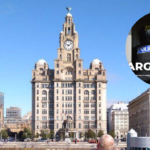
The Pier Head features the absolute pinnacle of early twentieth-century commercial architecture in the city, colloquially known as the Three Graces. These three buildings include:
- The Royal Liver Building, constructed in 1911, featuring two 18-foot tall copper Liver Birds.
- The Cunard Building, constructed in 1917, which served as the headquarters for the Cunard Cruise Line.
- The Port of Liverpool Building, constructed in 1907, known for its grand Edwardian Baroque dome.
Walking along the waterfront pathway allows visitors to view the active maritime traffic on the River Mersey, an estuary tracking into the Irish Sea. For individuals seeking real-world historical data, the surrounding docklands feature historic graving docks, vintage anchor installations, and commemorative plaques outlining the transatlantic trade mechanisms that shaped modern geopolitical history.
Where are the best free green spaces and parks located?
The best free green spaces in Liverpool are Sefton Park, Calderstones Park, and Croxteth Country Park, which together provide over 1,000 acres of open public parkland.
The municipal governance of Liverpool has historically prioritised the preservation of large urban green spaces. Sefton Park is a 235-acre parkland designated as a Grade I historic park by Historic England. The layout features an elegant Victorian design, incorporating a boating lake, winding watercourses, and native British arboreal specimens. The architectural centerpiece is the Sefton Park Palm House, a three-tier grade II listed glass conservatory built in 1896 that houses a botanic collection of exotic plants and holds free public open days.
Calderstones Park, located in the leafy suburb of Allerton, offers 94 acres of highly diverse ecological and historical landscapes. The park contains the ancient Allerton Oak, a tree estimated to be over 1,000 years old, alongside the Neolithic Calderstones—six sandstone monoliths older than Stonehenge that are housed inside a free public exhibition space. This park also serves as an excellent operational hub for digital nomads seeking quiet open-air workspaces with public Wi-Fi infrastructure at the adjacent Reader Organisation café.
Harvey Lawrey
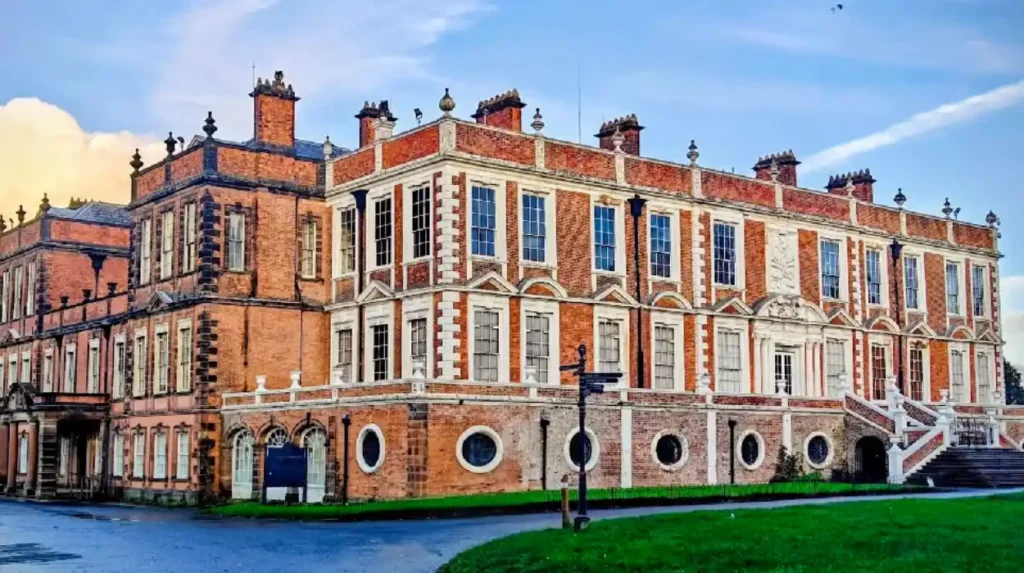
Croxteth Country Park represents a massive 500-acre estate on the eastern edge of the city. The grounds encompass a historic working farm, formal Victorian walled gardens, and extensive nature reserves containing protected native species, including red squirrels and ancient woodlands. Access to the vast trail networks and parkland requires no ticketing, offering long-distance hiking and wildlife observation opportunities to residents and domestic business travellers looking to maximize their downtime between corporate commitments.
Which iconic cathedrals can you tour for zero cost?
You can tour both the Liverpool Anglican Cathedral and the Metropolitan Cathedral of Christ the King for zero cost, experiencing two distinct architectural landmarks situated on Hope Street.
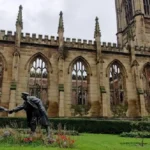
Liverpool possesses two major cathedrals situated at opposite poles of Hope Street, creating a unique theological and architectural axis. The Liverpool Anglican Cathedral is the largest cathedral in the United Kingdom and the fifth largest globally, constructed between 1904 and 1978. Designed by Sir Giles Gilbert Scott, the building utilizes local red sandstone and features a monumental Gothic Revival design style. The interior vault reaches a height of 175 feet, and the central tower rises to 331 feet, dominating the regional skyline. Entry into the main nave is completely free for all members of the public.
At the northern terminus of Hope Street sits the Metropolitan Cathedral of Christ the King, the mother church of the Roman Catholic Archdiocese of Liverpool. Consecrated in 1967, this building represents a stark stylistic contrast to its Anglican counterpart, utilising a modernist, circular design constructed from reinforced concrete and Portland stone. The structural components include:
- A conical tower containing sixteen large stained-glass windows designed by John Piper and Patrick Reyntiens.
- A spacious circular nave capable of seating over 2,000 congregants symmetrically around the central altar.
- A historic crypt designed by Sir Edwin Lutyens during the 1930s, which charges a minimal entry fee but remains a masterpiece of brick architecture.
Touring these structures provides tourists with deep historical, cultural, and artistic insight into the post-war regeneration efforts of Merseyside. Both sites operate active musical schedules, allowing visitors to attend choral services and organ recitals without any financial outlay, delivering an acoustic experience that ranks among the finest in Europe.
What cheap transit and walking options exist for travellers?
You can utilize affordable transit options in Liverpool by obtaining a Merseytravel Saveaway ticket for unlimited regional off-peak travel or by executing highly efficient self-guided urban walking routes.
The spatial economy of Liverpool favors pedestrian movement, but longer excursions require public transport. Merseytravel, the strategic transport executive for the Liverpool City Region, offers integrated ticketing structures that drastically reduce transport outlays. The Saveaway voucher is a cheap, off-peak day ticket that provides unlimited travel on buses, regional trains, and the Mersey Ferries direct commuter services. It allows travelers to access peripheral locations such as Crosby Beach or the Wirral Peninsula for a single low price.
The local rail network, Merseyrail, functions as an efficient underground system within the central business district. Stations such as Liverpool Lime Street, Liverpool Central, Moorfields, and James Street form a loop connecting key tourism nodes. To optimize your financial budget, avoid peak travel hours between 07:00 and 09:30, as well as 16:00 and 18:30 on weekdays, when individual fare structures increase.
For individuals selecting walking routes, the city offers distinct thematic corridors. The Waterfront Trail connects the north docks to the south docks along a flat, paved route spanning five miles. Alternatively, the Heritage Walk begins at the neoclassical St George’s Hall, passes through the historic William Brown Street museum district, and moves down into the commercial center of Liverpool ONE, providing a clear window into the changing architecture of the urban core without costing a single pound.
Where can you find cheap food and budget community spaces?
You can find affordable food and budget-friendly community spaces in the Baltic Triangle creative district, the historic Bold Street food corridor, and various community grocery initiatives across the city.
Sustenance budgeting in Liverpool is highly manageable due to a diverse culinary ecosystem. Bold Street is recognized as the primary culinary street in the city centre, housing a high concentration of independent cafes, international street food vendors, and Middle Eastern bakeries that provide substantial meals for under ten pounds. This street caters extensively to digital nomads and leisure travellers looking for rapid, high-protein food options that avoid the premium pricing structures found in formal hotel dining facilities.
The Baltic Triangle, a formerly industrial warehouse district transformed into a creative and digital cluster, offers communal hubs such as the Baltic Market. This warehouse space functions as a food hall where multiple independent local vendors offer competitive pricing on diverse menu items. The area is highly integrated with tech infrastructure, making it a functional space for remote work sessions during daytime hours when crowd density is low.
For absolute bare-minimum food budgets and social support frameworks, Liverpool hosts several community food networks. Initiatives like the Liverpool Zero Waste network and various community cafes operate on a pay-as-you-feel or heavily subsidized pricing mechanism to redistribute surplus food from major commercial retailers. These systems provide high-quality food solutions while driving sustainable urban food consumption across the wider Merseyside region.
How can you explore Liverpool’s historic architecture on a budget?
You can explore Liverpool’s historic architecture on a budget by taking free self-guided tours of the Georgian Quarter, St George’s Hall, the Bluecoat, and the Stanley Dock Tobacco Warehouse.
The architectural landscape of Liverpool includes thousands of listed buildings, reflecting its historical prominence as a core global trade hub. The Georgian Quarter, located around Rodney Street and Catherine Street, contains one of the largest intact collections of terraced Georgian townhouses outside London. Walking through these cobblestone streets is entirely free and reveals classic architectural details such as ornate fanlights, sash windows, and iron railings that date back to the late eighteenth century.
St George’s Hall, located opposite Lime Street Station, is a monumental neoclassical building opened in 1854. It contains courts of law and a grand great hall, showcasing the immense civic wealth of Victorian Liverpool. While specific guided heritage tours carry a charge, the public can enter the historic building, view the breathtaking architecture, and examine the external Corinthian columns without any structural cost.
The Bluecoat, situated in the heart of the retail district, is the oldest surviving building in central Liverpool, constructed in 1717 as a charity school. Today, it operates as a contemporary arts center with a free-to-enter historic courtyard. This space provides a calm architectural oasis for digital nomads and tourists. Farther north, the Stanley Dock Tobacco Warehouse stands as the largest brick building in the world, containing over 27 million bricks; viewing this colossal monument to industrial maritime history from the public canal pathways costs absolutely nothing.
What free coastal and hidden day trips are accessible?
Dattatreya Ramachandra
You can access free coastal day trips by taking short walks or low-cost train rides to Crosby Beach to see Antony Gormley’s art installation, or by visiting the coastal sand dunes of Formby.
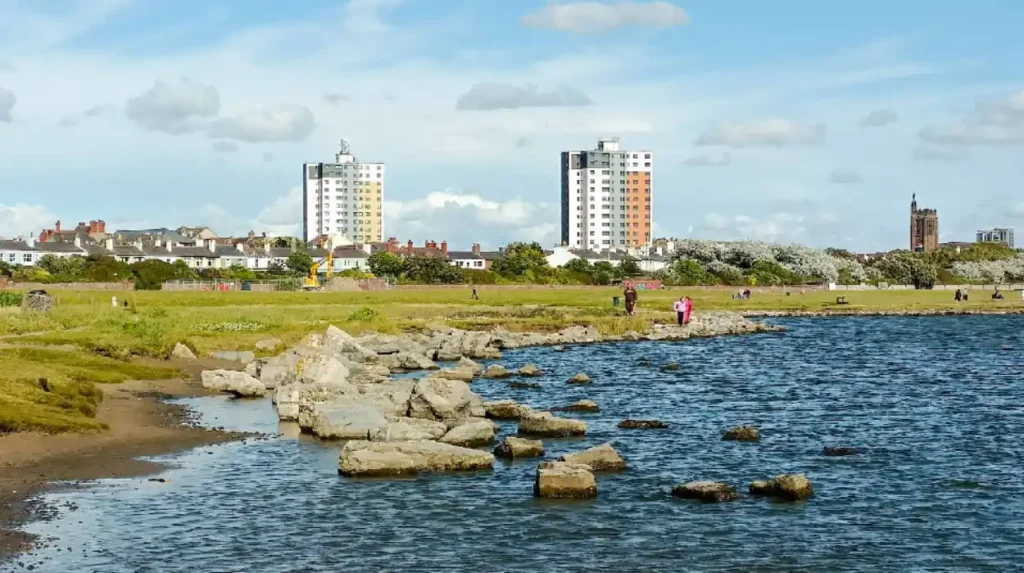
The coastal geography of Merseyside provides exceptional natural attractions that require no entry fees. Crosby Beach, located just north of the city center, is home to “Another Place,” a globally renowned public art installation by sculptor Antony Gormley. The installation consists of 100 cast-iron, life-sized statues modeled on the artist’s own body, spread out along three kilometers of the coastline and stretching up to one kilometer out to sea. Watching the figures interact with the changing tides of the Irish Sea provides a unique cultural experience that is completely free to the public.
Further north along the rail line lies Formby Beach, a coastal nature reserve managed by the National Trust. While parking fees apply to motor vehicles, pedestrian access to the beach and the surrounding pine woodlands is entirely free. The site is a critical ecological habitat featuring:
- Large shifting sand dune systems that are home to rare natterjack toads.
- Pine woodlands that serve as one of the few remaining strongholds for native British red squirrels.
- Prehistoric footprints embedded in the intertidal mudflats, dating back to the Neolithic and Bronze Ages.
For a hidden urban exploration day trip, travelers can head to the Williamson Tunnels in the Edge Hill district. This labyrinth of subterranean tunnels was carved out of the sandstone bedrock during the early nineteenth century under the direction of eccentric tobacco merchant Joseph Williamson. While some fully excavated sections operate guided tours for a small fee, visiting the heritage centers and tracking the public surface routes of these enigmatic engineering works offers an intriguing historical mystery on a minimal budget.
FAQs About Liverpool on a Budget
Is it possible to visit the Beatles sites in Liverpool without paying for a tour?
Yes, you can easily see iconic Beatles landmarks like the Beatles Statue at Pier Head, Mathew Street, and the exteriors of the Cavern Club for free. You can also take a public bus or walk to see the real Penny Lane signs and the gates of Strawberry Field without buying expensive museum or tour tickets.
Do national museums in Liverpool charge an entry fee?
No, the major public museums and galleries in Liverpool are completely free to enter, including the Museum of Liverpool, the World Museum, and the Walker Art Gallery. While some special temporary exhibitions might require a ticket, access to the massive permanent collections costs absolutely nothing.
What is the cheapest way to travel around Liverpool and Merseyside?
The most cost-effective method is walking within the compact city center, combined with a Merseytravel Saveaway ticket for longer distances. This budget-friendly, off-peak day pass gives you unlimited travel on all local buses, regional Merseyrail trains, and the direct commuter Mersey Ferries.
Are Liverpool’s famous cathedrals free to enter for tourists?
Yes, both the Liverpool Anglican Cathedral and the Metropolitan Cathedral of Christ the King offer free entry to the public. Located at opposite ends of Hope Street, these stunning architectural landmarks allow you to explore their massive naves, beautiful stained glass, and historic interiors without any admission fee.
Where can I find affordable food or work spaces in Liverpool as a digital nomad?
Bold Street is the best hub for cheap, diverse street food and independent cafes, while the Baltic Triangle offers excellent communal spaces like the Baltic Market. For peaceful work environments with free public Wi-Fi, the Sefton Park Palm House and the Calderstones Reader Café are excellent, low-cost options.