
Liverpool is one of the United Kingdom’s most historically significant cities. Located on the eastern side of the River Mersey in North West England, Liverpool developed into a major maritime centre during the eighteenth and nineteenth centuries. Today, it attracts millions of visitors each year because of its maritime heritage, music history, architecture, museums, and cultural institutions. Exploring Liverpool does not require a large travel budget. Many of the city’s most important attractions are free or low-cost while still providing access to centuries of history and culture.
- Why is Liverpool considered one of the best budget-friendly cities in England?
- What historic attractions can visitors explore for free in Liverpool?
- How can visitors experience Liverpool’s museums without spending money?
- What is the most affordable way to explore Liverpool’s waterfront?
- How does Liverpool’s music heritage offer value for budget travellers?
- Which neighbourhoods provide the best cultural experience without high costs?
- How can visitors use Liverpool’s parks and public spaces to enhance their trip?
- What transportation options help visitors save money in Liverpool?
- How can travellers combine history, culture, and affordability in a single itinerary?
- Why does budget travel in Liverpool still provide a complete visitor experience?
Visitors can experience Liverpool’s historic waterfront, museums, public spaces, religious landmarks, and cultural districts without sacrificing quality or depth. Understanding how to navigate the city efficiently allows travellers to maximise their experience while controlling costs.
Why is Liverpool considered one of the best budget-friendly cities in England?
Liverpool combines free museums, accessible historic landmarks, walkable neighbourhoods, affordable transport, and public cultural spaces. Visitors can explore maritime heritage, music history, architecture, and UNESCO-recognised areas while spending significantly less than in many major British tourist destinations.
Liverpool’s affordability stems from a long-standing commitment to public cultural access. Unlike many international destinations where museums require substantial admission fees, Liverpool offers free entry to numerous nationally significant institutions.
The city’s development as a major port generated substantial wealth during the eighteenth and nineteenth centuries. That wealth financed many of the civic buildings, museums, libraries, and public institutions that remain accessible today.
Liverpool’s visitor economy benefits from concentrated attractions. The historic waterfront, museums, galleries, shopping districts, and cultural sites are located within walking distance of one another. This reduces transportation expenses.
Tourism statistics published by local authorities consistently show millions of annual visitors. Despite this popularity, Liverpool remains less expensive than many major British tourism centres, particularly for accommodation, attractions, and daily activities.
The city’s compact urban design allows visitors to explore substantial portions of its historic core on foot. This creates opportunities to experience multiple attractions in a single day without purchasing expensive tours.
What historic attractions can visitors explore for free in Liverpool?
Liverpool offers free access to many nationally important cultural institutions, including maritime museums, art galleries, historic waterfront spaces, public monuments, and heritage districts. These attractions preserve evidence of the city’s role in global trade, migration, and cultural development.
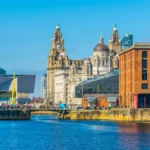
The waterfront represents the starting point for most budget-conscious visitors. The area contains some of Liverpool’s most recognisable landmarks and illustrates the city’s historical importance as a maritime gateway.
The Royal Albert Dock opened in 1846 and was one of the world’s first structures constructed from cast iron, brick, and stone without structural timber. The dock complex demonstrates nineteenth-century engineering innovation and remains one of Britain’s most visited heritage sites.
Walking through the dock area costs nothing and provides access to significant architectural and historical landscapes. Visitors can observe preserved warehouse buildings that once stored goods arriving from around the world.
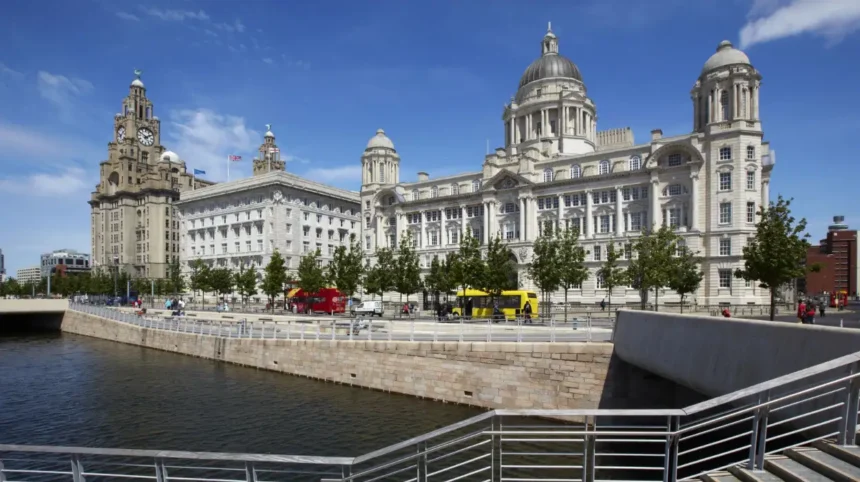
The nearby Pier Head contains the famous Three Graces. These buildings include the Royal Liver Building, the Cunard Building, and the Port of Liverpool Building. Together they represent Liverpool’s commercial prominence during the height of the British Empire.
The waterfront also provides views of the River Mersey, which served as one of the most important shipping corridors in global trade during the nineteenth century.
Liverpool’s public monuments contribute additional historical context. Memorials commemorate maritime workers, military service personnel, and civic leaders who influenced the city’s development.
How can visitors experience Liverpool’s museums without spending money?
Liverpool possesses one of the largest collections of free museums in the United Kingdom. These institutions preserve maritime history, archaeology, social history, international cultures, and regional heritage while remaining accessible to visitors of all budgets.
The Museum of Liverpool documents the city’s social, industrial, and cultural history. Exhibits explore Liverpool’s growth from a small medieval settlement into a major international port.
Archaeological discoveries reveal evidence of settlement patterns dating back centuries. Historical collections demonstrate how trade, migration, and industrialisation shaped local communities.
Merseyside Maritime Museum examines Liverpool’s maritime connections. Exhibits cover merchant shipping, naval history, port operations, and transatlantic migration.
The museum also documents Liverpool’s role in global migration networks. Millions of emigrants departed through the city during the nineteenth and early twentieth centuries.
International Slavery Museum presents evidence-based interpretation of the transatlantic slave trade and its lasting global impacts. The institution contributes to ongoing research and public education regarding slavery and colonial systems.
World Museum contains collections relating to natural history, archaeology, geology, and world cultures. Visitors gain access to scientific and historical information without paying admission charges.
Walker Art Gallery houses works spanning several centuries of artistic development. The collection includes paintings, sculptures, and decorative arts that reflect changing cultural movements.
Together, these institutions create a comprehensive educational experience at minimal cost.
What is the most affordable way to explore Liverpool’s waterfront?
Walking is the most affordable and historically informative method for exploring Liverpool’s waterfront. The route connects major heritage landmarks, museums, public art installations, historic docks, and river viewpoints while providing extensive historical interpretation opportunities.
Liverpool’s waterfront stretches across several historically important districts. Walking allows visitors to observe architectural transitions between different periods of urban development.
Beginning at Pier Head introduces visitors to Liverpool’s commercial heritage. The Three Graces dominate the skyline and demonstrate architectural styles associated with Edwardian civic design.
Moving south toward the Royal Albert Dock reveals preserved warehouse infrastructure. These buildings illustrate how goods moved through Liverpool during the nineteenth century.
Interpretive signs throughout the area explain shipping operations, dock construction methods, and trade routes.
The waterfront promenade also contains public art installations and memorials. These features commemorate significant events and individuals associated with Liverpool’s maritime past.
Seasonal events frequently occur along the waterfront. Many festivals, exhibitions, and cultural celebrations offer free public access.
Visitors seeking additional context can spend time observing dock layouts and preserved industrial features that remain visible throughout the district.
How does Liverpool’s music heritage offer value for budget travellers?
Liverpool’s musical heritage can be explored through public landmarks, historic streets, cultural districts, and affordable attractions associated with The Beatles and the city’s broader music industry legacy. Many significant sites remain accessible without expensive tours.
Liverpool achieved international recognition through its contribution to twentieth-century popular music. The city produced numerous influential musicians and bands.
The most famous musical association is with The Beatles. Formed in Liverpool in 1960, the group transformed global popular culture.
Visitors can explore locations connected to the band without purchasing premium tour packages. The Cavern Quarter contains streets associated with Liverpool’s music scene.
The area surrounding Mathew Street preserves connections to the city’s performance history. Public artwork and commemorative displays provide historical context.
The Beatles Statue at Pier Head remains freely accessible. It serves as one of Liverpool’s most photographed cultural landmarks.
Liverpool’s music heritage extends beyond a single group. During the 1960s, hundreds of bands contributed to the Merseybeat movement, creating a vibrant local music ecosystem.
Many music-related sites can be viewed independently through self-guided walking routes, reducing overall travel costs.
Which neighbourhoods provide the best cultural experience without high costs?
Several Liverpool neighbourhoods offer significant cultural and historical value through public architecture, religious landmarks, markets, parks, and heritage streetscapes. These areas allow visitors to experience local identity without expensive admission fees.
The Georgian Quarter contains some of Liverpool’s finest historic residential architecture. Development accelerated during the late eighteenth and early nineteenth centuries.
Wide streets, Georgian townhouses, and public squares reflect periods of economic prosperity linked to maritime commerce.
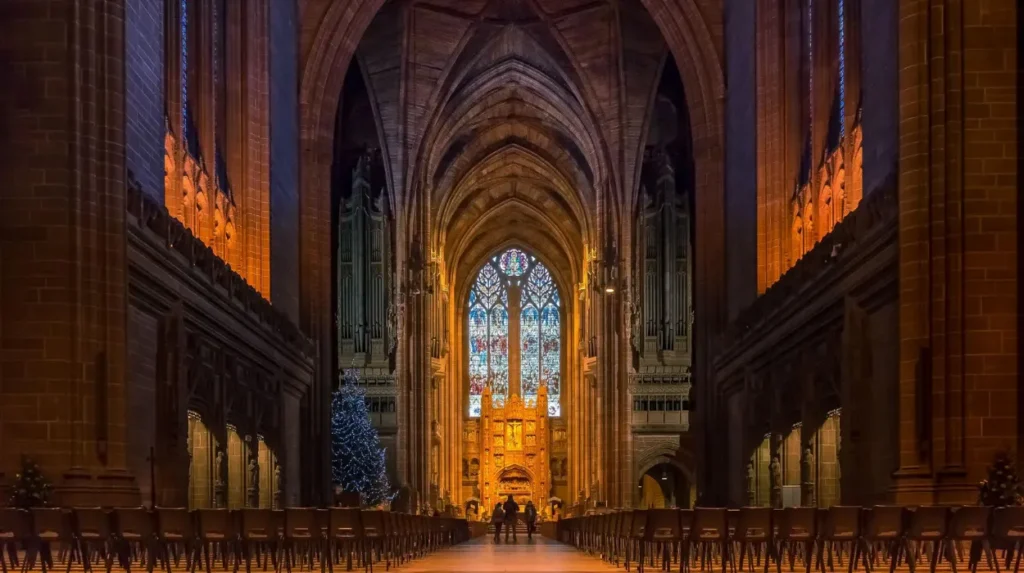
Liverpool Cathedral stands within this district. Construction began in 1904 and continued for decades. The cathedral ranks among the largest religious buildings in Britain.
Visitors can enter much of the cathedral without significant expense while appreciating Gothic Revival architectural design.
The nearby Chinatown represents one of Europe’s oldest Chinese communities. Migration links between Liverpool and China developed through maritime trade networks.
The district contains cultural landmarks, restaurants, and public spaces that illustrate Liverpool’s multicultural heritage.
Baltic Triangle demonstrates contemporary urban regeneration. Former industrial buildings have been adapted for creative industries, cultural venues, and community activities.
Exploring these neighbourhoods on foot reveals layers of Liverpool’s social and architectural history.
How can visitors use Liverpool’s parks and public spaces to enhance their trip?
Liverpool’s parks and public spaces preserve historic landscapes, Victorian planning principles, and recreational traditions. These areas provide free opportunities to experience local heritage, architecture, and environmental design while reducing travel expenses.
Public parks played an important role in nineteenth-century urban planning. Industrial cities increasingly created green spaces to improve public health and recreation.
Sefton Park represents one of Liverpool’s most significant examples. Opened in 1872, it covers approximately 235 acres and reflects Victorian landscape design principles.
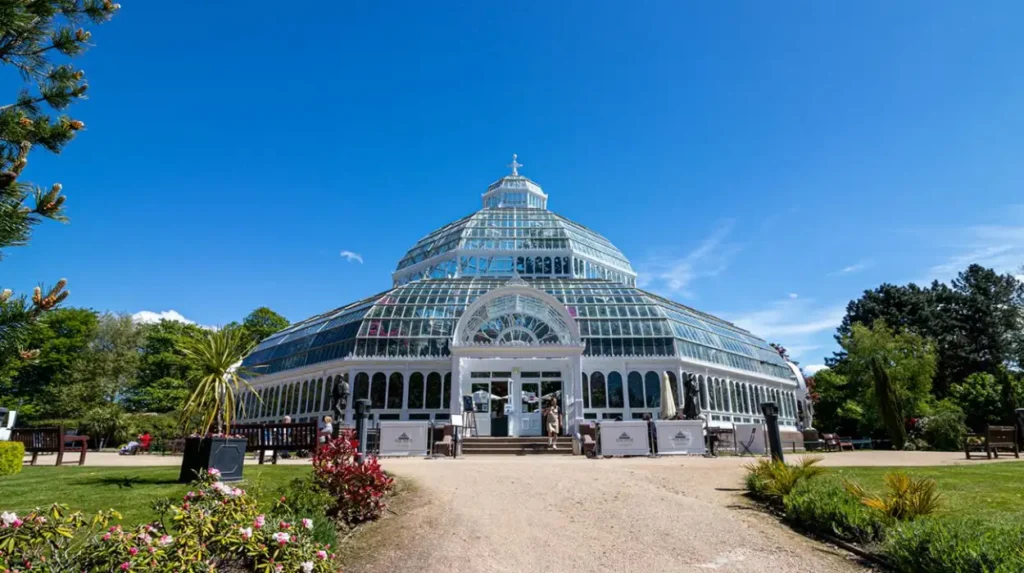
The park contains lakes, pathways, monuments, and the Palm House, a restored glass conservatory structure.
Princes Park also demonstrates nineteenth-century planning innovations. Designed by landscape architect Joseph Paxton, the park influenced later urban park development.
Liverpool’s waterfront spaces provide additional opportunities for recreation and historical observation.
Public squares throughout the city centre contain statues, memorials, and architectural viewpoints that contribute to a deeper understanding of local history.
These locations encourage slower exploration and reduce reliance on paid entertainment.
What transportation options help visitors save money in Liverpool?
Liverpool’s compact city centre, integrated public transport system, and walkable historic districts enable visitors to minimise transportation expenses. Strategic route planning allows access to major attractions without frequent reliance on taxis or organised tours.
Many of Liverpool’s principal attractions are concentrated within the central area.
Walking remains the most cost-effective transportation method. Visitors can comfortably move between the waterfront, museums, shopping areas, and cultural districts.
The Merseyrail network provides efficient regional transportation. Stations connect the city centre with suburban destinations and surrounding communities.
Local buses offer affordable access to locations beyond walking distance.
The Mersey Ferry provides river crossings and waterfront perspectives. Although not free, it often represents a lower-cost sightseeing alternative compared with specialised tourism cruises.
Visitors staying near the city centre frequently discover that transportation expenses remain relatively low compared with other major cities.
Careful itinerary planning reduces unnecessary travel and maximises available time.
How can travellers combine history, culture, and affordability in a single itinerary?
A successful budget itinerary combines Liverpool’s waterfront heritage, museums, cultural districts, parks, and architectural landmarks. Because many attractions are free, visitors can create comprehensive historical experiences while maintaining strict spending limits.
A morning waterfront walk provides insight into Liverpool’s maritime development. Visitors can examine the Three Graces, Royal Albert Dock, and riverfront infrastructure.
The afternoon can focus on museums. The Museum of Liverpool, Merseyside Maritime Museum, and World Museum collectively provide several hours of educational content.
The Georgian Quarter offers architectural exploration and access to Liverpool Cathedral.
Evening visits to cultural districts allow visitors to experience local identity and public spaces.
To experience this historic landmark in person today, consult our comprehensive Top Free Things to Do in Liverpool Without Spending Money for itineraries and visiting parameters.
This integrated approach combines historical education, cultural engagement, and financial efficiency.
Why does budget travel in Liverpool still provide a complete visitor experience?
Liverpool’s historical significance, concentration of free attractions, preserved architecture, public museums, and accessible cultural landscapes ensure that budget travellers receive a comprehensive understanding of the city without major financial barriers.
Liverpool’s history spans medieval origins, maritime expansion, industrial transformation, global migration, and cultural innovation.
The city preserves evidence of these developments through buildings, museums, monuments, public spaces, and neighbourhoods.
Many destinations worldwide require substantial expenditure to access major cultural resources. Liverpool follows a different model. Public institutions remain central to the visitor experience.
The continued preservation of docks, museums, cathedrals, parks, and historic districts allows contemporary audiences to engage directly with the past.
These resources support educators, researchers, students, heritage professionals, and cultural tourists seeking reliable historical interpretation.
Liverpool’s affordability does not diminish the quality of its attractions. Instead, it increases accessibility to nationally significant heritage assets.
As a result, Liverpool remains one of the strongest examples of how a major historic city can deliver educational, cultural, and architectural experiences while remaining accessible to travellers with limited budgets. Its combination of free museums, preserved waterfront infrastructure, music heritage, public parks, and walkable historic districts ensures visitors can explore extensively without missing the landmarks and stories that define the city’s identity.
Are Liverpool museums free to enter?
Many of Liverpool’s major museums are free, including the Museum of Liverpool, Merseyside Maritime Museum, World Museum, and the International Slavery Museum.