

Liverpool is one of the United Kingdom’s most historically significant cities. Located on the eastern side of the River Mersey in north-west England, the city developed into a major maritime, commercial, cultural, and industrial centre during the eighteenth, nineteenth, and twentieth centuries. Its waterfront, civic architecture, museums, religious landmarks, and public spaces preserve centuries of British history while remaining accessible to visitors at no cost.
- Why is Liverpool considered one of the best UK cities for free cultural attractions?
- What can visitors learn from Liverpool’s historic waterfront without paying an entrance fee?
- How does the Royal Albert Dock provide free access to Liverpool’s maritime heritage?
- What free museums offer the best understanding of Liverpool’s history?
- Why is St George’s Hall one of Liverpool’s most important free historic sites?
- What historic churches and cathedrals can be visited for free in Liverpool?
- How do Liverpool’s public parks preserve local history?
- What free art galleries showcase Liverpool’s cultural development?
- How does Liverpool’s music heritage remain accessible without admission fees?
- Why does Liverpool remain an important destination for heritage tourism today?
For travellers seeking cultural experiences without spending money, Liverpool offers a remarkable concentration of free attractions. Historic docks, public museums, architectural landmarks, memorial sites, art galleries, religious buildings, and heritage districts provide opportunities to explore the city’s past and present without an admission fee. These locations also support educational research, heritage preservation, and public understanding of Liverpool’s role in British and global history.
Why is Liverpool considered one of the best UK cities for free cultural attractions?
Liverpool combines nationally significant museums, historic waterfront districts, public monuments, religious landmarks, and heritage streetscapes that can be visited free of charge. The city preserves centuries of maritime, industrial, cultural, and architectural history while maintaining broad public access through publicly funded institutions and open spaces.
Liverpool’s development accelerated during the eighteenth century as transatlantic trade expanded through the Port of Liverpool. By the nineteenth century, the city had become one of the world’s busiest ports. Wealth generated through maritime commerce funded the construction of civic buildings, public institutions, libraries, churches, museums, and galleries that remain accessible today.
A significant factor behind Liverpool’s free attractions is the United Kingdom’s commitment to publicly funded museums. National Museums Liverpool operates several institutions with free entry, enabling residents and tourists to access collections documenting archaeology, transportation, global trade, social history, and art.
The city also contains extensive public heritage landscapes. These include waterfront promenades, civic squares, memorial parks, and conservation areas that preserve architectural evidence of Liverpool’s economic growth during the Industrial Revolution.
Liverpool’s cultural significance extends beyond commerce. The city contributed substantially to music, sport, migration history, social reform, and popular culture. These diverse historical themes are represented through free museums, monuments, and public exhibitions throughout the city.
What can visitors learn from Liverpool’s historic waterfront without paying an entrance fee?
Liverpool’s waterfront reveals the city’s maritime history through historic dock systems, commercial architecture, memorials, public spaces, and surviving port infrastructure. Visitors can examine physical evidence of global trade networks, industrial innovation, and urban development that shaped Britain between the eighteenth and twentieth centuries.
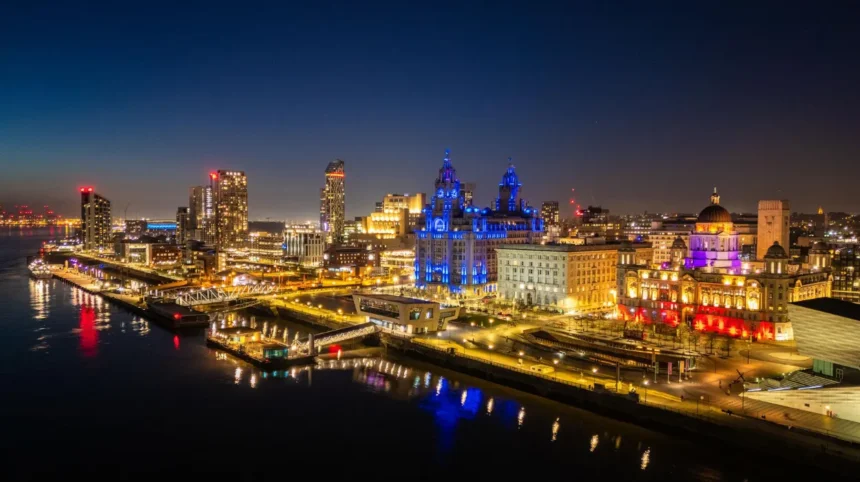
The Liverpool waterfront is among the most recognisable urban landscapes in Britain. Stretching along the River Mersey, it illustrates how maritime commerce transformed a regional settlement into an international trading hub.
The most famous landmark is the Pier Head, which forms part of Liverpool’s historic waterfront district. The area contains the celebrated Three Graces: the Royal Liver Building, the Cunard Building, and the Port of Liverpool Building. Constructed between 1903 and 1916, these structures symbolised Liverpool’s prominence in international shipping and commerce.
The Royal Liver Building remains one of Britain’s earliest large-scale reinforced concrete buildings. Its two Liver Birds have become enduring symbols of the city.
Walking routes along the waterfront allow visitors to observe surviving dock infrastructure connected to Liverpool’s maritime economy. The docks handled commodities including cotton, tobacco, sugar, grain, and manufactured goods throughout the nineteenth century.
Public memorials located along the waterfront commemorate merchant seafarers, naval personnel, and emigrants who departed Liverpool for destinations throughout North America, Australia, and other regions of the British Empire.
To experience this historic landmark in person today, consult our comprehensive How to Explore Liverpool on a Budget Without Missing Attractions for itineraries and visiting parameters.
How does the Royal Albert Dock provide free access to Liverpool’s maritime heritage?
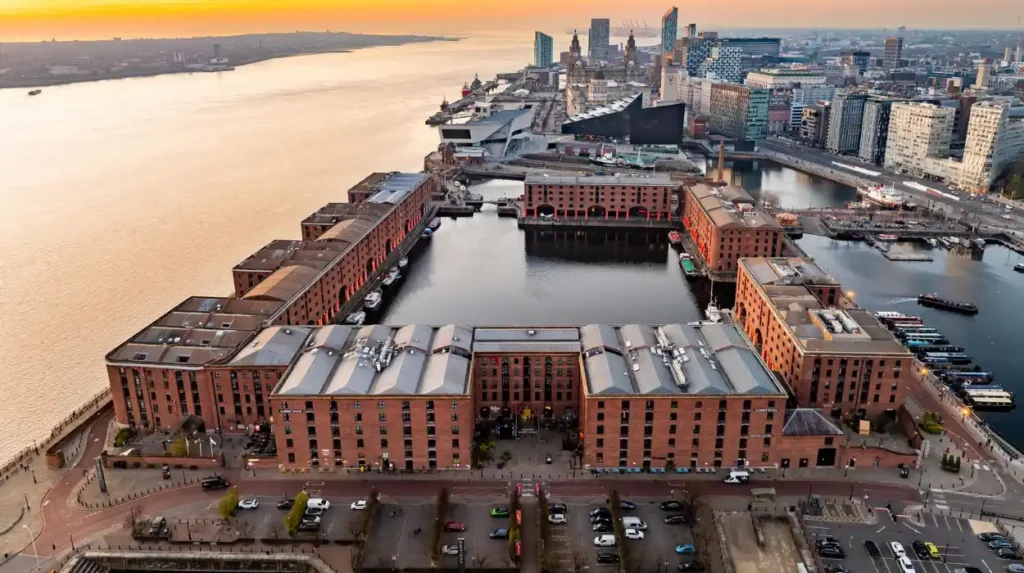
The Royal Albert Dock preserves one of the world’s most important nineteenth-century dock complexes and offers free public access to historic warehouses, waterfront walkways, maritime views, and heritage architecture that illustrate Liverpool’s commercial and industrial development.
Opened in 1846, the Royal Albert Dock represented a major engineering achievement. Designed by Jesse Hartley and Philip Hardwick, the dock became one of the first non-combustible warehouse systems constructed from cast iron, brick, and stone.
The complex was specifically designed to reduce fire risks associated with storing valuable imported goods. This innovative construction method influenced dock architecture internationally.
Today, visitors can walk throughout the dock complex without charge. The massive warehouse buildings demonstrate the scale of Liverpool’s commercial operations during the Victorian era.
Interpretive panels and public displays explain the dock’s historical function within international trade networks. The surviving infrastructure provides direct evidence of how goods were unloaded, stored, and distributed across Britain.
The Royal Albert Dock also offers views of the River Mersey, historic dock basins, and preserved maritime landscapes that help contextualise Liverpool’s economic history.
The site serves as one of the most accessible examples of industrial heritage preservation in the United Kingdom.
What free museums offer the best understanding of Liverpool’s history?
Liverpool’s publicly funded museums provide free access to collections covering archaeology, maritime history, social change, transportation, natural sciences, and international trade. These institutions preserve millions of artefacts that document local, national, and global historical developments.
Museum collections play a central role in understanding Liverpool’s historical significance.
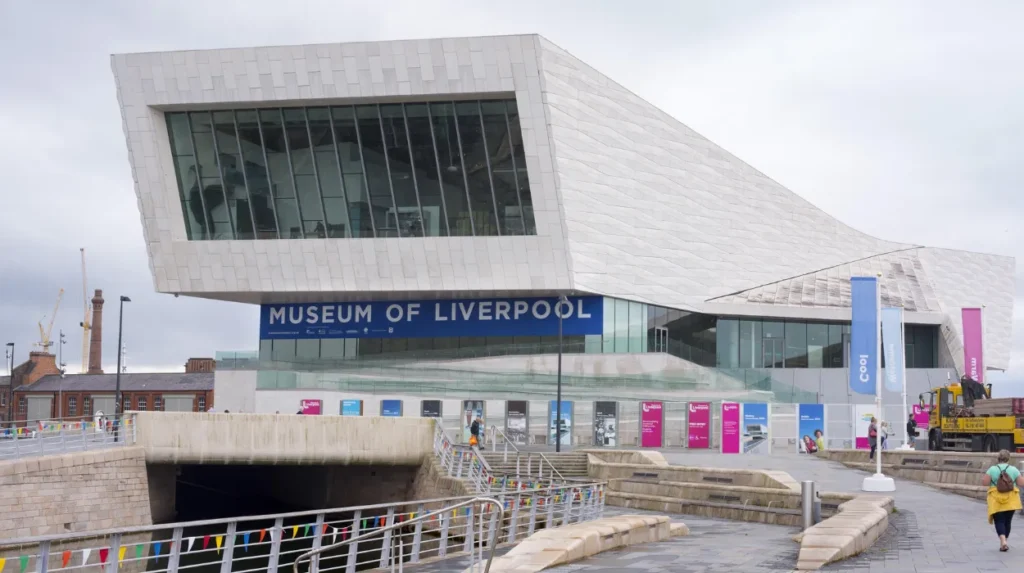
The Museum of Liverpool explores the city’s social, economic, and cultural evolution. Exhibitions examine urban growth, migration, industry, public life, and sporting traditions. Artefacts include historical photographs, transportation objects, civic records, and community archives.
Merseyside Maritime Museum documents Liverpool’s relationship with global shipping. Displays examine merchant trade, passenger travel, naval service, and maritime technology.
The International Slavery Museum presents evidence related to the transatlantic slave trade and its long-term consequences. Liverpool’s involvement in slave-trading networks during the eighteenth century forms a critical part of the city’s historical narrative.
World Museum Liverpool contains collections related to archaeology, natural history, geology, and world cultures. These collections support educational research and public learning across multiple disciplines.
Together, these museums preserve millions of objects that contribute to historical scholarship and public understanding.
Why is St George’s Hall one of Liverpool’s most important free historic sites?
St George’s Hall represents one of Europe’s finest neoclassical public buildings and demonstrates Liverpool’s nineteenth-century civic ambition. Visitors can freely view its exterior architecture, public spaces, and surrounding heritage landscape while learning about governance, justice, and civic identity.
Completed in 1854, St George’s Hall stands as one of Britain’s most celebrated examples of neoclassical architecture.
Designed by architect Harvey Lonsdale Elmes, the building served both judicial and civic functions. Courtrooms, assembly spaces, and public halls operated within a structure intended to symbolise civic authority and prosperity.
The building’s exterior incorporates Corinthian columns, monumental stonework, and symmetrical design principles inspired by classical Greek and Roman architecture.
Its location within Liverpool’s cultural quarter enhances its historical significance. Nearby heritage structures include libraries, museums, railway infrastructure, and educational institutions developed during the nineteenth century.
The surrounding public space hosts commemorative statues honouring political leaders, social reformers, and cultural figures connected to Liverpool’s history.
St George’s Hall remains a central component of Liverpool’s civic identity and heritage conservation efforts.
What historic churches and cathedrals can be visited for free in Liverpool?
Liverpool’s cathedrals and historic churches provide free opportunities to explore religious architecture, urban development, artistic craftsmanship, and community history. These buildings preserve centuries of ecclesiastical traditions while remaining active places of worship and cultural landmarks.
Liverpool contains two internationally recognised cathedral buildings.
Liverpool Cathedral, formally known as the Cathedral Church of Christ, dominates the city skyline. Construction began in 1904 and continued for much of the twentieth century. Designed by architect Giles Gilbert Scott, it remains one of the largest cathedrals in the world.
Visitors can freely enter the main cathedral spaces to observe Gothic Revival architecture, stained glass, monumental stone vaulting, and religious artworks.
The Metropolitan Cathedral of Christ the King represents a striking contrast. Completed in 1967, the building showcases modernist ecclesiastical architecture. Its circular structure and colourful stained-glass lantern create one of Britain’s most distinctive religious interiors.
Historic parish churches throughout Liverpool also preserve local community histories, memorial inscriptions, and architectural features spanning several centuries.
These religious buildings function as important repositories of social and genealogical information.
How do Liverpool’s public parks preserve local history?
Liverpool’s public parks preserve historic landscapes, commemorative monuments, Victorian planning principles, and environmental heritage. These spaces illustrate nineteenth-century approaches to urban improvement while providing free recreational and educational opportunities for residents and visitors.
Urban parks emerged during the nineteenth century as responses to industrialisation, population growth, and public health concerns.
Sefton Park remains Liverpool’s most famous historic park. Opened in 1872, the park covers approximately 235 acres and reflects Victorian landscape design principles.
Its layout incorporates lakes, pathways, ornamental gardens, and recreational areas intended to improve urban living conditions.
Palm House, located within Sefton Park, is a restored Victorian glasshouse that serves as a major heritage attraction.
Other parks preserve memorials dedicated to military service, civic leadership, and local historical events.
These landscapes also contribute to biodiversity conservation and environmental education.
The preservation of historic parks demonstrates how heritage extends beyond buildings to include designed landscapes and public spaces.
What free art galleries showcase Liverpool’s cultural development?
Liverpool’s free art galleries preserve artistic movements, regional creativity, and international collections that reflect changing social, political, and cultural conditions. These institutions provide public access to artworks spanning several centuries of artistic production.
Art collections offer valuable evidence of historical attitudes, values, and cultural trends.
Walker Art Gallery houses one of Britain’s most important public art collections outside London. The gallery contains paintings, sculptures, decorative arts, and works on paper dating from the medieval period to the present day.
Exhibitions document developments in British art, European traditions, and modern creative movements.
The gallery’s collections include portraits, historical scenes, religious artworks, and representations of social life that support academic and educational research.
Additional public exhibition spaces throughout Liverpool showcase local artists and contemporary creative practices.
These institutions contribute to cultural preservation while maintaining public accessibility.
Art galleries therefore complement museums by providing visual records of historical and social change.
How does Liverpool’s music heritage remain accessible without admission fees?
Liverpool’s music heritage can be explored through public landmarks, commemorative sites, streetscapes, and cultural districts associated with influential performers and music industries. These locations document Liverpool’s global contribution to twentieth-century popular music and cultural identity.
Liverpool achieved international recognition as a centre of popular music during the twentieth century.
The city’s most famous musical association involves the band The Beatles. Public locations connected to the group attract visitors from around the world.
Numerous commemorative artworks, statues, plaques, and heritage markers can be viewed free of charge.
The waterfront Beatles statue remains among the city’s most photographed public monuments. Installed in 2015, it recognises the group’s global cultural impact.
Historic neighbourhoods associated with Liverpool’s music scene also reveal broader stories about post-war social change, youth culture, recording industries, and entertainment economies.
Public heritage interpretation throughout the city contextualises Liverpool’s role within national and international music history.
These freely accessible landmarks contribute significantly to Liverpool’s tourism economy.
Why does Liverpool remain an important destination for heritage tourism today?
Liverpool remains a major heritage destination because its historic buildings, museums, waterfront landscapes, cultural institutions, and public monuments collectively preserve more than three centuries of social, economic, maritime, and cultural history that visitors can explore largely without cost.
Heritage tourism depends on the preservation of authentic historical environments.
Liverpool retains a remarkable concentration of surviving historic assets representing multiple periods of British history. These include eighteenth-century commercial districts, nineteenth-century civic architecture, twentieth-century cultural landmarks, and contemporary conservation projects.
Public investment in museums, archives, galleries, parks, and historic sites has ensured broad accessibility.
The city’s heritage resources support educational programmes, academic research, genealogical investigations, and community engagement.
Liverpool also illustrates major historical themes including maritime commerce, industrialisation, migration, urbanisation, religion, architecture, public health reform, and popular culture.
Many cities preserve individual landmarks. Liverpool preserves interconnected historical landscapes that reveal how economic, social, and cultural systems evolved across several centuries.
For visitors seeking meaningful experiences without financial barriers, Liverpool offers one of the most comprehensive collections of free historical and cultural attractions in the United Kingdom. From waterfront promenades and Victorian parks to museums, cathedrals, galleries, and civic monuments, the city demonstrates how heritage preservation can remain accessible to the widest possible audience while continuing to educate future generations about Britain’s maritime and cultural past.
What are the best free attractions to visit in Liverpool?
Some of Liverpool’s top free attractions include the Royal Albert Dock, Museum of Liverpool, Merseyside Maritime Museum, Walker Art Gallery, St George’s Hall, and the city’s historic waterfront.