
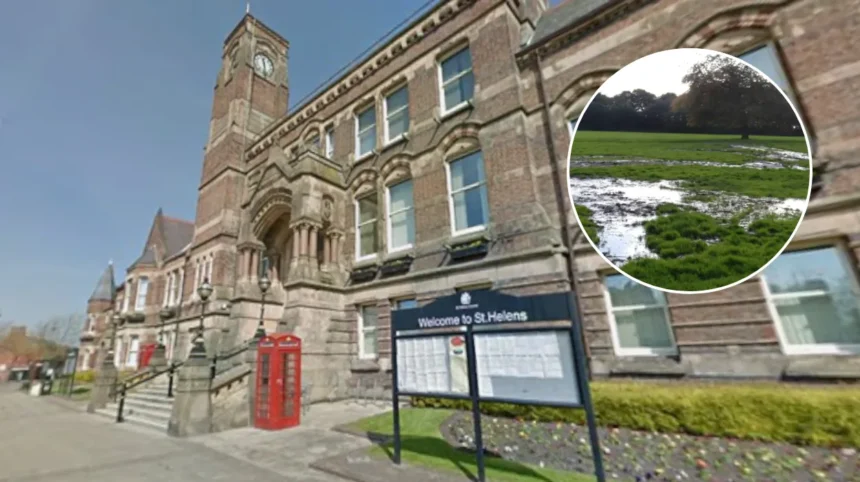
St Helens Council stands as the cornerstone of local governance in the Metropolitan Borough of St Helens, Merseyside, delivering essential services to over 185,000 residents. This metropolitan borough council has evolved through centuries of industrial heritage and modern innovation, ensuring its role remains vital for community well-being.
- Origins of Local Governance
- Formation of the Modern St Helens Council
- Governance Structure and Decision-Making
- Leadership Evolution Over Decades
- Core Services Provided to Residents
- Economic Development Initiatives
- Regeneration and Infrastructure Projects
- Social Care and Community Support
- Environmental and Sustainability Efforts
- Engagement with Residents
- Future Vision and Challenges
Origins of Local Governance
The roots of organized local authority in St Helens trace back to 1845, when improvement commissioners were established to address the town’s rapid growth amid the Industrial Revolution. These early efforts focused on infrastructure like streets, lighting, and sanitation in a landscape dominated by coal mining and glassmaking industries that fueled the area’s prosperity.
By 1868, St Helens had incorporated as a municipal borough, governed by a mayor, aldermen, and burgesses who managed expanding urban needs. This marked a shift to more formal democratic representation, reflecting the town’s status as a bustling hub in Lancashire. The council’s predecessors laid the groundwork for responsible stewardship, handling public health crises and economic booms with foresight that resonates in today’s operations.
Formation of the Modern St Helens Council
The contemporary St Helens Borough Council emerged on April 1, 1974, under the Local Government Act 1972, consolidating several districts including St Helens County Borough, Haydock Urban District, and parts of others into the Metropolitan Borough of St Helens. Elected a year earlier as a shadow authority, it inherited borough status, allowing continuity of the mayoral tradition since 1868.
From 1974 to 1986, Merseyside County Council oversaw upper-tier functions like education and transport, but abolition in 1986 devolved these to St Helens and fellow boroughs, enhancing local autonomy. Since 2014, integration into the Liverpool City Region Combined Authority has amplified regional collaboration without diminishing core local powers.
This structure positions St Helens Council as a resilient entity, adapting to devolution while prioritizing borough-specific needs in a dynamic Merseyside context.
Governance Structure and Decision-Making
St Helens Council operates with 48 councillors representing 18 wards, elected every four years via first-past-the-post in multi-member wards. The full council convenes to approve budgets, policies, and the constitution, electing a leader who heads the cabinet of up to nine portfolio holders for streamlined executive decisions.
Labour has held majority control since 2010, with current composition including 28 Labour, 6 Green, 3 Liberal Democrats, 2 Conservatives, 2 Reform, and 7 independents as of April 2025. The ceremonial mayor rotates annually, symbolizing civic pride, while the leader drives strategy.
Decisions cascade from cabinet and committees to officers via delegation, ensuring efficiency on matters from planning to social care. This leader-and-cabinet model fosters accountability, with the leader representing St Helens on the Liverpool City Region Combined Authority.
Leadership Evolution Over Decades
Leadership has mirrored the borough’s transformations, starting with Len Williams in 1974 through Labour figures like Marie Rimmer, who served multiple terms. Recent leaders include David Baines until 2024 and current Leader Anthony Burns, emphasizing inclusive growth.
Notable tenures, such as Rimmer’s from 1985-1993 and 1999-2006, navigated economic shifts, while Liberal Democrat Brian Spencer led during no-overall-control periods from 2004-2010. Burns’ era highlights annual reports showcasing peer challenges praising council transformation and awards for tech-enabled care.
This lineage underscores stable, progressive governance attuned to residents’ evolving priorities.
Core Services Provided to Residents
St Helens Council delivers over 700 services around the clock, spanning housing, social care, waste management, and public health. Adult social care earned a “Good” rating, supported by innovative tech programs that won iNetwork Awards for enhancing care delivery.
Highways receive substantial investment, with over £17 million pledged for improvements, addressing potholes and traffic flow in key areas. Food waste recycling surveys refine services, while libraries, parks, and planning support daily life.
Council tax assistance, free school meals, and energy efficiency programs like Affordable Warmth aid vulnerable households, embodying the motto “With You, For You.”
Economic Development Initiatives
The Inclusive Growth Strategy, published in June 2023 after extensive consultation, targets job creation and business support. Employment sites like Parkside and Omega advance, promising significant jobs, complemented by Town Deal projects such as the Youth Facility and Health Innovation Hub.
Brownfield funding exceeding £650,000 unlocks housing in Parr, while town centre regeneration in St Helens and Earlestown revitalizes retail and leisure. These efforts counter post-industrial decline, fostering sustainable prosperity.
Regeneration and Infrastructure Projects
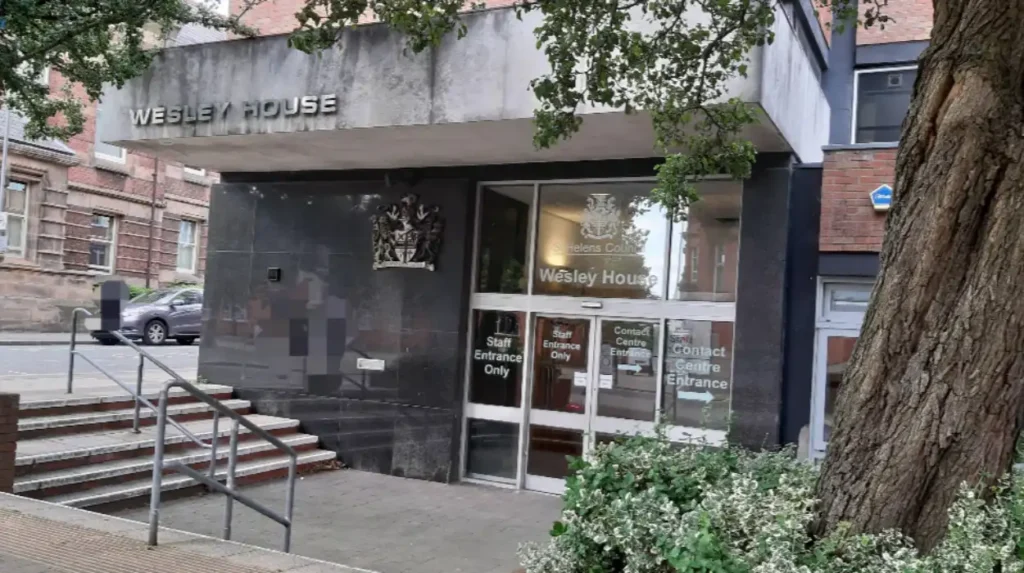
St Helens Town Hall, built in 1876 at Victoria Square, serves as the council’s headquarters alongside Wesley House offices. Recent unveilings honor pioneering female athletes with plaques, celebrating sporting heritage.
Sports fields upgraded to 5G standards and family hubs enhance community facilities. Digital infrastructure bolsters connectivity, aligning with Liverpool City Region goals.
Highway investments and new homes delivery reflect a commitment to resilient infrastructure.
Social Care and Community Support
Tech-enabled care transforms adult services, reducing hospital admissions through monitoring tech. Public health emphasizes local needs assessments, collaborating with NHS on wellbeing strategies.
St Helens Together helpline (01744 676767) aids vulnerable residents, with welfare schemes for housing and energy. Libraries offer resources, reinforcing social cohesion.
Environmental and Sustainability Efforts
Food waste initiatives and energy-saving programs promote recycling and efficiency. Parks like Victoria, acquired in 1886, preserve green spaces amid urban growth.
Highways upgrades incorporate sustainable materials, supporting net-zero ambitions within regional frameworks.
Engagement with Residents
Online forms enable seamless applications for services, from permits to payments. Consultations shape strategies like Inclusive Growth, ensuring resident input.
Transparency via annual reports and peer reviews builds trust.
Future Vision and Challenges
Upcoming 2026 elections will refresh leadership amid ongoing projects. Priorities include housing delivery, economic sites, and service innovation against budget pressures.
Collaboration with Liverpool City Region positions St Helens for growth. The council’s adaptability, from 1845 commissioners to modern authority, promises enduring service.