
Liverpool is internationally recognised for its maritime heritage, musical legacy, and historic waterfront. Beyond its famous landmarks, the city and surrounding region contain lesser-known locations that reveal centuries of social, industrial, religious, and cultural history. These hidden gems provide a deeper understanding of Liverpool’s development from a medieval settlement into one of Britain’s most influential port cities.
- What makes Liverpool’s hidden gems historically significant?
- Which lesser-known historic sites can visitors explore in Liverpool?
- How did Liverpool’s surrounding villages contribute to regional history?
- What unique underground and hidden spaces exist beneath Liverpool?
- Which coastal hidden gems reveal Liverpool’s maritime history?
- How did Liverpool’s industrial heritage create unique visitor experiences?
- What architectural hidden gems showcase Liverpool’s development?
- Why are Liverpool’s hidden gems valuable for researchers and educators?
- How are Liverpool’s hidden gems being preserved for future generations?
- What do Liverpool’s hidden gems reveal about the city’s wider historical legacy?
From forgotten tunnels and Victorian villages to coastal heritage sites and preserved industrial landscapes, these destinations demonstrate how local communities, trade networks, architecture, and innovation shaped Merseyside. Exploring these locations offers valuable insight into the region’s historical evolution while highlighting places often overlooked by mainstream tourism.
What makes Liverpool’s hidden gems historically significant?
Liverpool’s hidden gems reveal important aspects of local history that are often absent from major tourist attractions. They preserve evidence of industrial growth, maritime expansion, religious communities, social reform movements, and architectural innovation that collectively shaped Liverpool and the wider Merseyside region.
Many visitors focus on the city’s internationally recognised attractions, including the waterfront and musical heritage sites. However, Liverpool’s lesser-known locations provide context for how the city developed economically, socially, and culturally.
These sites range from medieval structures and Georgian streets to industrial-era infrastructure and coastal defence systems. Together, they illustrate more than 800 years of continuous human activity across the Liverpool area.
The significance of these locations extends beyond tourism. Many serve as preserved examples of urban planning, engineering, conservation efforts, and community-led heritage preservation. They provide valuable resources for historians, educators, genealogists, and researchers studying Britain’s urban transformation.
Liverpool’s hidden heritage sites also demonstrate the city’s connections with global trade networks, migration patterns, and technological developments that influenced both national and international history.
Which lesser-known historic sites can visitors explore in Liverpool?
Several lesser-known historic sites offer unique perspectives on Liverpool’s past. Notable examples include Williamson’s Tunnels, St James’ Cemetery, Speke Hall, Croxteth Hall, and the Georgian Quarter, each representing different periods and aspects of regional development.
Williamson’s Tunnels
One of Liverpool’s most intriguing heritage sites is the network known as Williamson’s Tunnels.
The tunnels were constructed during the early nineteenth century under the direction of Joseph Williamson, a wealthy tobacco merchant and property developer. Construction began around 1810 and continued for decades.
The exact purpose remains debated among historians. Evidence suggests the tunnels formed part of a large-scale land reclamation and construction project designed to stabilise uneven sandstone terrain.
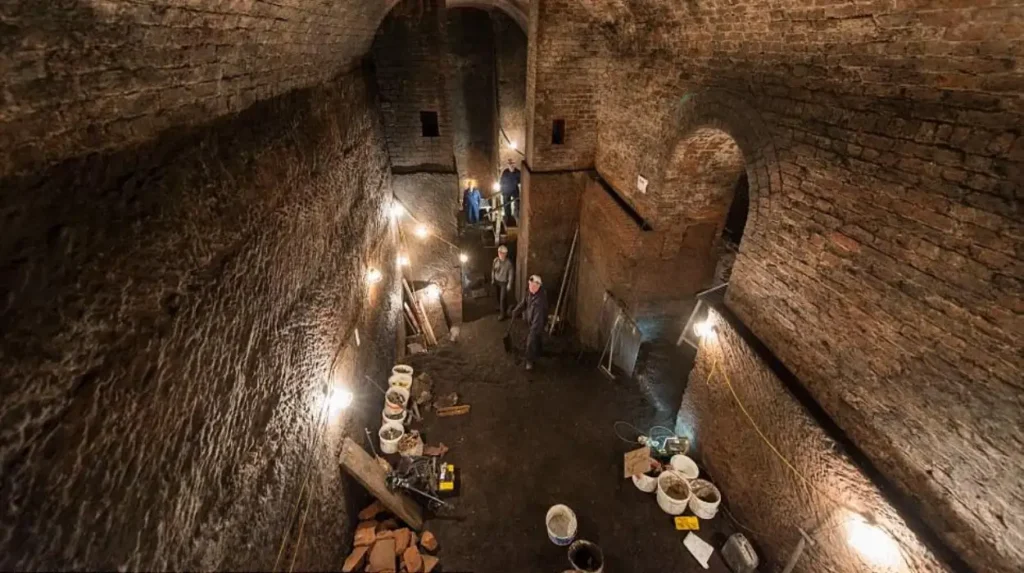
The tunnels consist of chambers, passageways, and vaulted spaces extending beneath parts of the Edge Hill district. Archaeological investigations have uncovered substantial brickwork and engineering features demonstrating sophisticated construction techniques for the period.
Today, sections are preserved and interpreted through guided heritage tours.
St James’ Cemetery
Located within a former sandstone quarry beneath Liverpool Cathedral, St James’ Cemetery represents a unique example of Victorian landscape design.
The cemetery opened in 1829 and contains thousands of burials associated with Liverpool’s nineteenth-century population growth.
Monuments, mausoleums, and memorials provide insight into the city’s social structure, religious traditions, and demographic expansion during the Industrial Revolution.
Speke Hall
Speke Hall is one of the finest surviving Tudor manor houses in north-west England.
Construction began in 1530. The timber-framed building preserves architectural features associated with elite domestic life during the Tudor period.
The surrounding grounds include historic gardens, woodland, and remnants of earlier agricultural landscapes.
Croxteth Hall
Croxteth Hall served as the ancestral home of the Earls of Sefton.
The estate reflects changing patterns of aristocratic life, land management, and rural administration from the sixteenth century through the twentieth century.
Historic interiors, collections, and estate buildings document several centuries of social and economic change.
How did Liverpool’s surrounding villages contribute to regional history?
Historic villages surrounding Liverpool played essential roles in agriculture, industry, religion, and trade. Locations such as Port Sunlight, Hale Village, and uk/local/woolton/">Woolton preserve evidence of community development that predates or complements Liverpool’s urban expansion and commercial success.
Port Sunlight
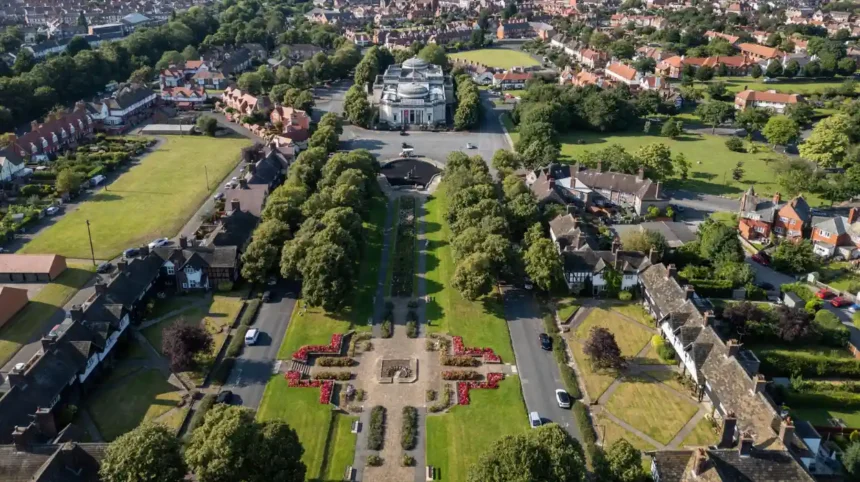
Port Sunlight represents one of Britain’s most important examples of planned industrial communities.
Founded in 1888 by William Hesketh Lever, the village was developed to house workers employed by Lever Brothers.
The settlement incorporated progressive ideas about housing, public health, education, and recreation.
More than 900 buildings contribute to its architectural significance. Styles include Arts and Crafts influences, Neo-Tudor design, and decorative Victorian features.
Port Sunlight remains an important case study in industrial welfare and urban planning history.
Hale Village
Hale Village preserves elements of medieval settlement patterns.
The village is associated with the legendary Childe of Hale, a local figure reputed to have stood more than seven feet tall during the seventeenth century.
Historic cottages, agricultural landscapes, and parish structures illustrate centuries of rural continuity near Liverpool.
Woolton Village
Woolton predates Liverpool’s rise as a major port.
The area contains historic buildings, churches, and conservation zones reflecting medieval origins and subsequent expansion.
Its village centre retains architectural characteristics rarely found within large urban environments.
What unique underground and hidden spaces exist beneath Liverpool?
Liverpool contains remarkable underground spaces created by geology, industry, and urban development. These include Williamson’s Tunnels, former quarry systems, wartime shelters, and subterranean infrastructure that reveal hidden layers of the city’s historical landscape.
Liverpool’s sandstone geology significantly influenced urban development.
For centuries, sandstone extraction supported building projects throughout the region. Quarrying activities created extensive underground voids that later acquired new uses.
Several locations were adapted as storage facilities, workshops, shelters, and transportation corridors.
During the Second World War, portions of Liverpool’s underground infrastructure provided protection during air raids. These spaces form part of the city’s wartime heritage and demonstrate civilian adaptation to conflict conditions.
Archaeological investigations continue to uncover previously undocumented chambers and structures beneath the city. These discoveries contribute to ongoing research into Liverpool’s industrial and urban history.
The preservation of underground heritage remains an important aspect of local conservation initiatives.
Which coastal hidden gems reveal Liverpool’s maritime history?
Liverpool’s coastline contains several historically significant sites connected to navigation, trade, defence, and maritime safety. Locations such as Crosby Beach, Fort Perch Rock, and Hilbre Island illustrate centuries of interaction between local communities and the Irish Sea.
Fort Perch Rock
Fort Perch Rock was constructed during the 1820s.
The fort formed part of a defensive network designed to protect Liverpool’s harbour approaches from naval threats.
Its architecture reflects military engineering practices used during the early nineteenth century.
Today, the structure serves as a museum preserving military and maritime artefacts.
Hilbre Island
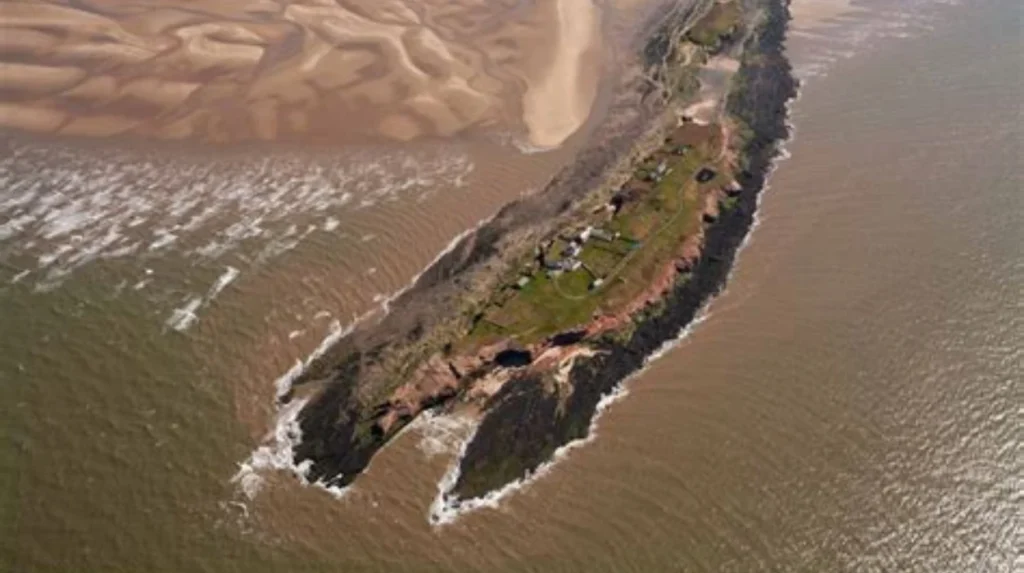
Hilbre Island occupies a strategic location within the Dee Estuary.
Historical records indicate religious occupation, fishing activity, and maritime observation spanning several centuries.
The island’s isolation during high tides creates a distinctive environment that has preserved aspects of its historical character.
Crosby Beach
Crosby Beach has long been associated with coastal trade, fishing, and navigation.
The coastline provides views toward shipping routes that contributed significantly to Liverpool’s economic development.
The beach remains connected to broader themes of maritime heritage and environmental change.
To experience these coastal landmarks in person today, consult our comprehensive [How to Discover Liverpool’s Hidden Gems Beyond Tourist Hotspots] for itineraries and visiting parameters.
How did Liverpool’s industrial heritage create unique visitor experiences?
Liverpool’s industrial heritage generated distinctive landscapes, infrastructure, and communities that remain visible today. Historic docks, warehouses, rail corridors, and worker settlements demonstrate the technological and economic systems that supported one of the world’s busiest ports.
The Industrial Revolution transformed Liverpool into a major commercial centre.
By the nineteenth century, the city operated one of the world’s most extensive dock systems. Goods including cotton, timber, sugar, tobacco, and manufactured products passed through Liverpool’s port facilities.
Industrial expansion stimulated infrastructure development across Merseyside.
Historic railway alignments, canal connections, warehouse districts, and engineering works survive as evidence of this transformation.
Examples include preserved dock architecture, former commercial buildings, and industrial landscapes adapted for modern uses.
These sites demonstrate how transportation networks and technological innovation supported economic growth.
Many former industrial structures now serve educational, cultural, and heritage functions while preserving their historical significance.
What architectural hidden gems showcase Liverpool’s development?
Liverpool contains numerous architectural treasures beyond its most famous buildings. Georgian terraces, Victorian civic structures, religious buildings, and preserved estates reveal changing design trends, economic prosperity, and social aspirations across several centuries of urban growth.
The Georgian Quarter
Georgian Quarter contains one of Britain’s largest collections of Georgian architecture.
Development accelerated between the late eighteenth century and early nineteenth century.
The district reflects Liverpool’s growing wealth generated through international trade and commercial activity.
Townhouses, squares, and public buildings demonstrate architectural principles associated with the Georgian era.
Princes Road Synagogue
Princes Road Synagogue opened in 1874.
The building illustrates the significance of Liverpool’s Jewish community and the city’s multicultural development during the Victorian period.
Its interior contains elaborate decorative features and architectural detailing.
Ancient Parish Churches
Historic churches throughout Merseyside preserve evidence of religious continuity and community identity.
Examples include medieval foundations, Victorian restorations, and memorials connected to local families and notable historical figures.
These structures serve as important repositories of documentary and genealogical information.
Why are Liverpool’s hidden gems valuable for researchers and educators?
Liverpool’s lesser-known historic sites provide primary evidence for studying urban development, migration, industrialisation, architecture, and community life. Their preserved records, landscapes, and structures support educational programmes and scholarly research across multiple academic disciplines.
Liverpool occupies an important position within British historical research.
The city’s archives, heritage sites, and preserved environments document major historical processes including industrialisation, maritime trade, population growth, and international migration.
Genealogists frequently utilise local church records, cemetery registers, municipal documents, and estate archives to reconstruct family histories.
Many hidden heritage sites contain material evidence supporting these investigations.
Educational institutions use local landmarks to teach topics ranging from archaeology and architecture to social history and environmental change.
Field visits allow students to examine historical evidence directly within its original context.
Researchers also study conservation strategies employed across Merseyside to understand best practices in heritage preservation and adaptive reuse.
How are Liverpool’s hidden gems being preserved for future generations?
Historic preservation efforts across Liverpool combine conservation expertise, community involvement, academic research, and heritage funding. These initiatives protect vulnerable sites while ensuring public access, educational value, and long-term sustainability for future generations.
Conservation organisations, local authorities, heritage trusts, and volunteer groups collaborate to preserve historic assets across the region.
Projects frequently involve structural stabilisation, archaeological investigation, archival research, and public interpretation.
Several sites have benefited from national heritage funding programmes supporting restoration and visitor engagement.
Digital documentation has become increasingly important.
Three examples include laser scanning, archival digitisation, and geographic information systems. These technologies create detailed records that assist future research and conservation planning.
Community participation remains essential.
Local volunteers contribute thousands of hours annually to heritage projects, guided tours, educational activities, and archaeological investigations.
This involvement strengthens public awareness of Liverpool’s historical significance and supports long-term preservation objectives.
What do Liverpool’s hidden gems reveal about the city’s wider historical legacy?
Liverpool’s hidden gems reveal the interconnected histories of trade, industry, migration, religion, architecture, and community development. Together, these sites provide a comprehensive understanding of how local events influenced regional, national, and global historical change.
Liverpool’s internationally recognised landmarks represent only part of the city’s historical narrative.
Lesser-known locations preserve evidence of everyday life, technological innovation, social reform, and cultural diversity across multiple centuries.
The tunnels beneath Edge Hill, the planned streets of Port Sunlight, the Tudor architecture of Speke Hall, and the coastal heritage of Hilbre Island collectively demonstrate the complexity of Liverpool’s development.
These sites illustrate how geography, commerce, engineering, and human activity shaped one of Britain’s most historically significant urban regions.
For visitors, researchers, educators, and heritage enthusiasts, Liverpool’s hidden gems provide opportunities to engage with authentic historical environments beyond conventional tourist routes.
Their preservation ensures that future generations can continue to study and understand the forces that transformed Liverpool from a modest medieval settlement into a city of global historical importance.
What are some hidden gems to visit around Liverpool?
Liverpool’s hidden gems include Williamson’s Tunnels, St James’ Cemetery, Speke Hall, Croxteth Hall, Port Sunlight, Hale Village, Woolton Village, Fort Perch Rock, and Hilbre Island. These locations reveal the city’s industrial, maritime, architectural, and social history beyond the main tourist attractions.