
Key Points
- Community Concerns Raised: Podcast host John Hyland challenged Liverpool Council Leader Liam Robinson during a live broadcast, warning that the city’s historic Pride Quarter is “disappearing before our eyes” following successive venue closures.
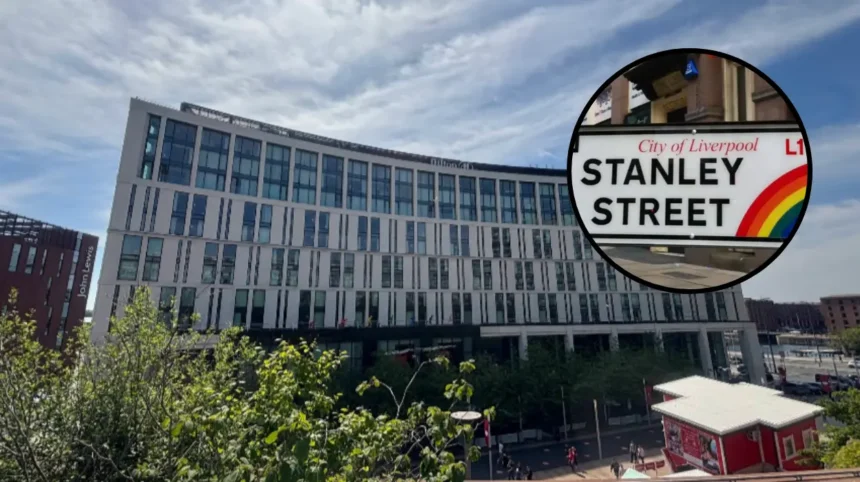
- Geographic Heart at Risk: The area in question spans Stanley Street, Temple Street, Cumberland Street, and Eberle Street, long serving as a vital sanctuary and cultural hub for the LGBTQ+ community.
- Council Pledge: Councillor Liam Robinson vowed that the local authority will “cherish” and actively support the Pride Quarter, promising to collaborate with local operators to safeguard its future.
- Broader Cultural Mission: Robinson emphasised Liverpool’s duty to project a strong, inclusive voice, particularly at a time when LGBTQ+ spaces and rights are facing distinct challenges in other regions across the country.
Liverpool (Liverpool Standard) June 18, 2026 – The leader of Liverpool City Council has vowed to actively “cherish” and protect the city’s historic Pride Quarter following stark warnings from community figures that the dedicated LGBTQ+ enclave is rapidly diminishing. Speaking during a live broadcast, Council Leader Liam Robinson responded to fears that the cultural sanctuary—which spans Stanley Street, Temple Street, Cumberland Street, and Eberle Street—could soon become nothing more than a memory if local authorities do not step in with robust structural and economic support.
- Key Points
- Why Is the Liverpool Pride Quarter Facing an Existential Crisis?
- How Did Council Leader Liam Robinson Respond to the Community’s Fears?
- What Specific Support Can the Local Authority Provide?
- Financial and Planning Safeguards
- Collaborative Cultural Management
- What Is the Broader Context of Disappearing LGBTQ+ Spaces Across the UK?
The political commitment comes in the wake of successive closures of high-profile queer venues across the city centre, a trend reflecting broader economic pressures hitting the nighttime economy nationwide. Local advocates argue that these spaces are not merely commercial bars but vital safe havens that require targeted municipal protection to survive shifting urban developments and escalating operational costs.
Why Is the Liverpool Pride Quarter Facing an Existential Crisis?
As reported by radio presenter Tony Snell of BBC Radio Merseyside, the formal challenge regarding the status of the quarter was brought directly to the council leader during an interactive phone-in session. Podcast host and LGBTQ+ advocate John Hyland dialled into the station to articulate growing anxiety within the community, stating to Liam Robinson that the physical footprint of the safe space is visibly shrinking.
According to the broadcast transcript from BBC Radio Merseyside, John Hyland explained that the Pride Quarter, specifically covering the interconnected network of Stanley Street, Temple Street, Cumberland Street, and Eberle Street, has seen multiple LGBTQ+ venues close down permanently. Hyland expressed an urgent worry that without intervention, the iconic location will “just become a memory” for future generations of queer Liverpudlians.
The economic reality behind these fears is underscored by media analysis from the Liverpool Echo. Writing for the publication, local government reporter Liam Thorp noted that independent hospitality venues across the city have faced a perfect storm of skyrocketing energy bills, increased business rates, and a pronounced drop in consumer spending power over the last few years. For specialized identity-based venues, this financial squeeze is compounded by gentrification and redevelopment pressures in the city core.
Explore More Liverpool Council News
Row Over Plans to Curb City Cycling Scheme: Childwall Liverpool 2026
Major £2M Wavertree High Street Upgrades Confirmed: Liverpool 2026
How Did Council Leader Liam Robinson Respond to the Community’s Fears?
In response to the direct questioning broadcast across the region, the local authority’s leadership sought to reassure the public that the council remains unyielding in its ideological and practical support for the district.
As documented by the production team at BBC Radio Merseyside, Liverpool Council Leader Liam Robinson stated definitively on air:
“When we know that these things have been challenged in other places, it’s Liverpool’s role for us to raise our voices even more.”
Robinson explicitly framed the preservation of the Pride Quarter as a matter of civic duty and historical pride, rather than just a routine urban planning issue. Writing in his subsequent coverage for the Liverpool Echo, journalist Liam Thorp detailed that Robinson insisted the administration would not stand by and watch the quarter dissolve. According to Thorp’s report, Robinson committed the council to a strategy of actively cherishing the area, promising to open direct lines of communication with nighttime economy operators, queer business owners, and community stakeholders to find viable, long-term preservation strategies.
What Specific Support Can the Local Authority Provide?
Financial and Planning Safeguards
While the verbal assurances were welcomed, community members are already pushing for concrete policy actions. Writing for the independent outlet The Post, senior reporter Jennifer Williams observed that local councils face strict statutory limits on directly subsidising private commercial bars. However, Williams noted that Liverpool City Council retains significant leverage through its planning powers and licensing frameworks. By applying specific cultural protections to the Stanley Street quarter, planners could theoretically make it much more difficult for developers to convert historic LGBTQ+ venues into generic residential flats or corporate hotel chains.
Collaborative Cultural Management
Furthermore, as highlighted in a feature by cultural commentator Jay Crame for QueerIO, the solution may lie in formalized public-private partnerships. Crame noted that cities like London and Manchester have successfully utilized “Night Czars” or dedicated queer heritage trusts to shield vulnerable venues from market volatility. Robinson’s pledge to “cherish” the area is expected to be tested in upcoming council budget sessions, where advocates will look for dedicated funding allocations aimed at marketing, street security, and cultural events designed to drive footfall back into the historic quarter.
What Is the Broader Context of Disappearing LGBTQ+ Spaces Across the UK?
The crisis unfolding on Stanley Street is far from isolated, reflecting a structural shift that has alarmed sociologists and urban planners across the British Isles.
National Trends in Venue Closures
According to data compiled by Dr Ben Campkin in a study published alongside the UCL Urban Laboratory, the United Kingdom has lost more than half of its specialized LGBTQ+ nightspaces over the last decade. The report emphasizes that these closures disproportionately impact trans and minority-ethnic queer communities who rely heavily on these physical parameters for safety and mutual aid.
Political Implications for Liverpool
This broader decline is precisely what prompted Councillor Robinson’s passionate declaration regarding Liverpool’s national role. As noted by political correspondent Nick Tyrrell of the Local Government Chronicle, Liverpool has long cultivated a reputation as a progressive bastion of inclusivity, becoming the first UK city to officially recognize a designated pride district with municipal signage and pink-crested street furniture. Tyrrell wrote that for Robinson’s administration, allowing the Pride Quarter to erode would represent a significant blow to the city’s progressive branding and its lucrative cultural tourism sector, which draws thousands of international visitors annually for the Liverpool Pride celebrations.