

Key Points
- Liverpool City Council has rejected Unite Students’ proposal to add 36 cluster bedrooms at Arrad House
- Planning officers ruled the scheme would result in “substandard” and “over intensive” student accommodation
- The proposal would have increased bed capacity from 74 to 110 bedrooms across first, second and third floors
- The decision notice states the development would “fail to deliver a high standard of accommodation”
- Planning application reference number 26F/0235 can be viewed on Liverpool City Council’s planning portal
- Falconer Chester Hall advised on design while ROK Planning handled planning matters for Unite Students
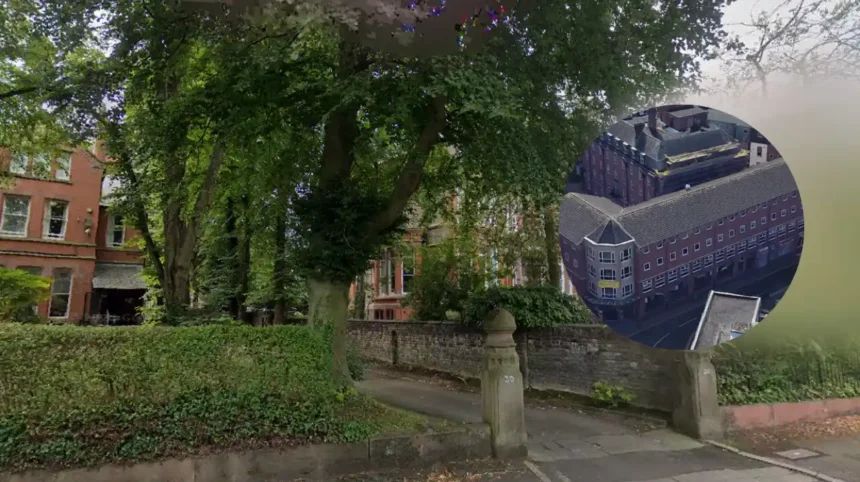
Liverpool Council (Liverpool standard) July 23, 2026 – A bid to increase the number of bedspaces at one of eight buildings at Unite Student Village has been turned down after officers ruled the proposal would result in “substandard” student accommodation. Arrad House in the city’s cultural quarter had been in line for a facelift and extension under plans lodged by the PBSA (Purpose-Built Student Accommodation) provider. Unite Students wanted to add 36 cluster bedrooms – 20 on the first floor and eight on each of the second and third floors – taking the total number of student beds within the building from 74 to 110.
- Key Points
- Why Did Liverpool City Council Reject the Arrad House Expansion Plans?
- What Specific Concerns Did Planning Officers Raise About the Proposal?
- How Does This Decision Fit Liverpool’s Recent Planning Pattern for Student Housing?
- What Are the Professional Advisors and Next Steps for Unite Students?
- Background: The Unite Student Village Development Context
- Prediction: How This Decision May Affect Students and Accommodation Providers
According to reporting by Place North West, the Unite Student Village comprises eight buildings providing 797 student bedrooms across the complex in Liverpool’s cultural quarter. Arrad House represents one component of this larger development, originally designed to accommodate 74 students. The proposed expansion would have represented a significant increase in capacity, adding nearly 50 per cent more bedrooms to the existing building.
Why Did Liverpool City Council Reject the Arrad House Expansion Plans?
However, the plans did not pass muster with Liverpool City Council’s planning team. In a decision notice confirming refusal of the plans, the scheme is criticised as “over intensive”. The decision notice states:
“The proposed development would result in a poor quality and substandard form of purpose-built student accommodation… As such, the development would fail to deliver a high standard of accommodation and would not function well for future occupants.”
The council’s planning officers identified several fundamental concerns with the proposal. The primary objection centred on the intensity of the proposed development relative to the building’s existing footprint and infrastructure. Officers determined that increasing capacity from 74 to 110 bedrooms would compromise living standards and create an overcrowded environment unsuitable for quality student accommodation.
As reported by journalists covering the initial application submission, the proposal involved relocating existing staff offices and reception facilities from the first floor to create additional student bedroom clusters. Currently, the first floor of Arrad House comprises three five-bedroom clusters, staff offices and welfare facilities and the Unite Student Village reception. The proposal sought to relocate the staff offices and reception and re-purpose this space to create additional clusters of student bedrooms.
What Specific Concerns Did Planning Officers Raise About the Proposal?
Liverpool City Council’s planning decision notice identified multiple specific concerns that led to the refusal. The description of the scheme as “over intensive” suggests officers believed the proposed density of accommodation exceeded acceptable standards for purpose-built student accommodation. This assessment aligns with the council’s recent pattern of scrutinising student housing developments more rigorously, particularly proposals that might compromise living quality in pursuit of increased capacity.
The decision notice’s statement that the development would “fail to deliver a high standard of accommodation” indicates officers found the proposed bedroom clusters, communal facilities, or overall building configuration inadequate for the increased occupancy. The notice further states the development “would not function well for future occupants”, suggesting concerns about practical living arrangements, circulation space, or support facilities within the reconfigured building.
To accommodate the proposed internal changes to Arrad House, a series of minor amendments were required to the building’s elevations. This includes adjusting the size, proportion and type of window to ensure that the newly created student bedrooms receive sufficient daylight and ventilation, according to reporting by GSL Global. However, these external modifications proved insufficient to address the council’s fundamental concerns about the internal reconfiguration’s impact on living standards.
How Does This Decision Fit Liverpool’s Recent Planning Pattern for Student Housing?
The refusal of Unite Students’ Arrad House application follows a series of recent planning decisions in Liverpool that demonstrate increased scrutiny of student accommodation proposals. In July 2026, Liverpool City Council rejected a proposal for a 35-bed house of multiple occupation in Childwall, citing poor living conditions including inadequate light, insufficient communal areas, and excessive occupancy per kitchen facility.
As reported by the Liverpool Echo regarding the Childwall refusal, planning officials noted that “the proposed living conditions for existing/future residents are/would be poor by reason of poor light and outlook to bedrooms, poor levels of privacy, lack of communal lounges/living areas, and too many people per kitchen.” This reasoning mirrors concerns raised in the Arrad House decision, suggesting a consistent approach by council planners toward student housing quality standards.
The council’s decision may also reflect broader concerns about student accommodation quality in Liverpool. Historical reporting by MerseyNewsLive documented student complaints about substandard living conditions in various properties, including issues with damp, maintenance, and facility adequacy. The Arrad House refusal signals the council’s commitment to preventing similar problems in future purpose-built developments.
What Are the Professional Advisors and Next Steps for Unite Students?
Falconer Chester Hall advised on design and ROK Planning advised on planning matters for Unite Students on the Arrad House proposal. Both firms specialise in property development consultation, with Falconer Chester Hall providing architectural and design expertise while ROK Planning handled the planning application process and liaison with Liverpool City Council.
Unite Students, as one of the UK’s largest purpose-built student accommodation providers, operates extensive portfolios across university cities. The company’s Liverpool Student Village represents a significant investment in the city’s student housing infrastructure. The refusal of the Arrad House expansion plans may prompt the provider to reassess its development strategy for the site, potentially considering alternative approaches to capacity expansion or focusing on other properties within the complex.
To learn more about the specific details of the planning application and decision, interested parties can search for reference number 26F/0235 on Liverpool City Council’s planning portal. The portal provides access to application documents, officer reports, and the formal decision notice outlining the council’s reasoning for refusal.
Background: The Unite Student Village Development Context
The Unite Student Village in Liverpool’s cultural quarter represents a significant investment in purpose-built student accommodation. The complex comprises eight buildings providing 797 student bedrooms across the development, serving students from Liverpool’s multiple higher education institutions. Arrad House forms one component of this larger development, originally designed with integrated administrative offices, reception facilities, and welfare spaces to support resident students.
Unite Students announced plans for the Arrad House reconfiguration in February 2026, as part of broader efforts to optimise existing accommodation stock. The proposal reflected industry-wide pressures to maximise capacity within existing building footprints, particularly in city centres where land availability for new construction is limited. The cultural quarter location places the development within walking distance of University of Liverpool campus and city centre amenities, making it a strategically important site for student accommodation provision.
Prediction: How This Decision May Affect Students and Accommodation Providers
The refusal of Unite Students’ Arrad House expansion plans is likely to affect multiple stakeholders in Liverpool’s student housing market. For students, the decision means one fewer opportunity to increase accommodation capacity in a city where demand for quality student housing consistently exceeds supply. With the proposed expansion would have added 36 bedrooms to the existing 74, the refusal maintains current capacity levels but forecloses potential expansion that could have eased pressure on the local student housing market.
For accommodation providers like Unite Students, the decision signals that Liverpool City Council will apply rigorous scrutiny to proposals that might compromise building functionality or resident welfare standards. Future applications will likely need to demonstrate more robust provisions for maintaining support services and living quality alongside any capacity increases. This may encourage providers to focus on new developments rather than reconfiguring existing buildings, potentially slowing the rate of capacity expansion in the city.
The decision may also influence planning applications in other university cities, as councils observe Liverpool’s approach to balancing accommodation capacity needs against quality standards. If similar refusals become common across multiple cities, the student accommodation sector may need to reassess development strategies and investment priorities to align with evolving planning expectations. The emphasis on preventing “substandard” and “over intensive” developments suggests a shift toward quality-focused planning criteria that prioritises resident welfare over maximum capacity utilisation.