Key Points
- Michael Gifford, 32, from Osborne Vale, Wallasey, sent indecent images and explicit messages to two undercover profiles that he thought were 13-year-old and 12-year-old girls.
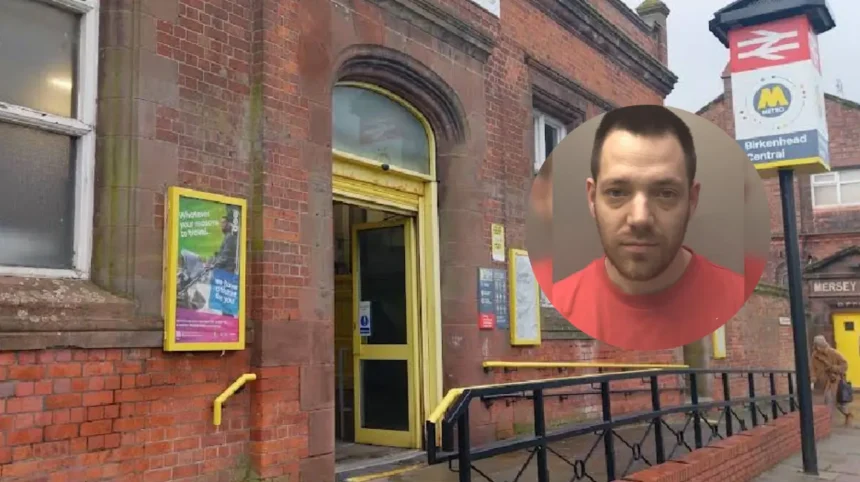
- Gifford made plans to meet the “13-year-old” at Birkenhead Central station on 26 October, where he was arrested by Angels of Innocence, a paedophile hunting team.
- When questioned by the police, Gifford said he did not commit the crimes as his brother could have accessed his phone, before pleading guilty.
- In court, Gifford admitted arranging child sex abuse, two charges of trying to encourage a child to take part in sexual activity, and another charge of trying to encourage a child under 13 years.
- Gifford was jailed for six years and four months at Liverpool Crown Court on 25 September 2026, with a Sexual Harm Prevention Order (SHPO).
- It emerged that Gifford previously had records of violent offenses and in March 2026, he was imprisoned for seven months after assaulting his mother.
Birkenhead Crime (Liverpool standard) September 25, 2026 – Michael Gifford, 32, of Osborne Vale, Wallasey, has been sentenced to six years and four months in prison after arranging to meet what he believed was a 13-year-old girl at Birkenhead Central railway station. The case, heard at Liverpool Crown Court, centred on explicit online conversations with two decoy profiles operated by paedophile hunter groups, and Gifford’s subsequent arrival at the station for a planned meeting.
- Key Points
- How did the online contact with the decoy profiles begin?
- What occurred at Birkenhead Central station on 26 October?
- What did Gifford tell police after his arrest?
- What sentence did Liverpool Crown Court impose?
- What did the defence say about Gifford’s background?
- What previous convictions did Gifford have?
- Background to the Birkenhead station development
- Prediction: how this case may affect parents, young people and the Wirral community
How did the online contact with the decoy profiles begin?
According to prosecutor Robert Dudley, the offending behaviour began on 25 October last year, when Gifford started messaging a Facebook profile he believed belonged to a 13-year-old girl. In reality, the profile was operated by an adult woman from the Angels of Innocence paedophile hunter group.
As reported by the journalist covering the case for the Liverpool Echo, Gifford asked the “girl” her age and was told she was 13, before asking: “Are you a virgin?” and sending an indecent image of himself. He told the decoy she was “super fit”, requested nude pictures of her, and sent a further indecent image of his genitals, which was quickly deleted.
On the same day, Gifford also contacted a second decoy profile, which he believed belonged to a 12-year-old girl and which was operated by the STOP paedophile hunter group. He sent that profile a series of explicit messages and an image of his genitals, and asked the “girl” to show him her own genitals.
What occurred at Birkenhead Central station on 26 October?
Following the online exchanges, Gifford arranged to meet the “13-year-old” at Birkenhead Central station at 6pm on 26 October. Prosecutor Robert Dudley told Liverpool Crown Court that Gifford arrived at 6.20pm, where members of Angels of Innocence were waiting outside the station and on the platform.
As reported in court, the defendant was heard to shout “I’m here” before being detained by the hunter group. Police were then called and Gifford was arrested at the station.
What did Gifford tell police after his arrest?
In a police interview following his arrest, Gifford denied all allegations relating to both decoy profiles. He told officers that his brother had access to his phone and implied that his brother could be responsible for the messages.
He later changed his position and pleaded guilty to arranging a child sex offence, two counts of attempting to incite a child to engage in sexual activity, and one count of attempting to incite a child under 13 to engage in sexual activity.
What sentence did Liverpool Crown Court impose?
At Liverpool Crown Court on 25 September 2026, Recorder Eric Lamb sentenced Gifford to a total of six years and four months in prison. In addition to the custodial sentence, the court imposed a Sexual Harm Prevention Order (SHPO), which will place restrictions on Gifford’s behaviour after his release.
Recorder Lamb told Gifford: “You were in touch with what you understood to be a 13-year-old girl. In fact it was an adult decoy, and you went on to make those requests for images of her body and you arranged to meet to have sex with her.”
He added: “Moreover you attended the station in Birkenhead and were detained by members of the paedophile hunter group and arrested by the police. But for the fact that child didn’t exist, you would have been involved in penetrative sex with that child.”
The judge also noted the parallel conversation with the second decoy believed to be 12, saying: “On the same day there had been a similar conversation with a decoy you believed to be a 12-year-old girl, and again you were sending pictures of yourself and requesting images from that child.”
What did the defence say about Gifford’s background?
Andrew McInnes, defending, told the court that Gifford had “fully accepted the offences” and offered an explanation rooted in poor mental health and difficult family relationships, particularly with his mother.
McInnes said Gifford and his stepfather had been convicted of assaulting his mother, and that Gifford had spent part of his childhood in care before later living with his father, from whom he is now estranged.
The defence highlighted that Gifford struggled in school due to ADHD and epilepsy, and that his health issues had contributed to social isolation and alcohol use. McInnes said:
“He’s a man who has faced significant issues growing up, being in care, diagnosed with ADHD, epilepsy, unable to work because of his health issues, that have led to social isolation and use of alcohol.”
He added that Gifford understood he would be in custody for some time, intended to seek support while imprisoned, and hoped on release to “turn his back on criminal activity and live a law-abiding life”.
What previous convictions did Gifford have?
The court heard that Gifford has a history of convictions for various violent offences, including assault, threatening behaviour, criminal damage, and possession of a bladed article.
In March 2026, he was found guilty of assaulting his mother and sentenced to seven months in prison. These previous convictions were taken into account during sentencing for the child sex offences.
Background to the Birkenhead station development
The arrest and subsequent sentencing of Michael Gifford form part of a wider pattern of cases in which individuals attempting to meet children for sexual purposes have been intercepted at or near Birkenhead Central station. Paedophile hunter groups such as Angels of Innocence and STOP have increasingly focused on railway stations and other transport hubs as meeting points, coordinating with police to detain suspects and hand them over for arrest.
In similar recent cases in the Liverpool and Wirral area, courts have heard how offenders used social media platforms, including Facebook, to initiate contact with decoy profiles purporting to be children, before arranging face-to-face meetings at public locations. Birkenhead Central, as a busy interchange serving Wirral and Liverpool, has featured in several such operations, with hunters positioning themselves on platforms and outside entrances to identify and confront suspects who arrive for planned meetings.
The use of hunter groups in this way has prompted ongoing debate about vigilante activity and police procedure, but in cases such as Gifford’s, the evidence gathered by the groups has been presented in court alongside police investigations and Crown Prosecution Service charges.
Prediction: how this case may affect parents, young people and the Wirral community
This development is likely to heighten awareness among parents and carers in Wirral and across Merseyside about the risks of children’s online interactions, particularly on platforms such as Facebook where age verification is limited. The detail that Gifford contacted two separate decoys on the same day, and then travelled to a public transport hub for a meeting, may reinforce calls for stronger safeguarding messages in schools and youth settings about not sharing images, not arranging meetings with unknown contacts, and reporting suspicious behaviour.
For young people in the area, the publicity surrounding the case could increase anxiety about using social media, but may also encourage more open conversations with trusted adults about online safety. For the wider community, the sentence and the visible presence of hunter groups at Birkenhead Central may be seen as a deterrent to others considering similar conduct, while also prompting further discussion about the role of such groups and their coordination with police.
In practical terms, local authorities, schools and police may use this case to review and strengthen online-safety education, reporting mechanisms, and support for families dealing with the aftermath of attempted child sexual exploitation.