
Birkenhead is an industrial and historic town located on the Wirral Peninsula in Merseyside, England, situated directly across the River Mersey from Liverpool. The town developed rapidly during the nineteenth century, transforming from a medieval monastic settlement into a international center for shipbuilding, maritime engineering, and pioneering urban planning. While most regional guidebooks direct international travelers exclusively toward the cultural attractions of Liverpool, Birkenhead possesses landmark historical sites, expansive public parks, and specialized museums that operate independently of its larger neighbor. Understanding the full scope of local heritage requires exploring the civic spaces, architectural preserves, industrial landmarks, and contemporary creative centers established within the town boundaries.
- Why Is Birkenhead Park Considered a World Landmark?
- How Does Birkenhead Priory Preserve Medieval History?
- What Makes Hamilton Square Architecturally Significant?
- What Can Visitors Discover at the Williamson Art Gallery?
- How Does the Wirral Transport Museum Celebrate Transit History?
- What Is the Significance of the Flaybrick Artisans Cemetery?
- How Has Future Yard Transformed Birkenhead’s Live Music Scene?
- What Panoramas Are Visible from Bidston Hill and Windmill?
- How Does the Woodside Ferry Terminal Connect Regional History?
- Why Is the Shore Road Pumping Station a Feat of Victorian Engineering?
- What Experiences Exist at Prenton Park for Football Enthusiasts?
- What Can Visitors Find at the Bloom Building Creative Hub?
- How Does Pyramids Shopping Centre Serve Local Retail?
- What Architecture Defines the Mersey Tunnel Ventilation Towers?
- How Does Birkenhead Docks Showcase Maritime Engineering?
- Frequently Asked Questions
The historical trajectory of Birkenhead began in 1150 with the establishment of a Benedictine monastery that established the first official ferry service across the River Mersey. By 1824, iron shipbuilding pioneer William Laird established the Boiler Works, which evolved into Cammell Laird, a naval construction firm that produced hundreds of merchant and military vessels. The mid-nineteenth century brought planned expansion directed by architect Gillespie Graham and urban developer Joseph Paxton, whose work established global precedents for public park design and civic architecture. Today, Birkenhead acts as an essential cultural anchor within the Metropolitan Borough of Wirral, featuring conserved Victorian squares, active transport archives, and independent arts venues that illustrate the town’s transition from an industrial engine to a modern cultural hub.
Why Is Birkenhead Park Considered a World Landmark?
Birkenhead Park is a historic 140-acre public park opened in 1847 that served as the world’s first publicly funded municipal park and provided the direct architectural template for Central Park in New York City.
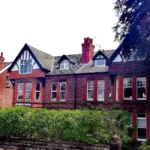
Birkenhead Park was designed by landscape architect Joseph Paxton and civil engineer Edward Kemp, opening officially on April 5, 1847. The park was commissioned by the Birkenhead Improvement Commissioners using public funds, establishing a legal precedent where municipal governments provided free, accessible green spaces for public health benefits. Paxton incorporated curvilinear carriage drives, drainage systems, artificial lakes, and expansive open fields designed to mimic countryside landscapes within an industrial town. The park’s structural layout divided spaces between active recreation and quiet nature observation, surrounding the perimeter with ornate residential lodges representing diverse architectural styles, including Gothic, Italianate, and Norman revival designs.
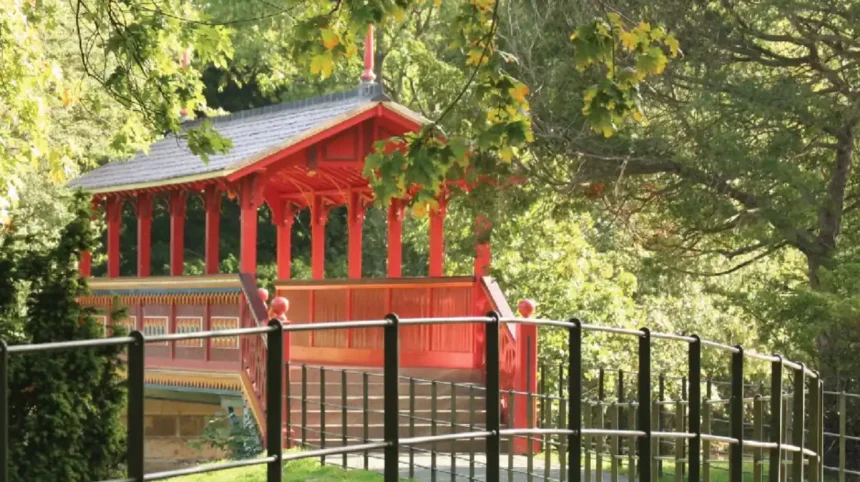
In 1850, American landscape designer Frederick Law Olmsted visited Birkenhead Park during his tour of English public gardens. Olmsted recorded his impressions in his publication Walks and Talks of an American Farmer in England, noting the democratic access and naturalistic design of the grounds. When Olmsted and Calvert Vaux submitted their winning “Greensward Plan” for New York City’s Central Park in 1858, they directly incorporated Paxton’s functional separation of footpaths and carriage roads, artificial lake design, and perimeter shelter belts. Today, Birkenhead Park retains its Grade I historic park status, featuring a modern visitor center, historic swiss bridges, and restored cricket grounds that host active regional matches throughout the spring and summer seasons.
How Does Birkenhead Priory Preserve Medieval History?
Birkenhead Priory is the oldest standing building in Merseyside, founded in 1150 as a Benedictine monastery that managed the original Mersey Ferry service for almost four centuries.
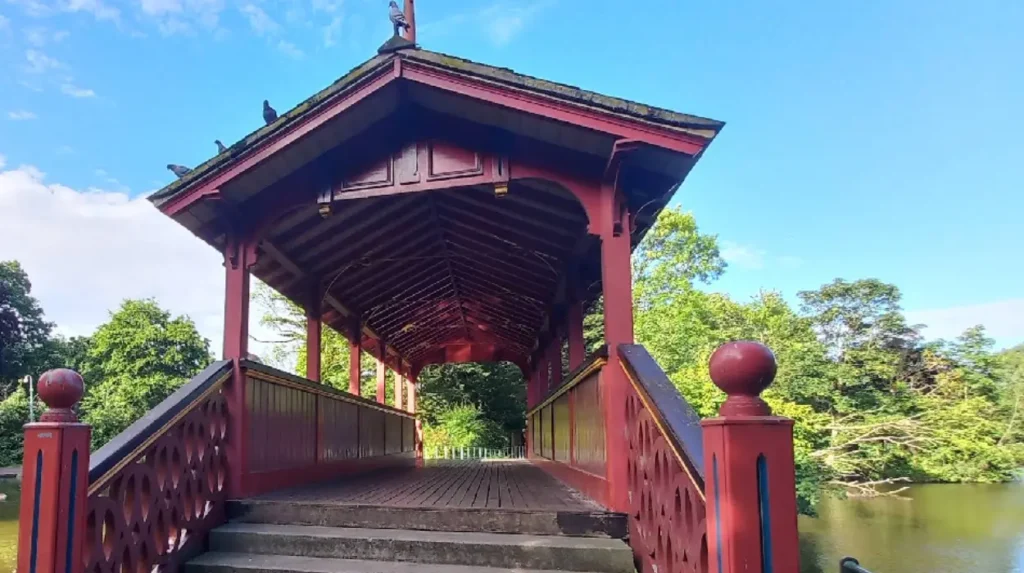
Birkenhead Priory was established by Hamon de Masci, 3rd Baron of Dunham Massey, for a community of sixteen Benedictine monks. The site contains surviving elements of twelfth-century architecture, including a intact Romanesque scriptorium, a vaulted chapter house, and an undercroft. In 1318, King Edward II granted the monks a royal charter conferring rights to build house accommodation and operate a paid ferry service across the River Mersey, establishing the continuous transport route known today as the Mersey Ferry. The monastery operated continuously until 1536, when King Henry VIII dissolved the religious house during the English Reformation, causing the church main hall to fall into ruins.
The site also incorporates St. Mary’s Tower, built in 1821 as the town’s first parish church adjacent to the medieval monastery ruins. The church building was dismantled in the mid-twentieth century due to structural decay, but the red sandstone tower was preserved and renovated as a historic viewpoint. Visitors can climb the spire to view the surrounding shipyards of Cammell Laird and the Liverpool skyline across the river. The site also houses a dedicated museum display detailing local monastic life, medieval artifacts, and the architectural history of the surrounding Wirral coastline, operating under local municipal conservation management.
What Makes Hamilton Square Architecturally Significant?
Hamilton Square is a historic Georgian residential square containing the highest density of Grade I listed buildings in the United Kingdom outside of the city of London.
Hamilton Square was designed in 1825 by Scottish architect James Gillespie Graham, who envisioned a grand residential quarter inspired by the New Town architecture of Edinburgh. Construction began in 1826 and continued across several decades, resulting in four uniform terraces constructed from local stone, featuring rusticated ground floors, Doric doorways, and detailed ashlar facades. The central garden area was laid out as a private residential park before being acquired by the local corporation in 1897 for public use. The square serves as the administrative core of Birkenhead, housing the former Town Hall, which was completed in 1887 using solid sandstone in a neoclassical style featuring a prominent 200-foot clock tower.
The central gardens host the town’s primary War Memorial, unveiled in 1925 to honor local military casualties from the First World War. Designed by sculptor Lionel Budden, the monument features detailed granite carvings and bronze figures depicting military personnel. The square also features a stone statue of John Laird, the prominent shipbuilder and Member of Parliament who spearheaded the economic expansion of Birkenhead during the mid-nineteenth century. The architectural layout remains fully preserved under local heritage zoning, offering an intact visual representation of early nineteenth-century civic planning and speculative development.
What Can Visitors Discover at the Williamson Art Gallery?
The Williamson Art Gallery and Museum is a historic cultural institution opened in 1928, housing the UK’s largest public collection of historic Della Robbia pottery alongside extensive maritime archives.
The Williamson Art Gallery and Museum was funded by corporate benefactor John Williamson and opened to the public to provide dedicated exhibition spaces for the Wirral region. The single-story neo-Georgian building features top-lit galleries designed specifically for displaying fine art and ceramic collections. Its primary ceramic collection focuses on the Della Robbia Pottery company, which operated in Birkenhead between 1894 and 1906 under the direction of Harold Rathbone and Conrad Dressler. The pottery produced Arts and Crafts movement ceramics, utilizing local clays, vibrant colored glazes, and botanical relief patterns inspired by Italian Renaissance lead-glazed terracotta.
In addition to its decorative arts, the museum houses a major regional maritime collection focused on local industrial history. The maritime hall displays dozens of detailed builder’s scale models of ships constructed at the neighboring Cammell Laird shipyard, including merchant vessels, dreadnoughts, and historic Mersey ferries. The fine art collection includes nineteenth-century British watercolors, oil paintings by the Liverpool School of artists, and rotating contemporary exhibitions featuring regional creators. The institution operates an active community print studio, educational workshops, and a courtyard cafe, serving as a permanent cultural facility for residents and heritage tourists alike.
How Does the Wirral Transport Museum Celebrate Transit History?
The Wirral Transport Museum is a historical transport archive established in 1995 that preserves and operates historic electric streetcars, vintage buses, and large-scale model railway systems.
The Wirral Transport Museum was created to preserve the operational history of public transit networks across Merseyside and the wider United Kingdom. The facility houses a collection of fully restored electric trams, including operating vehicles from Liverpool, Birkenhead, Hong Kong, and Lisbon. Birkenhead holds a unique place in transit history, having launched Europe’s first street tramway on August 30, 1860, under the direction of American entrepreneur George Francis Train. The museum tracks this history through displays of vintage omnibuses, classic commercial automobiles, emergency vehicles, and detailed transit equipment.
The museum operates the heritage Birkenhead Tramway line, which runs along actual street tracks connecting the museum depot on Taylor Street directly to the Woodside Ferry Terminal. Visitors can ride fully operational double-decker trams along the line on weekends and seasonal schedules. Inside the main hall, volunteers maintain an extensive 27-foot layout model railway that depicts regional rail lines, dockland infrastructure, and historical townscapes from mid-twentieth-century England. The institution is operated largely by the Blackpool Tram Supporters Society and local volunteers dedicated to mechanical preservation.
What Is the Significance of the Flaybrick Artisans Cemetery?
Flaybrick Artisans Cemetery is a historic 26-acre Victorian garden cemetery opened in 1864 that features elaborate funerary architecture, rare botanical specimens, and prominent local burial sites.
Flaybrick Artisans Cemetery, originally known as Flaybrick Hill Cemetery, was designed by landscape architect Edward Kemp after he won a public design competition in 1862. Kemp structured the grounds using winding paths, rocky outcrops, and curated arboretum plantings, contrasting natural features against formal burial plots. The site was built to accommodate Anglican, Roman Catholic, and Nonconformist Christian denominations, allocating dedicated chapel structures for each group. The architectural features, designed by Lucy and Littler, utilized local red sandstone quarried directly from the surrounding elevated terrain, establishing a distinct gothic revival style across the chapels and gatehouses.
The cemetery functions as an open-air historical archive, containing the graves of prominent figures who shaped the industrial development of Merseyside. Notable burials include Sir William Laird, members of the Jackson political family, and architects who designed civic monuments across the Wirral. The grounds host military grave sectors managed by the Commonwealth War Graves Commission, commemorating casualties from both World Wars. Recognized as a Grade II listed historic park, the site is managed as a nature conservation area where naturalized woodland growth provides a protected habitat for native birds, bats, and floral species.
How Has Future Yard Transformed Birkenhead’s Live Music Scene?
Future Yard is a modern independent music venue and community hub established in 2019 that provides live performance spaces and music industry training programs for the local region.
Future Yard was launched on Argyle Street to establish an independent cultural venue within Birkenhead’s town center, addressing a long-standing shortage of dedicated music infrastructure outside of Liverpool. The venue features a 350-capacity indoor performance hall, a dedicated basement rehearsal facility, and a large outdoor garden space designed for seasonal festivals. Future Yard functions as a Community Benefit Society, operating on a non-profit model where commercial revenues are reinvested directly into local creative initiatives, youth music programs, and artist incubation projects.
The venue emphasizes environmental sustainability and industry accessibility, pioneering zero-waste live music operations and carbon-neutral tour hosting protocols. Its signature education initiative, Soundcheck, offers young people hands-on technical training in sound engineering, lighting design, event management, and venue operations. By hosting national touring bands, experimental musicians, and local emerging talent, Future Yard has transformed Birkenhead into a destination venue within the broader Merseyside music ecosystem, attracting regional audiences while cultivating local artistic careers.
What Panoramas Are Visible from Bidston Hill and Windmill?
Bidston Hill is a high-elevation 100-acre sandstone ridge featuring ancient rock carvings, a historic 1800 brick windmill, and panoramic views of the Irish Sea.
Bidston Hill rises to 160 feet above sea level, making it one of the highest points on the Wirral Peninsula and offering uninterrupted views of the River Mersey, Liverpool’s skyline, and the mountains of North Wales. The site’s bedrock consists of Sherwood Sandstone, which exhibits historic rock carvings, including a notable pre-historic carving of a sun horse attributed to early inhabitants of the region. The hill has functioned as a maritime signaling and observation point for centuries due to its commanding view of shipping channels approaching the Port of Liverpool.
At the summit sits the Bidston Windmill, constructed in 1800 to replace an earlier wooden structure that was destroyed by fire. The brick-built tower mill operated commercially until 1875, grinding grain brought from local farms using wind-powered timber machinery. Adjacent to the windmill sits the historic Bidston Observatory, constructed in 1866 to compute tidal tables and regulate marine chronometers for merchant shipping. Today, the surrounding woodland and heathland are managed as a public nature reserve, while local heritage groups open the restored windmill for public tours during selected summer weekends.
How Does the Woodside Ferry Terminal Connect Regional History?
Woodside Ferry Terminal is a historic Mersey Ferry landing stage providing continuous passenger transit across the River Mersey to Liverpool while hosting local food venues and transport links.
Woodside has operated as a ferry landing point since medieval monks established the first river transit service in 1318. The modern terminal facilities developed rapidly during the nineteenth century with the advent of steam-powered vessels, which transformed Birkenhead into a commuter residential zone for Liverpool merchants. The current floating landing stage and terminal infrastructure accommodate passenger ferries operating the historic Mersey Ferry routes, providing direct water transportation between Woodside and Liverpool’s Pier Head waterfront.
Beyond its transit function, Woodside serves as a coastal public space featuring panoramic views of the waterfront. The terminal complex and adjacent plazas host local food halls, independent vendor markets, and historical display panels recounting the engineering history of the Mersey river crossings. The terminal connects directly with the Birkenhead Tramway line and local pedestrian coastal paths, forming a core access point for tourists exploring the town’s industrial waterfront.
Why Is the Shore Road Pumping Station a Feat of Victorian Engineering?
Shore Road Pumping Station is an 1881 Victorian engineering facility housing “Giant Grasshopper,” a massive steam-driven beam engine built to pump water out of the Mersey Railway Tunnel.
The Shore Road Pumping Station was designed by engineer Charles Douglas Fox and constructed in 1881 to solve a critical civil engineering challenge: removing water seepage from the newly excavated Mersey Railway Tunnel beneath the river bed. The station was equipped with massive steam-powered pumping machinery designed by hydraulic engine builders, featuring large wooden beam structures known colloquially as grasshopper engines due to their mechanical motion. These pumps operated continuously, extracting thousands of gallons of water per minute to prevent the underwater train tunnels from flooding.
The building itself represents classic Victorian industrial architecture, featuring decorative brickwork, arched windows, and a high chimney designed to match civic standards of the late nineteenth century. While modern electric pumps eventually replaced steam power for daily tunnel drainage, the Shore Road facility preserved its original mechanical infrastructure. Managed as part of the local industrial heritage estate, the pumping station allows visitors to view restored steam beam engines and examine historic mechanical engineering systems that made underwater rail transport across the River Mersey viable.
What Experiences Exist at Prenton Park for Football Enthusiasts?
Prenton Park is a historic 16,587-capacity sports stadium that has served as the official home stadium of Tranmere Rovers Football Club since 1912.
Prenton Park was constructed in 1912 to provide a permanent home ground for Tranmere Rovers FC, a professional football club originally founded in 1884 as Belmont Football Club. The stadium underwent major redevelopments during the 1990s, replacing historic standing terraces with modern all-seater stands, including the main Johnny King Stand, the Bebington End, and the large Cowshed Stand allocated for visiting supporters. The venue has hosted English Football League matches, international women’s fixtures, and elite youth tournaments across its century-long operational history.
Attending a match at Prenton Park offers visitors an authentic lower-league English football experience distinct from the commercialized top-tier matches found in major metropolitan cities. The club operates as a key focal point for local civic identity, hosting community sports programs, stadium tours, and educational initiatives through the Tranmere Rovers Trust. Matchdays feature traditional local food, active supporter vocal groups, and access to the fan park facility located adjacent to the main stadium grounds.
What Can Visitors Find at the Bloom Building Creative Hub?
The Bloom Building is an independent creative arts venue and community space in Birkenhead that combines art exhibitions, live performances, and mental health support programs.
The Bloom Building was established by the local social enterprise Open Door Charity to create an inclusive venue where culture, arts access, and youth mental health services intersect. Located within the industrial estate near Birkenhead Priory, the converted warehouse space features contemporary interior design, communal work tables, an independent coffee bar, and flexible staging for live events. The venue operates as a safe, accessible space designed to reduce the stigma surrounding mental health through creative engagement.
The facility hosts a revolving program of events, including art exhibitions by local painters, live acoustic music performances, creative writing workshops, and community panel discussions. All commercial revenues generated by the venue’s cafe and event operations directly fund free, fast-access creative therapeutic programs provided to young people across Wirral. The Bloom Building represents a modern model of social enterprise, using artistic expression and physical gathering spaces to improve community well-being.
How Does Pyramids Shopping Centre Serve Local Retail?
Pyramids Shopping Centre is a 300,000-square-foot indoor commercial complex that has served as Birkenhead’s primary central retail precinct since 1992.
Pyramids Shopping Centre was constructed in the early 1990s to consolidate Birkenhead’s retail footprint into a covered modern complex. Located in the core of the town center, the facility features over one hundred retail units housing national high-street brands, independent specialty shops, financial services, and food court dining options. The center integrated existing open-air market spaces and pedestrian precincts, providing climate-controlled walkways that connect major transit stops and multi-story parking structures.
The shopping center plays an active role in civic regeneration plans led by the local authority, adapting retail spaces to accommodate pop-up art galleries, community services, and independent micro-businesses. By combining commercial shopping with civic access points, the complex remains a focal point for daily foot traffic within Birkenhead’s urban core, supporting local employment and economic activity across the town center.
What Architecture Defines the Mersey Tunnel Ventilation Towers?
The Mersey Tunnel Ventilation Towers are massive Art Deco architectural structures built in 1934 to extract exhaust fumes from the Queensway Tunnel beneath the River Mersey.
The Queensway Tunnel was completed in 1934 as an engineering marvel, creating a 2.1-mile underwater vehicular tunnel connecting Birkenhead directly to Liverpool. To safely remove carbon monoxide and vehicle exhaust from the sub-river roadway, architect Herbert James Rowse designed a series of monumental ventilation stations on both sides of the river. The Birkenhead side features prominent towers at Woodside, Taylor Street, and Pacific Road, constructed using red brick and Portland stone accents designed in a streamlined Art Deco style.
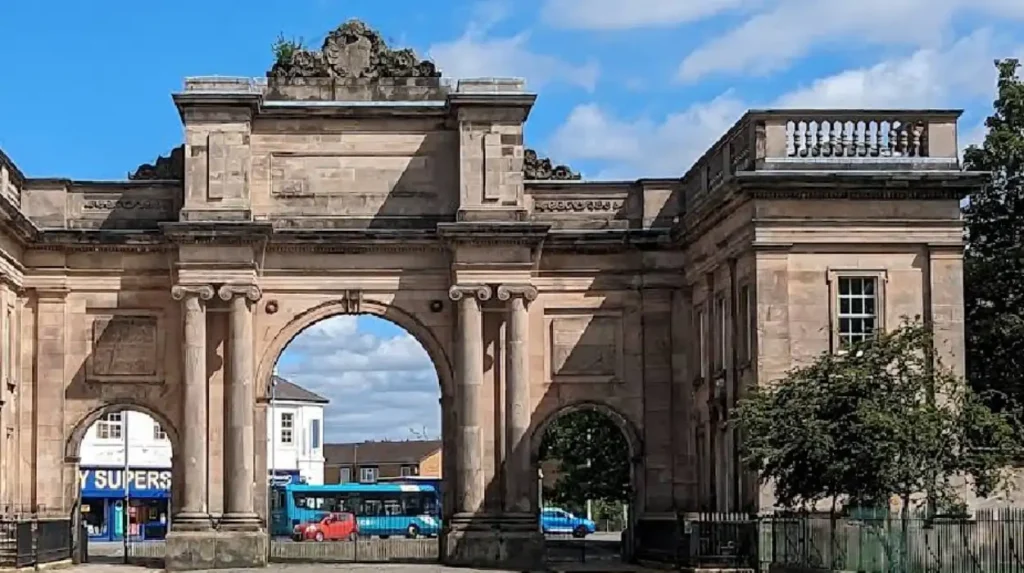
The Woodside Ventilation Station stands as the most visually striking tower, featuring bold geometric lines, relief sculptures, and massive internal fan chambers capable of moving millions of cubic feet of air per minute. Rowse designed the industrial structures to resemble monumental civic sculpture rather than utilitarian utility buildings. The structures are recognized as Grade II listed buildings, forming a distinct part of Birkenhead’s skyline and serving as major examples of mid-twentieth-century industrial architecture.
How Does Birkenhead Docks Showcase Maritime Engineering?
Birkenhead Docks is an extensive 1847 impounded dock system designed by Jesse Hartley that transformed the Great Float waterway into an international shipping hub.
The construction of Birkenhead Docks began in the 1840s to compete directly with the dock systems of Liverpool. Civil engineer Jesse Hartley, famous for designing Liverpool’s Albert Dock, engineered the conversion of the natural tidal inlet of Wallasey Pool into a massive enclosed dock system known as the Great Float. The project incorporated innovative hydraulic engineering, heavy granite quay walls, and specialized sluice gates that allowed large ocean-going vessels to dock safely regardless of Mersey river tide fluctuations.
The dock network became a vital hub for international trade, handling bulk cargo, grain, timber, and heavy industrial exports throughout the nineteenth and twentieth centuries. The surrounding infrastructure included giant warehouse complexes, flour mills, and hydraulic power towers, such as the historic Egerton Bridge and its adjacent accumulator tower. While industrial shipping patterns evolved over time, the dock estate remains a primary asset, undergoing major urban regeneration efforts known as Wirral Waters to transform the historic waterfront into sustainable residential, commercial, and educational quarters.
Frequently Asked Questions
What is the best way to travel from Liverpool to Birkenhead?You can reach Birkenhead from Liverpool via Merseyrail underground trains, which take roughly 6 to 10 minutes from James Street or Central stations. Alternatively, take the historic Mersey Ferry from Pier Head to Woodside Terminal for a scenic water crossing, or drive through the Queensway Tunnel.
Is Birkenhead Park suitable for a family day out?
Yes, Birkenhead Park offers expansive open green spaces, historic lodges, two large lakes, safe paved footpaths, modern children’s play areas, and a visitor center with a cafe. It provides an ideal, accessible environment for family walks, picnics, and outdoor recreational activities.
Can you visit the inside of the Mersey Tunnel Ventilation Towers?
While the ventilation towers are active industrial facilities, the exterior architecture can be viewed from public streets around Woodside and Pacific Road. Guided engineering tours of the underlying Queensway Tunnel infrastructure, including access to select control spaces, are periodically offered by Merseytravel.
How much time should I spend visiting Birkenhead Priory?
A typical visit to Birkenhead Priory takes between 1 and 2 hours. This provides ample time to explore the medieval chapter house, walk through the monastic ruins, visit the on-site museum displays, and climb St. Mary’s Tower for views of the River Mersey.
Is there parking available at the Williamson Art Gallery?
Yes, the Williamson Art Gallery and Museum provides free on-site parking for visitors, including dedicated accessible parking spaces near the primary entrance. The venue is fully accessible on one level, making it easy to visit by car or local public bus services.