

Liverpool city centre contains one of the densest clusters of waterfront, civic, religious, commercial, and cultural landmarks in Britain. Within a compact walkable core, visitors can move from the former imperial dock system to Georgian and Victorian civic architecture, from major museums to cathedrals, and from mercantile streets to Beatles heritage sites in a single day. That concentration makes Liverpool one of the most efficient historic city-break destinations in England.
- What makes Liverpool city centre efficient to visit?
- How should you divide Liverpool city centre into visitor zones?
- Waterfront zone: port power, empire, and museum Liverpool
- Civic quarter: municipal ambition, culture, and public education
- Commercial and Beatles quarter: mercantile streets, warehouses, and modern music heritage
- Cathedral district: religion, education, and civic skyline
- What is the best one-day walking route for Liverpool city centre attractions?
- Stop 1: St George’s Hall and the civic quarter
- Stop 2: walk down to Pier Head and the waterfront
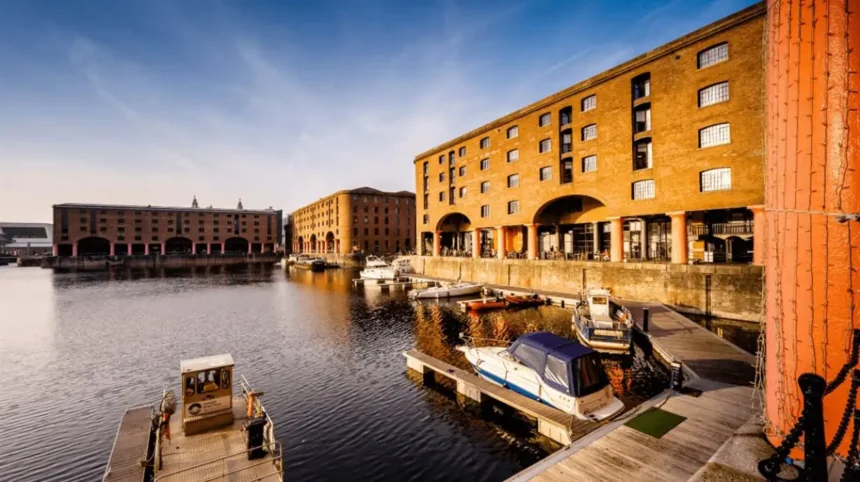
- Stop 3: Royal Albert Dock
- Stop 4: Mathew Street and the Cavern Quarter
- Stop 5: Hope Street and the cathedrals
- Why should the waterfront usually come first on a Liverpool itinerary?
- What should you prioritise in the civic quarter?
- How do the Beatles and music heritage fit into an efficient historical visit?
- Why are the cathedrals and Hope Street essential to understanding Liverpool?
- How much time do you need for Liverpool city centre attractions?
- What historical themes connect Liverpool’s main attractions?
- What remains historically significant in Liverpool city centre today?
The practical challenge is not finding enough to see. It is deciding how to sequence attractions without doubling back, wasting time on transport, or missing the historical logic that connects one district to another. Liverpool’s central attractions make the most sense when visited as a series of linked historical zones rather than as isolated stops. The waterfront explains the city’s rise as a global Atlantic port. The civic quarter explains nineteenth-century municipal ambition. The Ropewalks and Cavern Quarter explain trade, warehousing, migration, and twentieth-century music culture. Hope Street and the cathedrals explain religious, educational, and architectural change.
This guide explains how to visit uk/local/liverpool-city-centre/">Liverpool city centre attractions efficiently while also understanding why each place matters. It is written for visitors who want a coherent route, but also for readers interested in urban history, architecture, heritage conservation, and Liverpool’s long-term place in British and world history. To experience this historic landmark network in person today, consult our comprehensive [Top Attractions and Things to Do Near Liverpool City Centre] for itineraries and visiting parameters.
What makes Liverpool city centre efficient to visit?
Liverpool city centre is efficient because its major attractions sit within a compact area shaped by port expansion, Victorian civic planning, and later cultural redevelopment. The waterfront, civic quarter, Ropewalks, and cathedral district connect by short walking corridors, allowing visitors to cover multiple historic zones without complicated transport.
Liverpool developed as a port city whose economic, administrative, and cultural functions concentrated close to the river. That historic pattern still shapes the visitor experience. The principal waterfront attractions cluster around the Royal Albert Dock, Pier Head, and the Museum of Liverpool. The principal civic and museum institutions cluster around William Brown Street and St George’s Plateau. The commercial and music heritage areas cluster around Castle Street, Ropewalks, and Mathew Street. The two cathedrals anchor the southern ridge of the city centre and are linked by Hope Street.
The result is an urban geography that rewards a walking strategy. The distance from St George’s Hall to the Royal Albert Dock is roughly a mile. The route from the Albert Dock to Mathew Street is short and direct through the commercial core. The walk between Liverpool Metropolitan Cathedral and Liverpool Cathedral is essentially one axial street, Hope Street, lined with institutions that reveal the city’s nineteenth- and twentieth-century social history.
This efficiency has historical roots. Liverpool’s explosive growth in the eighteenth and nineteenth centuries was driven by Atlantic trade, dock construction, warehousing, finance, shipbroking, rail links, and municipal government. As the city expanded, its central institutions remained concentrated near the docks and the commercial core. Later regeneration preserved that concentration by reusing former dock, warehouse, and civic buildings as museums, galleries, performance spaces, and visitor attractions. Royal Albert Dock remains one of the most visited free attractions in north-west England, and the city centre still functions as a dense historical landscape rather than a dispersed metropolitan region.
How should you divide Liverpool city centre into visitor zones?
The most efficient way to visit Liverpool city centre is to divide it into four linked zones: the waterfront, the civic quarter, the commercial and Beatles quarter, and the cathedral district. Each zone reflects a different phase of Liverpool’s development and can be visited in a logical walking sequence.
A zone-based approach prevents aimless movement and creates historical continuity. Liverpool’s centre is not one uniform visitor district. It is a set of overlapping historic environments formed by different institutions, building types, and periods of urban growth. Treating each as a separate zone helps structure a visit and reduces repeated walking.
Waterfront zone: port power, empire, and museum Liverpool
The waterfront zone includes Royal Albert Dock, Pier Head, the Museum of Liverpool, and the surviving dockland environment. This is the best place to start because it explains why Liverpool became one of the world’s major ports. The dock system, warehouses, and waterfront commercial architecture illustrate the city’s role in transatlantic shipping, migration, cotton imports, and maritime technology. The Albert Dock, opened in 1846, was revolutionary in fireproof dock warehouse construction and integrated warehousing directly with dock operations. Pier Head later became the ceremonial and administrative face of Liverpool’s shipping economy.
Civic quarter: municipal ambition, culture, and public education
The civic quarter centres on St George’s Hall, the Walker Art Gallery, the World Museum, Liverpool Central Library, and William Brown Street. This district reflects nineteenth-century municipal confidence and philanthropic investment in public culture. It contains some of the city’s most important civic architecture and demonstrates how Liverpool’s wealth funded courts, concert halls, museums, reading rooms, and galleries.
Commercial and Beatles quarter: mercantile streets, warehouses, and modern music heritage
This zone includes Castle Street, the Town Hall area, Ropewalks, Bold Street, and Mathew Street with the Cavern Quarter. Historically, this was part of the mercantile and warehousing city. Streets here preserve evidence of commercial expansion, overseas trade, legal services, banking, and later entertainment culture. The Beatles story enters the urban fabric most visibly around Mathew Street, but it sits within a much older trading landscape.
Cathedral district: religion, education, and civic skyline
The cathedral district includes Liverpool Metropolitan Cathedral, Hope Street, Liverpool Cathedral, and parts of the Georgian Quarter. This zone explains Liverpool’s denominational diversity, population growth, philanthropic institutions, and twentieth-century architectural experimentation. The contrast between the modern Catholic cathedral and the monumental Gothic Anglican cathedral reveals both religious change and the city’s confidence in monumental building across different eras.
What is the best one-day walking route for Liverpool city centre attractions?
The strongest one-day route starts at St George’s Hall, moves through the civic quarter to the waterfront, crosses into the commercial and Beatles quarter, and finishes along Hope Street at the two cathedrals. This sequence follows Liverpool’s historical development while minimising backtracking across the centre.
A one-day itinerary works best when it begins at Lime Street station or the St George’s Hall area, because that places visitors at the northern edge of the civic quarter and allows a mostly downhill or level route towards the waterfront before turning south toward the cathedral district.
Stop 1: St George’s Hall and the civic quarter
Begin at St George’s Hall, Liverpool’s great neoclassical landmark opposite Lime Street station. Opened in 1854, it was designed by Harvey Lonsdale Elmes and completed under Charles Robert Cockerell after Elmes’s early death. The building combined law courts, assembly rooms, and a concert hall under one monumental roof. That dual function reflected Victorian ideas about civic order, public culture, and municipal prestige. Its Great Hall, law courts, and surviving fabric make it one of the finest public buildings of nineteenth-century Britain.
From St George’s Hall, walk along William Brown Street. This short corridor includes the Walker Art Gallery, founded in the nineteenth century and named after brewer and philanthropist Sir Andrew Barclay Walker, and the World Museum, whose collections reflect Liverpool’s role in imperial collecting, scientific education, and public scholarship. Liverpool Central Library, rebuilt internally in the twenty-first century while preserving major historic spaces, sits within the same cultural cluster.
This first segment works well because it concentrates several indoor attractions in a small radius. It also provides shelter in poor weather and establishes the civic and educational dimension of the city before the route shifts toward maritime Liverpool.
Stop 2: walk down to Pier Head and the waterfront
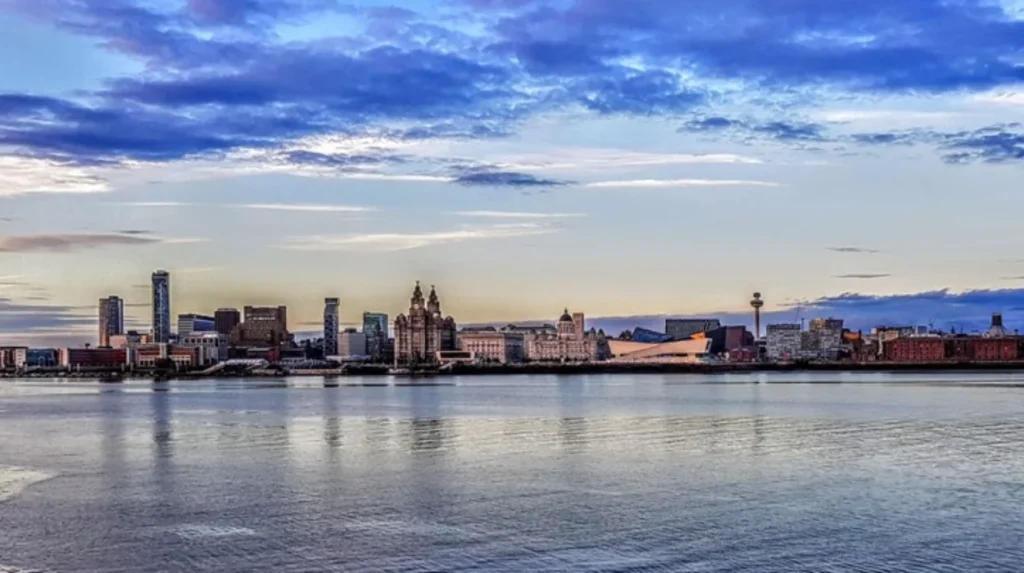
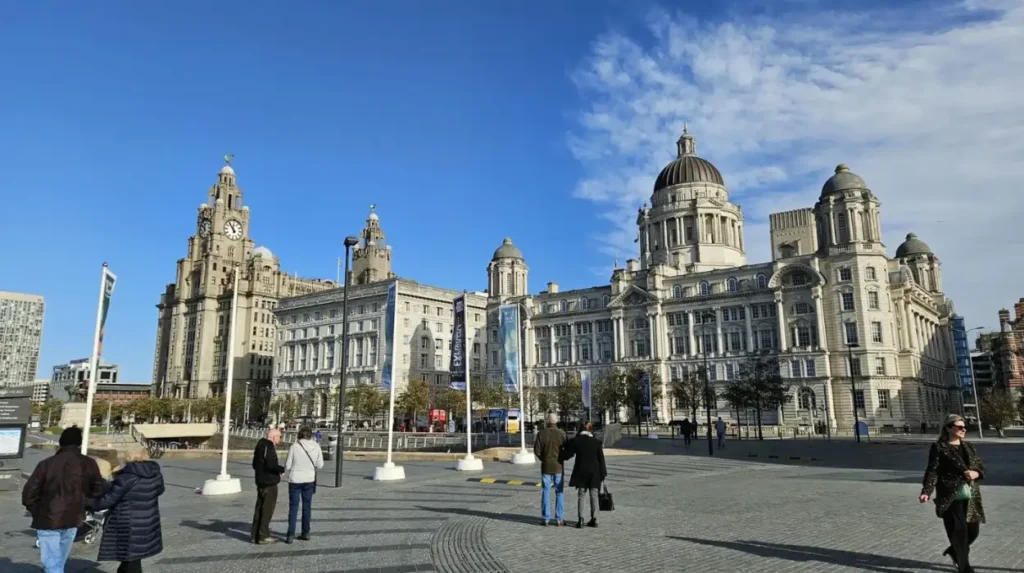
From William Brown Street, head downhill toward the waterfront. Pier Head is where Liverpool’s mercantile power becomes visually legible. The waterfront ensemble includes the Royal Liver Building, Cunard Building, and Port of Liverpool Building, collectively known as the Three Graces. These early twentieth-century buildings symbolised shipping, insurance, administration, and imperial commerce. The Royal Liver Building, completed in 1911, remains one of Liverpool’s most recognisable landmarks.
Nearby stands the Museum of Liverpool, which provides an efficient interpretive bridge between the waterfront’s architecture and the wider social history of the city. Its displays address migration, port labour, transport, popular culture, and everyday life. For visitors trying to understand the city quickly, this museum is one of the most useful orientation points because it connects physical landmarks with economic and social context.
Stop 3: Royal Albert Dock
Continue south into Royal Albert Dock. Opened in 1846 to the designs of Jesse Hartley and Philip Hardwick, the dock represented a major technical advance in dock construction. It used cast iron, brick, and stone rather than timber, reducing fire risk in a district packed with valuable cargo. The dock warehouses handled cotton, tobacco, sugar, and other commodities central to Liverpool’s Atlantic economy. The site also sits within the longer history of maritime trade, migration, and slavery that shaped the city’s development.
Today the dock contains museums, galleries, restaurants, and visitor attractions in reused warehouse buildings. This adaptive reuse is central to Liverpool’s modern heritage story. Rather than treating the dock as a static monument, the city transformed it into a living cultural district. That makes it an efficient visitor stop because historic fabric, museum interpretation, food options, and views of the waterfront all exist in one place.
Stop 4: Mathew Street and the Cavern Quarter
After the waterfront, walk inland toward Mathew Street. This is the shortest part of the route and shifts the narrative from shipping and empire to music and post-war urban identity. The Cavern Club, first opened in 1957 in a former warehouse cellar, became closely associated with the Beatles and Merseybeat. Although the present Cavern includes reconstruction and later adaptation, Mathew Street remains one of the clearest physical expressions of Liverpool’s twentieth-century musical heritage.
Stop 5: Hope Street and the cathedrals
Finish by moving south through the commercial centre toward Hope Street. Liverpool Metropolitan Cathedral, consecrated in 1967 and designed by Frederick Gibberd, represents post-war Catholic modernism and the long history of Catholic growth in a city shaped by Irish migration. Liverpool Cathedral, designed principally by Giles Gilbert Scott and begun in 1904, is one of the largest Anglican cathedrals in the world and dominates the city skyline.
Walking between the two cathedrals is not simply a scenic route. It is a compressed lesson in urban religion, education, philanthropy, and architecture. The street also intersects with the Georgian Quarter, where terraces and institutions reflect late eighteenth- and early nineteenth-century expansion beyond the medieval core.
Why should the waterfront usually come first on a Liverpool itinerary?
The waterfront should usually come first because it explains the city’s economic foundation, contains several major attractions in one compact district, and provides the clearest orientation to Liverpool’s historic geography. Starting there helps visitors understand later civic, commercial, and cultural sites in context.
Liverpool’s rise depended on the Mersey, the docks, and Atlantic commerce. The waterfront therefore functions as the city’s historical key. The old dock system, the Three Graces, and the museums at or near Albert Dock explain why Liverpool accumulated the wealth that funded civic architecture, galleries, churches, libraries, and transport infrastructure inland.
Royal Albert Dock is especially important because it embodies both nineteenth-century engineering and modern heritage preservation. Its warehouse ranges show how goods moved directly between ships and storage. Its masonry and iron structure illustrate the industrial response to fire risk and cargo management. Its survival also illustrates the shift from working port to heritage and visitor economy. The dock area fell into decline in the twentieth century as shipping patterns changed and containerisation moved port activity elsewhere. Its regeneration from the 1980s onward became one of Britain’s most visible examples of dockland reuse.
Pier Head adds a different layer. If Albert Dock shows cargo handling and warehousing, Pier Head shows corporate and administrative power. The Royal Liver Building, Cunard Building, and Port of Liverpool Building marked Liverpool’s status as a global port of departure and arrival. Millions of migrants, sailors, merchants, and passengers moved through or near this waterfront environment over generations. That movement shaped not only Liverpool but also migration histories across Britain, Ireland, North America, and the wider empire.
Starting at the waterfront also works practically. The district offers museums, cafés, toilets, open public space, and major viewpoints in a small area. Visitors can cover several high-value stops without complex planning, then move inland with a clear understanding of the city’s historical foundations.
What should you prioritise in the civic quarter?
In the civic quarter, prioritise St George’s Hall, William Brown Street, the Walker Art Gallery, the World Museum, and Liverpool Central Library. Together they explain how nineteenth-century Liverpool used mercantile wealth to build institutions of law, culture, education, and civic self-representation.
St George’s Hall deserves first priority because it is both architecturally outstanding and historically central. It was conceived through competition in the late 1830s and built in the great age of Victorian public architecture. Its combination of assize courts, concert spaces, and assembly rooms expressed the belief that a major city required monumental settings for justice, ceremony, and culture. Its interior Minton tile floor, great organ, sculptural programme, and sequence of halls reveal the scale of Liverpool’s civic ambition.
William Brown Street, immediately adjacent, has often been called Liverpool’s cultural quarter because it concentrates public institutions built through philanthropy, municipal investment, and public subscription. The Walker Art Gallery opened in 1877. The World Museum developed from earlier museum institutions and expanded with the city’s scientific and antiquarian interests. Liverpool Central Library traces its history to the nineteenth century and demonstrates how civic literacy and public learning became embedded in the urban fabric.
This quarter matters historically because it represents a deliberate public use of private wealth. Liverpool’s merchants, industrialists, politicians, and benefactors invested in cultural infrastructure as a statement of status and improvement. These buildings were not decorative extras. They formed part of the machinery by which a nineteenth-century city educated residents, hosted concerts, displayed art, organised collections, and projected authority.
For visitors, the quarter is efficient because the buildings sit close together and can be sampled selectively. If time is short, St George’s Hall and one museum or gallery create a strong half-day cluster. If time is longer, the quarter can absorb several hours without disrupting the wider route.
How do the Beatles and music heritage fit into an efficient historical visit?
Beatles heritage fits best after the waterfront because it lies close to the commercial core and shows Liverpool’s twentieth-century cultural transformation. Mathew Street, the Cavern Quarter, and related museums connect post-war music history to older warehouse streets shaped by trade, labour, and entertainment.
Liverpool’s global fame rests partly on music, especially the Beatles and the wider Merseybeat scene. Yet music heritage makes the most sense when treated as one layer in a much longer urban history. Mathew Street was not created for tourism. It emerged within the commercial and warehouse city, where cellars, clubs, bars, and back streets formed part of a dense service economy.
The Cavern Club is central because it became a major venue in the Beatles’ early career and remains one of the best-known music sites in Britain. The Beatles Story at Albert Dock offers a museum interpretation of the group’s formation, rise, and global impact, while the British Music Experience on the waterfront broadens the frame to national popular music.
From a historical perspective, Liverpool’s music culture drew on the city’s status as a port. Seafarers, migrants, imported records, and transatlantic cultural exchange helped shape local listening habits and performance scenes. American rhythm and blues, skiffle, and rock and roll entered a city already accustomed to international traffic. The Beatles therefore belong to the same urban system that produced the docks, migration routes, and entertainment districts, even though the cultural expression was very different from nineteenth-century mercantile trade.
For itinerary planning, music heritage is efficient because it sits between the waterfront and the cathedral district. It works well as a late-morning or afternoon segment after dockland museums, or as an evening extension if a visitor wants to end the day in a live music area.
Why are the cathedrals and Hope Street essential to understanding Liverpool?
The cathedral district is essential because it reveals Liverpool’s religious diversity, demographic growth, architectural ambition, and educational culture. The route between Liverpool Metropolitan Cathedral and Liverpool Cathedral condenses nineteenth- and twentieth-century social history into one walkable urban corridor.
Liverpool Cathedral and Liverpool Metropolitan Cathedral are among the most distinctive paired religious monuments in Britain. Their coexistence reflects the city’s confessional history, especially the scale of Catholic migration from Ireland and the institutional growth of both Anglican and Catholic communities in the nineteenth and twentieth centuries.
Liverpool Cathedral, the Anglican cathedral on St James’s Mount, was begun in 1904 to designs by Giles Gilbert Scott. It was completed in stages across the twentieth century. Its scale is deliberate. The building was intended as a monumental expression of ecclesiastical and civic confidence in one of Britain’s great port cities. Its sandstone mass, tower, and interior volumes dominate the skyline and create one of the most powerful architectural silhouettes in England.
Liverpool Metropolitan Cathedral, by contrast, belongs to the era of post-war liturgical and architectural reform. Frederick Gibberd’s circular modernist design, consecrated in 1967, replaced earlier plans for an even larger classical Catholic cathedral. Its dramatic lantern crown, radial interior, and modern materials make it one of the most recognisable post-war churches in Europe.
Hope Street between the two cathedrals links more than buildings. It passes through a district associated with education, music, Georgian housing, and institutional life. Nearby stand the Philharmonic Hall and the wider Georgian Quarter, whose terraces and streets preserve the pattern of elite and middle-class expansion as Liverpool grew inland from its earlier core.
No efficient historical visit to Liverpool is complete without this district because it broadens the story beyond docks and commerce. It shows how wealth, migration, religion, and public culture reshaped the city’s skyline and neighbourhoods over time.
How much time do you need for Liverpool city centre attractions?
A well-planned day covers Liverpool’s major city centre attractions, but two days allow proper museum visits, cathedral interiors, and slower exploration of the commercial core. One day is best for orientation; two days are best for historical depth, architectural study, and collection-based visits.
For a single day, the aim should be representative coverage rather than exhaustive entry to every museum. A strong one-day visit includes St George’s Hall, William Brown Street, Pier Head, Royal Albert Dock, Mathew Street, and at least one cathedral. That route creates a coherent understanding of Liverpool’s development from port to civic centre to music capital.
Two days improve the experience substantially. Day one can focus on the waterfront and commercial core, including museum time at Albert Dock and the Museum of Liverpool. Day two can focus on the civic quarter and cathedral district, with slower time inside St George’s Hall, the Walker Art Gallery, the World Museum, Liverpool Central Library, and both cathedrals. This approach is especially useful for history enthusiasts, educators, architecture students, and genealogical researchers who need time to read interpretation panels, study urban fabric, and connect places to wider historical questions.
Visitors interested in specialist themes should allocate time differently. Maritime historians should give more time to the docklands and museum interpretation of shipping and migration. Architectural visitors should prioritise St George’s Hall, the Three Graces, both cathedrals, and the Georgian Quarter. Beatles-focused visitors should combine Mathew Street with the Beatles Story and related music sites.
What historical themes connect Liverpool’s main attractions?
Liverpool’s attractions are connected by five historical themes: Atlantic trade, migration, civic philanthropy, religious change, and cultural reinvention. Reading the city through these themes turns a sightseeing route into a coherent historical study of how Liverpool grew, declined, adapted, and preserved its identity.
The first theme is Atlantic trade. Liverpool’s docks, warehouses, shipping offices, and waterfront monuments were built by commerce across the Atlantic world. Cotton, tobacco, sugar, and manufactured goods passed through the port, linking Liverpool to North America, the Caribbean, Ireland, Africa, and industrial Britain. That trade also tied the city to the history of transatlantic slavery and its legacies, which remain central to any honest interpretation of Liverpool’s past.
The second theme is migration. Liverpool was a major point of departure and arrival. Irish migration transformed the city’s demography and religion, especially during and after the Great Famine. Emigration to North America and beyond also made Liverpool a place of transit for millions of people. That migration history matters for genealogical researchers because many family histories intersect with the port, the docks, the railways, and the city’s churches.
The third theme is civic philanthropy and public culture. The civic quarter demonstrates how mercantile wealth funded museums, libraries, galleries, and public halls. These institutions were designed to improve, educate, and impress. They also show how Victorian cities used architecture to project legitimacy and cultural authority.
The fourth theme is religious change. The cathedrals and surrounding institutions reveal how Liverpool’s religious landscape evolved with population growth, denominational diversity, and twentieth-century architectural experimentation.
The fifth theme is cultural reinvention. Liverpool did not remain frozen as a nineteenth-century port. It reinvented former industrial and mercantile spaces through music, museums, tourism, and heritage-led regeneration. Albert Dock is the clearest example, but the same pattern appears across the city centre in reused warehouses, performance spaces, and curated public history.
What remains historically significant in Liverpool city centre today?
Liverpool city centre remains historically significant because its surviving docks, civic buildings, cathedrals, museums, and street patterns still preserve the physical framework of a major Atlantic port city. Modern regeneration has not erased that framework; it has repurposed and interpreted it for public use.
The continued significance of Liverpool lies in survival and legibility. Many British cities contain historic buildings, but Liverpool city centre still allows visitors to read relationships between docks, commercial streets, civic institutions, and religious monuments in close proximity. That physical continuity is unusually valuable for urban history.
Royal Albert Dock remains a major example of dock engineering and adaptive reuse. Pier Head still communicates the corporate image of maritime Liverpool. St George’s Hall and William Brown Street still display the scale of nineteenth-century civic ambition. The cathedrals still structure the skyline and reveal the city’s denominational complexity. Mathew Street still anchors the city’s modern music identity, even though its current visitor environment is partly reconstructed and commercialised.
Liverpool’s UNESCO World Heritage inscription, granted in 2004 for Liverpool Maritime Mercantile City and removed in 2021 after concerns over development, also demonstrates the international significance of the waterfront and commercial core. The loss of inscription did not erase the historic value of the surviving landscape. It instead highlighted the tension between redevelopment, skyline change, and heritage conservation in a living city. That debate itself is part of Liverpool’s modern historical relevance because it shows how former industrial cities manage economic renewal while protecting internationally significant urban fabric.
For visitors, the practical implication is clear. Liverpool city centre is best visited not as a list of disconnected attractions but as one integrated historical environment. The most efficient itinerary is the one that respects that structure: civic quarter to waterfront, waterfront to commercial core, commercial core to cathedrals. Follow that route and Liverpool reveals itself not only as a compact destination, but as one of Britain’s most intelligible historic cities.
What is the best order to visit Liverpool city centre attractions?
The best order is usually to begin at St George’s Hall and the civic quarter, then walk down to Pier Head and Royal Albert Dock, continue inland to Mathew Street and the Cavern Quarter, and finish at Hope Street with Liverpool Cathedral and Liverpool Metropolitan Cathedral. This route follows Liverpool’s historical development while keeping walking efficient.