

Key Points
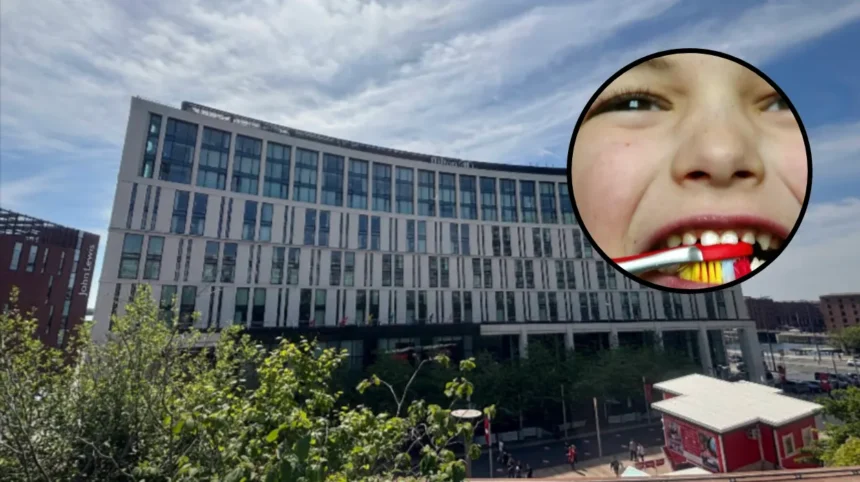
- Massive Free Distribution: Liverpool City Council is set to receive and distribute more than 40,000 free toothbrushes and nearly 40,000 tubes of toothpaste this upcoming July to protect local youth from extensive dental damage.
- Five-Year National Rescue Blueprint: This localized intervention forms part of a broader, five-year government strategy designed to combat worsening oral health inequalities across disadvantaged communities throughout England.
- Socioeconomic Gaps Exposed: Health professionals have classified tooth decay as a “disease of inequality,” heavily concentrated in economically deprived areas where standard oral care products have become cost-prohibitive for struggling families.
- Severe Regional Dental Crisis: In parts of Cheshire and Merseyside, approximately 31% of five-year-olds suffer from active tooth decay. In Liverpool alone, a staggering one-third of children in this age bracket are afflicted, outstripping national averages.
- Horrific Clinical Realities: Clinical specialists report instances of children as young as three requiring full-mouth extractions—removing 16 to 20 teeth simultaneously under general anaesthetic—due to entirely preventable decay.
- School-Based Prevention Expansion: Alongside equipment drops, an interactive, supervised toothbrushing initiative named All Together Smiling is being deployed across regional early years settings and primary schools for children aged three to five.
- Direct Public Access Route: Parents and local caregivers seeking access to this free defensive dental gear can directly engage with the public health team hosted by Liverpool City Council.
Liverpool (Liverpool Standard) June 22, 2026 – Tens of thousands of free toothbrushes and complementary tubes of toothpaste are scheduled for emergency distribution to children across the city of Liverpool this month, following an intervention orchestrated by local and national public health authorities to arrest an escalating crisis of early childhood tooth decay. Under this sweeping healthcare deployment, Liverpool City Council will take immediate custody of more than 40,000 toothbrushes and nearly 40,000 units of toothpaste. The initiative targets the region’s most vulnerable youth demographics, aiming to deliver basic preventative tools directly to households currently excluded from routine dental care due to mounting systemic economic pressures.
- Key Points
- What Is the Driving Force Behind This Public Health Intervention?
- Why Do Medical Authorities Classify Paediatric Tooth Decay as an Issue of Economic Inequality?
- What Severe Clinical Consequences Do Young Children Face Without Access to Basic Dental Products?
- How Will the ‘All Together Smiling’ Scheme Reinforce This Supply Drop inside Local Schools?
What Is the Driving Force Behind This Public Health Intervention?
This mass logistics operation operates as a critical localized branch of an expansive, five-year national government framework. The plan is structured around dedicating targeted preventative toolkits to designated high-deprivation areas throughout England, seeking to dismantle deep-seated geographic disparities in paediatric health.
Regional diagnostic data indicates that dental health metrics have deteriorated to alarming levels across the North West. Across the broader territories of Cheshire and Merseyside, an estimated 31% of five-year-olds show advanced clinical symptoms of dental decay. Within the specific municipal borders of Liverpool, that figure deepens further, with statistics proving that a full third of all five-year-old residents are experiencing structural tooth decay—a metric that tracking authorities note sits substantially higher than the documented national average for England.
Explore More uk/local/liverpool-council/">Liverpool Council News
South Facing Festival Not Moving to Sefton Park: Liverpool 2026
Liverpool Council Vows to Protect Pride Quarter: Liverpool 2026
Why Do Medical Authorities Classify Paediatric Tooth Decay as an Issue of Economic Inequality?
The underlying structural causes of this localized public health breakdown are directly linked to socioeconomic divides. As broadcast by presenter interviews on BBC Radio Merseyside, Professor Sondos Albadri, an esteemed paediatric dentistry consultant operating out of the Alder Hey Children’s Hospital, stated that
“Getting toothbrushes and toothpaste to families saves children from the operating table.”
This clinical assessment highlights a direct, linear relationship between domestic financial destitution and severe, irreversible dental degradation.
Professor Albadri further clarified the severe social divisions defining this medical issue, telling reporters that “unfortunately, tooth decay is a disease of inequality.” The clinical consultant expanded upon this reality, asserting that
“The poorer you are, the more likely you are to get tooth decay, and that is why it’s really important we support families to ensure that they’re getting the help they can to do the best for their children.”
What Severe Clinical Consequences Do Young Children Face Without Access to Basic Dental Products?
The physical toll exacted on young children due to prolonged preventative neglect manifests in traumatic surgical procedures that place immense strain on both the victims and municipal healthcare systems. Professor Albadri described the severe outcomes routinely witnessed within regional operating theatres, noting that she regularly encounters
“Children as young as three needing 16 to 20 teeth removed under general anaesthetic.”
According to the medical assessment provided by the Alder Hey specialist, these invasive surgical extractions are “almost entirely preventable” if basic structural hygiene habits are maintained at home. Commenting on the geographic disparity that places local youth at an unfair statistical disadvantage, Professor Albadri noted that
“Liverpool’s figures remain among the worst in the country, with a third of our five-year-olds still affected by tooth decay, well above the national average.”
Emphasising the fundamental ethical imperative underpinning the council’s supply drop, she stated:
“That is why this programme matters. No child should lose their teeth before their fifth birthday.”
How Will the ‘All Together Smiling’ Scheme Reinforce This Supply Drop inside Local Schools?
To guarantee that the physical influx of tens of thousands of toothbrushes and toothpaste tubes yields measurable long-term clinical improvements, Liverpool City Council is refusing to rely solely on domestic distribution. Public health directors are reinforcing the hardware drop with a structured educational curriculum titled All Together Smiling.
This supervised, classroom-based toothbrushing campaign is being systematically integrated into the daily routines of early years settings, nurseries, and primary schools operating across the Liverpool landscape. The programme targets children aged between three and five years old, establishing structured, peer-supported brushing intervals during the school day to teach, monitor, and cement positive oral hygiene mechanics before irreversible decay sets in.