

Key Points
- Four Teenagers Safeguarded: A joint operation successfully identified and immediately protected four teenagers deemed at high risk of criminal exploitation by drug syndicates.
- Joint Agency Crackdown: The multi-agency initiative combined the resources of the British Transport Police (BTP) and Merseyside Police at a major transport hub.
- Arrests and Seizures Made: Officers conducted more than 20 stop-and-search procedures, resulting in three arrests and the confiscation of Class B substances alongside approximately £1,000 in illicit cash.
- Focus on Transport Hubs: The operation targeted Liverpool Lime Street station to intercept the “County Lines” networks that exploit railway infrastructure to move narcotics from urban centres to rural areas.
- Specialist Support Deployed: The BTP County Lines Taskforce was actively supported by its specialist safeguarding team alongside third-sector youth and social care agencies.
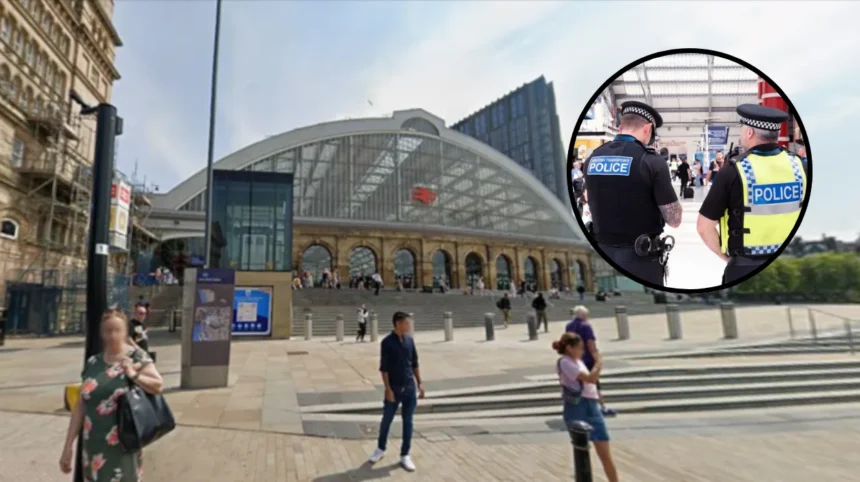
Liverpool (Liverpool Standard) June 19, 2026 – A coordinated multi-agency crackdown targeting modern slavery and drug trafficking networks at Liverpool Lime Street station has resulted in the safeguarding of four vulnerable teenagers and multiple arrests. Orchestrated as a high-visibility and intelligence-led intervention, the joint operation by the British Transport Police (BTP) and Merseyside Police focused heavily on disrupting “County Lines” drug supply networks. These networks frequently weaponise the national rail infrastructure to traffic illicit substances out of metropolitan hubs into smaller towns and rural communities. By positioning specialized units directly within one of the region’s busiest transport hubs, law enforcement disrupted ongoing distribution chains and intercepted vulnerable youths before they could be transported across county borders.
- Key Points
- What is the Significance of the Liverpool Lime Street County Lines Operation?
- Why are transport hubs like Liverpool Lime Street critical to drug networks?
- Who was arrested during the Lime Street station drug sweep?
- How do Law Enforcement Agencies Identify and Safeguard Exploited Youth?
- What role did specialized safeguarding teams play in this operation?
- Which external support agencies assisted the British Transport Police?
- What Statements Were Left by Law Enforcement Officials Regarding the Crackdown?
- What did Detective Inspector Brian Buddo say about the impact of these interventions?
- Why is intelligence sharing vital between the BTP and Merseyside Police?
- What are the Broad Characteristics of the County Lines Drug Supply Phenomenon?
During the targeted operation, law enforcement personnel executed more than 20 strategic stop-and-search procedures based on real-time behavioral monitoring and intelligence profiling. These searches yielded significant quantities of Class B controlled substances, specifically cannabis and ketamine, alongside items directly indicative of active street-level and mid-tier drug supply operations. Among those intercepted were a 16-year-old girl and a 17-year-old boy, both of whom were taken into custody on suspicion of being concerned in the supply of controlled drugs. The arrests followed the physical recovery of approximately £1,000 in cash and a mobile communication device believed by investigators to be a “line phone”—the primary tool used by syndicates to coordinate drug drop-offs and manage local user bases.
Beyond the immediate arrests of the minors, the taskforce intercepted a 53-year-old man who was subsequently arrested after standard warrant checks revealed he had failed to appear at court in relation to outstanding driving offences. Crucially, the operational mandate extended far beyond punitive measures; the primary objective remained the extraction of minors from dangerous criminal environments. The BTP County Lines Taskforce operated in tandem with its specialist safeguarding team, ensuring that the four identified at-risk teenagers were not merely processed as offenders but were immediately routed into protective social care systems. This side of the operation was reinforced by a coalition of external support agencies, including the River drug and alcohol service, the youth crime prevention charity Catch22, and local authority children’s social care departments.
What is the Significance of the Liverpool Lime Street County Lines Operation?
Why are transport hubs like Liverpool Lime Street critical to drug networks?
As reported by regional crime correspondents analyzing the logistics of urban drug networks, major railway termini serve as the primary arterial pathways for County Lines syndicates. These criminal groups rely on the anonymity and high volume of foot traffic within stations like Liverpool Lime Street to move couriers, cash, and narcotics rapidly across the United Kingdom. By embedding plainclothes and uniformed officers within these hubs, the British Transport Police aim to turn these transit routes into hostile environments for traffickers.
Who was arrested during the Lime Street station drug sweep?
According to official operational briefings released by the British Transport Police, three individuals were arrested during the June enforcement action:
- A 16-year-old girl arrested on suspicion of being concerned in the supply of controlled drugs.
- A 17-year-old boy arrested on suspicion of being concerned in the supply of controlled drugs.
- A 53-year-old man detained for failing to appear at court regarding prior driving offences.
How do Law Enforcement Agencies Identify and Safeguard Exploited Youth?
What role did specialized safeguarding teams play in this operation?
Writing for the crime and justice section of the Liverpool Standard, legal analysts note that the modern policing of County Lines requires an approach that balances criminal justice with social care. The presence of the BTP’s specialist safeguarding team ensured that the teenagers intercepted during the operation were immediately screened for signs of coercion, debt bondage, and human trafficking. Rather than facing immediate criminalization, the four teenagers identified as being at risk were placed into emergency protective custody and handed over to social services.
Which external support agencies assisted the British Transport Police?
As detailed in the joint agency press dispatch, the law enforcement vanguard was supported by a network of specialised social care and harm-reduction organisations.
This multi-tiered structure allows for immediate, wrap-around support the moment a minor is removed from a transit network, addressing both immediate physical safety and long-term psychological rehabilitation.
Explore More Liverpool Police News
Two Charged Following Racially Aggravated Central Protests: Liverpool 2026
Three arrested as police recover 25kg Cannabis in Liverpool
What Statements Were Left by Law Enforcement Officials Regarding the Crackdown?
What did Detective Inspector Brian Buddo say about the impact of these interventions?
As reported by the investigative reporting team at the Liverpool Standard, Detective Inspector Brian Buddo from the BTP County Lines Taskforce emphasised the profound social weight of these railway interventions. Detective Inspector Buddo stated that:
“Make no mistake, these interventions can be potentially life changing – if they prevent vulnerable young people from being picked up by drugs gangs or help them find a way out then this can be a pivotal point in their lives.”
Why is intelligence sharing vital between the BTP and Merseyside Police?
In a secondary analytical statement focused on regional security cooperation, Detective Inspector Brian Buddo further observed that:
“Joint operations like these are also key to us sharing intelligence throughout Liverpool and making the public aware of how to spot the signs of exploitation.”
His comments underscore a growing consensus among UK police forces that individual departments cannot dismantle syndicates in isolation; instead, cross-border intelligence pooling remains the single most effective weapon against distributed criminal networks.
What are the Broad Characteristics of the County Lines Drug Supply Phenomenon?
How do criminal gangs exploit vulnerable teenagers in urban centres?
As documented extensively by criminologists writing for national media titles, the “County Lines” business model is fundamentally predatory. Street gangs based in large cities like Liverpool establish dedicated mobile phone lines to market illicit substances to users in smaller towns. To minimize their own risk of detection, these gang leaders systematically recruit, groom, and coerce vulnerable children—often those in the care system or experiencing poverty—to act as drug mules. These minors are tasked with transporting thousands of pounds worth of Class A and B drugs on public transport networks, frequently enduring physical intimidation, psychological abuse, and extreme isolation.
What signs should the public look for to spot child criminal exploitation?
According to public safety campaigns published by Catch22 and echoed by British Transport Police community outreach officers, there are several key indicators that a young person may be trapped within a County Lines network. Members of the public and rail passengers are urged to remain vigilant for:
- Minors travelling alone long distances on the rail network, particularly during school hours or late at night.
- Teens in possession of multiple mobile phones, excessive amounts of unexplained cash, or high-value clothing they cannot afford.
- Vulnerable youths showing signs of physical neglect, intoxication, or an uncharacteristic withdrawal from regular social circles.
The British Transport Police continue to urge anyone who witnesses suspicious behavior on the railway network to text them directly on 61016 or call CrimeStoppers anonymously on 0800 555 111.