
Key Points
- Founder of Signature Group based in Liverpool, Lawrence Kenwright, is no longer allowed to be a company director for five years.
- The Lawrence Kenwright director disqualification is a result of an investigation by the Insolvency Service of Signature Works Gold Limited.
- The government notes that investors have lost in excess of £4.8 million following the distribution of promotional material by the company which is misleading.
- At age 60, Lawrence Kenwright signed a legally binding disqualification undertaking shortly before his scheduled trial.
- This disqualification has taken effect since Tuesday 18 August and now Kenwright is not allowed to promote, form or manage a company without the permission of the court.
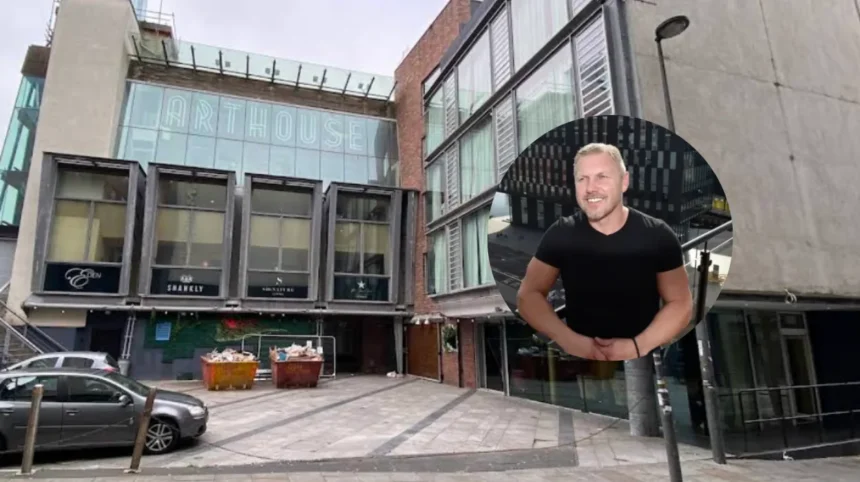
- Signature Works Gold offered desk space investments involving three Liverpool city centre locations including The Bling Bling Building, the Arthouse Hotel and 60 Old Hall Street.
- According to the Insolvency Service, investors were made to believe or convinced they had received a legal stake in the concerned property located with HM Land Registry.
- Investigation shows that Signature Works Gold had no registered freehold or leasehold interest in any of the three premises.
- The company was wound up in the interest of the public in December 2022 with assets of less than
Liverpool (Liverpool standard) August 18, 2026 — Lawrence Kenwright, the founder of Liverpool-based Signature Group, has been disqualified from serving as a company director for five years after investors lost more than £4.8 million through a connected company that issued false and misleading marketing material, according to the Insolvency Service.
- Key Points
- Why has Lawrence Kenwright been banned as a director?
- What did Signature Works Gold Limited sell to investors?
- What did the investigation find about the property interests?
- What happened to Signature Works Gold Limited?
- How does the director ban affect Lawrence Kenwright?
- Background: What is the Signature Works Gold case?
- Prediction: How could this affect property investors and company directors?
The director disqualification relates to Signature Works Gold Limited, a company in which Kenwright was the sole registered director. It sold desk space to investors in three properties in uk/local/liverpool-city-centre/">Liverpool city centre, with rental income intended to provide returns to those investors. The Insolvency Service said the company’s promotional information incorrectly stated or implied that buyers would acquire a legally registered interest in the properties.
Kenwright signed a disqualification undertaking days before he had been due to face trial following the Insolvency Service’s investigation. The undertaking is legally binding and means he does not dispute specified allegations of unfitness made by the Secretary of State for Business, Innovation, Science and Trade.
Why has Lawrence Kenwright been banned as a director?
The Insolvency Service said Kenwright failed to ensure proper stewardship and corporate governance at Signature Works Gold Limited, allowing it to distribute marketing materials that contained false and misleading information.
The ban prevents Kenwright from being involved in the promotion, formation or management of a company without permission from a court. It began on Tuesday 18 August and will remain in force for five years.
Kevin Read, chief investigator at the Insolvency Service, said: “Lawrence Kenwright’s failures as a company director had serious consequences for investors, who suffered losses of more than £4.8 million as a result of false and misleading marketing material.”
Read added: “While Kenwright is not accused of direct fraud, his conduct nevertheless falls well below the standards we expect of company directors.”
He said directors are responsible for ensuring that investment information issued in a company’s name is accurate and reliable, and that the Insolvency Service would continue taking action against directors who do not meet those obligations.
What did Signature Works Gold Limited sell to investors?
Signature Works Gold Limited was incorporated in January 2017. The company marketed and sold desk-space investments connected to three Liverpool properties:
- The Bling Bling Building on Hanover Street.
- The Arthouse Hotel on Seel Street.
- 60 Old Hall Street.
The company’s model involved renting the desk space to members of the public, with the resulting rental income intended to fund payments to investors. However, the Insolvency Service said returns to investors stopped after September 2019.
The government announcement did not state how many investors were affected. It did state that the total losses were reflected in the company’s financial position when it was wound up: assets were less than £100,000, while liabilities stood at £4,848,654.
What did the investigation find about the property interests?
The Insolvency Service’s investigation focused on claims in marketing material regarding investors’ interests in the three Liverpool buildings.
The material stated or implied that investors buying desk space would obtain a legal interest in the relevant property and that the interest would be registered at HM Land Registry. Investigators found that Signature Works Gold Limited did not own a registered freehold or leasehold interest in any of the three sites.
The properties were instead owned by separate companies:
- Signature Hanover Street Limited.
- Signature Living Arthouse Square Ltd.
- Signature Living Residential Ltd.
The Insolvency Service said Kenwright was the sole shareholder of those property-owning companies. It also said that, while promotional materials described Signature Works Gold as part of the broader Signature group, the company was not part of the group’s legal structure. Kenwright was the link between the entities because he was the principal or sole shareholder, creating common ownership.
What happened to Signature Works Gold Limited?
Signature Works Gold Limited was wound up in the public interest in December 2022 after the Insolvency Service uncovered concerns that investors had been misled.
A public-interest winding-up is a court process through which a company may be compulsorily closed where this is considered necessary to protect the public. In this case, the investigation identified concerns regarding the company’s investor communications and the legal ownership of the properties being marketed.
The subsequent director-disqualification action concerned Kenwright’s role in the company’s governance and the distribution of its marketing material. By signing the undertaking, Kenwright accepted a restriction on his future company-management activity without the matter proceeding to the scheduled trial.
The Insolvency Service identifies Kenwright as being of Sankey Road, Maghull, and says he has been a director of almost 100 companies. More than 60 of those companies were under the Signature brand, according to the service. The wider Signature Group was associated with developments including Liverpool’s Shankly and Dixie Dean hotels.
How does the director ban affect Lawrence Kenwright?
During the five-year period, Kenwright cannot act as a director of a company or take part in its promotion, formation or management unless a court grants permission.
The prohibition applies even where an individual does not formally hold the title of director if they are involved in managing or directing a company’s affairs. The disqualification does not automatically determine the status of any particular property, company or investment claim. It addresses Kenwright’s ability to participate in company management under the terms of the undertaking.
The Insolvency Service said the case was intended to reinforce expectations that company directors must ensure investment information is accurate and capable of being relied upon.
Background: What is the Signature Works Gold case?
Signature Works Gold Limited operated in Liverpool’s property-investment market after its incorporation in January 2017. It sold desk-space investments tied to three city-centre properties, saying rental income generated by the working space would support investor returns.
The case centred on the difference between the claims made in investor marketing and the company’s legal ownership position. The Insolvency Service found that Signature Works Gold did not hold registered freehold or leasehold interests in the buildings, despite statements or implications that investors would obtain an interest registered at HM Land Registry.
Investor returns ceased after September 2019. The company was wound up in the public interest in December 2022. At the point of winding up, its reported liabilities were £4,848,654, compared with assets below £100,000.
Prediction: How could this affect property investors and company directors?
For property investors, the development is likely to reinforce the importance of checking the legal structure behind an investment before committing funds. This can include confirming which company owns the property, whether the selling company has a registered interest in it, and what legal rights an investor is actually receiving.
For company directors, the case shows that regulatory consequences can arise from inadequate governance and misleading company marketing, even where a director is not accused of direct fraud. The five-year restriction on Kenwright’s company-management activity may also serve as a practical reminder to businesses marketing investment products that statements about ownership, returns and legal interests require clear evidence and proper oversight.