Key Points
- The Liverpool Council has said that the 15 public libraries managed by it will not automatically withdraw books by David Walliams.
- The council has stated that the libraries go through regular stock reviews and refreshments to accommodate demands and borrowing practices. The libraries follow certain professional and ethical standards, and all decisions about stock should adhere to the laws of the country.
- As per the Liverpool council, the books will only be taken off from the shelves in case they are illegal. Certain copies of a certain author or title might automatically reduce in number if the demand for them decreases during the process of stock refreshment.
- The Liverpool Council made this statement following allegations of sexual misconduct against Walliams, which he denies. The author’s name came up in an investigation conducted by The Guardian and ITV News on 10 November 2026.
- It was announced in September 2026 that HarperCollins had severed ties with Walliams and would no longer represent his entire book list. The Kent County Council has stated that they have no plans to remove Walliams’ titles. While other councils and schools have reacted differently.
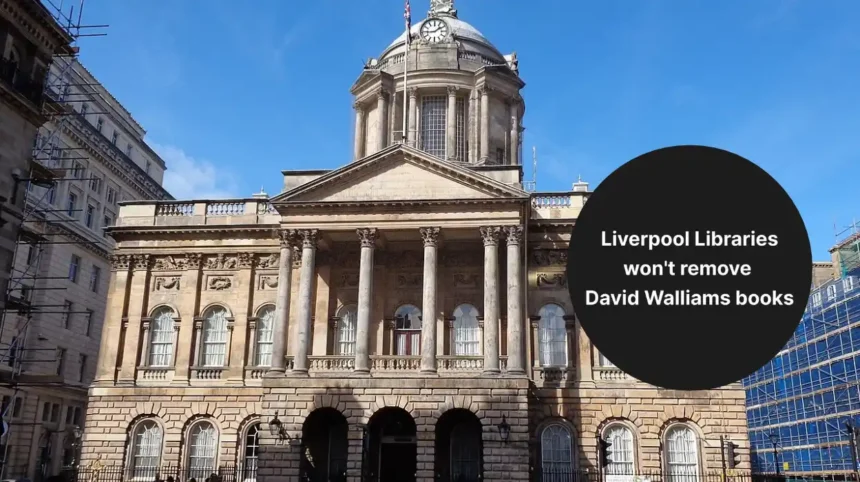
- The Liverpool Council manages 15 libraries around Liverpool including Liverpool Central Library situated on William Brown Street.
Liverpool (Liverpool standard) November 14, 2026 — Liverpool Council has said that books by David Walliams will remain subject to its normal library-stock review process, rather than being removed as a blanket response to allegations made against the children’s author.
- Key Points
- What exactly has Liverpool Council said?
- Why has the council been asked about Walliams?
- What does the council’s policy mean in practice?
- Which Liverpool libraries are affected?
- How does Liverpool’s approach compare with other councils?
- What has happened to Walliams’s publishing arrangements?
- What have other reports said about the wider response?
- Why library stock decisions matter
- What happens next in Liverpool?
- Background to the development
- How this may affect Liverpool readers and parents
As reported by the Liverpool Echo, the council was asked whether it would continue to lend any copies of Walliams’s books held across its 15 public libraries. In response, a council spokesperson said: “Our library collections are regularly reviewed and refreshed to reflect reader demand and borrowing patterns.”
The spokesperson added that public libraries operate “in line with established professional and ethical principles”, and that decisions on whether to continue lending existing titles or withdraw them must be made “in accordance with the law”.
The council’s position means that Liverpool libraries are not announcing an immediate, city-wide withdrawal of Walliams’s children’s books. Instead, the authority says any future change to availability would follow its established stock-management process.
What exactly has Liverpool Council said?
Liverpool Council’s statement sets out three main principles: regular review, legal compliance and reader demand.
“Public libraries operate in line with established professional and ethical principles, and decisions about the management of library stock, including whether to continue lending existing titles or withdraw them from loan, must be made in accordance with the law,”
the spokesperson said, as quoted by the Liverpool Echo.
The council also said:
“Professional guidance is clear that books should remain available to readers unless their content itself is unlawful.”
It further explained that, where demand for a particular author or title declines, the number of copies held “may reduce naturally as stock is refreshed and space is made for newer and more widely requested books”.
That wording does not state that Walliams’s books will definitely remain on shelves indefinitely. Nor does it say that they will be withdrawn. It indicates that Liverpool’s libraries will assess the titles through the same framework used for other stock, taking account of borrowing patterns, available space and the need to refresh collections.
Why has the council been asked about Walliams?
The question followed reporting alleging sexual misconduct against David Walliams. As reported by the Liverpool Echo, Walliams was named as the famous man who lost a High Court injunction battle earlier in the week.
The Liverpool Echo reported that a number of councils in southern England had moved to remove the author’s children’s books from their stock. That context prompted the Liverpool authority to clarify its own approach.
In a statement reported by the Liverpool Echo, Mr Walliams denied the allegations and said he was “devastated” by the claims.
The allegations and the subsequent response from publishers, libraries and schools have created a wider debate about whether publicly funded institutions should continue stocking books by authors facing serious allegations, even where the books themselves have not been found unlawful.
What does the council’s policy mean in practice?
Liverpool Council’s response suggests that its libraries will not treat the author’s name alone as sufficient grounds for removal.
The council’s statement distinguishes between the legality of a book’s content and the broader circumstances surrounding its author. Its position is that books should remain available unless the content itself is unlawful.
At the same time, the authority has not committed to preserving every Walliams title. Its reference to “reader demand and borrowing patterns” means that copies could reduce over time if fewer people borrow them, or if library space is needed for newer or more requested material.
In practical terms, a Walliams book could remain available in one Liverpool library while becoming less widely held elsewhere in the city, depending on demand and stock-review decisions.
Which Liverpool libraries are affected?
Liverpool Council operates 15 public libraries across the city, according to the Liverpool Echo. These include Liverpool Central Library, the authority’s flagship library on William Brown Street.
The council did not identify individual Walliams titles, specify how many copies it holds, or say whether any have already been withdrawn. Its statement was framed as a general position on collection management rather than an announcement about particular books.
That means parents, teachers and library users in Liverpool cannot yet tell from the council’s response whether a specific title, such as Gangsta Granny or Awful Auntie, remains available at their local branch. The council’s answer instead describes the process through which such decisions would be made.
How does Liverpool’s approach compare with other councils?
Liverpool is not the only authority to face questions over Walliams’s books. As reported by the BBC, Kent County Council said its libraries would not remove the author’s titles from shelves.
A Kent County Council spokesperson said there were “no plans” to remove Walliams’s books, adding that decisions about stock were “not made through blanket bans on individual authors”. The council, which is controlled by Reform UK, said:
“The starting point is that books should be available to readers unless their content is unlawful.”
That position closely matches the principle set out by Liverpool Council: that availability should not be withdrawn solely because of allegations against an author, unless the material itself is unlawful.
However, coverage by the BBC and other outlets shows that local responses have not been uniform. The Liverpool Echo reported that some councils in southern England had moved to remove Walliams’s books from their stock. The BBC also reported that individual schools retain authority over their own book decisions.
What has happened to Walliams’s publishing arrangements?
The controversy has also affected Walliams’s commercial publishing arrangements. As reported by the BBC, HarperCollins announced in September 2026 that it had cut all ties with Walliams and would no longer represent his back catalogue.
That decision means his books would not be replaced when they sold out in shops, according to the BBC’s reporting. This is separate from a library’s decision on whether to lend existing copies.
A library may continue lending a book it already owns even if a publisher has stopped representing the author or a bookshop has stopped stocking new copies. Liverpool Council’s statement does not say whether its libraries hold particular Walliams titles or whether replacements would be purchased in future.
What have other reports said about the wider response?
The issue has extended beyond Liverpool. The Independent, in reporting by Eleanor Busby on 12 November 2026, said school leaders were seeking government guidance on whether to keep Walliams’s books in libraries.
The Independent reported that the move followed “serious allegations of sexual assault and grooming against the bestselling children’s author, which he denies”. Those allegations were also referenced in coverage by the Liverpool Echo.
The BBC reported on 12 November that local councils are responsible for decisions about book availability, while Kent County Council had indicated it did not intend to remove Walliams’s titles.
Separately, the News & Star reported that South Cumbria libraries would not remove Walliams’s books. The outlet reported that Walliams was named as part of an investigation by The Guardian and ITV News on Tuesday 10 November, after he tried to obtain an injunction to prevent reporting of the allegations.
Why library stock decisions matter
Public libraries are not simply retail outlets. They manage collections with limited space, changing borrowing patterns and a responsibility to provide access to a broad range of material.
Liverpool Council’s statement reflects that operational reality. It says collections are reviewed and refreshed, meaning titles can be added, retained, reduced or withdrawn as demand and space change.
The council’s reference to professional and ethical principles also points to the role of library professionals in making stock decisions. Those decisions are generally intended to balance access to reading material with legal requirements and the practical needs of the service.
For Liverpool readers, the immediate effect is that there has been no announced blanket removal of Walliams’s books. The longer-term effect will depend on borrowing demand, stock reviews and any future guidance or legal developments.
What happens next in Liverpool?
Liverpool Council has not announced a timetable for a further review of Walliams’s books, nor has it said whether any individual titles are under active consideration for withdrawal.
Its statement indicates that any change would arise through the normal process of reviewing and refreshing stock. If borrowing demand remains strong, the council’s wording suggests copies may continue to be held. If demand declines, the number of copies could reduce naturally.
The council has also not said whether it will provide a further public update. For now, its position is that Walliams’s books are not subject to an automatic ban, but remain part of a library collection that is regularly assessed.
Background to the development
David Walliams is a British comedian, actor and bestselling children’s author. His books include titles such as Gangsta Granny and Awful Auntie, which have been widely stocked by schools, libraries and booksellers.
The current dispute began after Walliams was named in an investigation by The Guardian and ITV News on 10 November 2026. According to the Liverpool Echo, he had attempted to obtain a High Court injunction to prevent reporting of allegations of sexual misconduct, but lost that legal challenge.
The Liverpool Echo reported that Walliams denied the allegations and said he was “devastated” by the claims. The BBC reported that, in a statement to ITV News and The Guardian, Walliams said: “Looking back, I realise that at times I behaved thoughtlessly towards other people I had casual sexual relationships with.”
The allegations prompted responses from parts of the publishing, retail, school and library sectors. HarperCollins said in September 2026 that it had cut ties with Walliams and would no longer represent his back catalogue, according to the BBC. Some libraries and schools have reviewed or removed his titles, while others, including Kent County Council and Liverpool Council, have said they will not impose blanket bans.
How this may affect Liverpool readers and parents
For Liverpool families, the council’s position means that children may still be able to borrow David Walliams books from the city’s public libraries, subject to normal stock availability.
Parents who prefer their children not to read particular titles can make choices at home, while library users who want the books can continue to check availability at their local branch. The council’s approach places the decision within its existing stock-review process rather than removing titles automatically.
For schools, the development may add to existing questions about how to handle books by authors facing serious allegations. The Independent reported that school leaders were seeking government guidance, indicating that institutions may want clearer national direction before making individual decisions.
For library users more widely, Liverpool’s statement reinforces the principle that publicly funded libraries will generally retain lawful material unless there is a specific reason to withdraw it. It also signals that availability can change over time through ordinary collection management, rather than through a single, immediate decision.