Key Points
- Liverpool Cathedral was officially opened by Queen Elizabeth II on 25 October 1978, ending the construction that had started in 1904.
- The Grade I-listed Anglican cathedral has taken 74 years to be constructed and was designed by Sir Giles Gilbert Scott.
- The building process spanned two world wars, economic difficulties, and many changes in Liverpool.
- Sir Giles Gilbert Scott passed away in 1960 prior to the completion of the cathedral.
- The Liverpool Echo newspaper has published archive photos from Mirrorpix to celebrate the event.
- October 2026 also marks the 100th anniversary of the dedication of the cathedral’s Grand Organ in 1926.
- Professor Ian Tracey retired from the post of cathedral organist, having served for 46 years since his appointment in 1980 at age 25.
- The final service of Ian Tracey and Centenary Organ Recital took place on 17 October 2026.
- The programme entitled “Organ October” included an exhibition, talks, family events and the Centenary Organ Recital.
Liverpool (Liverpool standard) October 25, 2026 — Liverpool Cathedral has marked 48 years since its official opening by Queen Elizabeth II, an occasion that completed one of Britain’s longest-running cathedral-building projects and secured the building’s place in the city’s skyline.
- Key Points
- What happened at Liverpool Cathedral in 1978?
- Who designed Liverpool Cathedral?
- Why has the Liverpool Echo published archive pictures?
- How is the organ centenary connected?
- Who is Professor Ian Tracey?
- What happened at the centenary recital?
- What does the anniversary mean for Liverpool?
- Background of the development
- Prediction: How this may affect visitors and Liverpool residents
What happened at Liverpool Cathedral in 1978?
As reported by the Liverpool Echo, the Anglican cathedral was officially opened on 25 October 1978 by Queen Elizabeth II, marking the completion of construction work that had spanned more than seven decades. Liverpool Cathedral’s own history records that the service of thanksgiving was held in the Queen’s presence to mark the cathedral’s completion, describing it as “a triumphant proclamation of hope”.
The cathedral had begun rising above Liverpool in 1904. According to the Liverpool Echo, the Grade I-listed building took 74 years to complete, with work continuing through two world wars, periods of financial difficulty and extensive change in the surrounding city.
Who designed Liverpool Cathedral?
The cathedral was designed by Sir Giles Gilbert Scott. The Liverpool Echo reports that Scott died in 1960, before he could see the completion of the project he had designed, although his architectural vision became a lasting feature of Liverpool’s identity.
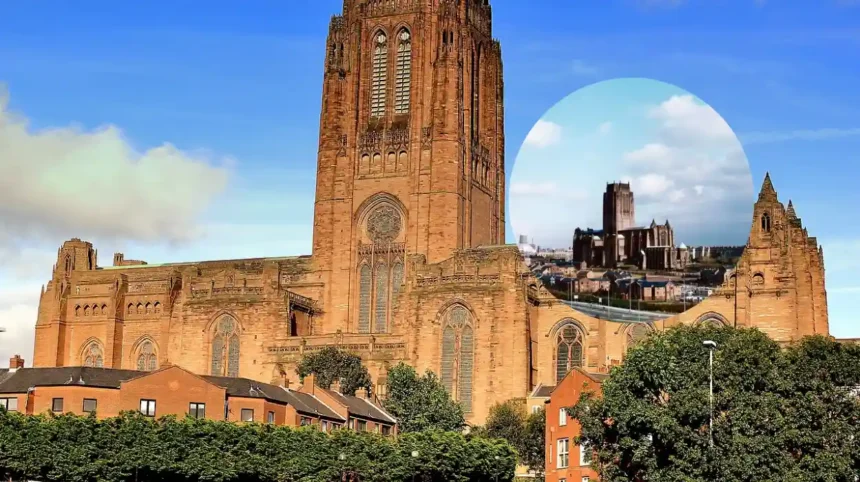
The building is known for its soaring tower, Gothic architecture and vast interior. The Liverpool Echo describes it as a place of worship, reflection and celebration, as well as a destination for visitors from across the world.
Why has the Liverpool Echo published archive pictures?
To mark the anniversary of the cathedral’s official opening, the Liverpool Echo looked back through its Mirrorpix archive and published photographs showing the cathedral, the people connected with it and the changing Liverpool cityscape across the decades.
The publication states that the cathedral has “watched generations come and go” and remains one of the most recognisable landmarks on Liverpool’s skyline. The archive feature does not report a new building announcement or restoration scheme; it is an anniversary retrospective based on historical photographs and the cathedral’s documented history.
How is the organ centenary connected?
The anniversary coincides with another major milestone: 100 years since the dedication of Liverpool Cathedral’s Grand Organ in 1926. As reported by the BBC, the instrument is the largest pipe organ in the UK and has been central to worship and music at the cathedral since its dedication.
Liverpool Cathedral launched “Organ October” to mark the centenary. According to the cathedral, the month-long programme included a free exhibition, talks and family activities, culminating in a special centenary recital held exactly 100 years after the organ’s dedication.
The BBC reported that the exhibition, titled Organ 100, explored the history and legacy of the organ, its connection with Liverpool and its three organists. The cathedral said the exhibition also recognised Professor Ian Tracey’s 46 years of service, from his early role as an organ scholar to his tenure as cathedral organist.
Who is Professor Ian Tracey?
Professor Ian Tracey became Liverpool Cathedral’s organist in 1980, when he was 25 years old. As reported by the Liverpool Echo, he was preparing to retire after 46 years in the role.
The cathedral announced in February 2026 that Tracey would retire later that year. It said he would play his final service on Saturday 17 October, before concluding his tenure with the Centenary Organ Recital that afternoon.
The Liverpool Echo reported that Tracey, who was born in West Derby, described the role in personal terms, saying: “I wouldn’t have swapped it for the world.” The cathedral described him as the youngest cathedral organist in the UK when appointed in 1980 and said his musicianship had inspired generations of listeners and colleagues.
What happened at the centenary recital?
The centenary recital took place on 17 October 2026, following Choral Evensong. Liverpool Cathedral said the performance continued an unbroken annual tradition and was given by Professor Tracey to mark both the organ’s centenary and the end of his tenure.
Church Organ World reported that more than 1,800 people attended the 100th Choral Evensong and anniversary recital, which formally marked Tracey’s retirement. The BBC separately reported that the recital formed part of a month of celebrations for the organ’s milestone, alongside the Organ 100 exhibition.
What does the anniversary mean for Liverpool?
The 1978 opening represented the completion of a project that had shaped Liverpool for most of the 20th century. The Liverpool Echo notes that the cathedral’s creation continued through wars, financial hardship and significant changes to the city around it.
The building’s history is therefore tied not only to religious life but also to Liverpool’s wider social and architectural development. The cathedral’s official history identifies the 1978 service as the moment that marked the completion of the cathedral.
Background of the development
Liverpool Cathedral was designed by Sir Giles Gilbert Scott and construction began in 1904. The Liverpool Echo reports that the Grade I-listed cathedral took 74 years to complete, with the official opening by Queen Elizabeth II taking place on 25 October 1978.
The cathedral’s own historical account confirms that the service of thanksgiving on that date marked the completion of the building in the presence of Queen Elizabeth II. The Grand Organ, dedicated in 1926, became another defining feature of the cathedral and is described by the cathedral as the largest pipe organ in the UK.
The 2026 anniversary coverage brings together two linked milestones: 48 years since the cathedral’s official opening and 100 years since the dedication of its Grand Organ. The Liverpool Echo’s archive feature and the cathedral’s Organ October programme provide the principal contemporary context for the commemorations.
Prediction: How this may affect visitors and Liverpool residents
For Liverpool residents, the anniversary is likely to reinforce the cathedral’s role as a familiar civic landmark and a site for worship, music and public events. The continued attention to its history may encourage local interest in the archive photographs and the cathedral’s Organ October activities.
For visitors, the combination of the cathedral anniversary and the organ centenary may increase interest in attending services, exhibitions and recitals. The cathedral’s programme has already included a free exhibition, talks and family activities, suggesting that the commemorations are designed to appeal to both regular worshippers and wider audiences.
For the cathedral community, Professor Tracey’s retirement marks a leadership change in its musical life after 46 years. His final recital and the centenary programme may shape how the institution presents its musical heritage as it moves into its next chapter.