

Key Points
- A major Channel 4 thriller is linked to Liverpool’s Littlewoods building on Edge Lane, one of the city’s best-known landmarks.
- The project is being developed as a £70 million film and television studio complex, with plans for sound stages, studios, office space, a training facility, and other public-facing spaces.
- Liverpool City Council approved the scheme in October 2024, after the project was first under way in December 2023.
- The landmark has stood empty and derelict for around 20 years and was originally built in 1928 as the Littlewoods Pools building.
- The wider plan has been described as having the potential to bring thousands of jobs to the area if funding and redevelopment are completed.
- Liverpool continues to be used heavily for screen production, including recent Channel 4 filming in other parts of the city region.
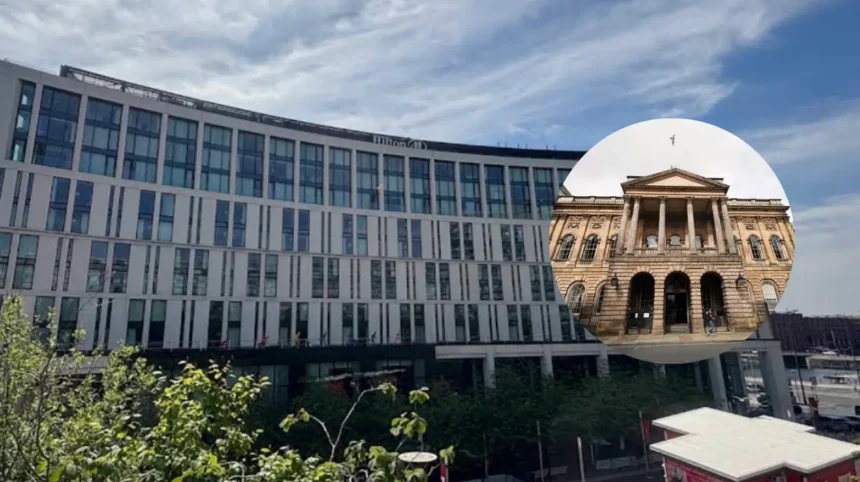
Liverpool Council (Liverpool standard) July 30, 2026 – Liverpool’s Littlewoods building is once again in the spotlight as part of a wider Channel 4 screen industry story, with the historic Edge Lane landmark tied to a major thriller production and regeneration plans already approved for the site. The project centres on turning the former Littlewoods Pools building into a large-scale film and television hub, a move that has placed one of the city’s most recognisable derelict structures at the heart of a new phase of screen-industry development.
- Key Points
- How did the Littlewoods redevelopment begin?
- Why is the landmark important?
- What have officials and reports said?
- How does this fit Liverpool’s filming boom?
- What does this mean for viewers and the city?
- Background: Why the development matters
- Prediction: How could this affect viewers and Liverpool?
As reported by the Liverpool Echo, the landmark has been described as a “big budget” Channel 4 thriller site, underlining the scale of the production interest in a building that has stood empty for years. The story matters not only because of the show itself, but because the production links into a longer-running redevelopment project that could reshape the use of the site and strengthen Liverpool’s place in UK screen production.
How did the Littlewoods redevelopment begin?
The redevelopment of the Littlewoods building has been in motion for some time. Work to transform the site into a film studio and production hub began in December 2023, after developers had already been involved in the project for years.
Liverpool City Council later approved the proposals in October 2024, backing a plan that would see the derelict building adapted for use by the television and film industry. The approved vision includes sound stages, studios, office space, a training facility, a food hall, a performance zone, educational facilities and a screening area.
Why is the landmark important?
The Littlewoods building has long been one of Liverpool’s major architectural landmarks. Built in 1928, it was originally home to the Littlewoods football pools business before later being used for manufacturing during the Second World War.
Its future has drawn attention because the site has remained empty and derelict for around 20 years, making any large-scale reuse significant for both heritage and regeneration. The studio proposal is part of a broader effort to turn Liverpool into a stronger centre for film and television production, a reputation that has been growing as more major shows are filmed in the city.
What have officials and reports said?
Reports linked to the redevelopment have said the scheme could deliver substantial economic benefits if completed. The £70 million project has been associated with the possibility of creating around 4,000 jobs, according to coverage of the approved plans.
There is still a funding element to resolve, however. One report said Liverpool City Council was seeking further funding for the redevelopment phase, even after planning approval had been granted, showing that the project remains dependent on finance as well as planning support.
How does this fit Liverpool’s filming boom?
Liverpool has been used regularly for television and film production in recent years, and the city’s appeal for producers continues to grow. Channel 4 productions have already filmed in Liverpool city centre, on the waterfront, and in neighbourhoods across the region, with the city often standing in for other places on screen.
Recent examples include filming for Channel 4’s A Woman of Substance, which used Liverpool locations including the waterfront, Water Street and the Port of Liverpool Building. Another Channel 4 production, Army of Shadows, also filmed in Liverpool, including on Lark Lane.
What does this mean for viewers and the city?
For viewers, the most immediate effect is likely to be more recognisable Liverpool locations appearing in major television productions. For the city, the long-term effect could be more sustained screen-industry work, more visitor interest in filming locations, and further investment in buildings that have previously been left unused.
If the Littlewoods studio project continues to progress, it could also support training and entry routes into production jobs, which would matter to local workers, students and businesses linked to the creative economy. That said, the scale of the plan means its impact will depend on funding, construction progress and the wider demand for studio space.
Background: Why the development matters
Liverpool has spent years building a reputation as one of the UK’s most film-friendly cities. Its mix of historic architecture, waterfront buildings and adaptable streets has made it attractive for productions ranging from period dramas to modern thrillers, and the Littlewoods project represents one of the biggest attempts to turn that filming reputation into permanent infrastructure.
The building’s history also adds to its significance. Once a major commercial site, it later fell into long-term decline, and the current redevelopment plan is part of a wider trend in which unused industrial and commercial landmarks are repurposed for creative industries.
Prediction: How could this affect viewers and Liverpool?
For Liverpool audiences, the development could mean more jobs, more filming activity and a higher profile for the city in national television coverage. For viewers outside the city, it may mean Liverpool appears more often as a filming base in major Channel 4 drama projects, even when the story is set somewhere else.
If the studio conversion is completed successfully, the biggest effect could be long-term rather than immediate: a stronger local production base, more regular use of city landmarks, and a better chance that future large-budget dramas will be made in Liverpool instead of only passing through it.