
When I tell people I am a PhD researcher working on a virus, they often assume I work infections we know well in the UK, such as flu or COVID-19. However, on the edge of the University of Liverpool’s campus sits Liverpool School of Tropical Medicine (LSTM). Right here on Liverpool’s doorstep, cutting-edge research into infectious diseases, such as HIV, malaria and tuberculosis, takes place largely unnoticed by most of the city. My work here focuses on relatively unknown virus found within the parasites causing leishmaniasis.
Leishmaniasis is a neglected tropical disease (NTD) caused by Leishmania parasites. These parasites are transmitted to humans and other mammalian species through the bite of an infected sandfly. Human infection presents in three different ways: ranging from mild skin lesions (cutaneous disease), lesions affecting the nose and mouth (mucocutaneous disease) and infection of the internal organs (visceral disease), which can be fatal if left untreated. In humans, the immune cells, macrophages are required to clear infection but also provide a breeding ground for parasites to survive and multiply. Upwards of 700,000 new Leishmania infections occur each year, mainly affecting the world’s poorest countries. Although several drug treatments exist, recurrent treatment failures, toxic side effects and increasing drug resistance is providing an additional challenge. Currently, no vaccine exists for Leishmania infection, largely due to its complex life cycle, interactions with host immunity, and species diversity. There is also a lack of financial incentive for pharmaceutical companies given its status as a neglected tropical disease. Additionally, climate change may be changing the distribution of the disease. Higher global temperatures are causing sandflies to move further north in Europe, into areas that were previously too cool for them. Consequently, leishmaniasis may become increasingly common and begin infecting people in countries previously reported to have very few to no cases.
Leishmania martiniquensis (L. martiniquensis), behaves unlike most other Leishmania species. Most species are geographically restricted, however, L. martiniquensis has been found across several continents, and infections are being increasingly reported in people, as well as domestic and wild animals. Both sandflies and midges can transmit it, suggesting this species may pose a further risk in Europe. Infections are also more common in immunocompromised individuals. In these patients, disease can progress more quickly, and treatment relapse is more common. Further research into L. martiniquensis is needed to understand why this species’ behaviour differs greatly from other Leishmania species, and why it disproportionately affects people with weaker immune systems.
Viruses infecting parasites is an emerging research field. One group of viruses, known as Leishmania RNA viruses (LRVs) have been found to infect Leishmania parasites. These viruses have been shown to worsen parasitic infection and have even been linked to drug resistance. Removing these viruses has been shown to restore key immune responses and allow parasitic infection to be cleared more effectively. Additionally, therapies targeting key viral components have been proposed to treat infection alongside routinely used drugs. As LRV presence can indicate patients at increased risk of treatment failure and disease progression, it has also been suggested as a potential therapeutic marker.
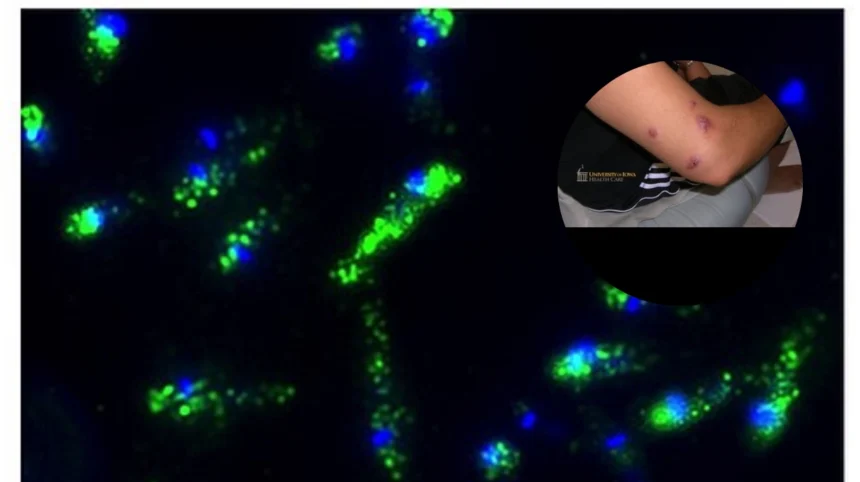
Leishmania martiniquensis leishbunyavirus 1 (LmarLBV1) is an RNA virus found within L. martiniquensis. It is the first virus identified in this species and represents the first bunyavirus found to infect Leishmania. The existence of this virus suggests it may confer an advantage to the parasites, perhaps in a manner similar to LRVs. The 2019 study that initially identified the virus showed that in mouse macrophages, parasites without the virus are less infective than those carrying the virus. However, we currently do not know how the virus does this or whether it has an impact on human health. My PhD research focuses on determining how this virus works, specifically by defining the structure and function of one if its proteins. During my project, we will also test if it influences parasitic infection in human macrophages. If it does, this could help identify patients at increased risk of relapse and treatment failure. Ultimately, our research could change our fundamental understanding of leishmaniasis and help uncover new therapeutics to treat disease.