Halton is a unitary authority borough located in Cheshire in North West England, straddling the River Mersey and comprising the two major industrial and historic towns of Widnes and Runcorn. It covers an administrative land area of approximately seventy-nine square kilometers and sits directly between the major urban centers of Liverpool and Manchester. The borough forms an essential part of the Liverpool City Region, sharing immediate geographical borders with Warrington to the east and Knowsley to the west. Halton has a recorded resident population exceeding 128,000 individuals, according to official census figures recorded by the Office for National Statistics. The primary geographic identity of the region is defined by its strategic position along the upper Mersey Estuary.
- What Are the Top Historical Landmarks to Visit in Halton?
- How Can Visitors Experience Outdoor Nature and Parks in Widnes and Runcorn?
- What Educational and Cultural Attractions Are Available in Halton?
- What Sports and Family Activity Venues Are Located in Widnes and Runcorn?
- How Does Halton Connect to the Wider Liverpool City Region Transportation Network?
- Frequently Asked Questions
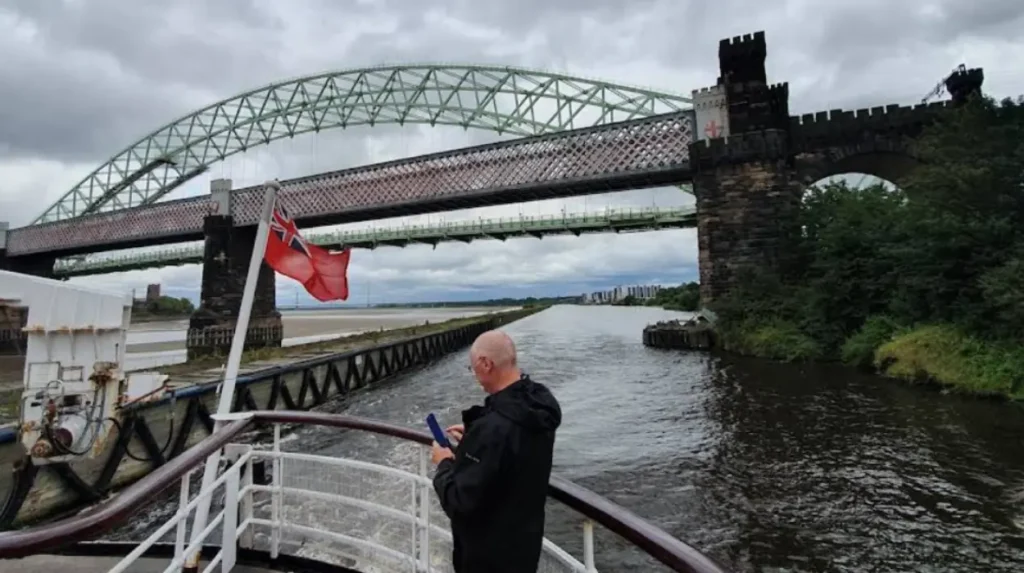
The region has served as a central transport crossing point across the River Mersey for centuries, evolving from a rural crossing into a modern infrastructure corridor. The borough features two major modern bridges connecting its north and south banks: the Silver Jubilee Bridge, opened in 1961, and the Mersey Gateway Bridge, opened in 2017. Transportation links are reinforced by major motorway access via the M56 and M62 networks, alongside direct West Coast Main Line rail connectivity at Runcorn railway station. The physical landscape combines urban industrial districts with coastal salt marshes, nature reserves, and elevated sandstone hills. The strategic proximity to the Mersey canal network enabled Halton to develop rapidly during the nineteenth century into a international center for heavy chemical manufacturing and industrial logistics.
What Are the Top Historical Landmarks to Visit in Halton?
The top historical landmarks to visit in Halton include the medieval ruins of Runcorn Castle at Halton Hill, Norton Priory Museum and Gardens, and the Grade II listed Silver Jubilee Bridge spanning the River Mersey Estuary. Halton Hill hosts the preserved stone ruins of Halton Castle, a Motte and Bailey fortification constructed in 1070 by Nigel of Cotentin, the first Baron of Halton. Norton Priory represents the most excavated monastic site in Europe, housing a restored twelfth-century Augustinian abbey abbey ruin alongside a massive St. Christopher statue carved around 1390. The Catalyst Science Discovery Centre in Widnes occupies a historical chemical administrative building, documenting the industrial heritage of the borough from the Victorian era.
Norton Priory features over sixty-four acres of surrounding woodlands, a walled garden established in the eighteenth century, and a dedicated museum exhibiting medieval artifacts. The site provides documented insight into monastic life between 1134 and the Dissolution of the Monasteries in 1536 under King Henry VIII. The Silver Jubilee Bridge stands as an engineering landmark, constructed as a steel arch bridge with a main span of 330 meters. Halton Hill offers elevated panoramic views across five surrounding counties, serving as a tactical defensive point throughout the English Civil War during the 1640s. The Spike Island precinct in Widnes marks the origin site of the modern alkali chemical industry, established by John Hutchinson in 1847 adjacent to the Sankey Canal.
How Can Visitors Experience Outdoor Nature and Parks in Widnes and Runcorn?
Visitors experience outdoor nature and parks in Widnes and Runcorn through designated nature reserves, expansive municipal parks, historic canal paths, and elevated sandstone walking trails across the Mersey Valley. Victoria Park in Widnes offers formal Victorian gardens, a restored glasshouse conservatory, a boating lake, and dedicated sports facilities over twenty-one hectares of managed parkland. Wigg Island Community Park in Runcorn covers twenty-four hectares along the banks of the River Mersey and Manchester Ship Canal, offering bird hides and native woodland habitats. Runcorn Hill Park features a designated Local Nature Reserve encompassing rare lowland heathland, historic sandstone quarries, and structured orienteering trails.
Pickering’s Pasture in Widnes operates as a prominent Local Nature Reserve overlooking the Mersey Estuary, providing dedicated habitats for migratory wading birds and wild plant species. The Sankey Canal, opened in 1757 as Britain’s first canal of the industrial era, provides miles of flat walking paths running directly through Spike Island. Town Park in Runcorn covers more than one hundred and fifty hectares of continuous green space, making it one of the largest municipal urban parks in the region. These green spaces support biodiversity programs targeted at protecting species such as skylarks, lapwings, and rare local butterflies. Structured walking routes include the Mersey Way, which traverses the shoreline and connects regional walking paths throughout the borough.
What Educational and Cultural Attractions Are Available in Halton?
Educational and cultural attractions in Halton feature the Catalyst Science Discovery Centre and Museum, the Brindley Theatre and Arts Centre, and the specialized exhibitions at the Norton Priory Museum. The Catalyst Science Discovery Centre operates as the only museum in the United Kingdom dedicated solely to the science and history of the chemical industry. The Brindley Theatre, opened in Runcorn in 2004, acts as the primary performing arts venue, featuring a 420-seat main auditorium and a 108-seat studio theater. Norton Priory houses high-density medieval collection displays, interactive archaeological exhibits, and seasonal educational workshops covering local ecological and religious history.
Catalyst contains three interactive exhibition floors, including the interactive Design Studio and the rooftop Observatory providing panoramic views over the Mersey Gateway. The museum hosts educational STEM workshops aligned with the National Curriculum, serving tens of thousands of visiting school students annually. The Brindley Theatre hosts professional theatrical productions, classical music concerts, film screenings, and visual art exhibitions inside its dedicated gallery space. The Widnes Library and Runcorn Library offer public local history archives containing historical maps, photographic records, and census data dating from the early nineteenth century. Cultural events occur throughout the year, including the Halton Global Links educational initiatives and annual community performing arts festivals.
What Sports and Family Activity Venues Are Located in Widnes and Runcorn?
Sports and family activity venues in Halton include the DCBL Stadium in Widnes, Planet Ice Rink, Runcorn Ski Centre, and the multi-sport leisure facilities located within the Brookvale Recreation Centre. DCBL Stadium serves as a 13,350-capacity venue and acts as the home stadium for the historic Widnes Vikings rugby league club, founded originally in 1875. Planet Ice Widnes provides a full-sized ice skating rink hosting public skating sessions, ice hockey matches, and regional figure skating training programs. Runcorn Ski Centre, located within Runcorn Town Park, features dry ski slopes offering instruction in skiing, snowboarding, and specialized tubing activities for families.
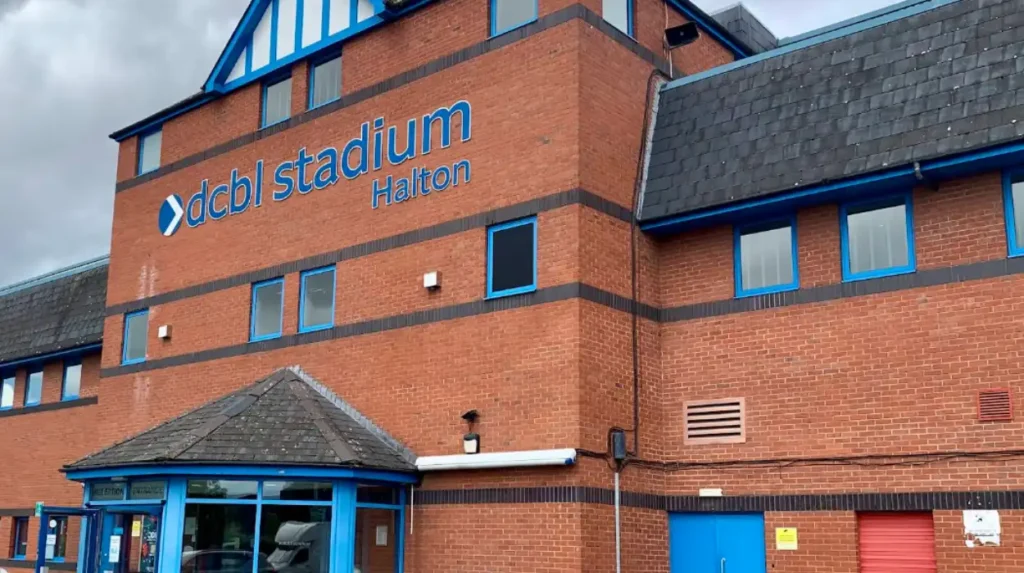
The DCBL Stadium also features indoor table tennis courts, fitness suites, conference facilities, and artificial turf pitches used by local community sports teams. Widnes Leisure Centre and Runcorn Swimming Pool provide indoor swimming facilities, fitness studios, and structured public aquatic instruction courses. Hive Leisure Park in Widnes forms a central commercial entertainment complex housing a multi-screen reel cinema, a ten-pin bowling alley, and multiple family dining establishments. The borough maintains multiple public golf courses, including Widnes Golf Club, established in 1924, and Runcorn Golf Club, established in 1909. Outdoor adventure facilities include dedicated skate parks, BMX tracks, and extensive cycle network paths integrated into the National Cycle Network.
How Does Halton Connect to the Wider Liverpool City Region Transportation Network?
Halton connects to the wider Liverpool City Region through dual river bridge crossings, primary regional motorways, direct passenger railway lines, and comprehensive regional bus transit services. The Mersey Gateway Bridge operates as a six-lane toll bridge facilitating high-volume regional road traffic between the M56 and M62 motorways. Runcorn railway station operates on the West Coast Main Line, providing direct rapid rail service to Liverpool Lime Street in under twenty minutes and London Euston in two hours. Widnes railway station operates on the Liverpool-to-Manchester line, providing frequent suburban commuter access across the North West transport corridor.
The bus transit infrastructure in Halton is operated primarily by Arriva North West, providing high-frequency routes connecting Widnes and Runcorn directly to Liverpool, Chester, and Warrington. Runcorn features a unique Busway transit network, constructed during the 1960s as the first bus rapid transit system in Europe using completely dedicated bus lanes. The Mersey Estuary waterway remains an active commercial shipping channel linked directly to the Manchester Ship Canal, supporting regional freight shipping operations. Liverpool John Lennon Airport sits adjacent to the western boundary of Halton, located less than ten minutes by road from central Widnes. This multi-modal transit network enables seamless daily commuting, freight logistics, and regional leisure travel across North West England.
Recommended Related Articles Block
More Guides from the Liverpool City Region:
- Area Guide: How Far Is Formby From Liverpool City Centre?
- Coastal Travel: What Is the Distance Between Formby Beach and Crosby Beach?
- Mersey Maritime: £26m Royal Daffodil Launches on River Mersey Liverpool
Frequently Asked Questions
What are the main free things to do in Halton?
The main free activities in Halton include exploring the outdoor trail networks at Runcorn Hill Park, visiting the nature reserves at Pickering’s Pasture and Wigg Island, and walking along the historic Sankey Canal at Spike Island.
How do visitors travel between Widnes and Runcorn?
Visitors travel between Widnes and Runcorn across the River Mersey using either the Silver Jubilee Bridge or the Mersey Gateway Bridge via public bus services, dedicated cycle lanes, or private motor vehicles.
Is Norton Priory suitable for families with children?
Norton Priory offers extensive interactive museum exhibits, family-friendly historical displays, open woodland trails, and a restored eighteenth-century walled garden suitable for visitors of all age groups.
What is the primary museum located in Widnes?
The primary museum in Widnes is the Catalyst Science Discovery Centre and Museum, which features interactive STEM exhibits, historical galleries, and an observation deck overlooking the Mersey Gateway.
Where can visitors find indoor sports and leisure activities in Halton?
Indoor sports and leisure activities are located at the Hive Leisure Park in Widnes, the Planet Ice ice-skating rink, Runcorn Ski Centre, and the public sports facilities inside the DCBL Stadium.