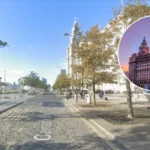

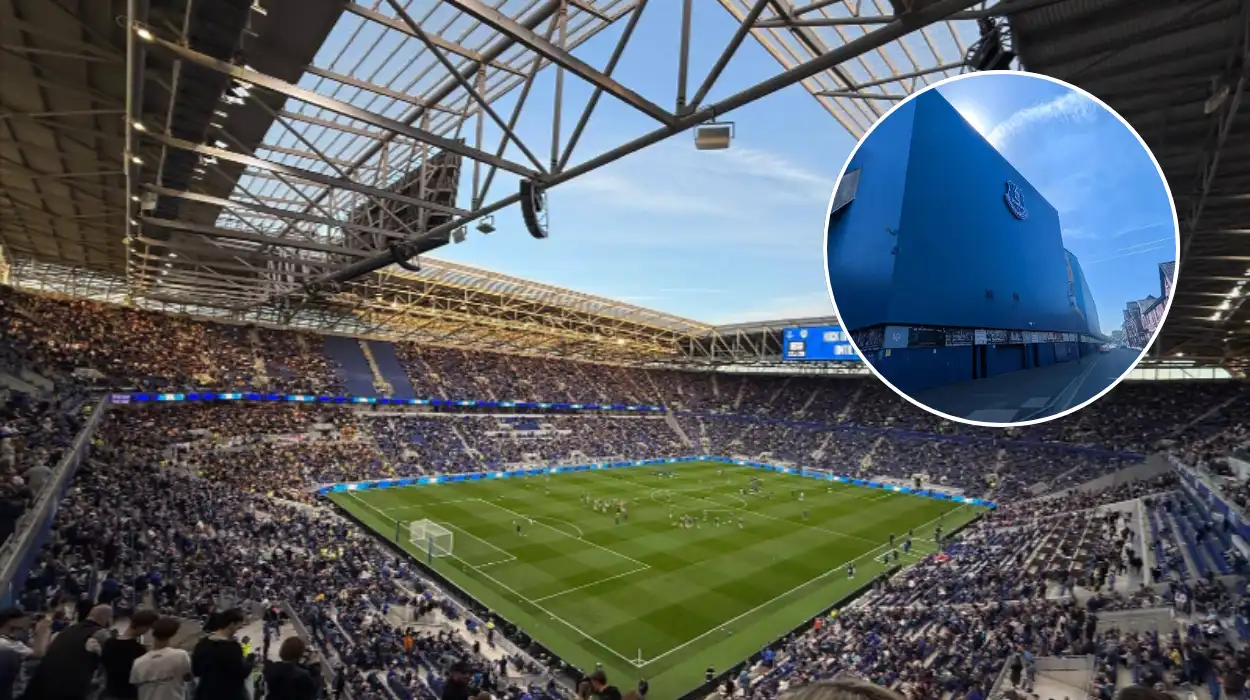
Everton stands as one of Liverpool’s most storied neighborhoods, a place where ancient roots intertwine with modern resilience and world-famous football legacy. Nestled in the north of the city, this district embodies the unyielding spirit of Merseyside, drawing residents, visitors and fans to its hills, parks and cultural landmarks.
- Origins of Everton: From Saxon Settlement to Georgian Elegance
- Victorian Boom: Industry, Immigration and Urban Expansion
- The Birth of a Football Giant: Everton F.C.’s Roots in the District
- Glory Days: Trophies, Legends and Unforgettable Eras
- Everton’s Enduring Landmarks: Towers, Parks and Hidden Gems
- Culture and Community: The People’s Heartbeat
- Challenges and Revival: Navigating Change in Modern Everton
- Looking Ahead: Everton’s Promising Horizon
Origins of Everton: From Saxon Settlement to Georgian Elegance
Everton’s name traces back to Saxon times, derived from “eofor,” meaning wild boar that roamed the forests, evolving into a small rural parish within Walton-on-the-Hill by the late 18th century. Historical records from 1327 list just 19 heads of household, indicating a modest population of around 95, while by 1692 it had grown only slightly to 135 souls, mostly farmers tilling the fertile lands on the ridge overlooking the Mersey.
The area’s transformation accelerated with Liverpool’s booming trade, attracting wealthy merchants who built grand villas on Everton Hill. By 1769, the population reached 253, surging to 913 by 1811 as affluent families sought respite from the bustling docks. Local developer James Atherton played a pivotal role, laying out elegant streets like Albion Crescent and Grecian Terrace adorned with handsome mansions, while donating land for St. George’s Church, a neoclassical gem completed in 1813 that replaced the old Everton Beacon—a 25-foot sandstone tower used for signaling since at least the 14th century.
This Georgian era marked Everton as a “courtly place” of “Everton nobles,” where merchants withdrew to landscaped gardens and panoramic views stretching 30 to 50 miles on clear days. The beacon, once a Civil War wedding site and fire signal post, collapsed in a 1803 storm, paving the way for the church that dominates the skyline at the district’s highest point.
Victorian Boom: Industry, Immigration and Urban Expansion
The 19th century brought rapid urbanization as Liverpool’s port empire swelled, drawing Irish immigrants and dockworkers to Everton’s terraced streets. Incorporated into Liverpool in 1835, the population exploded from 2,109 in 1821 to an estimated 3,763 by 1829, fueled by chemical works and riverside industries that dotted the landscape.
Everton became a microcosm of Victorian Liverpool: densely packed red-brick homes housed laborers, while St. Domingo Road hosted grand plans for a Catholic cathedral—later relocated due to costs. By 1921, the civil parish peaked at 124,414 residents, a testament to its role as a working-class stronghold amid sectarian tensions between Catholic and Protestant communities.
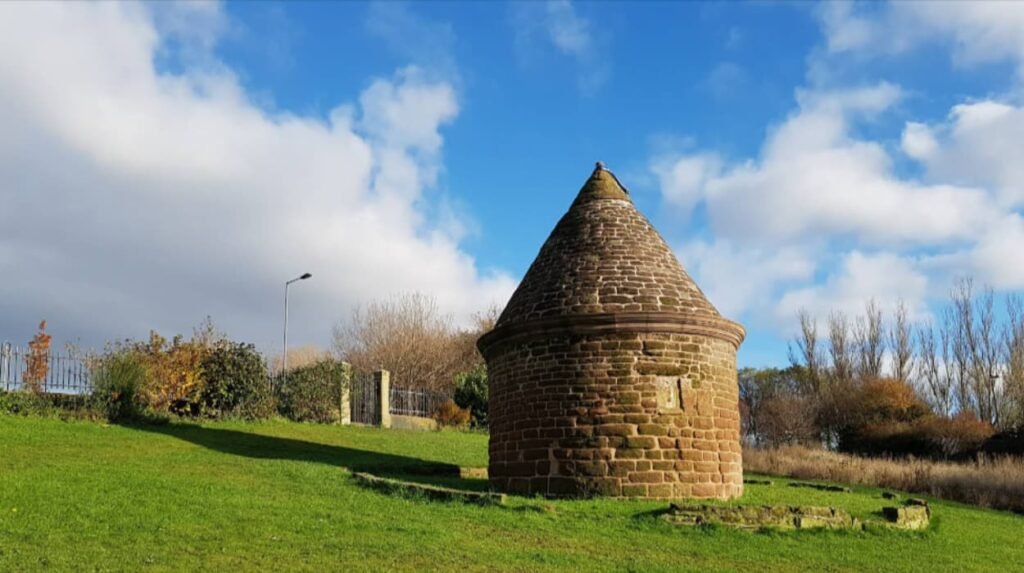
The Everton Lock-Up, a quaint 1787 round tower on Everton Brow, emerged as an iconic symbol—a bridewell for drunks and petty criminals, its preserved structure now graces the crest of the district’s most famous export: Everton Football Club. This period solidified Everton’s identity as a vibrant, if gritty, hub of community life.
The Birth of a Football Giant: Everton F.C.’s Roots in the District
Everton Football Club, founded in 1878 as St. Domingo’s FC by members of the St. Domingo Methodist Chapel on Breckfield Road North, crystallized the area’s sporting passion. Renamed Everton in 1879 to welcome broader participation, the club played its first match—a 1-0 win over Everton Church Club—at Stanley Park, embodying year-round recreation beyond summer cricket.
By 1884, Everton moved to Anfield, turning professional and becoming a founding member of the Football League in 1888. They clinched their first title in 1890-91, with Fred Geary scoring 21 goals, but rent disputes with landlord John Houlding led to a dramatic split in 1892. Everton decamped to Goodison Park, while Houlding founded Liverpool F.C., birthing the Merseyside Derby—a respectful yet fierce rivalry that defines the region’s football soul.
Goodison Park, England’s first major purpose-built stadium opened in 1892, hosted over 120 years of top-flight action, including a 1966 World Cup semi-final. Its Gwladys Street End roared with “Blues” chants, and traditions like the Toffee Lady tossing Everton Mints—honoring local confectioners Mother Noblett’s—cemented the “Toffees” nickname.
Glory Days: Trophies, Legends and Unforgettable Eras
Everton’s trophy cabinet boasts nine League titles, five FA Cups and the 1985 European Cup Winners’ Cup, ranking them among England’s elite. Dixie Dean’s 60-goal haul in 1927-28 secured their third championship, a record unbroken today, while the 1960s under Harry Catterick delivered the 1963 League and 1966 FA Cup.
The 1980s golden era under Howard Kendall saw two more titles (1985, 1987), the 1984 FA Cup and European triumph over Rapid Vienna, though the Heysel ban curtailed further glory. The 1995 FA Cup win over Manchester United provided modern magic, with “Dogs of War” grit personified by players like Neville Southall.
Legends abound: Dean’s scoring prowess, Tim Cahill’s aerial threat, and recent stars like Jordan Pickford, whose four straight Player of the Season awards highlight enduring excellence. As of 2026, Everton competes at the Hill Dickinson Stadium, a 52,888-capacity marvel at Bramley-Moore Dock, opened for the 2025-26 season after £760 million in investment.
Everton’s Enduring Landmarks: Towers, Parks and Hidden Gems
Beyond football, Everton’s landscape captivates. St. George’s Church crowns the hill, its spire a beacon since 1813, while the Everton Water Tower—a listed Victorian relic—stands sentinel. The Everton Library, a Carnegie-funded Edwardian treasure, preserves local lore, and the Drill Hall on Everton Road recalls military history from the Boer War.
Everton Park, spanning 40 hectares and created in the 1980s amid slum clearances, offers sweeping city views, playing fields and memorials—a green lung born from 1960s-70s regeneration that reshaped the skyline but halved the population.
The Greatie Market on Great Homer Street buzzes with local trade, revitalized in 2017’s Project Jennifer alongside a Sainsbury’s and NSPCC center, injecting vitality into post-industrial streets.
Culture and Community: The People’s Heartbeat
Everton’s spirit thrives in its people. A large Irish diaspora shaped its Catholic heritage, evident in schools like Our Lady Immaculate and Notre Dame College, while music icons like Paul McCartney claim roots here. Comedians like Robb Wilton and authors such as Thomas de Quincey add literary flair.
Everton in the Community (EitC) extends the club’s reach, offering programs for disabilities and youth via Finch Farm’s state-of-the-art facilities. The “School of Science” moniker, coined in the 1920s for stylish play, reflects a cultured undercurrent amid terrace anthems like “Johnny Todd.”.
Rivalries extend to the friendly-yet-fiery Merseyside Derby, with chains of red-and-blue scarves symbolizing unity post-Hillsborough. Supporters’ clubs span globally, from Singapore to Pittsburgh Riverhounds partnerships.
Challenges and Revival: Navigating Change in Modern Everton
Post-WWII decline hit hard: Blitz damage, dock closures and 1960s clearances razed terraces, dropping population by over 100,000 and leaving voids filled by parkland. Sectarian echoes faded, but economic scars lingered into the 21st century.
Regeneration ignited with the new stadium, approved in 2021 and backed by £45 million from the Liverpool City Region Combined Authority. Bramley-Moore Dock’s transformation promises jobs, housing and accelerated Northern Docks revival, with Goodison repurposed for women’s football—the UK’s largest dedicated venue.
Ownership stabilized under Dan Friedkin’s 2024 takeover via the Friedkin Group, valued at $744 million, funding sustainability amid past PSR challenges. Pursuit Sports oversees multi-club synergies with AS Roma, eyeing fresh ambitions.
Looking Ahead: Everton’s Promising Horizon
Everton endures as Liverpool’s resilient core, where football passion meets historical depth. The Hill Dickinson Stadium heralds a new chapter, blending cutting-edge design with district pride—piles driven into dredged sands, panoramic Mersey vistas. Community schemes like living pensions for staff underscore commitment to locals.