
Key Points
- Four individuals have been imprisoned for using tear gas (CS spray) in an elevator and the terminal vicinity in the parking lot of Heathrow Airport Terminal 3 on 7 December 2025.
- The attack was directed towards two women who had landed in London with a British Airways flight from Johannesburg, where one woman was hit in her face and her luggage was robbed.
- There was a lockdown in Terminal 3 for several hours that caused significant disturbances in trains, shuttle buses, and passengers, affecting 21 people and hospitalized five.
- A Caffè Nero barista said in court she started coughing and vomiting blood after exposure to the gas; others members of the public were hospitalized as well.
- Tyrone Richards, aged 31, Anton Clarke‑Butcher, aged 25, Omoneke Whyte, aged 31, and Denzel Eduardo, aged 29, pleaded guilty to affray at Isleworth Crown Court in June 2026.
- Judgment: Richards 27 months; Whyte and Eduardo 23 months each; Clarke Butcher 21 months.
- Judge Kwame Inyundo stated that the violence was “serious, sustained and determined.”
Liverpool Crime (Liverpool standard) September 16, 2026 — A gang that used tear gas to steal suitcases from passengers at Heathrow Airport’s Terminal 3 has been jailed after a court heard how the attack left people coughing, choking and, in some cases, vomiting blood.
- Key Points
- What sentences were handed down at Isleworth Crown Court?
- How did the tear gas attack unfold at Terminal 3?
- Who were the victims and what injuries were reported?
- What disruption did the incident cause at Heathrow?
- How were the four men identified and arrested?
- Background to the Heathrow tear gas development
- Prediction: how could this sentencing affect travellers and airport security?
What sentences were handed down at Isleworth Crown Court?
Tyrone Richards, 31, Anton Clarke‑Butcher, 25, Omoneke Whyte, 31, and Denzel Eduardo, 29, were sentenced at Isleworth Crown Court after pleading guilty to affray in June 2026. Richards received 27 months in prison, while Whyte and Eduardo were each jailed for 23 months and Clarke‑Butcher for 21 months, according to reports including The Mirror and BBC News.
As reported by Michael Howie of Yahoo News UK, the four admitted affray at Isleworth Crown Court, with sentencing delivered by Judge Kwame Inyundo, who characterised the incident as “serious, sustained and determined” violence.
How did the tear gas attack unfold at Terminal 3?
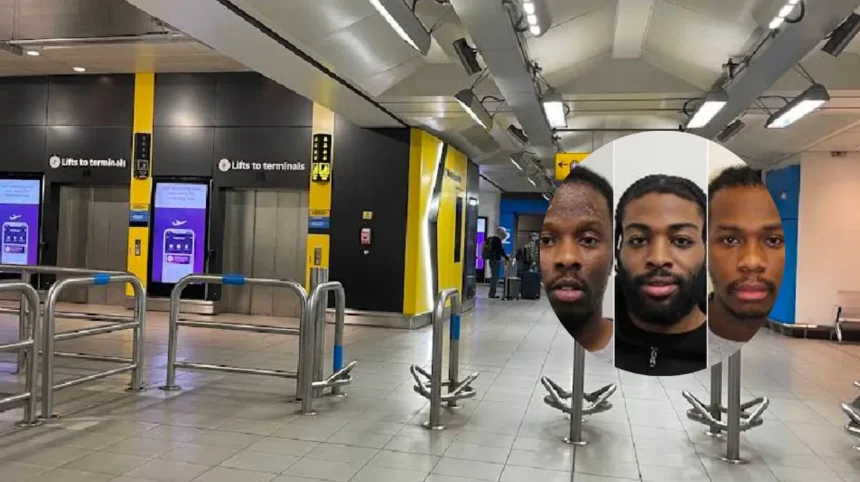
The court heard that on 7 December 2025 at about 8am, three of the defendants, wearing face coverings and dark clothing, sprayed a substance believed to be CS spray inside a lift at the Terminal 3 car park. When the lift reached the ground floor, gas was emitted into the surrounding area, affecting people nearby, including customers and staff at a Caffè Nero.
As reported by the Clydebank Post, the gas spread near the cafe, with some individuals taken to hospital after coming into contact with the substance. CS gas, commonly used by police forces worldwide as a temporary incapacitant, was also sprayed at close range into the face of one of the women at 8.03am, causing her to start coughing and choking before her suitcase was taken.
Who were the victims and what injuries were reported?
The gang targeted two women who had just arrived on a British Airways flight from Johannesburg, South Africa, the court was told. One of the women was sprayed in the face before her suitcase was stolen, and she was among five of 21 victims who required medical treatment.
A barista at the Caffè Nero told the court she began coughing and vomiting blood after exposure, describing how she “felt fine one minute and then almost instantly unwell”. Judge Inyundo noted that the incident left “members of the public, coughing, vomiting, and some vomited blood”, with several people needing hospital care.
What disruption did the incident cause at Heathrow?
Terminal 3 was locked down for several hours following the episode, leading to significant disruption for passengers travelling to and from the airport. Shuttle buses and trains faced delays as the terminal remained closed while emergency services and police responded to the incident.
As reported by BBC News, the event unfolded as an incident of “serious and sustained” violence in a car park area serving Terminal 3, prompting an armed response and a wider security operation.
How were the four men identified and arrested?
Richards was arrested while still at the airport, according to court evidence, while the other three defendants were later identified and arrested separately. All four subsequently pleaded guilty to affray at Isleworth Crown Court in June 2026, ahead of sentencing in September.
During sentencing, Richards appeared by video link from HMP Wayland in Norfolk, while Whyte, Eduardo and Clarke‑Butcher appeared via video link from HMP Wormwood Scrubs, Metro reported.
Background to the Heathrow tear gas development
The incident forms part of a pattern of opportunistic thefts and robberies targeting arriving passengers at major UK airports, with offenders exploiting crowded car parks, lifts and short‑stay areas to isolate victims. CS spray is not legally available to the general public in the UK and is classified as a prohibited weapon; its use in public spaces carries significant risk of widespread harm, particularly in enclosed or semi‑enclosed areas such as lifts and terminal concourses.
Heathrow has previously warned travellers to remain vigilant in car parks and to keep luggage close, especially after long‑haul flights when passengers may be tired and carrying visible bags. The December 2025 attack prompted a multi‑agency response involving British Transport Police, airport security and the Metropolitan Police, reflecting the potential for mass‑casualty effects when noxious substances are deployed in busy transport hubs.
Prediction: how could this sentencing affect travellers and airport security?
For travellers using Heathrow, particularly those arriving on long‑haul flights into Terminal 3, the sentencing is likely to reinforce existing advice on staying alert in car parks and lift areas, and may encourage more visible security patrols and signage warning against following strangers into confined spaces. Airlines and airport operators may also review passenger communications about baggage collection routes and safe transit between terminals and transport links.
For airport security and policing, the case underlines the need to treat CS spray incidents as high‑risk public‑order events, with rapid containment, medical triage and clear public messaging to prevent panic during lockdowns. Over time, this could lead to enhanced surveillance in car park lift lobbies, improved lighting and layout changes to reduce blind spots where groups can isolate victims. For the wider public, the sentences signal that using prohibited weapons in crowded transport settings will attract immediate custody, even where the primary intent is theft rather than mass harm.