
Birkenhead offers historic sites, cultural galleries, and expansive green spaces beyond its cross-Mersey ferry terminal. Visitors explore medieval priories, Victorian urban parks, and industrial museum collections across the Wirral Peninsula in Merseyside.
- Why Is Birkenhead Park Considered a Historic Landmark?
- What Exhibits Are inside the Williamson Art Gallery and Museum?
- How Does the Wirral Transport Museum Preserve Heritage Trams?
- Where Can You Find Contemporary Music and Arts in Birkenhead?
- What Historic Walks and Nature Trails Border Birkenhead?
- Frequently Asked Questions
Birkenhead originated as a medieval monastic settlement before expanding during the Industrial Revolution. The town sits directly across the River Mersey from Liverpool, connected by water transport and subterranean railway tunnels. Maritime engineering, shipbuilding, and civic architectural planning shaped the urban layout during the nineteenth century.
The physical landscape features historic docks, formal Georgian residential squares, and extensive public parks. Cultural infrastructure includes independent music venues, fine art galleries, and preservation railways. Visitors access these attractions through public transit connections via Merseyrail stations at Hamilton Square, Birkenhead Central, and Parkfield.
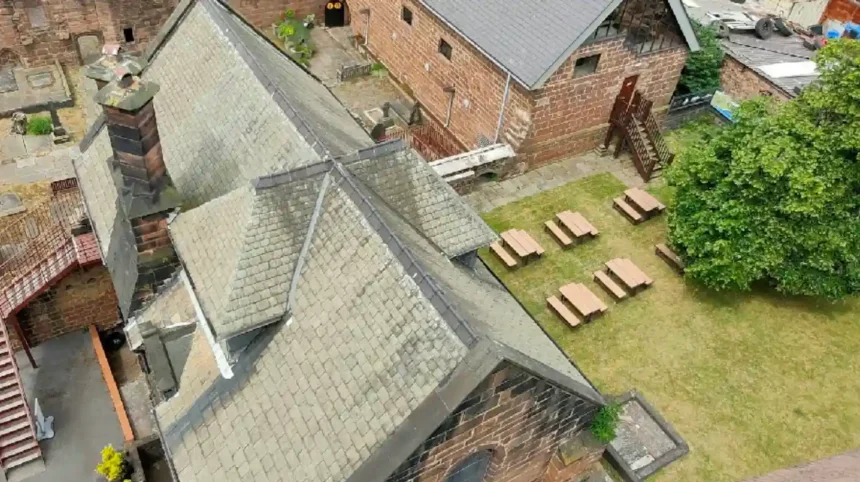
Birkenhead Priory stands as the oldest surviving structure in Merseyside. Founded in 1150 by Benedictine monks, the complex contains a medieval chapel, cloister remnants, and St. Mary’s Tower. Guests climb the 101 steps of St. Mary’s Tower for panoramic views over the Cammell Laird shipyard and the River Mersey.
Hamilton Square contains the highest concentration of Grade I listed buildings outside London, surpassed only by Trafalgar Square. Designed by Scottish architect James Gillespie Graham in 1826, the square showcases classic Georgian residential architecture surrounding central landscaped gardens. The prominent Birkenhead Town Hall, constructed from Storeton sandstone in 1887, anchors the eastern perimeter.
Why Is Birkenhead Park Considered a Historic Landmark?
Birkenhead Park is the world’s first publicly funded municipal park, opening on April 5, 1847. Designed by Sir Joseph Paxton, the park established a template for urban greenspace that directly influenced Frederick Law Olmsted’s design for Central Park in New York.
Birkenhead Park spans 140 acres of landscaped terrain designed to provide accessible open countryside for urban factory workers. Sir Joseph Paxton integrated naturalistic topography with engineered drainage systems, transforming marshland into functional public gardens. The landscape features two central lakes, winding perimeter walks, wide driveways, and expansive open meadows.
American landscape architect Frederick Law Olmsted visited Birkenhead Park in 1850. Olmsted noted the democratized access to natural beauty, subsequently incorporating Paxton’s spatial distribution principles, circulation routes, and meadow layouts into New York City’s Central Park. Birkenhead Park holds a Grade I listing on the National Register of Historic Parks and Gardens.
Architectural features inside the park include the Swiss Bridge, a wooden pedestrian structure spanning the upper lake, and the Italianate Boathouse. The Grand Entrance on Park Road East presents an ionic archway flanked by residential lodges. The park supports local biodiversity, housing mature oak, beech, and cherry trees along with native woodland bird populations.
What Exhibits Are inside the Williamson Art Gallery and Museum?
The Williamson Art Gallery and Museum displays the UK’s largest public collection of Della Robbia pottery, British watercolors, and maritime ship models. Located on Slatey Road, the gallery opened in 1928 to preserve regional decorative arts and industrial history.
The Williamson Art Gallery occupies a purpose-built neo-Georgian building housing fourteen display galleries. The Della Robbia pottery collection highlights the Arts and Crafts movement active in Birkenhead between 1894 and 1906. Local craftspeople produced colored lead-glazed earthenware, ceramic panels, and ornamental vases utilizing local clay deposits.
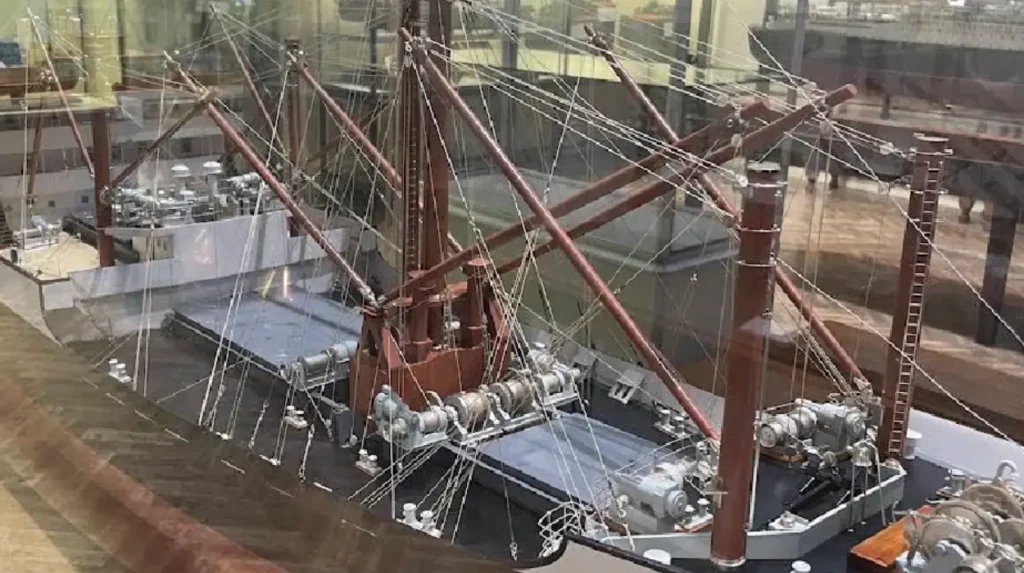
Maritime history displays showcase scale models of vessels constructed at the Cammell Laird shipyard. Displays include detailed builders’ models, historical naval artifacts, and documentation tracking regional maritime engineering from steam locomotives to mid-twentieth-century naval fleet construction.
Fine art collections feature Victorian oil paintings, English watercolors, and regional landscape studies. Works by Merseyside artists appear alongside temporary contemporary art exhibitions. The gallery operates an open courtyard cafe, an educational art workshop space, and a dedicated local history archive accessible to independent researchers.
How Does the Wirral Transport Museum Preserve Heritage Trams?
The Wirral Transport Museum operates preserved electric streetcars along the Wirral Heritage Tramway to Woodside Ferry Terminal. Volunteers restore and maintain vintage buses, cars, and electric double-decker trams within the Taylor Street depot facility.
Birkenhead became the first town in Europe to launch a street tramway on August 30, 1860, managed by American entrepreneur George Francis Train. The present museum opened in 1995 to protect operational transport artifacts. The Merseyside Tramway Preservation Society restores double-decker passenger trams originating from Birkenhead, Liverpool, Lisbon, and Hong Kong.
The main exhibition hall houses vintage motor vehicles, commercial delivery vans, historic motorbikes, and horse-drawn carriages. A large operational model railway layout depicts regional transport routes, stations, and industrial sidings across the Wirral Peninsula.
The Wirral Heritage Tramway runs operational services connecting the museum depot directly to the Mersey riverfront at Woodside. Trams travel on track laid along Pacific Road, giving visitors functional experience on mid-twentieth-century urban electric street railways.
Where Can You Find Contemporary Music and Arts in Birkenhead?
Future Yard on Argyle Street serves as Birkenhead’s primary independent music venue, community arts hub, and creative skills incubator. The venue hosts regional touring bands, community festivals, artist development workshops, and outdoor performance events.
Future Yard opened as a community-benefit society designed to revitalize the local live music ecosystem. The facility features a 280-capacity indoor performance space, a outdoor garden stage, and dedicated music practice rooms. The venue operates a music industry training program, providing regional youth with practical technical skills in live sound engineering, lighting design, and event management.
Bloom Building, located in the Abbey Close creative quarter, provides additional community arts programming, open-mic poetry, life drawing sessions, and exhibitions. The venue operates as a non-profit social enterprise where venue hire revenue directly funds local mental health and well-being initiatives.
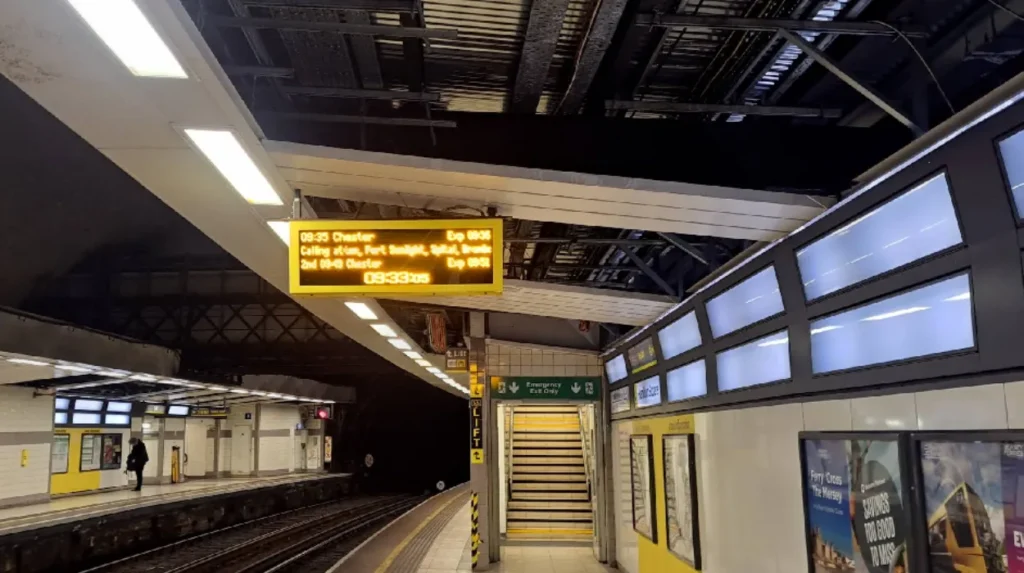
Convenience Gallery focuses on contemporary visual arts by partnering with local creators to deliver site-specific installations, public murals, and community workshops. These creative spaces establish an accessible modern arts circuit within short walking distance of Hamilton Square Station.
What Historic Walks and Nature Trails Border Birkenhead?
Bidston Hill provides 100 acres of heathland and woodland trails featuring historic monuments like the Bidston Windmill, Bidston Observatory, and Bidston Hall. Located on a sandstone ridge, the site offers views across the Welsh mountains, Wirral peninsula, and Liverpool bay.
Bidston Hill reaches 70 meters above sea level, forming one of the highest geographical points on the Wirral Peninsula. The Bidston Windmill, built in 1800, stands on the site of previous wooden mills used for grinding wheat. Bidston Observatory, established in 1866, historically conducted astronomical observations, timekeeping, and oceanographic tide research.
The Tam O’Shanter Urban Farm sits on the boundary of Bidston Hill, operating as a free community educational farm. The farm manages heritage livestock breeds, poultry, domestic farm animals, and educational garden plots for local school programs.
The Wonders of Birkenhead walking route covers two miles of historic urban terrain. The trail links Hamilton Square, Birkenhead Priory, the Shore Road Pumping Station, and Egerton Bridge, allowing pedestrians to view nineteenth-century hydraulic dock machinery and ventilation towers on foot.
Frequently Asked Questions
What is the single best attraction to visit in Birkenhead?
Birkenhead Park remains the top destination due to its global historic significance and status as the model for Central Park in New York. Visitors can explore acres of landscaped gardens, Italianate architecture, and peaceful lake paths.
Is Birkenhead Priory free to visit for tourists?
Birkenhead Priory offers free entry to explore its historic monastic grounds, medieval chapel, and museum displays. Visitors can also climb St. Mary’s Tower without admission charges to view the Mersey riverfront.
How do you get to Birkenhead from central Liverpool?
Travelers take direct Merseyrail underground train services from Liverpool Central or James Street to Hamilton Square Station in under ten minutes. Alternatively, passengers use the Mersey Ferry cross-river service arriving at Woodside Ferry Terminal.
Are the attractions in Birkenhead family-friendly?
Attractions like the Wirral Transport Museum, Tam O’Shanter Urban Farm, and Birkenhead Park offer interactive exhibits suited for children. Most venues feature flat access paths, picnic areas, and nearby public transport links.
Can you walk around Hamilton Square without guided tours?
Hamilton Square is a public municipal square fully accessible for self-guided walking tours at any time. Pedestrians can view the Grade I listed Georgian townhouses, the central war memorial, and Birkenhead Town Hall independently.