

Key Points
- A crash on the westbound M62 on 16 July 2026 has caused three lanes to remain closed between junction 12 (Eccles Interchange) and junction 11 (Birchwood).
- Traffic was briefly held at a standstill on that stretch, creating long queues and severe delays for drivers.
- The AA Roadwatch reports “severe delays of 16 minutes near M60 (Eccles Interchange)” with average speeds of 5mph.
- Further queues are reported on the M60, with increasing delays of 15 minutes on the southbound side of the Manchester Outer Ring Road.
- The disruption is affecting commuters, freight operators, and local residents across Greater Manchester and neighbouring areas.
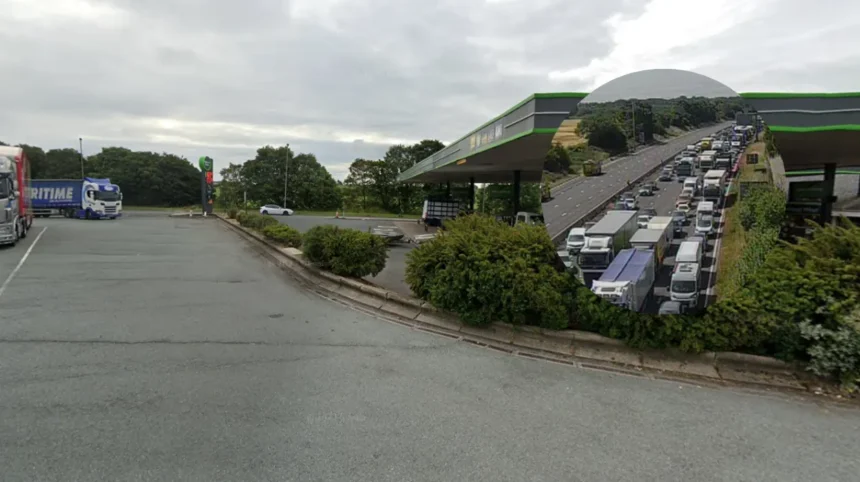
Liverpool (Liverpool standard) July 16, 2026 – Drivers are facing huge queues on a stretch of the M62 following a crash that brought the westbound motorway to a near standstill. According to the latest reports, traffic was briefly held at a standstill on the westbound motorway today, July 16, with three lanes remaining closed between junction 12, Eccles Interchange, and junction 11, Birchwood. The AA Roadwatch reports “severe delays of 16 minutes near M60 (Eccles Interchange)” with average speeds of 5mph and long queues building. Further queues are reported on the M60, with increasing delays of 15 minutes on the southbound side of the Manchester Outer Ring Road.
- Key Points
- How Have Traffic Conditions Changed Since the Crash Was Reported?
- What Do the Latest AA Roadwatch Figures Show About Delays and Speeds?
- Why Is This Incident Particularly Problematic for the M62 and M60?
- What Are the Immediate Implications for Commuters and Freight Operators?
- How Have Emergency and Highways Services Responded to the Incident?
- What Background Exists Behind This Development on the M62?
- How Could This Development Affect Drivers, Commuters, and Local Businesses in the Coming Days?
As reported by the AA Roadwatch, the incident has triggered a major disruption on one of the region’s busiest motorway links, with multiple lanes blocked and traffic forced to slow to crawling speeds. Emergency services and high-ways crews are understood to be on site, though the exact cause of the crash and the number of vehicles involved have not been officially confirmed in the initial bulletins.
How Have Traffic Conditions Changed Since the Crash Was Reported?
Traffic conditions deteriorated rapidly after the crash was first reported. As described by the AA, the westbound M62 saw “long queues building” and speeds dropping to as low as 5mph in the affected zone. The standstill created a ripple effect that spread onto connecting routes, particularly the M60, where southbound traffic encountered increasing delays of up to 15 minutes.
As noted in updates from AA Roadwatch, the situation remained unstable for several hours, with three lanes remaining closed between Eccles Interchange and Birchwood. This meant that only a narrow corridor of the motorway was available for use, forcing drivers to merge repeatedly and contributing to further congestion. Motorists who had planned to use the M62 as a shortcut into or out of Manchester were instead caught in stagnant traffic, with some reporting journey times more than double their usual duration.
What Do the Latest AA Roadwatch Figures Show About Delays and Speeds?
The AA Roadwatch has provided specific figures that illustrate the scale of the disruption. According to its live traffic data, delays near the M60 at the Eccles Interchange reached 16 minutes, with average speeds along the affected stretch of the M62 dropping to 5mph. These figures are particularly significant because they indicate that traffic was not merely slowed but effectively halted for extended periods.
Further queues are reported on the M60, with increasing delays of 15 minutes on the southbound side of the Manchester Outer Ring Road. As reported by the AA, these delays are not isolated to the immediate crash site but are instead part of a broader congestion pattern affecting multiple routes in the Greater Manchester area. The combination of high volumes of traffic, reduced lane capacity, and repeated merging has created a bottleneck that continues to feed back into the wider network.
Why Is This Incident Particularly Problematic for the M62 and M60?
The M62 is a critical east–west motorway link that connects Liverpool, Manchester, Leeds, and beyond. Any major disruption on this route has immediate consequences for regional travel, freight movements, and commuter patterns. As highlighted by traffic analysts, the closure of three lanes between Eccles Interchange and Birchwood removes a large proportion of the motorway’s capacity, forcing traffic to concentrate on a single or double lane configuration.
The M60, which serves as the Manchester Outer Ring Road, is already known for heavy congestion during peak hours. As reported by regional traffic observers, the additional pressure from M62-bound traffic diverting onto the M60 has exacerbated existing delays. The southbound side of the M60, in particular, has seen increasing delays of 15 minutes, according to AA figures. This dual impact on two major motorways means that the disruption is not contained to a single corridor but is instead affecting the heart of the region’s road network.
What Are the Immediate Implications for Commuters and Freight Operators?
For commuters, the incident translates into lost time, increased stress, and the likelihood of missing work appointments or other scheduled activities. Many drivers who rely on the M62 as part of their daily routine have been forced to seek alternative routes, which are often longer and less predictable. As noted by local transport commentators, such incidents can have a cumulative effect, with drivers altering their behaviour over time and perpetuating congestion even when the original incident has cleared.
Freight operators face a different set of challenges. Delays on the M62 and M60 can disrupt delivery schedules, increase fuel consumption, and reduce overall efficiency. As reported by logistics industry sources, the combination of long queues and reduced speeds means that vehicles spend more time on the road than planned, which can have financial implications for businesses that depend on tight time windows. In some cases, drivers may need to adjust routes at the last minute, adding complexity to navigation and increasing the risk of further delays.
How Have Emergency and Highways Services Responded to the Incident?
Emergency services and highways crews are understood to be on site, though detailed information about the scale of the response has not been fully disclosed in the initial reports. As reported by traffic monitoring organisations, the priority in such situations is typically to secure the scene, attend to any injured parties, and begin the process of clearing damaged vehicles and debris.
The closure of three lanes between junction 12 and junction 11 indicates that the incident has required a significant temporary reduction in motorway capacity. As noted by highways management guidelines, such closures are standard practice when there is a need to ensure the safety of both road users and intervention teams. The length of the closure suggests that the crash may have involved multiple vehicles or caused substantial damage that requires careful removal.
What Background Exists Behind This Development on the M62?
The M62 has long been recognised as a high-pressure corridor, particularly in the Greater Manchester area where traffic volumes are consistently high. The stretch between Eccles Interchange and Birchwood is known for its role in connecting suburban and industrial areas, as well as serving as a key route for regional and national traffic.
Incidents involving lane closures on this section of the motorway have occurred periodically in recent years, often due to collisions, vehicle breakdowns, or adverse weather conditions. As reported by transport authorities, the combination of high traffic density and the strategic importance of the M62 means that even relatively minor incidents can lead to significant delays. The current incident on 16 July 2026 follows this pattern, with a crash triggering a multi-lane closure and severe congestion across a wider network.
How Could This Development Affect Drivers, Commuters, and Local Businesses in the Coming Days?
In the immediate term, drivers and commuters are likely to continue experiencing delays if residual congestion or ongoing recovery work remains in place. As reported by traffic analysts, the effects of a major motorway incident can linger for several hours, with queues gradually dissipating as traffic returns to normal patterns. For those who rely on the M62 and M60 for daily travel, this means that alternative routes, adjusted departure times, or the use of public transport may become necessary for the rest of the day.
For local businesses, particularly those that depend on road freight or customer access via these motorways, the disruption could translate into delayed deliveries, reduced footfall, and increased operational costs. As noted by regional business commentators, the cumulative impact of such incidents can be significant, especially when they occur during peak periods. Over time, repeated disruptions on key routes like the M62 and M60 may encourage some businesses and commuters to reconsider their travel patterns, potentially leading to longer-term shifts in how the region’s road network is used.