
Key Points
- Mike Wharton, leader of Halton Borough Council since 2021, and his deputy Dave Thompson are both standing down as council leader and deputy leader.
- The decision comes two months after Labour suffered heavy losses in the May 2026 local elections in Halton.
- Wharton and Thompson will remain as ward councillors on the local authority.
- Wharton will also step down as deputy mayor of the Liverpool City Region, a role he has held since 2024.
- Jonathan Mackie, leader of Reform UK’s main opposition group on the council, said the resignations mark “the beginning of the end of an era of Labour failure.”
- Reform UK won 16 of the 19 seats up for grabs in May, while Labour remains the largest party overall after winning a recent by-election in Widnes.
- The council highlighted significant initiatives under Wharton and Thompson, including the Mersey Gateway Bridge, the £23.6m Reconnecting Runcorn Programme, a new Halton Leisure Centre, and improvements to The Brindley theatre.
- Halton Borough Council has faced financial difficulties and received a £35m government bailout last year.
- A process to appoint a new council leader and deputy leader will now begin; Labour councillors will select a new group leader, with a full council meeting planned for 8 July.
- Liverpool City Region Metro Mayor Steve Rotheram praised Wharton as a “brilliant ambassador” and said he will appoint a new deputy in the coming weeks.
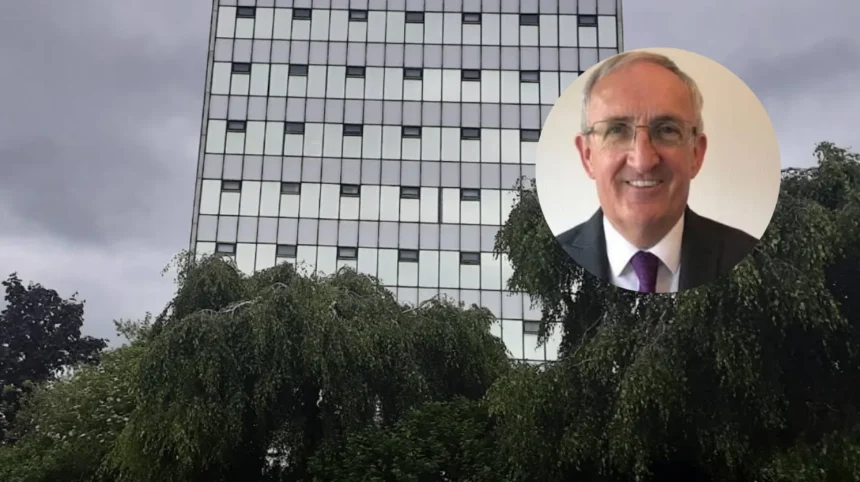
Halton Council (Liverpool Standard) July 03, 2026 – The leader of Halton Borough Council and his deputy have announced they are standing down, two months after Labour suffered heavy losses in the local elections. Mike Wharton and Dave Thompson will both continue as ward councillors on the local authority, but both will cease their leadership roles within the council. Wharton, who has led the council since 2021, will also step down as deputy mayor of the Liverpool City Region.
As reported by BBC News, Wharton said it was the “right time” to step back, adding that a new leader for Halton would bring “stability and continuity for the years ahead while also bringing fresh ideas and renewed energy”. Thompson, who served as deputy leader, is also leaving that post, though the detail of his future role beyond remaining a ward councillor has not been elaborated in initial reports.
Wharton’s departure from the deputy mayor role is particularly significant because it ties local council leadership to regional governance. He was appointed deputy metro mayor of the Liverpool City Region by Steve Rotheram in 2024, and his exit will require Rotheram to appoint a new deputy in the coming weeks. Rotheram, who praised Wharton for having been a “brilliant ambassador” for the region, confirmed that the appointment process for a new deputy would begin shortly.
What triggered the resignations and how do parties respond?
The resignations come in the wake of a deeply damaging local election result for Labour in Halton. Reform UK won 16 of the 19 seats up for grabs in May, leaving Labour with a severely weakened presence on the council. Although Labour won a by-election in Widnes last week and remains the largest party overall, the scale of Reform’s victory has reshaped the political landscape in the borough.
Jonathan Mackie, leader of Reform UK’s main opposition group on the council, said:
“These resignations mark the beginning of the end of an era of Labour failure. Changing the names at the top won’t change the culture that created these problems.”
Mackie’s comments, widely reported by BBC News, underscore the opposition’s view that the leadership change is superficial unless accompanied by broader reform.
Wharton, in his own statement, argued that stepping aside was the right decision for him, his family, and the council. He said:
“In recent weeks, as I have reflected on the opportunities that lie ahead for the borough and the important decisions the council will need to take, it’s become increasingly clear to me that stepping aside is the right thing for me, my family and for the council.”
He added that Halton has a “really bright future” and that a new leader, supported by the executive board, should lead the borough into its next chapter.
What has the council achieved under Wharton and Thompson?
The council has publicly acknowledged a range of significant initiatives overseen by Wharton and Thompson during their time as leader and deputy leader. According to the council’s statement, these include the opening of the Mersey Gateway Bridge, major town centre improvements, including the £23.6m Reconnecting Runcorn Programme, the opening of the state-of-the-art Halton Leisure Centre, and the enhancement of The Brindley theatre.
These projects have been central to the council’s narrative of development and regeneration in Halton. The Mersey Gateway Bridge, for example, has been a high-profile infrastructure project aimed at improving connectivity across the River Mersey. The Reconnecting Runcorn Programme, worth £23.6m, has focused on town centre regeneration, transport improvements, and community investment. The new leisure centre and theatre upgrades have been promoted as key elements of Halton’s cultural and social infrastructure.
Despite these achievements, the council has also faced serious financial challenges. Halton Borough Council has suffered financial difficulties recently, and last year received a £35m government bailout. This bailout has become a central point of criticism from opposition parties, who argue that it reflects long-standing mismanagement and fiscal weakness under Labour leadership.
How will the leadership transition be managed?
The council has confirmed that the process to appoint a new leader and deputy leader of Halton Borough Council will now begin. Labour councillors will select a new group leader, and it is likely that he or she will become the next leader at a full council meeting on 8 July. This timeline indicates a relatively swift transition, aimed at restoring political stability following the election shock.
Mackie, however, has dismissed the idea that a new Labour leader will resolve the underlying issues. He said: “It doesn’t matter who Labour appoint as their next leader. Every Labour councillor stood behind the decisions that brought Halton to this point. Replacing one Labour leader with another won’t fix years of mismanagement. It’s like replacing the driver who crashed the car with someone who helped plan the journey.” His remarks, reported by BBC News, suggest that Reform UK intends to keep pressure on Labour throughout the next year.
The appointment of a new deputy mayor of the Liverpool City Region will also require attention. Steve Rotheram indicated that he would appoint a new deputy in the coming weeks, though he has not yet named a candidate. This decision will have implications for how Halton is represented in regional decision-making, particularly on issues such as transport, housing, and economic development.
Background of the development
The resignations of Mike Wharton and Dave Thompson are rooted in a combination of electoral pressure, financial strain, and internal political reflection. Halton Borough Council has been under scrutiny for several years due to its financial management, culminating in a £35m government bailout last year. This bailout was widely interpreted as a signal that the council’s financial position had become unsustainable without external intervention.
The May 2026 local elections heightened the political crisis. Reform UK’s victory of 16 out of 19 seats represented a dramatic shift in local political power, reflecting voter dissatisfaction with Labour’s performance. Although Labour retained enough seats to remain the largest party overall, the scale of Reform’s success weakened Labour’s ability to govern effectively and set the tone for future contests.
Wharton’s leadership, which began in 2021, coincided with a period of both high-profile infrastructure projects and growing financial difficulties. While the council has highlighted achievements such as the Mersey Gateway Bridge and the Reconnecting Runcorn Programme, these have not fully offset批评 regarding fiscal management. The combination of these factors created a political environment in which Wharton and Thompson felt their continued leadership was no longer viable.
Prediction: How this development can affect Halton residents and local politics
The exit of Wharton and Thompson is likely to have several immediate and longer-term effects on Halton residents and the local political landscape. In the short term, the appointment of a new council leader and deputy leader will be crucial in restoring a sense of stability. Residents may expect a renewed focus on financial management, particularly in light of the recent government bailout and ongoing concerns about the council’s fiscal health.
For local politics, the resignations could intensify the contest between Labour and Reform UK. Reform’s strong performance in May has already positioned it as a significant opposition force, and Mackie’s comments suggest that the party will continue to press Labour on issues of mismanagement and accountability. If Labour’s new leader is unable to deliver visible improvements in service delivery, financial transparency, or economic development, Reform UK may seek to capitalise on this in the next round of local elections in May 2027.
Residents in Halton may also see changes in how the council engages with regional bodies, particularly the Liverpool City Region. With Wharton stepping down as deputy metro mayor, the new appointee could bring different priorities or approaches to regional collaboration. This could influence decisions on transport, housing, and economic investment that directly affect daily life in Halton.