
Key Points
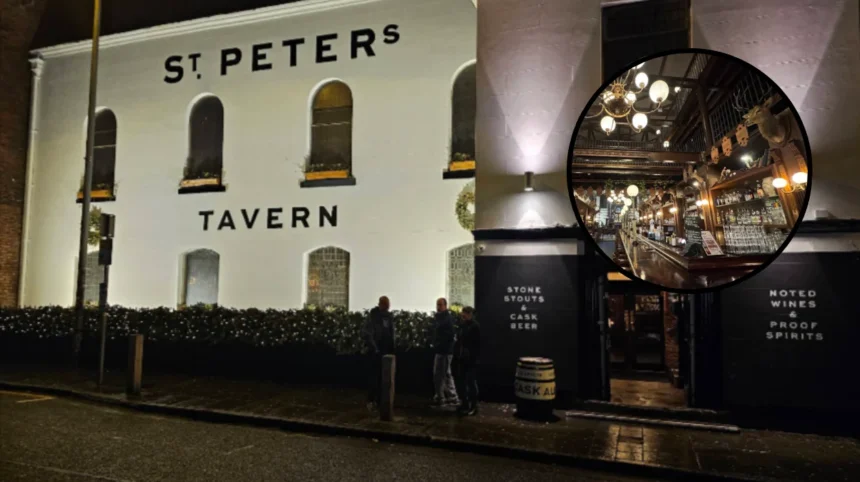
- Major Industry Recognition: St Peter’s Tavern, situated on Seel Street in Liverpool city centre, has officially secured the national title in the ‘Conversion to Pub Use’ category at the prestigious Campaign for Real Ale (CAMRA) Pub Design Awards.
- Architectural Transformation: The pub achieved national champion status following a meticulous, high-stakes structural conversion of an 18th-century, deconsecrated Roman Catholic church into a thriving public house.
- Preservation of Heritage: Spearheaded by hospitality group 1936 Pubco, the extensive restoration project safely opened the building’s spectacular historic galleried interior while completely reviving its classic façade.
- Bespoke Interior Features: Key design achievements include the installation of an striking 20-metre-long bar counter constructed out of recycled courthouse furniture, alongside custom glazing, new traditional pew seating, custom mirrors, and an expansive courtyard garden.
- Shared National Glory: St Peter’s Tavern did not hold the crown completely alone; the establishment was named the official joint national winner alongside the highly acclaimed Blue Stoops pub located in Kensington, London.
Liverpool (Liverpool Standard) June 23, 2026 – A historic city centre landmark has taken the top crown in British hospitality design following a breathtaking structural renaissance. St Peter’s Tavern, a prominent venue situated on the bustling Seel Street in Liverpool, has been officially named the national champion in the highly competitive ‘Conversion to Pub Use’ category at the Campaign for Real Ale’s (CAMRA) Pub Design Awards. The establishment secured the victory after successfully executing a complex engineering and architectural project that transformed a long-abandoned, deconsecrated 18th-century church into a vibrant, modern public house. The ambitious design layout has drawn widespread acclaim across the heritage preservation and hospitality sectors, solidifying the venue’s reputation for having one of the most extraordinary physical aesthetics in the country.
- Key Points
- What makes CAMRA’s Pub Design Awards so significant?
- Why was this conversion deemed the ultimate challenge for 1936 Pubco?
- How did designers restore the building’s 18th-century architecture?
- What new design elements were added to the space?
- Who did St Peter’s Tavern share the national championship title with?
What makes CAMRA’s Pub Design Awards so significant?
The Campaign for Real Ale’s Pub Design Awards, held annually in conjunction with Historic England, serve as a premier platform celebrating architectural excellence and creative preservation across the United Kingdom’s hospitality landscape. Rather than focusing solely on commercial output or beverage selection, these accolades explicitly honour venues that have undergone sensitive, loving revamps or extensive structural refurbishments.
The judging panel rewards everything from highly ambitious architectural conversions of non-residential spaces to minor community-led projects that make a profound, tangible difference to the social fabric of local neighbourhoods. By identifying spaces that successfully bridge historical memory with modern commercial utility, CAMRA seeks to establish a blueprint for how Britain can protect its vast urban architectural history without leaving historic structures empty or derelict.
Explore More uk/local/liverpool-city-centre/">Liverpool City Centre News
Car Park Safety Review Ordered After Joshua Perry Fall: Liverpool 2026
Liverpool PBSA Units For Sale: One Islington Plaza 2026
Why was this conversion deemed the ultimate challenge for 1936 Pubco?
The building that now houses St Peter’s Tavern carries immense architectural and religious history within the Merseyside region, having originally been constructed as a Roman Catholic church all the way back in 1788. Converting a building of such delicate antiquity required navigating a labyrinth of structural liabilities, strict local heritage guidelines, and complex spatial demands.
The owners of the site, the veteran hospitality developers at 1936 Pubco, publicly admitted that saving the church and turning it into a functional commercial tavern was their greatest physical and logistical challenge to date. The structural state of the centuries-old church required extensive stabilisation before any creative interior design elements could even be safely considered by the engineering teams on site.
How did designers restore the building’s 18th-century architecture?
The core architectural strategy relied heavily on highlighting, rather than obscuring, the grand spiritual space of the original 1788 building. The primary structural breakthrough involved completely opening up the spectacular, sweeping galleried interior, allowing natural light to flood the multi-level public house and showcasing the dizzying verticality of the former church.
Specialist restoration teams were brought in to delicately clean, patch, and preserve the historic external façade, maintaining its defining presence on Seel Street. Inside the main hall, the designers blended historical reverence with sustainable luxury, constructing an impressive, central 20-metre-long bar counter entirely formed out of heavy, beautifully re-engineered recycled courthouse furniture.
What new design elements were added to the space?
To seamlessly marry the ecclesiastical past of the building with the comforting atmosphere of a traditional British pub, a variety of bespoke interior assets were integrated throughout the vast ground floor and upper galleries. New custom-made traditional pew seating was fabricated to mirror original church layouts, offering comfortable yet thematic booths for patrons.
Additionally, precision glazing and custom-manufactured mirrors were strategically placed along the walls to bounce ambient light across the expansive wooden surfaces. Outside, the developers utilised the adjoining land to create an elegant, oasis-style courtyard garden, giving city-centre patrons an outdoor green space framed by the towering brickwork of the original late-Georgian church structure.
Who did St Peter’s Tavern share the national championship title with?
While the Liverpool development captured the hearts of the Northern design community, the final judging scores resulted in a tie at the very peak of the ‘Conversion to Pub Use’ category. St Peter’s Tavern was officially named the joint national winner alongside the Blue Stoops, a beautifully restored public house located in Kensington, London. Both venues were highlighted by the judges as peerless examples of how abandoned, structurally vulnerable properties can be creatively repurposed into stunning community hubs, effectively safeguarding British architectural history through commercially sustainable hospitality concepts.