

Key Points
- Who Is Behind the Proposal and What Does Liverpool FC Want?
- Why Are Residents and Politicians Opposing the Closure?
- What Does the Deferred Council Decision Mean Now?
- What Consultation Process Is Liverpool FC Undertaking Now?
- Broader Context: Stadium Expansion and Neighbourhood Impact in Liverpool
- Background of the Anfield Road Closure Development
- Prediction: How This Development Could Affect Liverpool Residents and Fans
- Liverpool City Council has deferred a decision on Liverpool FC’s request to permanently close part of Anfield Road to motor traffic following the club’s stadium expansion plan.
- The proposed closure covers the stretch between Stanley Park and Walton Breck Road via 97th Avenue, which has already been vehicle-free since construction began on the Anfield Road Stand.
- The club argues that a permanent closure would improve safety, reduce congestion, and create a pedestrian-friendly “public space” for fans and residents.
- Local residents, community groups, and some councillors have accused LFC of “betrayal” and warned the closure could worsen traffic on surrounding roads and harm access for disabled and elderly residents.
- Liverpool City Councillor Ellie Byrne had previously opposed the idea and continues to highlight concerns about displacement of traffic and impact on local streets.
- LFC says it is now undertaking a more comprehensive consultation with those most affected before any long-term proposals are put forward.
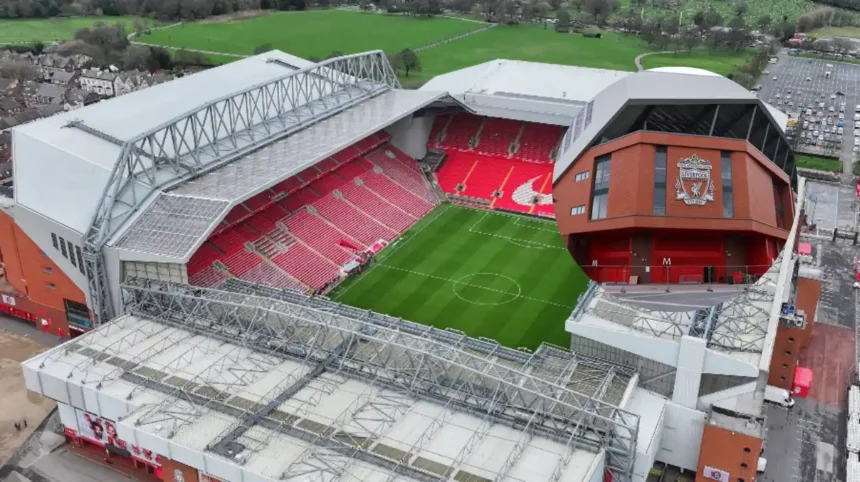
- The Anfield Road Stand expansion added around 7,000 seats, bringing total capacity to 61,000, and completed in the 2023/24 season after earlier delays.
- The issue has become a focal point in wider debates over how big clubs balance stadium growth with neighbourhood impact and transport planning in Liverpool.
Liverpool City Centre FC (Liverpool standard) July 01, 2026 – City Council has postponed a decision on granting Liverpool Football Club permission to permanently shut a section of Anfield Road to cars, as the club’s stadium expansion plan has triggered strong local opposition and political concern over traffic and access issues.
The dispute centres on a stretch of the highway linking Stanley Park to Walton Breck Road via 97th Avenue, which has been closed to vehicles since the Anfield Road Stand expansion work began. Liverpool FC wants that closure to become permanent, converting the area into a pedestrian and cycle-friendly public space, but councillors and residents have warned the move could push more traffic onto neighbouring streets and limit access for some vulnerable people.
As reported by Place Northwest, the council’s decision on the application has been deferred, meaning no final approval or rejection has been made at this stage. The postponement comes amid pressure from community groups and local politicians who argue that the club has not adequately considered the wider transport consequences of the proposal.
Who Is Behind the Proposal and What Does Liverpool FC Want?
Liverpool FC initiated talks with nearby residents last year about keeping the section of Anfield Road next to the stadium free of motor traffic and designating it as a shared space for pedestrians and cyclists. The club’s managing director, Andy Hughes, wrote to residents in September 2024 outlining these plans and seeking input from the community and key stakeholders.
In that letter, Hughes stated that the aim was to create a safer, quieter environment around the stadium, particularly on matchdays, by removing cars from the road and turning it into a public space. The proposal follows the completion of the Anfield Road Stand expansion, which added approximately 7,000 seats and raised the stadium’s capacity to 61,000.
The club has stressed that the consultation it is now conducting will be more comprehensive and focused on those most affected by the potential closure. LFC says it wants to gather detailed opinions before any long-term proposals are considered, indicating that the final design and scope could still change depending on feedback.
Why Are Residents and Politicians Opposing the Closure?
As reported by the Liverpool Echo, local people and some politicians are “up in arms” about the plan to permanently shut part of Anfield Road, with some accusing Liverpool FC of “betrayal”. The opposition is rooted in concerns that closing the road to cars will force drivers to use alternative routes, increasing congestion on nearby residential streets already struggling with traffic from matchday crowds.
Liverpool City Councillor Ellie Byrne, who had previously opposed the closure, has highlighted potential negative impacts on disabled and elderly residents who rely on vehicle access to their homes. She and other critics argue that the club has not fully assessed how traffic displaced from Anfield Road would redistribute across the local network, potentially worsening air quality and safety in surrounding areas.
Community groups have also questioned whether the benefits of a pedestrian-friendly zone around the stadium outweigh the risks to local mobility and access. Some residents have expressed frustration that the consultation process began after major construction was complete, leaving them feeling that their concerns were not integrated into the broader planning of the expansion.
What Does the Deferred Council Decision Mean Now?
The deferred decision means that Liverpool City Council has not yet granted or refused permission for the permanent closure of the Anfield Road stretch. In practical terms, the road will remain closed to vehicles in the same way it has been during the construction period, but the legal status of that closure remains temporary pending a final ruling.
This delay gives Liverpool FC and local stakeholders more time to negotiate, refine proposals, and potentially adjust the scope of the closure to address concerns about traffic displacement and access. It also allows the council to seek further evidence or transport modelling before making a determination that could have long-term implications for the area.
The postponement is likely to be seen as a sign that the issue is politically sensitive and that the council wants to avoid a decision that could lead to significant backlash from residents or legal challenges.
What Consultation Process Is Liverpool FC Undertaking Now?
Liverpool FC has stated that it is now conducting a more comprehensive consultation with residents who would be most impacted by the potential permanent closure of Anfield Road. The club aims to gather detailed feedback before any long-term proposals are formally considered, indicating that the final plan may be adjusted based on community input.
The club previously ran a survey in September 2024, which was accessible online and remained open until late March 2025, seeking opinions on the idea of keeping the road free of traffic and designating it as a public space. That exercise was followed by concerns from councillors and residents, prompting LFC to widen and deepen its engagement process.
Andy Hughes, in his letter to residents, acknowledged the need for further dialogue and indicated that the club would work closely with those living closest to the proposed closure to understand their concerns and priorities. This suggests that the outcome is not predetermined and that the final arrangement could differ from the initial proposal.
Broader Context: Stadium Expansion and Neighbourhood Impact in Liverpool
The Anfield Road Stand expansion, which began in 2021, faced significant delays when the main contractor, Buckingham Group, entered administration in August 2023. The project was eventually completed in the 2023/24 season, increasing the stadium’s capacity by around 7,000 seats to a total of 61,000.
The closure proposal emerges as part of a wider pattern in which big English clubs, including Liverpool and Everton, have pursued major stadium developments that reshape local transport and land use. Everton’s nearby stadium relocation and associated parking schemes have also sparked controversy, highlighting how matchday infrastructure changes can become flashpoints between clubs and communities.
In Liverpool, the Anfield Road issue has become a focal point for debates over how stadium growth should be balanced with the needs of local residents, transport planning, and environmental considerations. The deferred council decision reflects the complexity of these issues and the political sensitivity of altering road access in a densely populated urban area.
Background of the Anfield Road Closure Development
This development follows Liverpool FC’s decision to expand the Anfield Road Stand, a project that started in 2021 but was delayed by the administration of the primary contractor in 2023. Once completed in the 2023/24 season, the expansion added roughly 7,000 seats, raising Anfield’s total capacity to 61,000.
Since the start of the construction work, the section of Anfield Road between Stanley Park and Walton Breck Road via 97th Avenue has been closed to motor vehicles. In September 2024, Liverpool FC sought community input on making that closure permanent and converting the road into a pedestrian and cycle space. Strong opposition from residents, community groups, and councillors such as Ellie Byrne led the club to promise a more thorough consultation. The council’s decision on the formal application to permanently close the road has now been deferred, leaving the current temporary closure in place while further discussions take place.
Prediction: How This Development Could Affect Liverpool Residents and Fans
If the Anfield Road section is eventually permitted as permanently closed to cars, local residents living closest to the stadium could experience reduced vehicle noise and improved safety on matchdays, creating a more pedestrian-friendly environment around the stadium. However, the same closure could displace car traffic onto nearby residential streets, potentially increasing congestion, parking pressure, and air pollution in those areas, which would disproportionately affect households without alternative transport options.
For Liverpool FC fans, a permanent closure could make arrival and departure around the stadium smoother and safer, particularly for those walking or cycling, but may complicate journeys for supporters who rely on cars or need vehicle access due to disability or age. The outcome of the deferred council decision and the ongoing consultation will therefore shape whether the benefits of a quieter, safer stadium perimeter are felt more widely or whether they come at the cost of greater strain on surrounding neighbourhoods.