

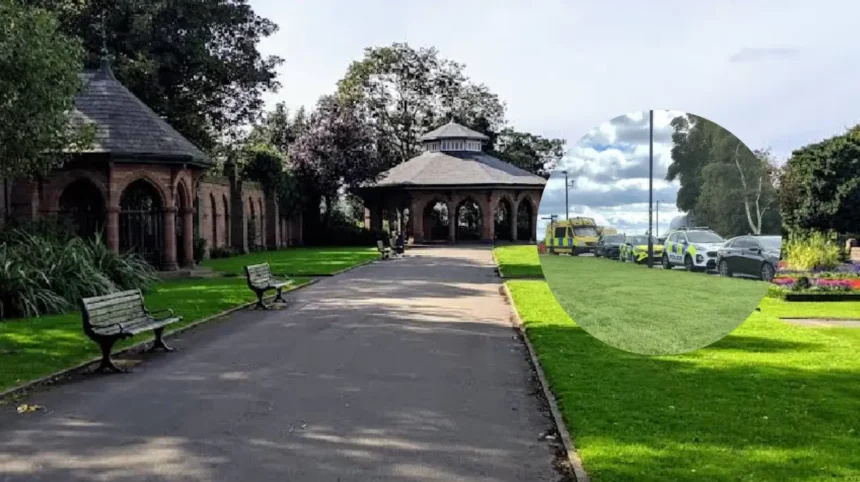
Key Points
- Following the discovery of the body of a woman who was inside a black bin bag in Stanley Park in Liverpool, Merseyside police commenced a murder inquiry on 28 August 2026.
- The suspected victim is a white female thought to be in her 70s, 5ft 2in in height with strawberry blonde hair, wearing a distinctive pink Nike T-shirt.
- The body is estimated to have been in the walled garden section for weeks before its discovery by police.
- DNA analysis has been carried out and the profile has not been matched on the national DNA database; no match has been found from dental records either.
- Over 120 calls have been made to the police offering information in relation to the woman and 40 names have been offered but the woman is still unidentified.
- A substantial number of police officers have been at Stanley Park following the discovery.
Liverpool Police (Liverpool standard) September 08, 2026 – Merseyside Police were called to Stanley Park, near Anfield Stadium, at about 17:25 BST on Friday 28 August 2026 after a member of the public reported a black bin bag in bushes within the walled garden area, close to the Isla Gladstone Conservatory. Officers who attended found the body of a woman inside the bag and immediately began what has become a murder investigation.
- Key Points
- Who is the unidentified woman found in Stanley Park?
- How has the investigation unfolded since the body was found?
- What have police and officials said about the case?
- Why has the woman not yet been identified?
- Background to the development in Stanley Park
- Prediction: How could this development affect Liverpool residents and park users?
As reported by reporters at the Liverpool Echo, detectives believe the body may have been at the location for “a number of weeks” before it was discovered. A post‑mortem examination has been carried out, but the force has said the cause of death is being withheld for investigative reasons.
Detective Superintendent Rachel Wilson, head of the major incident team at Merseyside Police, told a press conference that extensive enquiries had been carried out to identify the woman but had so far been unsuccessful. She said: “Our team have since been carrying out extensive enquiries to identify the woman, but we have so far been unable to do so.”
Who is the unidentified woman found in Stanley Park?
Police have released a detailed physical description in the hope that someone will recognise the victim. They believe she is a white woman in her 70s, approximately 5ft 2in (about 157cm) tall, of slight build, with strawberry‑blonde hair. When found, she was wearing what officers described as a “distinctive” pink Nike T‑shirt.
Despite this information and widespread media coverage, her identity has not been established. As reported by the BBC, more than 40 possible names have been put forward by members of the public since the murder investigation was launched, but none has led to a confirmed identification. More than 120 people have contacted police with information or potential sightings.
Forensic testing has established a DNA profile from the woman, but that profile has not matched anyone on the UK’s national DNA database. Dental records have also been reviewed but have not produced an identification, according to coverage by People and other outlets.
How has the investigation unfolded since the body was found?
A murder investigation was formally launched on 29 August 2026, with specialist detectives from Merseyside Police’s major incident team taking the lead. In the days that followed, officers maintained a visible presence in and around Stanley Park, including near the walled garden where the body was discovered.
Detectives have conducted house‑to‑house enquiries, reviewed CCTV and sought witness accounts from people who may have seen suspicious activity in the area in the weeks before 28 August. As reported by ITV News Granada, Detective Superintendent Wilson said the force had been carrying out “extensive enquiries” to identify the woman and establish the circumstances of her death.
Police have repeatedly appealed for anyone with information to come forward, including people who may have been in the park in late July or August, or who may recognise the description of the woman or her clothing. The force has stressed that even details that seem minor could be significant to the investigation.
What have police and officials said about the case?
Senior officers have described the discovery as “shocking” and have emphasised the unusual and distressing nature of the case. Detective Superintendent Rachel Wilson, who is leading the investigation, has addressed the media on multiple occasions to update the public and issue fresh appeals.
As reported by HelloRayo’s Greatest Hits Radio, Wilson told a press conference: “Our team have since been carrying out extensive enquiries to identify the woman, but we have so far been unable to do so.” She has thanked the public for coming forward but urged anyone with further information, no matter how small, to contact Merseyside Police or Crimestoppers.
Local coverage by the Liverpool Echo has quoted officers saying that the scale of the response more than 120 witness reports and dozens of suggested names underlines how much the case has resonated with the community, even as the central question of the woman’s identity remains unanswered.
Why has the woman not yet been identified?
Detectives have pointed to several factors that have complicated identification. Although forensic scientists have been able to generate a DNA profile from the remains, that profile has not matched any record on the national database, which limits one of the most powerful tools typically available in such cases.
Dental records have also been examined but have not produced a match, according to reporting by People and other outlets. The possibility that the woman may not have been in regular contact with services that would generate identifiable records, or that she may have been living away from family or support networks, has been implied in coverage, though police have not confirmed any specific theory about her background.
The length of time the body may have been in the park — potentially several weeks — could also have affected the condition of the remains and the availability of certain types of evidence, although officers have not given detailed comment on this beyond stating the body was believed to have been there for “a number of weeks”.
Background to the development in Stanley Park
Stanley Park is a large public park in north Liverpool, situated between Anfield Stadium, home of Liverpool FC, and Goodison Park, formerly home of Everton FC. The walled garden area, close to the historic Isla Gladstone Conservatory, is a well‑used part of the park and is visible from nearby paths and roads.
The discovery of a body in such a prominent and frequently visited location has prompted a significant policing response and widespread local concern. While violent incidents do occur in the city, the circumstances of this case — an unidentified elderly woman found inside a bin bag in a public park — are unusual and have drawn attention from national as well as local media.
Merseyside Police have treated the death as murder from an early stage, reflecting the nature of the discovery and the initial assessment of the scene. The force has continued to maintain officers in the area both to support the investigation and to reassure local residents and visitors.
Prediction: How could this development affect Liverpool residents and park users?
If the woman is identified and the investigation progresses, the immediate effect is likely to be a mixture of relief and renewed grief for any family or friends who have been waiting for news of a missing relative. For the wider Liverpool community, a resolution could provide some closure but may also prompt difficult questions about how an elderly person came to die and be left in a public space for weeks without being recognised.
In the shorter term, the ongoing police presence and media attention may make some local residents and park users more anxious about using certain parts of Stanley Park, particularly the walled garden and more secluded areas. That could lead to calls for improved lighting, more frequent patrols, or changes to how the park is managed at night.
For Merseyside Police, the case underlines the challenges of investigating deaths where the victim is unknown and not on national databases. It may encourage closer working with missing‑persons charities, care homes, and community groups to cross‑check descriptions and names, and could influence how future unidentified‑body cases are handled in the region.