

Key Points
- Whitbread confirms all 106 remaining Beefeater restaurants will close permanently on 10 September 2026.
- Approximately 3,800 jobs across the UK and Ireland are at risk as part of the restructuring plan.
- The closures are driven by “significant cost increases” and higher taxes affecting the restaurant division.
- Whitbread aims to save £250 million over five years by shifting to a “pure-play hotel” model focused on Premier Inn.
- Many former Beefeater sites adjoining Premier Inn hotels will be converted into additional hotel rooms and integrated food-and-beverage offers.
- Closure dates for Brewers Fayre and Bar + Block restaurants remain unconfirmed, though they are also part of the wider shutdown.
- A full list of 106 Beefeater locations has been published, including sites from Lincolnshire to Glasgow.
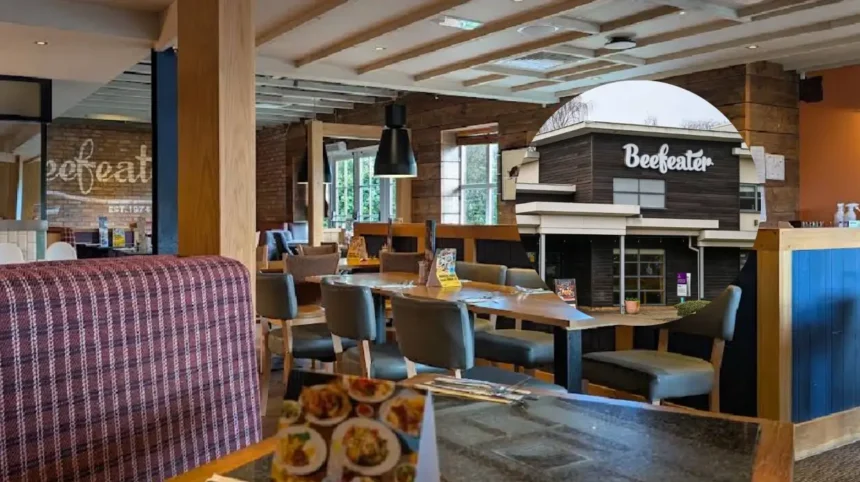
UK (Liverpool standard) July 25, 2026 – Beefeater, the long-standing UK pub and restaurant chain, will permanently close all 106 of its remaining sites on Thursday, 10 September 2026, marking the end of an era for the 52-year-old brand. The announcement, confirmed in a letter to Beefeater reward club members and reported across multiple outlets, places around 3,800 jobs at risk as parent company Whitbread pushes ahead with a major restructuring plan to save £250 million over the next five years.
- Key Points
- Why Is Whitbread Closing All Beefeater Restaurants?
- Full List of Beefeater Restaurants Closing in September 2026
- What Happens to Brewers Fayre and Bar + Block?
- Statement from Whitbread and Industry Reaction
- Background: How Did Beefeater Reach This Point?
- Prediction: What Does This Mean for Diners, Staff, and Local Communities?
As reported by journalists at the Mirror, Express, and GB News, Whitbread cited “significant cost increases” and rising taxes as key factors behind the decision to exit the standalone restaurant market entirely. The company says it will transition to a “pure-play hotel business” model, focusing exclusively on its Premier Inn brand while converting many former restaurant spaces into additional hotel rooms and integrated food-and-beverage offers.
Why Is Whitbread Closing All Beefeater Restaurants?
Whitbread’s strategic shift comes amid sustained pressure on the UK hospitality sector, with inflation, energy costs, and business rates squeezing margins for standalone dining brands. As reported by The Guardian in April 2026, Whitbread described the move as part of a “five-year plan” to streamline operations and redeploy capital toward its more profitable hotel division.
According to coverage by the Sun and GB News, the company plans to sell or lease back up to £1.5 billion in freehold properties linked to the restaurant estate, using the proceeds to fund further Premier Inn expansion. Many Beefeater sites located adjacent to Premier Inn hotels will be repurposed to create approximately 600 new hotel rooms, alongside a new “integrated food and drink model” tailored to hotel guests.
Whitbread has stated it expects to retain a “significant proportion” of affected staff through redeployment within its remaining business locations, though consultations with employees and unions are ongoing.
Full List of Beefeater Restaurants Closing in September 2026
The confirmed closure list includes 106 Beefeater sites across England, Scotland, and Wales. Among those named in reporting by the Mirror and GB News are: The Anchor (Lincolnshire), The Applecart (Oxford), Badgers Sett (Worcestershire), Bagle Brook (Port Talbot), Balmoral Inn (Hampshire), The Barn (Buckinghamshire), The Beacon (Kent), The Belgrave (Devon), Bentley Green (West Midlands), Border Gate (Cumbria), The Brache (Bedfordshire), The Brecks (South Yorkshire), Broomside Park (County Durham), The Bull (Kent), Carnon Inn (Cornwall), Centre (Dundee), The Coldra (Newport), Countess Wear (Devon), The Cricketers (Surrey), Crossbush (Sussex), Crows Nest (Hertfordshire), Deer Park (West Lothian), The Dukes Worksop (Nottingham), Eureka Park (Kent), Euston Way (Shropshire), The Farmhouse (Cheshire), Farnborough (Hampshire), The Fountain (Greater London), The Foxburrow (Suffolk), Frome Flyer (Bristol), George In The Tree (West Midlands), The Gifford (Bristol), Gourdie Croft (Dundee), The Granary (Cambridgeshire), Great Oak (Hampshire), Great Yarmouth Seafront (Norfolk), Griff House (Warwickshire), Halfway House (Bedfordshire), Halifax (West Yorkshire), Hamilton (Glasgow), Harbour Lights (Hampshire), Harlow Mill (Essex), The Haywain (Essex), Heaton Park (Lancashire).
Further locations include Heritage (Devon), The Hideaway (Essex), Highfield (Hampshire), Hillside (Devon), Holmfield (West Yorkshire), Holywell (Flintshire), The Horse & Groom (Surrey), The Huntsman (Hampshire), The Junction (Essex), Kings Head (Hampshire), The Lodge (Devon), Longbridge (Hampshire), The Manor (Oxfordshire), Meadow View (Hertfordshire), The Meadway (Essex), Mitre (Hampshire), New Inn (Devon), The Oak (Kent), The Old Mill (Essex), The Orchard (Kent), Oxstalls (Gloucestershire), The Packet Steamer (Merseyside), The Pavilion (Devon), Pelican Cross (Devon), The Pheasant (Devon), The Plough (Kent), The Potters (Hertfordshire), The Preston Brook (Cheshire), The Red Lion (Kent), The Riverside (Essex), The Rockingham (Northamptonshire), The Royal Oak (Kent), The Saffron (Essex), The Ship (Kent), The Sloop (Hampshire), The Southgate (Essex), The Stag & Rainbow (Merseyside), The Stables (Devon), The Star (Kent), The Station (Essex), The Swan (Kent), The Tannery (Essex), The Tollgate (Kent), The Tower (Essex), The Trinder (Essex), The Trumpet (Essex), The Union (Essex), The Victoria (Kent), The Waggon & Horses (Kent), The Walnut Tree (Essex), The Warren (Essex), The Waterfront (Essex), The Weir (Essex), The White Horse (Kent), The White Lion (Essex), The White Swan (Essex), The Windmill (Essex), The Woodman (Essex), The Woolpack (Essex), The Yacht (Essex).
What Happens to Brewers Fayre and Bar + Block?
While Beefeater’s closure date is fixed, Whitbread has not yet confirmed final shutdown dates for its Brewers Fayre and Bar + Block restaurants. As noted in reporting by the Mirror and Wikipedia, these brands are also part of the wider restructuring, with all 197 remaining Whitbread restaurant sites (including Beefeater, Brewers Fayre, and Bar + Block) earmarked for closure or conversion.
Some Brewers Fayre locations have already ceased trading in recent months, including sites in Godalming, Surrey, and several in Merseyside such as Ocean Plaza (Southport), Preston Brook (Runcorn), and the Stag & Rainbow (Queens Drive, Liverpool).
Statement from Whitbread and Industry Reaction
In a statement covered by the Express and The Guardian, Whitbread said the decision reflects a “strategic reset” designed to strengthen its core hotel business in the face of “higher costs and taxes” impacting the restaurant sector. The company added that it is committed to supporting affected colleagues through redeployment opportunities where possible.
Unions and hospitality campaigners have expressed concern over the scale of job losses. As reported by the Guardian, the closures will affect nearly 12% of Whitbread’s 30,000-strong UK and Ireland workforce, with particular impact on staff employed in Beefeater and Brewers Fayre outlets.
Background: How Did Beefeater Reach This Point?
Beefeater was founded in 1974 and became a staple of British family dining, known for its 30-day aged steaks, mixed grills, and riverside pub locations. At its peak, the chain operated more than 200 sites across the UK. However, in April 2024, Whitbread announced plans to close 112 restaurants, converting many into “more profitable” Premier Inn hotel rooms.
By April 2026, the company confirmed it would close all remaining 197 restaurant sites (including Beefeater, Brewers Fayre, and Bar + Block), citing sustained underperformance relative to its hotel division. The final 106 Beefeater sites represent the last standalone outlets of the brand before its complete exit from the UK restaurant scene.
Prediction: What Does This Mean for Diners, Staff, and Local Communities?
The closure of all 106 Beefeater restaurants will have wide-ranging effects. For regular diners, the loss removes a familiar, mid-priced family dining option from high streets and retail parks across the country. For the 3,800 employees at risk, the transition will depend on Whitbread’s ability to redeploy staff into Premier Inn or other hospitality roles—though union representatives warn that many may face redundancy or reduced hours.theguardian+1
Local communities could also feel the impact, particularly in areas where Beefeater sites anchor retail or leisure parks. Property analysts suggest that many former restaurant buildings will be repurposed for hotel expansion or sold to other operators, potentially altering the character of local high streets. In the longer term, the shift underscores a broader trend in UK hospitality: the consolidation of budget hotel chains and the decline of standalone, mid-market pub restaurants.