

Key Points
- A 22-year-old man, William Keeling, from Springbank in Cheltenham, has been charged with wounding after an alleged stabbing in a town centre car park in Cheltenham, Gloucestershire, on Thursday morning, 2026.
- Keeling has also been charged with possession of a bladed article and common assault in connection with the same incident.
- The incident reportedly occurred shortly after 06:00 BST in a car park in Rodney Road, Cheltenham, involving a male victim in his 20s from Gloucester.
- The victim is understood to have suffered a stab wound to the back and remains in hospital in a stable but serious condition, according to Gloucestershire Police.
- Keeling is set to appear at Cheltenham Magistrates’ Court later, where the charges of wounding, possession of a bladed article and common assault will be formally put to him.
- Gloucestershire Police have confirmed the charging decision and continue to investigate the circumstances surrounding the incident in Rodney Road car park.
- Officers are likely to review CCTV footage, speak to witnesses and carry out forensic enquiries at the car park and surrounding area as part of the ongoing investigation.
- The case highlights continuing concerns over knife-related offences and serious violence involving young adults in Gloucestershire and across the wider UK.
UK (Liverpool standard) July 17, 2026 – As reported by Gloucestershire Police in their official communication, 22-year-old William Keeling, of Springbank in Cheltenham, has been charged with wounding following an alleged stabbing incident in a car park off Rodney Road in Cheltenham shortly after 06:00 BST on Thursday. The force has also confirmed that Keeling faces additional charges of possession of a bladed article and common assault arising from the same incident, reflecting the seriousness with which officers are treating the matter.
- Key Points
- What is known about the incident in Rodney Road car park?
- How is the victim’s condition described by police?
- What court appearance has been scheduled for the defendant?
- How does possession of a bladed article and common assault fit into the case?
- What investigative steps are police likely to take following the alleged stabbing?
- How does this case sit within wider concerns about knife crime in Gloucestershire and the UK?
- How might the magistrates’ hearing shape the next steps in the case?
- How are local communities likely to respond to an alleged stabbing in a town centre car park?
- Background to the Cheltenham stabbing and charges
- Prediction: How could this development affect local residents and the wider public?
According to the police account, the decision to charge Keeling was taken after initial enquiries at the scene and at the station, where he was understood to have been questioned in connection with the alleged attack. Officers will now prepare an evidential file for the Crown Prosecution Service (CPS), although the charging decision has already been made in relation to these three offences, allowing the case to proceed to Cheltenham Magistrates’ Court.
What is known about the incident in Rodney Road car park?
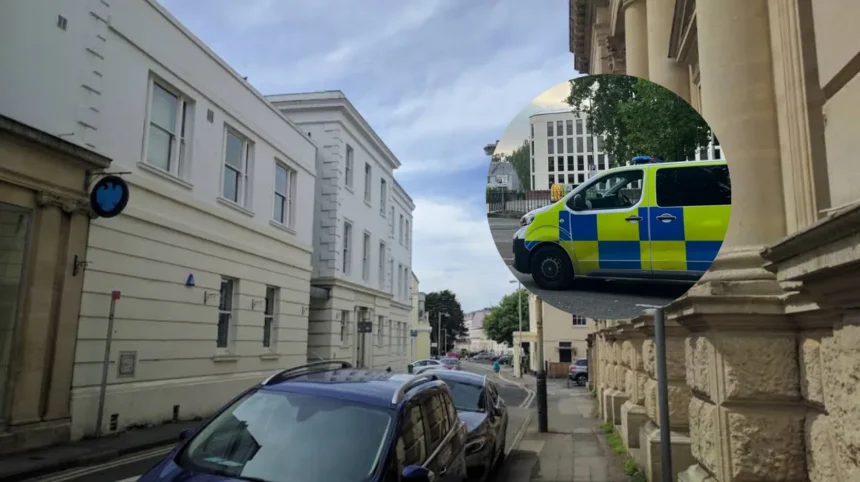
As stated by Gloucestershire Police, the incident occurred shortly after 06:00 BST on Thursday in a car park in Rodney Road, Cheltenham, a location close to the town centre and accessible to early-morning commuters, residents and businesses. The victim, described by police as a man in his 20s from Gloucester, is believed to have been in the car park at the time when an altercation led to him being allegedly stabbed in the back.
The force has indicated that emergency services were called to the scene following reports of a serious assault, with officers and ambulance crews attending to the injured man. The car park itself is likely to have been cordoned off for several hours as part of the initial investigation, allowing crime scene investigators to examine the area for any physical evidence, including the alleged bladed article and any other items that could assist in reconstructing the events leading up to the stabbing.
How is the victim’s condition described by police?
According to Gloucestershire Police, the victim, a man in his 20s from Gloucester, remains in hospital in a stable but serious condition following the alleged stabbing to his back. This description suggests that while his immediate condition is not believed to be life-threatening at present, the injury is serious enough to require ongoing medical treatment and careful monitoring.
Police are likely to stay in contact with medical staff treating the victim, both to understand any change in his condition and to assess when he may be fit enough to provide a formal statement about what happened. In cases involving serious violence, the victim’s account can be a central part of the evidential picture, alongside witness statements, CCTV footage and forensic findings, and any deterioration or improvement in his health may also be relevant to how the case progresses.
What court appearance has been scheduled for the defendant?
Gloucestershire Police have stated that William Keeling is set to appear at Cheltenham Magistrates’ Court later, where he will face the charges of wounding, possession of a bladed article and common assault. At this initial hearing, magistrates will typically confirm the defendant’s identity, outline the charges and consider issues such as legal representation, plea (if entered at this stage) and whether the case should be sent to a higher court, given the seriousness of the wounding allegation.
Magistrates will also determine whether Keeling is remanded in custody or granted bail, subject to conditions, pending further hearings. Decisions on bail in serious violence cases can take into account factors such as the nature of the alleged offence, any previous history, community ties and the risk to the public or to witnesses. If the wounding charge is considered sufficiently serious, the matter may be committed to the Crown Court for trial or sentencing, should Keeling ultimately be convicted or plead guilty.
How does possession of a bladed article and common assault fit into the case?
The additional charges of possession of a bladed article and common assault sit alongside the central wounding allegation and provide further legal context to the events in Rodney Road car park. Under UK law, carrying a bladed article in a public place without lawful authority or reasonable excuse is a criminal offence, and the fact that Gloucestershire Police have charged Keeling with this offence indicates they believe a knife or similar weapon was present during the incident.
The charge of common assault generally relates to actions that cause another person to fear immediate unlawful violence or involve minor physical contact, and in this case it is understood to arise from behaviour linked to the broader incident in the car park. Taken together, the three charges sketch a picture of what investigators allege occurred: the presence of a blade, an assault, and a resulting wound, which the authorities are now putting before the courts for determination.
What investigative steps are police likely to take following the alleged stabbing?
Gloucestershire Police have confirmed that the case remains under investigation, and standard practice in a serious assault of this kind would involve several key steps to establish what happened in Rodney Road car park. Officers are expected to gather CCTV footage from the car park itself, nearby shops, residential buildings and any public cameras in the vicinity, with the aim of tracing the movements of both the victim and the defendant before and after the alleged stabbing.
In addition, police will seek witness statements from anyone who was in or near the car park at the time, including early-morning workers, residents and passers-by, to corroborate or clarify the sequence of events. Forensic officers will examine any recovered bladed article for fingerprints, DNA and other trace evidence, and may also look for bloodstains, footprints or discarded clothing in and around the car park. All of this material will contribute to an evidential file that can be used by prosecutors and presented in court, subject to legal rules and the defendant’s right to challenge the case against him.
How does this case sit within wider concerns about knife crime in Gloucestershire and the UK?
Although Gloucestershire Police have focused on the specifics of the Rodney Road incident, the charges against William Keeling inevitably resonate with wider concerns about knife crime and serious violence involving young adults in Gloucestershire and across the UK. National and local statistics in recent years have highlighted recurring issues around the carrying of bladed articles, street violence and assaults taking place in public spaces such as car parks, high streets and transport hubs.
Local forces, including Gloucestershire Police, have run periodic campaigns urging people not to carry knives and warning of the legal and personal consequences of doing so. High-profile cases, even when they involve non-fatal injuries, can influence public debate, lead to renewed calls for prevention work and encourage communities to cooperate with police operations. The fact that the victim in this case remains in a serious condition, albeit stable, underscores the potential harm associated with knife-related incidents, even when the injuries are not immediately life-threatening.
How might the magistrates’ hearing shape the next steps in the case?
The upcoming appearance of William Keeling at Cheltenham Magistrates’ Court will be a key procedural moment, setting the framework for how the case progresses through the criminal justice system. Magistrates will consider whether the wounding charge, alongside the bladed article and common assault charges, should be dealt with at magistrates’ level or sent up to the Crown Court, where more serious trials and sentencing take place.
The hearing will also clarify Keeling’s immediate legal position: if he indicates a plea at this stage, that could influence the timetable and the court to which the case is allocated; if not, the matter will move forward with further preparatory hearings. Conditions set at this point, such as bail terms or reporting restrictions, can also shape how much information becomes publicly available as the case unfolds, and will affect how quickly the trial or subsequent hearings can be scheduled.
How are local communities likely to respond to an alleged stabbing in a town centre car park?
While Gloucestershire Police have concentrated on the facts of the case, incidents of alleged serious violence in visible public locations, such as a town centre car park in Cheltenham, can generate concern among local residents, workers and visitors. People who use the Rodney Road area regularly may be anxious about safety, particularly at quieter times of the day, and may look to police and local authorities for reassurance through visible patrols or information about steps being taken.
Local businesses operating near the car park could also be affected by any temporary closures, cordons or disruption arising from the investigation, and might adjust opening plans or customer guidance if access routes are restricted. Community groups and local representatives often play a role in channeling questions to the police, encouraging witnesses to come forward and supporting broader efforts to address the causes of violent incidents, especially when they involve young adults and bladed articles.
Background to the Cheltenham stabbing and charges
Gloucestershire Police’s confirmation that a 22-year-old man, William Keeling, has been charged with wounding, possession of a bladed article and common assault follows established procedures for dealing with incidents of serious violence in the county. The alleged stabbing in Rodney Road car park shortly after 06:00 BST on Thursday took place in a central location within Cheltenham, a town known both for its residential neighbourhoods, such as Springbank, and for its busy commercial and cultural areas.
Rodney Road and its car park serve local businesses, offices and amenities, making the reported early-morning assault particularly visible to any commuters or staff arriving in the area. The victim’s description as a man in his 20s from Gloucester indicates that people move between nearby towns, and that serious incidents can draw in individuals from across the wider county, rather than being confined to one locality. Gloucestershire Police have, in previous years, highlighted the importance of tackling knife crime through enforcement and prevention campaigns, and the inclusion of a bladed article charge in this case aligns with that emphasis.
Within the UK legal framework, wounding is a significant offence, and when linked to the use of a bladed article, it can carry substantial penalties if proven in court. The decision to bring the case before Cheltenham Magistrates’ Court is standard practice, with magistrates empowered to manage the early stages and direct more serious matters to the Crown Court. Against this backdrop, the Rodney Road incident fits into a wider pattern of concerns about the presence of knives in public spaces, the risks of disputes escalating into serious violence, and the role of local policing and justice systems in responding promptly to protect the public.
Prediction: How could this development affect local residents and the wider public?
The charging of William Keeling with wounding, possession of a bladed article and common assault following the alleged stabbing in Rodney Road car park is likely to have several potential impacts on local residents, visitors to Cheltenham and the wider public in Gloucestershire. In the short term, people who use the town centre car parks and surrounding streets may feel heightened concern about safety, particularly during quieter periods, and could adjust their routines or seek more information from police and local authorities about patrols and security measures.
Local awareness of knife-related offences may increase, encouraging some individuals to engage more actively in community safety initiatives, report suspicious behaviour and participate in discussions about prevention. For young adults, who feature both as the alleged defendant and the victim in this case, the development may serve as a reminder of the legal consequences of carrying bladed articles and the serious harm that can result from violent confrontations, potentially reinforcing the deterrent effect of existing laws and campaigns.
From a policing perspective, the case may prompt renewed emphasis on targeted operations around known hotspots, including town centre car parks and public spaces, as well as continued liaison with schools, colleges and youth services to address underlying issues linked to knife carrying. For the wider public, the outcome of the court proceedings whether in terms of conviction, acquittal or sentencing could shape perceptions of how effectively the justice system responds to serious violence, influencing confidence in local institutions and the willingness of communities to cooperate with investigations and crime prevention efforts.