
Key Points
- Tower cranes have been installed on the St Helens town centre regeneration site.
- The cranes are described as one of the most visible signs of major construction progress.
- They were erected between 30 June and 3 July by a mobile crane.
- The equipment includes a Wolffkran WK 235B and a Wolffkran WK 166B XX.
- The cranes stand at 22.5 metres and can lift up to 16 tonnes.
- They will support construction of the 120-bedroom Hampton by Hilton Hotel and a 56-apartment block.
- The regeneration work is being led by St Helens Borough Council, ECF and main contractor VINCI Building.
- The town centre regeneration programme forms part of a wider 20-year regeneration project.
St Helens (Liverpool standard) July 27, 2026 – tower cranes are now a defining feature of the town centre regeneration site as the project moves into a more advanced stage of construction. Their installation marks a clear shift from early groundwork into the main build phase, with the equipment already visible above the hoardings and set to remain part of the skyline for months to come.
The cranes are being seen as one of the clearest signs that the transformation of St Helens town centre is gathering pace. According to the project update, they are the first tower cranes to be installed in the town centre and are expected to become a familiar sight as construction continues.
What equipment has been installed?
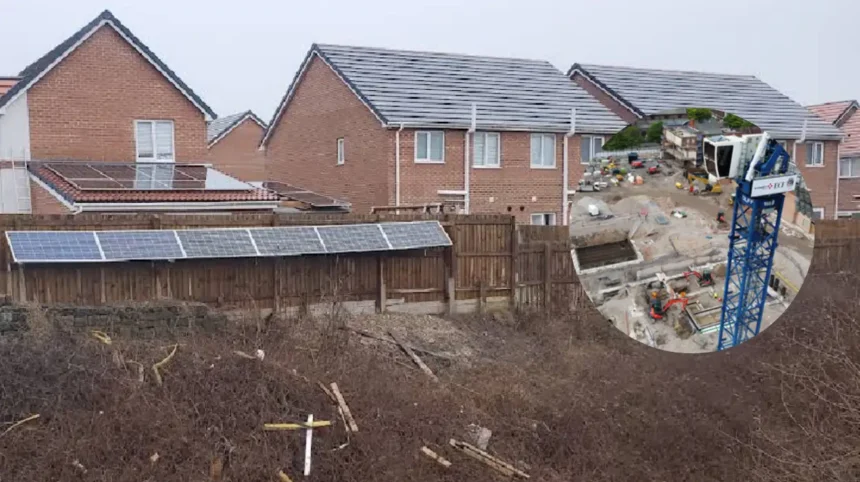
Supplied by Mayo on behalf of main contractor VINCI Building, the site now has a Wolffkran WK 235B and a Wolffkran WK 166B XX tower crane. The cranes were erected by a mobile crane between 30 June and 3 July, and each stands at a height of 22.5 metres.
The cranes can lift up to 16 tonnes, making them suitable for the heavy construction work now under way on the regeneration site. Their installation signals that the project has progressed beyond substructure drainage and piling, and is now entering the stage where concrete frame construction can move ahead.
What will the cranes do?
The cranes will facilitate delivery of the concrete frames for two major elements of the scheme: the 120-bedroom Hampton by Hilton Hotel and a 56-apartment block. That means the cranes will be central to lifting and positioning materials as the main structures rise.
Their role is practical as well as symbolic. On a large town centre site, cranes of this type are often essential for keeping construction moving efficiently and safely, especially when multiple parts of a development are being built at the same time. In this case, they are directly tied to the next stage of visible construction.
What have the project leaders said?
Councillor Jack Benyon, Portfolio Holder for Regeneration, Property and Planning at St Helens Borough Council, said: “You only have to look up to see the scale of what’s happening in St Helens town centre. Our priority is to deliver this transformational project for the people of St Helens Borough on time and these cranes show businesses, residents and visitors that real, physical change is well underway. This is the next step in delivering a town centre that we can all be proud of and I look forward to seeing this vision start coming to life.”
Matt Whiteley, Senior Development Manager at ECF, said:
“The sight of tower cranes on site in the town centre is a powerful reminder of the vision we share for the future of St Helens – the progress we’ve made, and the work still to come. We are pleased to reach this milestone and excited to move into the next stage of delivering a town centre that serves its community.”
Martin Horton, Senior Project Manager at VINCI Building, said:
“Erecting the tower cranes marks the transition from substructure drainage and piling works into the main concrete frame construction activities, and it’s a key milestone the whole project team has been working towards. Over the months ahead, these cranes will be at the heart of everything we build here, and we look forward to seeing the new town centre take shape above the hoardings.”
Why does the milestone matter?
The arrival of tower cranes matters because it makes the regeneration project far more visible to the public. For residents, businesses and visitors, the equipment is a clear sign that the redevelopment is no longer confined to planning boards and early-stage works. It is now physically reshaping the town centre.
It also matters because crane installation usually comes after substantial preparatory work has already been completed. In this case, the project has moved on from drainage and piling into the main frame stage, which is one of the most important steps in any large construction scheme. That shift often helps give a project a stronger sense of momentum.
What is the wider regeneration project?
The town centre regeneration programme is the centrepiece of a 20-year regeneration project being delivered by St Helens Borough Council and ECF. ECF is a partnership between Homes England, L&G and Muse, bringing together public and private expertise for long-term urban renewal.
That wider programme means the tower cranes are only one part of a much larger plan for St Helens. The current milestone shows the project is moving into a more active phase, but it also sits within a long-term strategy that will continue to shape the town centre over a number of years.
What does this mean for the town centre?
For the town centre, the cranes represent both a practical construction tool and a public sign of change. They show that the scheme is progressing and that the next major structural elements are now being delivered on site. This may increase public awareness of the project and strengthen expectations that further visible improvements will follow.
For nearby businesses and residents, the immediate impact will be a more active construction presence in the area. Over the coming months, the cranes are likely to remain a prominent part of the town’s skyline as work continues on the hotel and apartment block. As the build gathers pace, the regeneration programme is expected to become even more visible to those living and working in St Helens.
Background of the development
The St Helens town centre regeneration programme has been designed as part of a long-term effort to revitalise the area and bring new uses into the heart of the town. The arrival of tower cranes marks a major point in that journey because it shows the project has moved well beyond initial site preparation.
In urban regeneration projects, visible construction milestones often help demonstrate delivery and build confidence among stakeholders. That is especially important in schemes intended to reshape a town centre, where the public often wants to see tangible progress. The current stage suggests the project is now entering the part of delivery that will have the greatest visual impact.
Prediction for the audience
For local residents, the cranes are likely to mean more visible construction activity and a stronger sense that the regeneration is becoming real. People using the town centre may see changes in the skyline, increased building work and possible short-term disruption around the site. At the same time, the project may build anticipation for the new hotel, apartments and wider town centre improvements.
For businesses, the effect could be mixed in the short term but potentially positive over the longer term. Construction activity may bring inconvenience, but it also signals confidence in the future of the town centre and may support wider investment sentiment. If the programme continues on schedule, the cranes may come to be seen as the point when St Helens began its next major phase of change.