Key Points
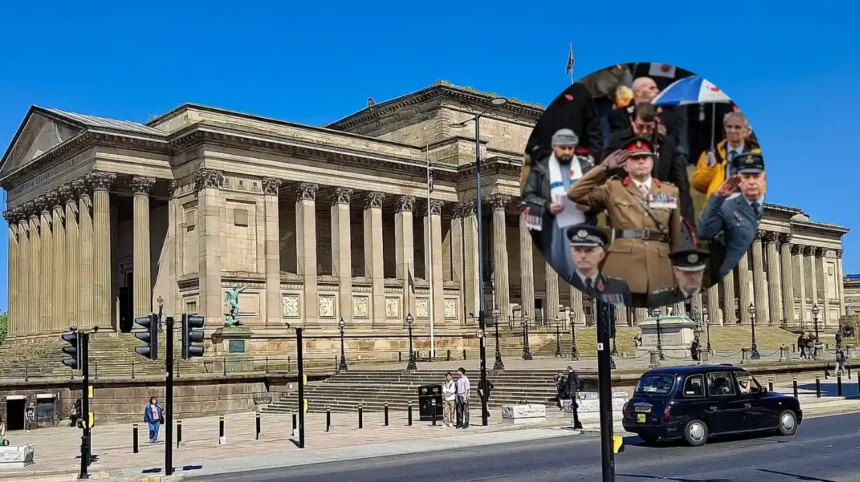
- The yearly Liverpool Remembrance Sunday Service for 2026 will be held on Sunday, 8th November, on the plateau next to St George’s Hall.
- The theme of the service will be “Liverpool Remembers” and will commemorate the 110th anniversary of the Battle of the Somme.
- Church leaders, community leaders, The Armed Forces, Veterans, and cadets will participate in the civic remembrance event.
- There will be music from 10.40am, performed by the Band of The Duke of Lancaster’s Regiment and The Pipes and Drums of The Liverpool Scottish Regimental Association.
- A two-minute silence will be observed at 11am, followed by wreath-laying and a parade to the Cenotaph.
- This is an open event; therefore, people are urged to arrive early.
- Footage from archives of First World War recruitment marches at St George’s Hall will be played before the ceremony.
- According to the Liverpool Echo, 114 Liverpool men were killed on the first day of the Battle of the Somme, which occurred on 1st July, 1916.
Liverpool (Liverpool standard) October 22, 2026 — Liverpool is preparing to gather at St George’s Hall for its annual Remembrance Sunday service, which will honour those who served and died in conflict while marking 110 years since the Battle of the Somme.
The Service of Remembrance will be held on Sunday, 8 November 2026, on the plateau outside St George’s Hall. The event forms part of the city’s “Liverpool Remembers” commemoration and will bring together civic, military, religious and community representatives.
As reported by the Liverpool Echo, the service will recognise those who fought and fell during the Battle of the Somme, one of the First World War’s deadliest campaigns. The Guide Liverpool reported that Liverpool City Council is inviting residents to come together for the service at the historic city-centre venue.
What will happen at the service?
The programme will begin at 10.40am, when the Band of The Duke of Lancaster’s Regiment and The Pipes and Drums of The Liverpool Scottish Regimental Association will perform.
Musical contributions are also scheduled from the Liverpool Lighthouse Choir, the St Edward’s College Senior Choir and Liverpool mezzo-soprano Danielle Louise Thomas.
A ceremonial signal will mark a two-minute silence at 11am. After the silence, civic, military and religious leaders, along with cadets, will take part in the traditional wreath-laying and service. A parade will then march from St George’s Plateau to salute the Cenotaph.
Why is this year significant?
This year’s commemoration marks 110 years since the Battle of the Somme, which began on 1 July 1916. According to the Liverpool Echo, as many as 114 men from Liverpool died on the first day of the battle; almost all are buried or commemorated at the Somme.
The service will also reflect the role of St George’s Hall during the First World War. Its steps became a rallying point for the Liverpool Pals, when speakers including Lord Derby and Lord Kitchener appealed for 100,000 men to form a new army.
Before the service, archive film footage of those rallies and recruitment appeals will be shown on a screen, giving attendees a view of events that took place at the same location more than a century ago.
Who will attend the service?
The commemoration will include faith and community leaders, members of the Armed Forces, veterans and cadets.
The Lord Mayor of Liverpool, Cllr William Shortall, said:
“It is an honour to stand with our city as we remember those who served, those who serve today and those who gave their lives.”
He added that, 110 years after the Somme, “the courage of the Liverpool Pals and so many others still matters deeply”.
Leader of Liverpool City Council, Cllr Liam Robinson, said the annual gathering at St George’s Hall feels especially poignant this year. “The Cenotaph remains a place where our city reflects with humility and gratitude,” he said, encouraging people to attend and pay tribute to veterans and everyone affected by conflict.
Armed Forces Champion for Liverpool City Council, Cllr Declan Henry, said: “Remembrance is about people: the families who waited, the veterans who carry their memories with them and the men and women serving today.”
Is the service open to the public?
Yes. The service is open to the public, and organisers have encouraged people to arrive early.
St George’s Hall is located on Lime Street in central Liverpool, with the service taking place on the plateau outside the building. The venue is regularly used for civic gatherings, commemorations and major public events.
Background of the development
Remembrance Sunday is observed on the second Sunday of November and provides a national moment to remember members of the Armed Forces who died in conflict. In Liverpool, the service at St George’s Hall and the nearby Cenotaph has become a central part of the city’s annual commemoration.
St George’s Hall holds particular historical importance in Liverpool’s wartime story. During the First World War, its steps were used for recruitment rallies connected with the formation of the Liverpool Pals, the city’s locally raised battalions.
The 2026 service adds a specific historical focus: the 110th anniversary of the Battle of the Somme. The battle began on 1 July 1916 and remains one of the most heavily commemorated campaigns of the First World War.
Prediction: How the service may affect Liverpool residents
For Liverpool residents, veterans and visiting families, the service is likely to provide a shared civic moment of reflection at a prominent city-centre location. Attendance may be higher than usual because of the Somme anniversary and the inclusion of archive footage linked directly to St George’s Hall.
People planning to attend should expect crowds around St George’s Plateau, particularly shortly before the 11am silence. Early arrival is advised by organisers, and visitors should be prepared for a formal, respectful atmosphere during the wreath-laying and parade.
For local businesses and transport users, the event may bring increased footfall around Lime Street and the surrounding city-centre area. The service’s public nature also means residents who cannot attend in person may still observe the two-minute silence elsewhere in the city at 11am.