

Key Points
- Council Approval: Liverpool City Council’s planning committee has officially approved multi-million-pound expansion plans for the Claire House children’s hospice in West Derby.
- Service Transformation: The approval grants permission to transition the current site from a daytime-only care service into a fully operational, 24/7 around-the-clock medical and palliative care facility.
- Shifting Referral Demographics: Claire House, which historically operates its main full-care hospice in Wirral, reported that more than 60% of its current patient referrals now originate directly from Liverpool and its surrounding boroughs.
- Target Demographics and Scope: The state-of-the-art expansion will offer comprehensive care, respite, and end-of-life support for infants, children, and young adults up to the age of 25.
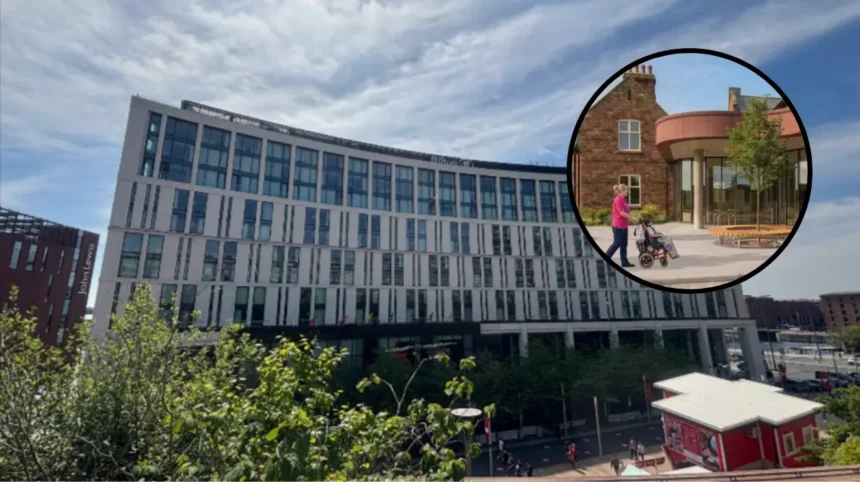
- Structural Additions: The approved blueprints outline significant architectural modifications, including a new two-storey extension to the side of the existing building and a single-storey extension at the rear.
- Fundraising and Timeline Targets: The charity must secure an additional £15 million to fund the project fully. Construction is projected to begin in January next year, with an anticipated completion date set for late 2028.
- Historical Context: The West Derby property, before being acquired by the children’s charity, was historically occupied and maintained by Carmelite nuns.
Liverpool (Liverpool Standard) June 30, 2026 – Major development plans to significantly expand the Claire House children’s hospice site in West Derby have been formally approved by the Liverpool City Council planning committee, a decision poised to bring specialized, round-the-clock palliative care significantly closer to hundreds of families across the city region. The successful planning application marks a pivotal operational shift for the charity, authorizing the transformation of its Liverpool hub from a limited, day-only care resource into a comprehensive, twenty-four-hour residential medical facility.
- Key Points
- Why did Claire House seek planning permission for its Liverpool site?
- What statements did Claire House management make regarding the approval?
- Who will benefit from the expanded West Derby facility?
- What specific services and amenities are included in the approved plans?
- What architectural changes will be made to the former monastery?
- How much will the project cost and what is the construction timeline?
Why did Claire House seek planning permission for its Liverpool site?
As documented by the editorial team at BBC News, the primary catalyst behind the extensive expansion application is a fundamental shift in regional healthcare demands. The charity, which continues to operate its well-established full-care hospice facility over in Wirral, disclosed to local planning authorities that the geographic distribution of its service users has changed dramatically over recent years. According to official figures provided by Claire House, more than 60% of all new hospice referrals are now coming directly from Liverpool and the immediate surrounding municipal areas.
Without a fully functioning, around-the-clock infrastructure on the Liverpool side of the River Mersey, families facing critical pediatric illnesses have frequently been forced to endure significant travel times during high-stress periods. To address this geographic imbalance and optimize delivery frameworks, the charity pursued formal municipal authorization to scale up the West Derby site’s operational capacity, shifting it from basic daytime services to full residential capabilities.
What statements did Claire House management make regarding the approval?
In reports compiled by journalists at BBC News, leadership at Claire House emphasized the profound human impact that localized, continuous care will have on vulnerable local families. In an official press statement, Claire House Chief Executive Officer David Pastor highlighted the ethical necessity of removing geographical barriers for families navigating complex medical journeys. As reported by BBC News, David Pastor stated that:
“Distance should never stand in the way of families getting the support they need at the hardest moments of their lives.”
This principle forms the cornerstone of the charity’s long-term regional strategy. Mr Pastor further underscored the unique responsibilities and absolute precision required within the specialized field of pediatric palliative care. In a subsequent public comment detailed in the original reporting, David Pastor stated that:
“Every day at Claire House, I’m reminded that when a baby, child or young adult is seriously ill, there is only one chance to get their care right. We cannot change a diagnosis or stop children dying but we can make sure families feel supported, understood, and surrounded by compassion when it matters most.”
Who will benefit from the expanded West Derby facility?
According to details published within the approved planning application and corroborated by BBC News, the modernized West Derby site is meticulously designed to support a broad age spectrum. The state-of-the-art children’s hospice will deliver comprehensive, integrated clinical and emotional services tailored explicitly for babies, children, and young adults up to the age of 25, ensuring continuity of care through crucial transitional phases of life.
Crucially, the facility’s design philosophy acknowledges that a child’s terminal or life-limiting illness impacts an entire household. Therefore, the expanded services are not restricted solely to the primary patient; they encompass wrap-around support systems for parents, siblings, and extended family members who are actively participating in the care cycle or navigating the complex psychological realities of anticipatory grief.
Explore More Liverpool Council News
Free Toothbrushes Tackle Childhood Tooth Decay Crisis in Liverpool 2026
South Facing Festival Not Moving to Sefton Park: Liverpool 2026
What specific services and amenities are included in the approved plans?
The structural and operational blueprints ratified by Liverpool City Council’s planning committee reveal a highly specialized environment geared toward both intense medical intervention and tranquil sanctuary. According to the published reports, the newly approved care framework will integrate the following core provisions:
- Specialist Medical Care: Around-the-clock clinical supervision managed by specialized pediatric palliative care doctors and nurses.
- Respite Stays: Temporary residential placements designed to give primary family caregivers a vital, structured break from the exhausting demands of at-home clinical monitoring.
- End-of-Life Support: Dedicated, compassionate palliative interventions focused entirely on comfort, pain management, and dignity during a child’s final days.
- Overnight Respite Bedrooms: Purpose-built, fully accessible bedrooms equipped with advanced medical monitoring equipment to facilitate overnight guest stays.
- Private Family Suites: Specialized, self-contained suites specifically designated for families whose children have passed away, offering a private, unhurried environment for bereavement and remembrance.
- Therapeutic Spaces: Custom-designed rooms intended for multi-sensory therapy, psychological counseling, play therapy, and holistic family support.
What architectural changes will be made to the former monastery?
The physical manifestation of this care expansion requires extensive structural interventions to the existing West Derby property. As noted in the factual coverage by BBC News, the site carries a unique architectural legacy, having been previously occupied by Carmelite nuns as a monastery before it was subsequently taken over and repurposed by the Claire House charity organization.
To adapt this historic, cloistered structure into a high-tech, accessible medical facility, the approved construction plans dictate two primary structural additions. Contractors will execute the construction of a substantial two-storey extension to the side elevation of the existing building. Concurrently, a single-storey extension will be constructed at the rear of the property. These additions are designed to expand the building’s internal square footage significantly while respecting the existing aesthetic fabric of the historic West Derby setting, creating a seamless interface between heritage architecture and modern clinical utility.
How much will the project cost and what is the construction timeline?
The realization of this major regional healthcare asset remains contingent on a substantial capital fundraising campaign. As reported by BBC News, Claire House has publicly stated that it needs to raise an additional £15 million in capital funding to cover the extensive construction, fit-out, and initial operational costs associated with the expansion plans.
With planning permission now firmly secured from local government authorities, the charity has established a clear, phased development timeline. It is officially hoped that physical work on the property can commence in January of next year. Given the complex nature of integrating advanced medical infrastructure into an existing historic structure, the construction phase is projected to be long-term, with an anticipated final completion date slated for late 2028.
What are the immediate next steps for the project?
Following the successful verdict from the Liverpool City Council planning committee, the immediate focus of the Claire House organization shifts heavily toward philanthropy, corporate partnerships, and community fundraising initiatives to bridge the multi-million-pound capital gap. Concurrently, structural engineers and architectural consultants are expected to finalize detailed technical specifications and tendering documents required ahead of the targeted January construction launch. Local healthcare authorities are also expected to coordinate closely with the charity to map out the long-term integration of these new 24/7 beds into the wider Merseyside pediatric care network.