
Key Points
- Liverpool City Council has appointed a specialist design team to shape a major revamp of Liverpool Central and the surrounding gateway area.
- The team is led by Hawkins\Brown and will develop a Strategic Regeneration Framework to guide investment, placemaking and future development.
- The work focuses on reimagining one of the city’s busiest arrival points and improving how the area connects with the wider city centre.
- The project is linked to broader regeneration plans in Liverpool city centre, including long-term strategic design work for transport and public realm improvements.
- The development is still at a strategic stage, with further feasibility and design work expected to continue in 2026.
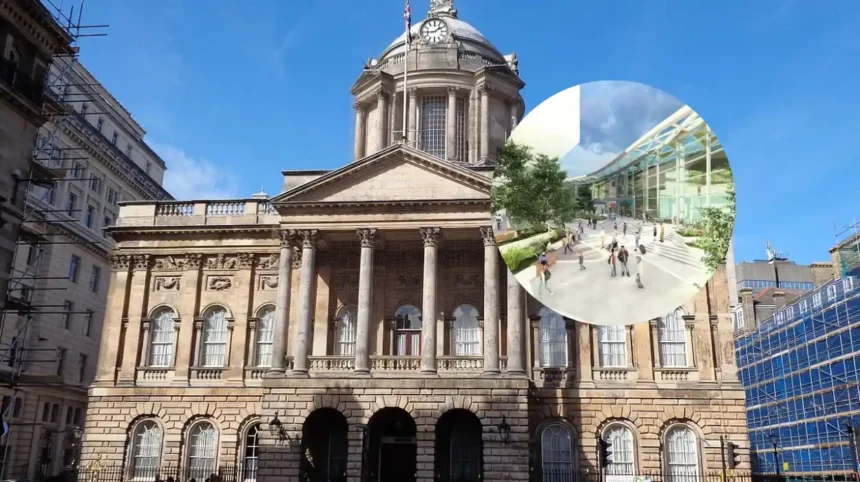
Liverpool City Centre(Liverpool Standard)May 19, 2026-Liverpool Central is the focus of a new regeneration push after Liverpool City Council appointed a design team to reimagine the city gateway around the station and its surrounding streets. The announcement was made on 19 May 2026, with the council saying the scheme is intended to shape a more coherent, attractive and better-connected arrival point for the city.
The design team is being led by Hawkins\Brown, a practice known for urban design and regeneration work, and its task is to prepare a Strategic Regeneration Framework, or SRF. That framework is expected to set out the direction for investment, placemaking and longer-term development around Liverpool Central, rather than deliver an immediate construction start.
Why does the project matter?
Liverpool Central is one of the city’s main transport gateways, so any redesign of the area has implications for passengers, businesses and nearby public spaces. The council’s approach suggests that the priority is not only visual improvement, but also better movement, stronger connectivity and a clearer sense of place in a part of the city that many people use every day.
The wider regional context also matters. Liverpool has several regeneration schemes moving forward in 2026, and city centre renewal has become part of a broader pipeline of long-term investment across housing, infrastructure and public realm projects. In that context, the Liverpool Central framework appears to be one piece of a much larger effort to reshape the city’s core.
Who is involved?
According to the council announcement, the design team is led by Hawkins\Brown, with the work commissioned by Liverpool City Council as part of its regeneration strategy for the area. The announcement also sits alongside other Liverpool City Region planning activity led by mayoral and council bodies that are exploring long-term changes to the city centre, including improved links between major transport hubs.
Liverpool City Region documents show that the Liverpool Central station area has been the subject of station design visioning, masterplanning strategy and strategic investment work, which supports the idea that this project has been in development for some time. That suggests the new appointment is an important step in moving from broad ambition to a more defined framework.
What will the design team do?
The appointed team will develop a Strategic Regeneration Framework for the Liverpool Central gateway area. In practical terms, that means setting out a design-led plan that can guide future regeneration decisions, including how the area looks, functions and connects with nearby streets and destinations.
The publicly available information indicates that the work is about shaping the next stage rather than delivering immediate works on site. The framework will likely inform later planning, investment and delivery decisions, especially where transport access, public realm and mixed-use development are involved.
How does this fit wider regeneration?
Liverpool Central is part of a wider wave of regeneration activity across the city. Publicly available reporting has referred to more than £7bn of projects across Liverpool and surrounding areas, covering housing, transport infrastructure, commercial space and public realm improvements.
Other city schemes also show the scale of ambition behind the city’s long-term plans. These include major redevelopment proposals elsewhere in Liverpool, as well as strategic thinking around the connection between Liverpool Central and Lime Street, where improved connectivity has been discussed as part of a broader city-centre vision.
What happens next?
The current stage is strategic, so the next steps are likely to involve feasibility work, design development and consultation with relevant stakeholders. Liverpool City Region material suggests that further design and investment planning for the station area is expected during 2026.
Because this is a framework stage, the exact shape of the final scheme is still to be defined. That means details such as phasing, funding, planning applications and construction timing are not yet confirmed in the available reporting.
Background of the development
Liverpool Central has long been viewed as a major arrival point for the city, and the station’s surrounding area has been included in strategic design and investment thinking before this appointment. The latest move builds on that earlier work by bringing in a dedicated design team to prepare a regeneration framework for the gateway area.
The broader background is Liverpool’s continuing city-centre regeneration agenda, which has included transport, housing and public realm projects across the city region. The current appointment indicates that the council is trying to align the Liverpool Central area with that wider programme rather than treat it as an isolated project.
Prediction
For commuters, businesses and nearby property owners, the development could eventually mean a more organised and appealing station environment, but the benefits will depend on how the framework is turned into deliverable projects. If the strategy progresses as expected, the area could become easier to navigate and more attractive for investment, though those outcomes are likely to emerge gradually rather than quickly.