

Key Points
- Mayor Steve Rotheram of Liverpool City Region and Chair Councillor Louise Gittins of the Cheshire and Warrington Combined Authority have jointly addressed a letter to the Prime Minister.
- Regional leaders are calling on the Government to stop plans which could see a reduction in resources and operations at Daresbury Laboratory.
- Regional leaders are asking for the Government to consult the region prior to final decisions being made.
- The Science and Technology Facilities Council is trying to make cuts worth more than £160 million by 2029-30.
- Among the plans that would have implications for Daresbury is a reduction of accelerator and technology activity worth £8 million each year until 2029 across all the STFC sites.
- Activity involving scientific computing at Daresbury and Rutherford Appleton Laboratory is likely to suffer from £10 million cuts.
- The Clara electron test accelerator at Daresbury is expected to be mothballed as part of the savings plan.
- Regional leaders have stated that Daresbury has been contributing towards high-skilled employment, research, business growth and innovation in the North West.
- STFC and UK Research and Innovation have said tough decisions have to be made due to rising costs while the budgets are under pressure.
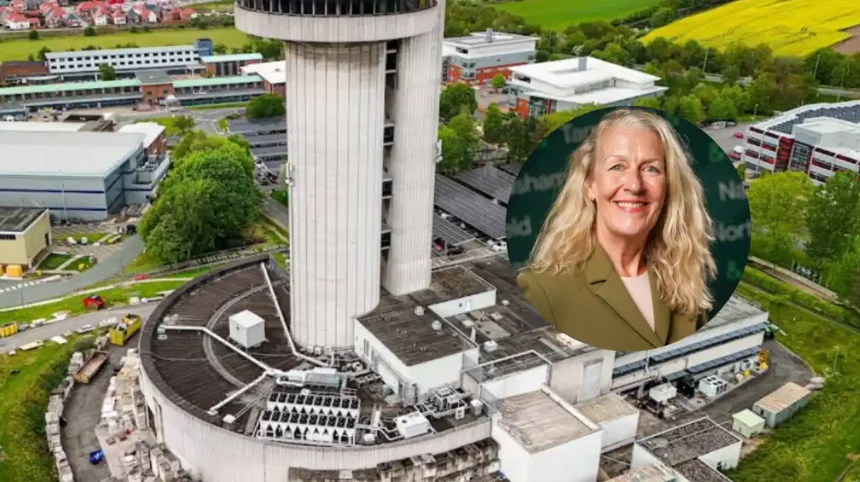
Liverpool (Liverpool standard) September 11, 2026 – Liverpool City Region Mayor Steve Rotheram and Cheshire and Warrington Combined Authority Chair Councillor Louise Gittins have written a joint letter to the Prime Minister asking the Government to pause proposals that could reduce funding and activity at Daresbury Laboratory.
- Key Points
- What did Steve Rotheram and Louise Gittins ask the Government to do?
- What cuts could affect Daresbury Laboratory?
- Why is STFC reducing its spending?
- What other research facilities face reductions?
- Could the cuts affect scientific research and jobs?
- Has the Government confirmed that Daresbury Laboratory will close?
- What is the wider background to Daresbury Laboratory’s role?
- Background to the Daresbury Laboratory development
- How could Daresbury Laboratory budget cuts affect the region?
According to the Liverpool City Region Combined Authority, the leaders want the Government to work with them to understand the full consequences of the proposals before any final decisions are made. Their intervention comes amid a wider review by the Science and Technology Facilities Council, or STFC, and UK Research and Innovation, known as UKRI, aimed at reducing spending over the next four years.
The appeal centres on concerns that cuts to accelerator science, computing and other research activities could weaken one of the North West’s most important scientific and innovation assets. The leaders argue that decisions made to address short-term financial pressures could have longer-term consequences for employment, research, business investment and the region’s ability to develop advanced technologies.
The Liverpool City Region Combined Authority’s announcement did not identify an author by name. It was published as an official statement from the authority and attributed the appeal to Mayor Steve Rotheram and Councillor Louise Gittins.
What did Steve Rotheram and Louise Gittins ask the Government to do?
The two regional leaders have asked the Prime Minister to pause the proposed changes and engage directly with Liverpool City Region and Cheshire and Warrington before proceeding.
Their request is focused on gaining a clearer assessment of the proposals’ impact. They want ministers and research authorities to consider the consequences for the laboratory itself, the wider Daresbury campus, local supply chains, universities, researchers and companies that use the site’s facilities.
The joint intervention reflects the fact that Daresbury’s role extends beyond a single laboratory. The site forms part of a wider science and technology ecosystem that includes research organisations, advanced engineering companies, start-ups and firms working in areas such as computing, energy, health technology and materials science.
The regional authorities’ position is that the proposed reductions should not be considered only as an internal STFC accounting exercise. They believe the Government should also assess the potential effect on regional productivity, skills and private-sector investment.
The official announcement said the leaders had written to the Prime Minister because they wanted the Government to “fully understand the proposals’ impact before decisions are taken”. The wording indicates that the appeal is aimed at securing further consultation rather than announcing that a closure has already been confirmed.
What cuts could affect Daresbury Laboratory?
The concerns form part of a wider STFC plan to reduce annual spending by approximately £162 million by 2029–30. The cuts are linked to rising costs, including staff costs, electricity prices, ageing buildings and the expense of international research commitments.
As reported by Pallab Ghosh, Science Correspondent for the BBC, STFC’s budget for Accelerator and Technology activities across its sites is expected to fall by £8 million a year by 2029. The Accelerator Science and Technology Centre at Daresbury designs and builds machines that drive particle beams, making it a significant part of the UK’s accelerator research capability.
The BBC also reported that the Scientific Computing Department, which is split between Daresbury and the Rutherford Appleton Laboratory at Harwell, faces a £10 million reduction in the STFC Computing budget. The department processes approximately a quarter of the data produced by the Large Hadron Collider at CERN, according to the BBC report.
The Times Higher Education report, written by Jack Grove, said the Clara electron test accelerator operated by STFC at Daresbury would be mothballed under the plan. The report also said the STFC expected job losses “in the hundreds”, although this would follow an increase of about 800 STFC staff over the previous five-year Spending Review period.
Mothballing does not necessarily mean that a facility is permanently closed. It generally means that operations are suspended or substantially reduced, with the possibility of future use depending on funding, demand and strategic decisions. However, the status can make it more difficult to maintain specialist expertise, equipment and technical capability.
Why is STFC reducing its spending?
UKRI and STFC say the reductions are necessary because planned research commitments have become more expensive than expected.
The BBC reported that overall Government research and development spending is scheduled to rise to £22.6 billion a year by 2029–30, while UKRI’s allocation is expected to increase from around £9 billion to nearly £10 billion. However, UKRI says its planned commitments have also increased and that it can no longer meet all those commitments without making savings elsewhere.
Prof Sir Ian Chapman, chief executive of UKRI, told the BBC that investment would be focused on areas where it could have the greatest impact. The priorities include artificial intelligence, quantum technologies and a national supercomputer. UKRI also wants research organisations to become more entrepreneurial and generate more income through partnerships with industry.
In the Times Higher Education report, Prof Ian Chapman said STFC’s core budget was expected to rise only from £835 million in 2025–26 to £842 million by 2029–30. Over the same period, the organisation’s costs are expected to increase. The report said international facilities and infrastructure spending would rise by £55 million to reach £350 million by 2029–30.
Prof Michele Dougherty, STFC’s executive chair, described the plan as a responsible response to growing costs and limited budgets. She said the organisation had consulted staff, advisory panels, science boards and research communities while developing the proposals.
The Times Higher Education report said UKRI had provided approximately £135 million in deferred funding over three years to help facilities move towards more sustainable financial models. Some sites are also being encouraged to seek additional commercial and industrial income.
What other research facilities face reductions?
Daresbury is part of a national network of facilities facing financial pressure.
The BBC reported that the Boulby Underground Laboratory in North Yorkshire could see its budget reduced by 40 per cent. The laboratory conducts experiments searching for dark matter, the invisible material that scientists believe accounts for much of the Universe.
At the Harwell campus in Oxfordshire, the Diamond Light Source could face a reduction of up to one-fifth in beam time, while its planned Diamond-II upgrade has been placed under pressure. Diamond uses extremely bright X-ray beams to examine materials and has supported research ranging from viruses and medicines to historic artefacts.
The ISIS Neutron and Muon Source is also expected to conduct fewer experiments. BBC reporting said some instruments could close and that muon experiments could be discontinued under the proposals.
The Central Laser Facility, which supports work in medical imaging, cancer research and fundamental physics, also faces pressure to find alternative funding for part of its activity.
The Guardian’s Science Editor Ian Sample reported that Diamond and ISIS managers were considering cuts of between 10 per cent and 20 per cent to help STFC achieve savings of at least £162 million by 2029–30. Sample reported that scientists had warned the reductions could damage the UK’s scientific capabilities and international reputation.
However, the proposed changes do not mean that every facility is scheduled to close. The Times Higher Education report said Diamond, ISIS and the Central Laser Facility would remain operational, although their budgets would be reduced by approximately 15 per cent over four years.
Could the cuts affect scientific research and jobs?
The effect on research would depend on which facilities, instruments and programmes are reduced.
Daresbury supports specialist work in accelerator science, advanced computing and related technologies. A reduction in activity could limit access to equipment, slow the development of new machines and reduce opportunities for engineers, technicians, researchers and students.
The impact could also extend beyond the laboratory’s direct workforce. Science and technology sites often support contractors, specialist manufacturers, university partnerships and companies that depend on research infrastructure. A reduction in activity may therefore affect the wider network of organisations connected to the campus.
Sue Ferns of the Prospect trade union told the BBC that the proposed reductions represented a “hammer blow to UK science”. She said public research facilities at Daresbury, Harwell and the Royal Observatory Edinburgh acted as catalysts for regional business ecosystems and provided training and employment opportunities.
Daniel Rathbone, Deputy Executive Director of the Campaign for Science and Engineering, also warned that short-term savings could have a larger long-term economic and research impact. He said that once capability was lost in a particular field, it could be difficult to rebuild it in a meaningful way.
The Guardian reported that Tom Grinyer, chief executive of the Institute of Physics, had urged the Government to think carefully about any reduction, consult the research community and slow down the changes. Grinyer said facilities such as Diamond and ISIS were important to the UK’s innovation infrastructure and that decisions made in the short term could have consequences for decades.
Has the Government confirmed that Daresbury Laboratory will close?
No. The available reports and the regional authority’s announcement do not confirm the closure of Daresbury Laboratory.
An STFC spokesperson told The Guardian: “No decisions have been made about any area of the work of STFC at this time.” The spokesperson said the organisation was carrying out a prioritisation exercise to identify efficiencies and establish a financially sustainable model. Decisions were expected to be shared in the autumn.
The distinction is important. Some activities may be scaled back, some equipment may be mothballed and some budgets may be reduced, but those developments are not the same as a confirmed closure of the entire laboratory.
The Times Higher Education report said STFC expected to reduce estates spending on national laboratories by 58 per cent by the end of the decade. It also reported that the number of particle physics, astronomy and nuclear physics PhD and postdoctoral positions would remain at 2025–26 levels, although the overall science budget for those areas would fall by 2.7 per cent over four years.
What is the wider background to Daresbury Laboratory’s role?
Daresbury Laboratory is one of the UK’s national science facilities and is located in Cheshire. It is associated with research and technical work involving accelerator science, computing, physics and advanced engineering.
The site is also linked to the wider Sci-Tech Daresbury campus, which has been developed as a location for high-technology businesses and research-led innovation. The Liverpool City Region Combined Authority has previously described Sci-Tech Daresbury as a national asset and supported development intended to create or support highly skilled jobs.
The site’s regional importance is one reason Liverpool City Region and Cheshire and Warrington leaders have jointly intervened. Their concern is not limited to the future of individual research projects. It includes the possibility that reductions could weaken the wider network of companies, universities, workers and investors built around the laboratory.
The present dispute follows a broader funding crisis across UK national laboratories. The Guardian reported that managers had been asked to find savings after cost pressures linked to electricity, staffing and foreign exchange rates for international collaborations, including the UK’s participation in CERN.
At the same time, the Government has maintained that total research and development spending is increasing. The central issue is therefore how additional funding is distributed and whether rising costs are consuming the money intended for scientific activity.
Background to the Daresbury Laboratory development
The current development follows STFC and UKRI efforts to reduce spending across national laboratories and research facilities by 2029–30. The proposed savings include reductions in accelerator and technology activity, scientific computing, research operations and estates spending.
Earlier reports indicated that the Government and research authorities were considering substantial reductions across particle physics, astronomy and multidisciplinary research facilities. Following lobbying by the particle physics and astronomy community, the reduction affecting particle physics and astronomy was reported by the BBC to have been reduced from proposals of up to 30 per cent to 2.7 per cent.
The financial pressure has also affected major facilities outside Cheshire. Diamond, ISIS and the Central Laser Facility are facing reductions or changes to their operating models, while Boulby Underground Laboratory is expected to face a significant reduction in its operating budget.
STFC says the prioritisation process is intended to make the organisation financially sustainable. Regional leaders, scientific organisations and trade unions have argued that the Government should assess the long-term effects before reducing capability that may be difficult or expensive to restore.
The next stage is expected to involve further consultation and decisions by STFC and UKRI. Until those decisions are published, the final scale of the impact on Daresbury Laboratory remains uncertain.
How could Daresbury Laboratory budget cuts affect the region?
Daresbury Laboratory budget cuts could affect researchers, technical staff, students, universities, technology companies and communities across Cheshire, Warrington and the wider Liverpool City Region if they lead to reduced access to facilities or the loss of specialist jobs.
In the short term, the most direct effects could involve fewer projects, reduced operating hours, changes to computing access and uncertainty for staff and contractors. The proposed mothballing of Clara could also reduce the number of activities available to accelerator researchers and engineers at the site.
In the medium term, businesses that rely on research partnerships could face fewer opportunities to test products, access technical expertise or recruit trained specialists. Universities may also need to seek alternative facilities or funding for research that uses Daresbury’s equipment and expertise.
The longer-term effect will depend on whether the Government pauses the proposals, whether alternative funding is found and whether STFC can attract more private-sector support. For the regional audience, the immediate prediction is continued uncertainty rather than an automatic closure: the joint letter may increase political pressure for consultation, but it does not yet guarantee that the proposed reductions will be withdrawn.
The final outcome is likely to depend on the autumn decisions promised by STFC, the response from the Prime Minister and ministers, and the ability of regional leaders to demonstrate the laboratory’s contribution to jobs, innovation and economic growth.

