Key Points
- The Widnes sting case revolves around Javed Iqbal, 49, from Birmingham, who was imprisoned following his travels to meet someone he thought was a 14-year-old boy.
- The “child” was fictitious; the individual Iqbal communicated with had been an adult pretending to be a child in a paedophile-hunter sting.
- Liverpool Crown Court learned that he started communicating online on August 28, 2024, and continued doing so even after he knew that the individual was 14 years old.
- He sent explicit messages and also an explicit image and requested images of the “child.”
- Iqbal planned a meeting and travelled to Widnes on September 7, 2024, where he was arrested by the Cheshire police.
- He was convicted of arranging the commission of a child sex offense and attempting to communicate with a child sexually.
- Five years’ imprisonment and indefinite listing on the sex offenders register were ordered for him.
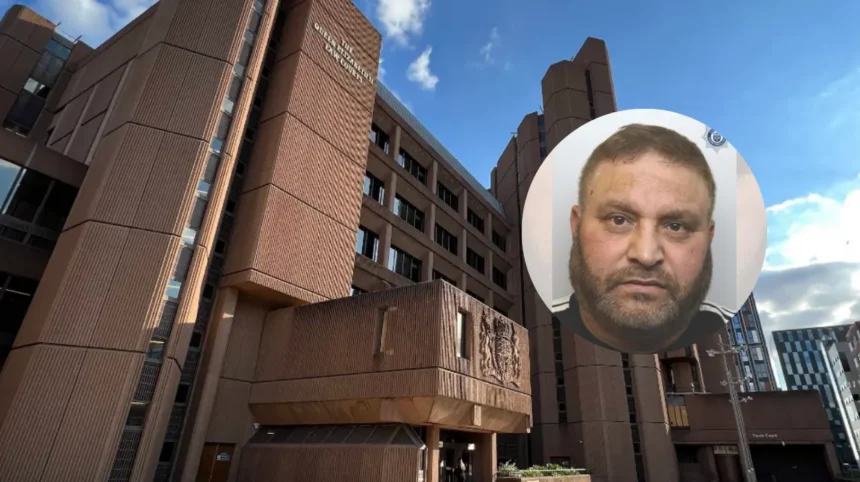
Liverpool (Liverpool standard) September 3, 2026 — A Birmingham man who believed he was travelling to Widnes to meet an underage boy for sex has been jailed after being caught in a paedophile-hunter sting, Liverpool Crown Court heard. The 49-year-old, Javed Iqbal, was found guilty of arranging the commission of a child sex offence and attempting to engage in sexual communications with a child, and was sentenced to five years in prison.
- Key Points
- What happened in the Widnes sting case?
- Who is Javed Iqbal?
- What did the court hear about the online chats?
- How did police become involved?
- What sentence did Iqbal receive?
- What did Cheshire Police say after sentencing?
- What offences was he convicted of?
- Background: What is the context of the Widnes development?
- Prediction: How could this affect Widnes residents and online-safety audiences?
What happened in the Widnes sting case?
As reported in court and summarised in media coverage, Iqbal began speaking online on 28 August 2024 with someone he believed to be a 14-year-old boy. In reality, he was communicating with an adult posing as a child in an operation designed to identify online child sex offenders.
During chats on WhatsApp and the LGBTQ+ social networking app HeeSay, the “child” clearly stated that he was 14 years old, according to the account given at Liverpool Crown Court. Despite this, the defendant continued to send sexualised messages, including an explicit image, and asked the “child” for images of himself.
Iqbal then arranged to meet the “child” in Widnes and travelled to the area on 7 September 2024. Cheshire Police was made aware of the planned meeting, officers attended and arrested him.
Who is Javed Iqbal?
Javed Iqbal, 49, of Castleton Road in Birmingham, is the defendant in this case. He was convicted after a trial at Liverpool Crown Court in which the jury heard evidence about his online communications and his journey to Widnes.
The court found him guilty of arranging the commission of a child sex offence and attempting to engage in sexual communications with a child. He was subsequently sentenced to five years in prison.
What did the court hear about the online chats?
Liverpool Crown Court heard that the defendant began speaking online on 28 August 2024 with someone he believed to be a 14-year-old boy. The person he was messaging was in fact an adult posing as a child as part of a sting to root out online child sex offenders.
During online chats on WhatsApp and the LGBTQ+ social networking app HeeSay, the “child” clearly informed Iqbal that he was 14 years old. Despite this, the defendant continued to send sexualised messages, including an explicit image, and asked the “child” for images of himself.
The court was told that Iqbal then arranged to meet the “child” in Widnes and travelled to the area on 7 September 2024. Cheshire Police was made aware of the arranged meet-up, and officers attended and arrested him.
How did police become involved?
Cheshire Police was made aware of the arranged meet-up in Widnes after the online communications and travel plans were identified. Officers attended the location and arrested Iqbal when he arrived in the area on 7 September 2024.
Following the arrest, the case proceeded to trial at Liverpool Crown Court, where Iqbal was found guilty of arranging the commission of a child sex offence and attempting to engage in sexual communications with a child. He was sentenced to five years in prison.
What sentence did Iqbal receive?
Having been found guilty, Iqbal, of Castleton Road in Birmingham, was sentenced to five years in prison. In addition to the custodial term, he was ordered to sign the sex offender register indefinitely. He was also made the subject of a sexual harm prevention order.
The combination of a prison term, indefinite registration and a prevention order reflects the court’s response to the seriousness of the offences and the risk management measures considered necessary after conviction.
What did Cheshire Police say after sentencing?
Following the sentencing, a Cheshire Police spokesman said:
“Although there was no young victim in this case, Iqbal did not know this.”
The spokesman added:
“He was intent on meeting with a child for sexual purposes, travelling a long distance to do so.”
The force also stated:
“He also sent explicit messages to the child, even after they clearly informed him of their age.”
According to the police statement,
“Iqbal attempted to deny the allegations, but he has now been found guilty of the offences and handed a custodial sentence, which reflects the severity of the charges against him.”
What offences was he convicted of?
Iqbal was found guilty of arranging the commission of a child sex offence and attempting to engage in sexual communications with a child. The convictions relate to his online communications with someone he believed to be a 14-year-old boy and his subsequent travel to Widnes to meet that person.
The court’s findings led to a five-year prison sentence, indefinite placement on the sex offender register and a sexual harm prevention order.
Background: What is the context of the Widnes development?
The development concerns a reported sting in which a Birmingham man travelled to Widnes believing he would meet a 14-year-old boy for sex. According to the account given at Liverpool Crown Court, there was no real child, because the supposed boy was part of a decoy operation involving an adult posing as a minor.
Widnes is in the borough of Halton, Cheshire, and cases involving suspected online child-sex offences can involve people travelling across regional boundaries after online communication. In this case, the journey from Birmingham to Cheshire on 7 September 2024 formed a key part of the evidence.
The case also illustrates how civilian-led sting operations can lead to police involvement and criminal prosecutions when evidence is passed to forces and charges are brought. The court outcome shows that a conviction can be secured even where no actual child was met, provided the prosecution proves the defendant believed the person was underage and acted accordingly.
Prediction: How could this affect Widnes residents and online-safety audiences?
For Widnes residents, the reported case may increase awareness of the risks linked to online contact between adults and people presented as children. The case may also prompt renewed attention to how suspicious online behaviour should be reported directly to police or safeguarding services, rather than relying on public confrontation.
For parents, carers, schools and youth organisations, the development is likely to reinforce routine online-safety messages: children should be encouraged to report inappropriate contact, privacy settings should be reviewed, and adults should remain alert to grooming indicators. These are general safeguarding implications rather than conclusions about any wider level of risk in Widnes.
For criminal-justice audiences, future reporting may focus on how evidence from sting operations is gathered, preserved and presented in court. Until further verified information is published, the central confirmed account remains that Iqbal travelled to Widnes believing he would meet a 14-year-old boy, but the supposed child was an adult-operated decoy and police were present.