
Key Points
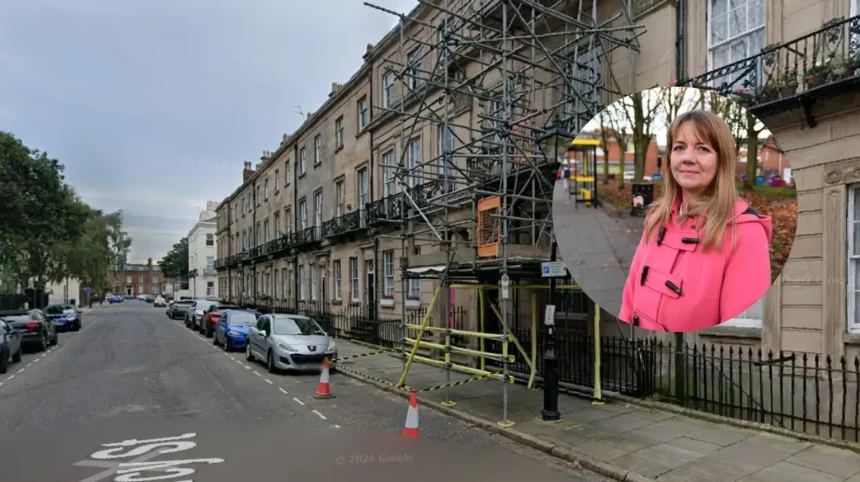
- A disabled woman in Anfield says planned roadworks on Walton Breck Road could leave her trapped at home for months.
- Jo Ikin has lived in a supported living flat on Walton Breck Road since 2005 and relies on her car for vital tasks.
- Liverpool Council is carrying out a wider programme of highway improvements in Anfield aimed at regeneration and better transport infrastructure.
- The scheme includes resurfaced carriageways and footpaths, upgraded pedestrian crossings, new bus stop facilities and utility pipe modernisation.
- The council says the projects will overlap or follow one another so the work can be delivered as one coordinated package rather than through repeated visits months apart.
- The next stage is due to start in August, with all work scheduled for completion in spring next year.
Anfield (Liverpool standard) July 24, 2026 – Jo Ikin fears the roadworks could leave her housebound for months because parking on a side street is not practical given her disabilities.
She told the Local Democracy Reporting Service that the works would make normal daily life difficult if vehicles have to be moved from the highway.
The concern is not simply about inconvenience but about access, because Ms Ikin depends on her car for important everyday tasks. That means the effect of the roadworks could be far more severe for her than for residents who can walk or use public transport more easily.
The timing is significant because the council’s next phase of works is due to begin at the start of August. Ms Ikin’s fear is that once parking restrictions and work activity intensify, she may not be able to leave her home with the same freedom she has now.
What is Liverpool Council planning?
Liverpool Council’s Anfield programme is part of a wider effort to breathe new life into the highway and support what it describes as urban regeneration in the area. Place North West reported in February 2026 that the council was preparing a £4 million package of highway improvements for Walton Breck Road as part of a broader regeneration scheme.
The planned work includes resurfaced roads and footpaths, upgraded pedestrian crossings and enhanced bus stop facilities. The package also covers modernised utility pipes, showing that the project is not limited to surface repairs but extends to the underground infrastructure as well.
The council has said the different projects will overlap or follow immediately after each other so the area can be worked on as one coordinated scheme. According to the report, this approach is meant to avoid multiple separate visits months apart, but it also means disruption may be concentrated over a longer period for residents.
Why is Walton Breck Road sensitive?
Walton Breck Road sits beside Liverpool FC’s historic stadium, making it one of the most visible parts of Anfield. The road has already seen an initial round of minor repairs, with the next phase due to bring more significant changes.
The area has been framed by the council as a place of major transformation, linked to longer-term regeneration ambitions. That follows previous work in Anfield tied to redevelopment and the clearance of old Victorian terraces two decades ago.
For residents, however, the impact is immediate and practical rather than strategic. Access, parking, bus use and safe movement along pavements become daily concerns when roadworks stretch over months.
How could the works affect disabled residents?
The strongest issue in this story is accessibility. Ms Ikin said parking on a side street is not feasible because of her disabilities, which means normal diversion advice may not solve the problem for her.
That reflects a wider challenge in street redesign, where works meant to improve roads can temporarily reduce independence for people who rely on vehicles, wheelchairs or supported travel. Liverpool has also faced wider criticism in other accessibility stories, with campaigners warning that some streets can still feel unsafe or difficult for disabled people to use.
The practical effect could be missed appointments, harder shopping trips, reduced visits from family or carers and greater isolation at home. In cases like this, a roadworks plan may be judged not only on engineering grounds, but also on whether it allows vulnerable residents to carry on living safely.
What did the council say?
The council’s position, as reflected in the reports, is that the work forms part of a coordinated regeneration effort rather than a set of disconnected projects. It says overlapping the schemes should reduce repeated disruption over time.
That explanation may reassure some residents who prefer one longer period of work to several smaller rounds of upheaval. But it does not remove the immediate problem for people who may struggle to relocate a vehicle or adapt to changing access arrangements.
Liverpool Council also maintains a roadworks information page that provides travel updates and details of closures linked to maintenance work. That suggests the authority expects residents to plan around the disruption, although that may still be difficult for disabled people with limited alternatives.
What is the wider background?
Anfield has long been a focus for regeneration policy, with the council presenting it as an area that can be reshaped through transport and public realm improvements. In February 2026, Place North West reported that the Walton Breck Road project formed part of a wider £250 million regeneration programme for the district.
The idea behind that approach is to improve the look and function of the neighbourhood, strengthen links around the stadium and make the area more accessible in the long term. But road schemes in Liverpool have repeatedly caused frustration, including complaints about disruption in the city centre and in south Liverpool.
That history matters because it shows residents are already familiar with the strain of large transport projects. For a disabled person like Jo Ikin, the fear is not abstract; it is tied to the possibility of losing normal access to the outside world for months at a time.
What happens next?
The next stage of the scheme is due to begin in August, and the full programme is expected to continue until spring next year. That means the coming months will be crucial for residents who need clear guidance on parking, access routes and possible support measures.
If the council and contractors manage the works well, the finished scheme could bring better pavements, crossings and bus facilities to Anfield. If access for disabled residents is not handled carefully, however, the project risks creating serious hardship during the construction period.
Prediction
For local residents, the most likely short-term effect is more congestion, parking pressure and uncertainty around access while the work progresses. Disabled residents are likely to feel that pressure more sharply because moving a car or changing routines may not be easy for them.
Once completed, the project may improve safety and movement around Walton Breck Road, but the benefit will depend on whether the finished design genuinely supports people with limited mobility. The story is likely to keep attention on how Liverpool balances regeneration with day-to-day access for the people already living in Anfield.
Background of the development
This development sits within Liverpool Council’s longer-term regeneration plans for Anfield, where road upgrades, pedestrian improvements and utility works are being bundled together into one major scheme. The broader aim is to improve infrastructure around Walton Breck Road and the stadium area while supporting the district’s transformation.
At the same time, the case has highlighted how regeneration can create difficult trade-offs for residents who depend on nearby access, particularly disabled people. That tension between public improvement and private inconvenience is central to why the story has drawn attention.