Key Points
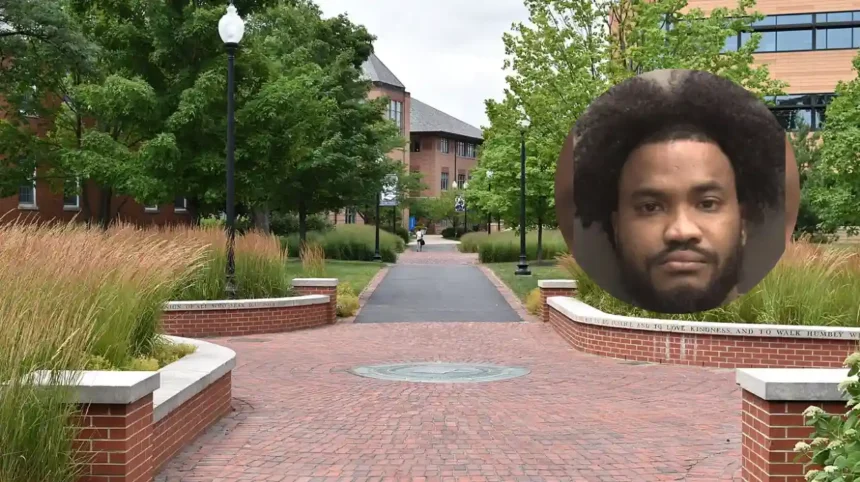
- Diaz Paul, aged 26, was sentenced to 13 years’ imprisonment after he was found guilty of wounding with intent to cause grievous bodily harm at Liverpool Crown Court.
- He was acquitted of attempted murder but previously pleaded guilty to causing grievous bodily harm without intent and possessing a bladed article in a public place.
- The assault occurred at North Park Tavern located on Stanley Road, Bootle, on 9 March 2026.
- According to CCTV footage, Paul played darts, shook hands with, and hugged patrons before leaving and re-entering the establishment about 15 minutes later wearing a balaclava.
- He stabbed an unknown man twice in the stomach after the victim and the landlord went outside to confront him.
- The members of the public and pub workers attacked Paul, beat him up, and held him until the arrival of the police.
- The victim underwent emergency surgery and blood transfusion and fell into an induced coma.
- Paul is under an indefinite restraining order and is required to serve two thirds of the jail time before his release on license.
- Judge Louise Brandon observed that “why he came back to the pub may never be known.”
Bootle Crime (Liverpool standard) October 29, 2026 — A man who played darts and hugged customers in a Bootle pub before returning minutes later and stabbing a stranger has been jailed for 13 years.
As reported by Liverpool ECHO, Diaz Paul, 26, attacked the victim outside the North Park Tavern on Stanley Road after initially spending time inside the pub on the evening of 9 March 2026. The court heard that Paul arrived at about 8pm, played darts and appeared to be in a good mood, with CCTV showing him shaking hands with and hugging other customers.
Jamie Baxter, prosecuting, said there “did not appear to be any issue” and that “all seemed well” during Paul’s earlier visit. Paul was seen leaving and returning to the bar several times before leaving again at around 10pm and walking towards nearby accommodation, according to Liverpool ECHO.
About 15 minutes later, CCTV captured him returning to the pub wearing a balaclava and smoking a cigarette. The court was told that his “demeanour had changed noticeably”, leading the victim and landlord to usher him out of the premises.
How did the stabbing unfold?
After being removed from the pub, Paul continued banging on the front door. When the victim and landlord went outside to challenge him, Paul “almost straight away lunged at” the victim as the door opened.
Liverpool ECHO reported that Paul attacked the man “not once but several times”, stabbing him twice, although he attempted to strike him more often. The victim suffered two stab wounds to his abdomen; one was described as superficial, while the other penetrated his stomach and required extensive surgery.
Others inside and outside the pub intervened. Liverpool ECHO reported that people punched Paul several times and dragged him away from the “gravely injured” man. The pub owner restrained Paul until police arrived, while other members of the public took the knife upstairs to prevent him from arming himself again.
Merseyside Police said in March that it received a report of a disturbance at the North Park Tavern at around 10.30pm on Monday 9 March. The force subsequently charged a man in connection with the assault.
What did the victim tell the court?
In a statement read to Liverpool Crown Court on his behalf, the victim said he could not walk properly until around May 2026. He said the attack affected his ability to care for his mother, who has been diagnosed with dementia.
The victim described a large vertical scar on his stomach and said he experienced recurring nightmares in which he saw Paul’s face. He also said he could no longer take part in climbing, football and running because of significant internal pain.
“I couldn’t walk properly until around May 2026,” the victim said in the statement reported by Liverpool ECHO. He added: “His actions could have cost me my life. I’m lucky to still be here.”
The victim also said that eating had become difficult and that he could not enjoy large meals without pain and discomfort. He said he was now more conscious of his surroundings and wary of people he did not know.
Why was Diaz Paul jailed?
Paul was found guilty of wounding with intent to inflict grievous bodily harm following a trial, but was cleared of attempted murder. Liverpool ECHO reported that he had previously admitted inflicting grievous bodily harm without intent and possessing a bladed article in a public place.
He was sentenced to 13 years in prison and given an indefinite restraining order. He must serve two thirds of the sentence before being released on licence.
Judge Louise Brandon said the victim required life-saving surgery and blood transfusions and was later placed in an induced coma. She said the trauma was visible when he gave evidence and that his scar would act as a permanent reminder of the attack.
What did the judge say about Paul’s motive?
Judge Brandon said Paul had been drinking and topping up his glass from a bottle in his pocket, which he told the jury contained vodka. She said he appeared in a good mood before returning to the pub with a changed demeanour.
The judge said Paul’s banging on the door prompted a reaction from people inside, and the victim happened to be at the front when the door opened. She said Paul “immediately lunged at him with the knife” and continued even after others intervened.
“It is only because of the actions of others that you did not stab him more times,” Judge Brandon said, as reported by Liverpool ECHO. “That is clearly what you were trying to do.”
The judge said Paul claimed he had accidentally been in possession of the knife and returned to pay for an unpaid drink, but she said it was clear that was not the reason he returned. She added: “Why you did go back may never be clear.”
What did Paul’s defence say?
Martine Snowdon, defending, told the court that Paul was 25 at the time of the offence and had no previous convictions. She said he was of positive good character and that the period on remand was his first experience of custody.
Liverpool ECHO reported that Snowdon said Paul accepted his actions were unlawful and asked the court to accept that his remorse was genuine. She described him as “respectful, courteous and polite” during proceedings and said he had achieved enhanced prisoner status by engaging in education while in custody.
Snowdon said Paul had been assessed as emotionally and behaviourally immature and argued that this, along with his age and lack of previous convictions, increased the prospects of rehabilitation.
Judge Brandon accepted that the incident was wholly out of character, that Paul regretted what he did and that there was no evidence of a pattern of behaviour. She said he was assessed as posing a medium risk of reoffending and that the risk could be managed through a lengthy determinate sentence.
Background of the development
The attack occurred at the North Park Tavern on Stanley Road in Bootle on the evening of 9 March 2026. Merseyside Police said it was called to a disturbance at the pub at around 10.30pm that night and later charged a man following the assault.
Liverpool ECHO reported that Paul, formerly of Bedford Road in Bootle, was staying in a nearby Airbnb at the time. The court heard he was in the area to see his children and had been looking for secure work.
The case proceeded to trial at Liverpool Crown Court, where a jury convicted Paul of wounding with intent to inflict grievous bodily harm but acquitted him of attempted murder. He had already admitted the less serious grievous bodily harm offence and possession of a bladed article in a public place.
Prediction: How this may affect Bootle pub-goers and local residents
For pub-goers in Bootle, the case is likely to reinforce concerns about safety around licensed premises, particularly late at night. The fact that the attack began after a man was asked to leave a pub may prompt staff and customers to remain alert to changes in behaviour and to rely on established door and escalation procedures.
For local residents, the sentence may provide some reassurance that the courts treated the violence seriously, while the victim’s account highlights the long-term physical and emotional consequences of knife crime. The case may also increase attention on how quickly bystanders and pub staff can intervene safely, and on the importance of preserving evidence and contacting police promptly.
For pub operators, the development may lead to renewed review of CCTV coverage, staff training, incident reporting and coordination with Merseyside Police. The court’s account of the events suggests that early intervention by staff and members of the public helped prevent further injuries, although the judge made clear that the victim’s survival followed life-saving medical treatment.