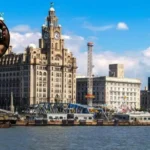


Birkenhead, the vibrant town on the Wirral Peninsula across the River Mersey from Liverpool, offers a rich tapestry of history, culture, and modern regeneration that makes it a compelling destination for locals and visitors alike. Often overshadowed by its bustling neighbor Liverpool, Birkenhead stands as a testament to industrial innovation, pioneering urban planning, and resilient community spirit.
- Origins and Medieval Foundations
- Industrial Boom in the 19th Century
- Birkenhead Park: A Global Design Legacy
- Landmarks and Architectural Marvels
- Economic Evolution and Shipbuilding Legacy
- Connectivity Across the Mersey
- Cultural Hubs and Creative Scene
- Sports and Outdoor Pursuits
- Modern Birkenhead and Future Prospects
Origins and Medieval Foundations
The story of Birkenhead begins in the 12th century, rooted in the birch-overgrown headland that gave the area its name, derived from Old English terms for birch trees and a promontory jutting into the Mersey. Around 1150, Hamon de Masci, the third Baron of Dunham Massey, established Birkenhead Priory, a Benedictine monastery that became the oldest surviving building on Merseyside. This priory not only served as a spiritual center but also played a crucial role in early trade, operating the first regulated Mersey ferry service to Liverpool, then a modest fishing hamlet known as Leverpole.
King Edward I visited the priory twice in 1275 and 1277, underscoring its strategic importance near the Irish Sea and Welsh border. By 1318, Edward II granted the monks exclusive ferry rights, allowing them to construct a shelter for travelers and merchants on Liverpool’s side, fostering cross-river commerce. The priory thrived until Henry VIII’s Dissolution of the Monasteries in 1536, when it was closed, and its lands repurposed. Today, the priory ruins, including the Grade I listed medieval remains, chapter house, and St Mary’s Tower, stand as a Scheduled Ancient Monument, drawing history enthusiasts to explore its Norman architecture and museum detailing 900 years of monastic life.
Industrial Boom in the 19th Century
Birkenhead’s transformation accelerated with the Industrial Revolution, fueled by steam ferries that bridged the Mersey barrier. In 1822, the paddle steamer Royal Mail initiated regular service from Liverpool to Woodside, spurring development and turning agricultural land into an industrial hub. Shipbuilding emerged as the cornerstone of the economy when William Laird founded an ironworks in 1824, later joined by his son John, evolving into the legendary Cammell Laird shipyard.
This yard produced iconic vessels, including HMS Birkenhead, HMS Achilles, the Confederate raider CSS Alabama, and luxury liners like RMS Mauretania. The shipyard’s innovations extended to early submarines like Resurgam and major warships such as HMS Prince of Wales. By 1833, the Birkenhead Improvement Act introduced paving, lighting, markets, and policing, formalizing the town’s growth. The 1886 opening of the Mersey Railway Tunnel—the world’s first under a tidal estuary—linked Birkenhead directly to Liverpool, revolutionizing transport and boosting population from 110 in 1801 to over 110,000 by 1901.
Urban visionaries like the Lairds shaped Birkenhead’s layout, adopting a grid-iron pattern inspired by Edinburgh New Town, with grand squares and neoclassical architecture. Hamilton Square, begun in 1826, boasts the highest concentration of Grade I listed buildings outside London’s Trafalgar Square, including the opulent Birkenhead Town Hall opened in 1887. This era also saw the advent of Britain’s first street tramway in 1860, horse-drawn from Woodside to Birkenhead Park, marking early public transport milestones.
Birkenhead Park: A Global Design Legacy
No exploration of Birkenhead is complete without its crown jewel, Birkenhead Park, the world’s first publicly funded civic park, opened in 1847. Spanning 91 hectares of former marshland purchased under the 1843 Birkenhead Extension Act, it was masterminded by Joseph Paxton, designer of London’s Crystal Palace, with Edward Kemp overseeing construction. Financed by selling peripheral plots for upscale housing, the park featured innovative drainage, terraced landscapes, lakes, and follies like the Swiss Bridge—the UK’s only traditional wooden covered bridge—and the Roman Boathouse.
Paxton’s naturalistic design, with winding paths revealing surprise vistas amid diverse plantings, emphasized accessibility for all classes, embodying democratic ideals. Its influence rippled globally; American landscape architect Frederick Law Olmsted visited in 1850 and drew direct inspiration for New York City’s Central Park, praising its “perfection” in gardening and social value. Sefton Park in Liverpool followed suit in 1872. Designated a Grade I listed landscape in 1995 and on the UK’s tentative UNESCO World Heritage list in 2023, the park underwent an £11.5 million restoration in the 2000s, reviving its Victorian splendor with a visitor center, café, sports facilities, and events like the weekly parkrun.

Landmarks and Architectural Marvels
Birkenhead’s skyline blends medieval relics with Victorian grandeur. Hamilton Square’s Georgian terraces, lodges, and town hall exemplify civic pride, while the Woodside Ferry Terminal evokes maritime heritage, with scenes from Chariots of Fire filmed there. The Queensway Tunnel entrance, opened in 1934, symbolizes 20th-century connectivity, alongside the historic Mersey Ferries still crossing to Liverpool.
The Williamson Art Gallery, opened in 1928, houses fine art, porcelain, and maritime exhibits, complementing the priory’s monastic history. Bidston Hill offers panoramic views from its windmill and observatory, while Flaybrick Memorial Gardens provides serene walks amid Victorian graves. These sites, maintained by Wirral Council, highlight Birkenhead’s evolution from priory outpost to architectural gem.
Economic Evolution and Shipbuilding Legacy
Shipbuilding defined Birkenhead for over a century, with Cammell Laird peaking as a global leader before challenges like containerization hit in the late 20th century. The yard revived under Northwestern Shiprepairers in 2001, reclaiming the Cammell Laird name in 2008 and securing contracts for HMS Queen Elizabeth’s flight deck and RRS Sir David Attenborough. Today, the sector focuses on repair and conversion, supporting the Royal Fleet Auxiliary.
Commerce thrives in the Pyramids Shopping Centre and Grange Road precinct, with markets dating to 1835 evolving into modern hubs. Recent regeneration, including a £51 million investment by Liverpool City Region Combined Authority and Homes England in 2024, targets housing and infrastructure, with construction eyed for 2025-2027. The Wirral Waters project, a 30-year £4.5 billion initiative since 2006, transforms docklands into offices, residences, and leisure spaces, promising 27,000 jobs. Birkenhead 2040 Framework envisions greener spaces like Dock Branch Park.
Connectivity Across the Mersey
Birkenhead’s transport network cements its Liverpool ties. Merseyrail’s Wirral Line, including the 1886 tunnel, connects Hamilton Square station to Liverpool Lime Street in minutes. Buses from Arriva and Stagecoach link to Liverpool via the Queensway Tunnel, while National Express coaches serve major cities. The Mersey Ferries, operating since the 12th century, offer scenic cruises alongside practical crossings.
The M53 motorway provides swift access, and Twelve Quays handles freight ferries to Dublin and Belfast. Horse trams paved the way in 1848, evolving into electrified systems closed in 1937, with heritage replicas now at Wirral Transport Museum. Liverpool John Lennon Airport lies just 13 km away.
Cultural Hubs and Creative Scene
Birkenhead pulses with artistic energy. Future Yard, an independent music venue, nurtures emerging talent on the Mersey scene. The Williamson Art Gallery hosts vibrant exhibitions, while the priory’s chapter house remains a consecrated chapel. Literary ties include Wilfred Owen’s schooling and Eisteddfods in 1878-79 and 1917, the latter’s “Black Chair” honoring war poet Hedd Wyn.
Birkenhead born icons like Glenda Jackson, Taron Egerton, Paul O’Grady, and Miles Kane amplify its fame. Half Man Half Biscuit and Engine hail from here, alongside Olympic cyclists like Chris Boardman.

Sports and Outdoor Pursuits
Sports weave into Birkenhead’s fabric. Birkenhead Park FC, founded 1871, hosted All Blacks in 1978 on its historic pitches. Tranmere Rovers, nearby in Prenton, returned to the Football League in 2018. Cricket at Birkenhead Park Club dates to 1847, with a pioneering pavilion.
Rowing clubs thrive at West Float, and cycling clubs produced stars like Steve Cummings. Arrowe Park hosted the 1929 World Scout Jamboree, birthplace of Scouting via Robert Baden-Powell in 1908.
Modern Birkenhead and Future Prospects
With a 2021 population of 109,835 in its built-up area, Birkenhead embodies resilience amid post-industrial shifts. Part of Wirral Metropolitan Borough since 1974, it falls under Liverpool City Region governance. Education shines through Birkenhead School (1860) and Wirral Metropolitan College.
Healthcare via Wirral University Teaching Hospital supports a diverse community. As Wirral Waters and town center plans unfold, Birkenhead positions itself as a sustainable, connected hub, blending heritage with innovation. Whether strolling Birkenhead Park, tracing priory steps, or catching a ferry to Liverpool, this Wirral gem rewards discovery.