
Anfield stands as one of Liverpool’s most iconic landmarks, embodying the city’s unyielding football heritage and vibrant community life. This suburb and its world-famous stadium have woven themselves into the fabric of local identity, drawing millions of visitors annually while serving as a beacon for residents.
Origins of Anfield
The name Anfield derives from Old and Middle English terms meaning “a field on a slope,” with records tracing back to at least 1642. Some historians link it to Irish influences from the 1850s, possibly referencing Annefield in County Wexford, Ireland, amid waves of Irish immigration to industrializing Liverpool. By 1836, the area integrated into Liverpool Borough Council after Walton lost its independence, setting the stage for suburban growth around what was then Anfield House, as noted on 1851 Ordnance Survey maps.
Development accelerated in the late 19th century, with the City Council establishing the 120-acre Priory Road Cemetery in 1863, later expanded to include a crematorium. This period marked Anfield’s transition from rural outskirts to a bustling residential zone, fueled by Liverpool’s port economy and population boom. The suburb’s layout began forming around key roads like Priory Road, where notable structures like MP Dan Carden’s office now stand.

Birth of the Stadium
Anfield Stadium originated in 1884 when minor landowner John Orrell, a friend of Everton member John Houlding, lent the pitch to Everton FC, who had outgrown their noisy Priory Road site. The inaugural match saw Everton defeat Earlestown 5-0 on September 28, 1884, before around 8,000 fans, with the ground capable of holding up to 20,000. It hosted international fixtures early on, including England’s 6-1 win over Ireland in the 1889 British Home Championship, affirming its elite status.
Everton claimed their first league title there in 1890-91, but tensions boiled over in 1892. A rent dispute between Houlding and Everton’s committee led to Everton’s departure to Goodison Park. Houlding, left with an empty venue, founded Liverpool FC as Liverpool F.C. and Athletic Grounds Ltd. The Reds’ debut at Anfield was a 7-1 friendly win over Rotherham Town on September 1, 1892, before just 200 spectators, launching a legacy that endures today.
Evolution Through the Eras
Early expansions shaped Anfield’s character. In 1895, a 3,000-seat stand rose on the Main Stand site, designed by Archibald Leitch with a red-and-white gable reminiscent of Newcastle’s St James’ Park. The 1903 Anfield Road end used timber and corrugated iron, while post-1906 league success prompted the Walton Breck Road stand, dubbed Spion Kop by journalist Ernest Edwards after the Boer War hill where Liverpool men fell.
The 1928 Kop redevelopment accommodated 30,000 standing fans under a roof, becoming England’s largest such terrace, topped by a flagpole from the SS Great Eastern ship. Floodlights arrived in 1957 at £12,000, debuting in a Merseyside derby. The 1963 Kemlyn Road cantilever stand held 6,700, and 1973 saw the Main Stand extend backward with new roofline lights. These changes mirrored Liverpool’s rising dominance under Bill Shankly.
The Taylor Report post-Hillsborough mandated all-seater conversion by 1994, shrinking capacity but modernizing facilities. The Kop rebuilt as a 12,390-seat single tier, Kemlyn Road became the double-decker Centenary Stand (renamed Sir Kenny Dalglish Stand in 2017), and the Anfield Road end gained a second tier in 1998 despite stability issues. Tributes like the 1982 Shankly Gates, inscribed “You’ll Never Walk Alone,” and Bill Shankly’s 1997 statue cemented its emotional core.
Modern Redevelopments
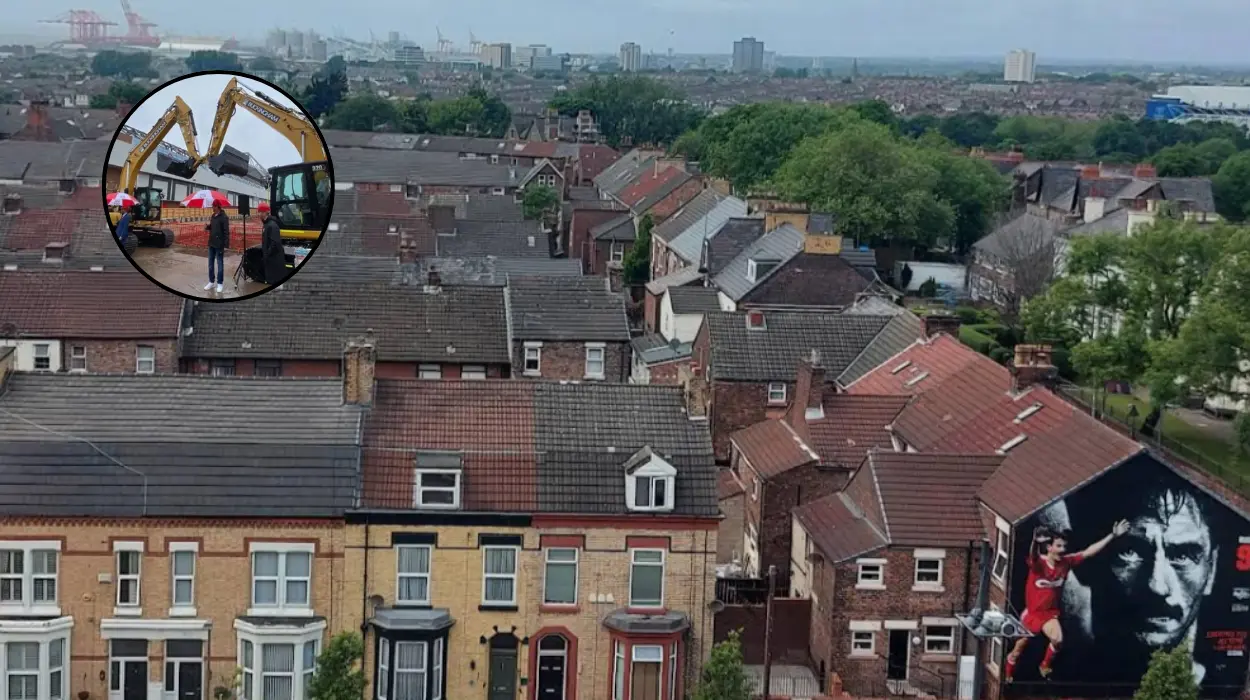
Fenway Sports Group’s 2010 takeover scrapped Stanley Park new-stadium plans, opting to expand Anfield. Phase one demolished Lothair Road homes for a towering Main Stand, adding 8,500 seats via 1.8 million bricks and 5,000 tonnes of steel. Completed in 2016 despite playing through construction, it boosted capacity to 54,074, featuring “This Is Anfield” sign, new changing rooms, and media suites.
Phase two transformed the Anfield Road End from 2021, approved in 2021 for £60-80 million, adding 7,000 seats to reach 61,000+. Contractor issues delayed the upper tier to early 2024, with partial opening against Burnley in February. Now UEFA 4-star rated with 101x68m GrassMaster pitch, it includes RFID entry and wheelchair spaces. Ongoing Walton Breck Road upgrades, backed by £5 million council plans, enhance pedestrian links, greening, and drainage around the stadium.
The Unrivaled Anfield Atmosphere
Anfield’s aura transcends architecture, fueled by the Kop’s roar. Managers like Jürgen Klopp noted its intangible edge, while Pep Guardiola called “This Is Anfield” unparalleled. José Mourinho felt its power in 2005’s Champions League semi-final. Record crowd 61,905 came in 1952’s FA Cup vs. Wolves; post-expansion peaks hit 60,466 in 2025. Liverpool boasts unbeaten home league runs like 85 games (1978-1981) and 24 straight wins (2018-2020).
Gates honor legends: Paisley’s 2020 statue by the Main Stand depicts him carrying Emlyn Hughes, funded by Standard Chartered. The Hillsborough Memorial, with eternal flame, moved to 97 Avenue in 2016, honors 97 lost in 1989. Anthems, scarves, and rituals bind generations, making matchdays a rite of passage.
Beyond Football: Diverse Uses
Anfield hosts internationals, like Euro 1996 quarter-finals and England’s last in 2006 vs. Uruguay. Women’s Merseyside derbies drew records, peaking at 27,574 in 2022. Rugby league events include 2019 Magic Weekend and 2016 Four Nations Final (40,042 attendees). Non-sporting draws: Billy Graham crusades (1984), Paul McCartney concerts (2008), and 2024-2025 stars like Taylor Swift (62,000+), Elton John, and Bruce Springsteen.
Historical oddities abound: 1921 women’s football exhibition, boxing world titles (1934), Harlem Globetrotters basketball (1958). Today, tours via LFC Museum showcase silverware, Boom Room on Klopp’s era, and fan zones with catering.

Anfield Suburb: Community and Demographics
Beyond the stadium, Anfield ward spans Anfield and Walton areas, with 14,510 residents in 2011 (51% female, average age 38). Ranked UK’s 10th most deprived in 2019, it faces challenges yet pulses with pride. Liverpool FC Foundation drives initiatives in health, education, and inclusion, hosting Community Days celebrating youth programs and inequality fights.
Landmarks include Priory Road Cemetery and Anfield Cemetery. Regeneration like £5m road revamps on Walton Breck Road adds trees, lighting, and mini-roundabouts, boosting safety and matchday flow. Economic ripple: stadium fuels jobs, tourism, tying into Liverpool’s Beatles waterfront via tours to Albert Dock and Strawberry Field.
Cultural and Economic Impact
Anfield symbolizes resilience, from Shankly’s era to Klopp’s triumphs, mirroring Liverpool’s docklands grit. It generates millions via tickets (61,276 capacity), hospitality, and events, supporting local businesses. Foundation work fosters belonging, with global fans pilgrimage-like visiting Shankly/Paisley statues.
In Liverpool’s tapestry—rivaling Everton’s Goodison, Beatles sites—Anfield unites diverse backgrounds. Transport evolves: no rail now (old Breck Road station closed 1948), but Soccerbus from Sandhills aids access; council eyes Canada Dock Branch revival.
Visiting Anfield Today
Tourism thrives with stadium tours, museum exhibits on 19 titles and six Champions Leagues, and Anfield Square’s meanwhile-use plans for jobs. Proximity to city center (2 miles from Lime Street) via bus invites combining with docks or cathedrals. For locals and fans, it’s home—a slope-field turned eternal fortress of passion.