Key Points
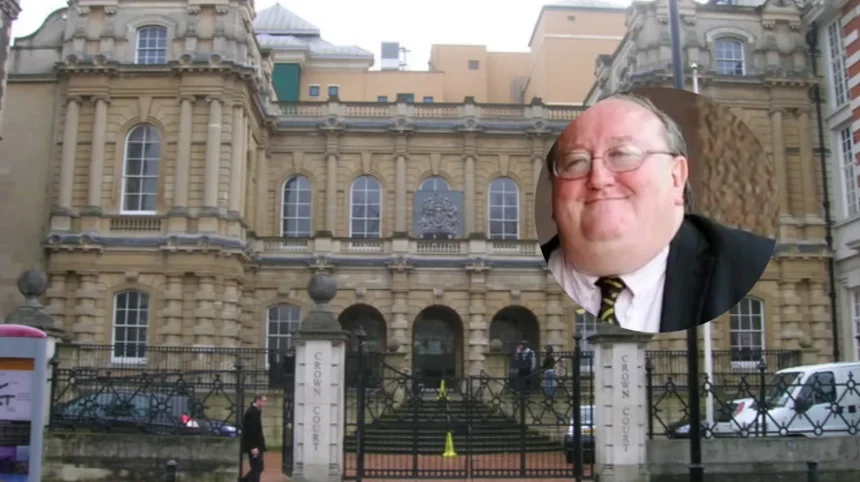
- George Gordon, 65 is in court in Liverpool Crown Court. He is accused of killing Delia McInerney. Her body was found in a chest freezer at his flat in St Helens on 8 January 2026.
- Gordon says he killed Ms McInerney but says it was self-defence. The people who are trying to prove he is guilty say that self-defence and a mercy killing do not explain how she died.
- The people who are trying to prove he is guilty say that Ms McInerney was killed on the night of 11 April 2023 or in the morning of 12 April 2023. That was just before she was going to move to Portugal.
- Her body was kept in a freezer for three years. Alongside her body were the bodies of five guinea pigs.
- The people who are trying to prove he is guilty say that Gordon took thousands of pounds from Ms McInerney’s bank accounts. They say he took out a loan and used credit cards that were in her name. They also say he pretended to be her when he sent messages to her friends.
- Gordon also says he did not harm the guinea pigs in a way. He is accused of drowning the five guinea pigs.
- The trial is happening in front of Mr Justice Goose. It is expected to take, up to six weeks.
Liverpool Crime (Liverpool standard) November 5, 2026 — The murder trial of George Gordon, the 65-year-old man accused of killing his friend Delia McInerney and concealing her remains in a freezer, has continued at Liverpool Crown Court, with prosecutors setting out allegations about the events before and after her death in April 2023.
- Key Points
- What has the jury been told?
- What did police find in the freezer?
- What does Gordon deny?
- What financial allegations have been made?
- How did the alleged deception unfold?
- How was the case uncovered?
- What did Gordon allegedly say after arrest?
- What purchases and searches were alleged?
- What happens next in the trial?
- Background of the development
- Prediction: how this may affect the local community
What has the jury been told?
As reported by the St Helens Star, prosecutor Martin Reid KC told the jury that Ms McInerney’s dismembered body was found by police in a chest freezer at Gordon’s flat in Gerards Court, Carr Mill, on 8 January 2026.
The court heard that Ms McInerney, who was 62 when she died, had been staying with Gordon when she was not travelling abroad or at her home in Anfield, Liverpool. The prosecution alleges that she died on the evening of 11 April 2023 or in the early hours of the following day, days before she was due to travel to Porto to begin a “new life” in Portugal.
As reported by the BBC, Reid said Gordon initially told police he had struck Ms McInerney with a hammer to “end her suffering” after she had taken an overdose, but now claims he acted in self-defence. The Liverpool Echo reported that the prosecution rejects both accounts and alleges that Gordon deliberately attacked her.
What did police find in the freezer?
The jury was told that officers attended Gordon’s flat after concerns were raised about Ms McInerney’s whereabouts and welfare. According to the Liverpool Echo, officers found her remains in a chest freezer that was still switched on, alongside the remains of five guinea pigs.
The court heard that Gordon allegedly told officers, “she’s in there,” before adding, “she’s in the freezer.” The prosecution said he then clarified that Ms McInerney’s body was in two pieces, stored together.
The Liverpool Echo reported that police could see human legs and feet, with what appeared to be an organ among black plastic bags. The BBC reported that examinations indicated the guinea pigs had died from drowning.
What does Gordon deny?
Gordon denies murder and causing unnecessary suffering to a protected animal. He has previously admitted six offences connected with the concealment of Ms McInerney’s body: obstructing a coroner, preventing a lawful and decent burial, three counts of fraud by false representation, and theft.
As reported by the BBC, Gordon acknowledges causing Ms McInerney’s death but says he acted in self-defence. The Liverpool Echo reported that he is represented by Gordon Cole KC and Philip Tully, while Martin Reid KC leads the prosecution and Katy Appleton is junior prosecution counsel.
What financial allegations have been made?
The prosecution alleges that, after Ms McInerney’s death, Gordon transferred thousands of pounds from her bank accounts into his own through hundreds of transactions. The court heard that more than £2,000 was allegedly transferred from her accounts to Gordon on 12 April 2023.
The Liverpool Echo reported that Gordon was allegedly facing credit card debts of more than £26,000 at around the time of Ms McInerney’s death, and that he later took out a £10,000 loan in her name with Tesco Bank in August 2023. The prosecution says the alleged financial activity forms part of its case that Gordon was motivated, at least in part, by financial gain.
How did the alleged deception unfold?
The court heard that Gordon allegedly misled Ms McInerney’s friends for more than 18 months by pretending she was still alive. The prosecution said he used phone messages and emails while posing as her, including an email sent from her account shortly after the time she is believed to have died.
According to the Liverpool Echo, Gordon allegedly told friends that Ms McInerney had suffered a stroke and was in an induced coma, and invented accounts about her property and travel plans. The prosecution also alleged that he claimed to have met Joanna Lumley and Stephen Fry at Westminster Abbey during the King’s Coronation, and used her phone to photograph himself at Liverpool’s Eurovision Song Contest.
The BBC reported that Gordon travelled to Portugal on 24 April 2023 and visited a property belonging to Ms McInerney while allegedly continuing to impersonate her in communications with friends and neighbours.
How was the case uncovered?
The court heard that the alleged deception began to unravel in December 2025, when a request was made to the Department for Work and Pensions to redirect Ms McInerney’s Personal Independence Payment to a different bank account. The request was allegedly made by someone using the name Chris Cavendish-Gordon and claiming to be a social worker.
The Liverpool Echo reported that concerns led police to Gordon’s flat on 8 January 2026, where they found the property cluttered and in disrepair, with bodily fluids on several surfaces. After being asked whether Ms McInerney was safe and well, Gordon allegedly eventually said she was no longer alive and directed officers to the freezer.
What did Gordon allegedly say after arrest?
The jury heard that Gordon was arrested after telephone inquiries and financial checks. The Liverpool Echo reported that, after initially making no comment in police interview, he later made statements while in hospital, including: “I finished her life myself. She was in agony and held onto me, and I finished it.”
The court was told that Gordon allegedly said he kept Ms McInerney’s body for about a day and a half before placing it in a freezer, and that he dismembered it because that was the only way it would fit. The prosecution said he described the dismemberment as the “most horrendous thing” he had ever had to do.
What purchases and searches were alleged?
The prosecution alleges that, after learning of Ms McInerney’s plans to move abroad, Gordon bought a sledgehammer, an electric handsaw and heavy-duty scissors advertised as capable of cutting through small bones.
The Liverpool Echo reported that his internet history allegedly included searches for butchers’ tools, meat saws, cleavers and choppers, and that he bought a copy of Gray’s Anatomy. Reid told the jury that the purchases were “consistent with those that would later be used, or required, to kill and dismember Ms McInerney”.
What happens next in the trial?
The trial continues before Mr Justice Goose and is expected to last up to six weeks. The jury of five men and seven women, plus two reserves, was sworn in earlier in the proceedings.
Gordon did not appear in the dock when the prosecution opened its case on Wednesday, 4 November. The BBC later reported that he appeared in the dock for the first time on Thursday.
Background of the development
Delia McInerney was an artist from Anfield, Liverpool, who was described in court as a close friend of Gordon, though not his romantic partner. She had been due to fly to Porto on 13 April 2023 but never boarded the flight.
Gordon, of Gerards Court, Hawes Avenue, Carr Mill, was charged after human remains were discovered in January 2026. In May 2026, he admitted concealing her body and related fraud and theft offences, but denied murder and the animal-cruelty allegation.
Prediction: how this may affect the local community
For St Helens residents and Ms McInerney’s friends and family, the trial is likely to keep attention focused on questions of community safety, safeguarding and how concerns about a missing or vulnerable person are escalated. The case began after concerns were raised with police, leading to the discovery at Gerards Court.
For people following the justice system, the outcome will depend on the jury’s assessment of the conflicting accounts: Gordon’s claim of self-defence and the prosecution’s allegation of a deliberate killing followed by concealment and financial exploitation. The six-week timetable means further evidence and witness testimony are expected before a verdict.