Key Points
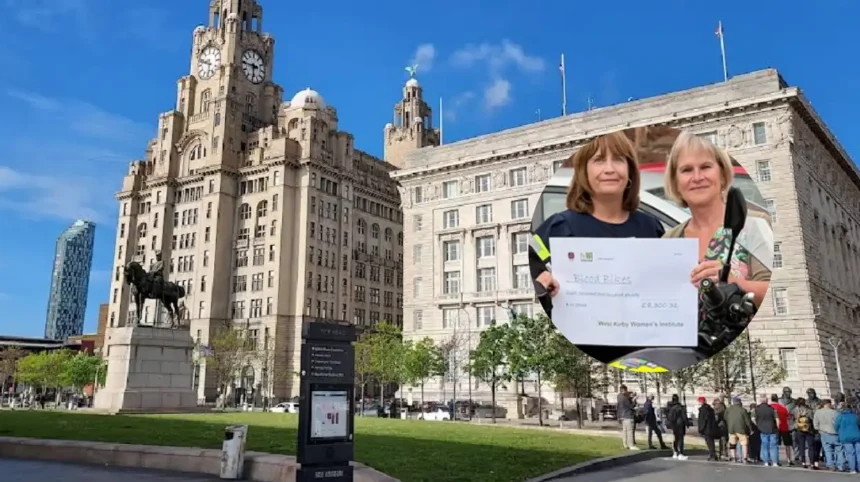
- Cheque presentation for £8,300.31 was done by members of West Kirby WI during their meeting in September to the organization of Merseyside and Cheshire Blood Bikes.
- This will go towards an entirely volunteer organization whose main function is providing transport service at no cost to carry blood, samples, drugs, and any other medical supplies for the National Health Service in Merseyside and Cheshire.
- This organization saves the National Health Service about £1 million per year through the elimination of paid couriers and taxis, according to the published information from this charity.
- Riders are volunteers, fleet bikes costs are provided by the organization, but those who have bikes pay for maintenance and fuel.
Liverpool (Liverpool standard) September 21, 2026 – At their September meeting, members of West Kirby Women’s Institute presented a cheque for £8,300.31 to Merseyside and Cheshire Blood Bikes. The presentation marks a significant fundraising achievement for the local WI branch and provides direct support to a volunteer-led service that operates out of hours to assist NHS hospitals and related healthcare providers across the region.
As reported in local coverage by Birkenhead News, the cheque presentation took place during the group’s regular monthly gathering, with the funds handed over to representatives of the blood bikes charity. The amount raised, £8,300.31, reflects organised fundraising activity by the West Kirby WI and will be used to support the operational costs of the charity’s motorcycle and vehicle fleet, which is essential to maintaining its 24/7 capability.
Who are Merseyside and Cheshire Blood Bikes?
Merseyside and Cheshire Blood Bikes is a charitable organisation that provides free emergency transport to deliver blood, drugs, human tissues and medical supplies for the NHS, helping to protect the health of the community. According to published information about the charity, its riders are all volunteers, with fleet bike expenses covered by the charity while owner-riders pay for their own fuel and maintenance on the bikes.
The service is part of a wider network of blood bike charities across the UK that operate outside normal working hours to move time-critical medical items between hospitals, laboratories, milk banks and other healthcare sites when other transport options are not available. Similar groups in other regions, such as Greater Manchester Blood Bikes and South West Blood Bikes, have reported transporting blood, plasma, platelets, vaccines, donor breast milk and other critical items completely free of charge to the NHS.
Published charity information states that Merseyside and Cheshire Blood Bikes saves the NHS around £1 million each year, allowing the health service to improve patient care and provide crucial services in the Northwest region of England. By replacing paid courier and taxi services for urgent out-of-hours deliveries, the charity redirects funds towards direct patient care.
How will the £8,300 donation be used?
While specific allocation details for the £8,300.31 donation were not itemised in the initial report, the funding will support the operational model of Merseyside and Cheshire Blood Bikes as described in publicly available charity information. The charity’s fleet expenses are covered centrally, and donations typically help maintain motorcycles and vehicles, cover insurance, equipment and other overheads required to keep the service running 365 days a year.
In comparable blood bike operations, volunteer riders commit to regular shifts, often covering nights, weekends and bank holidays when hospital courier demand is highest and commercial options are limited. Donations of this scale help sustain that rota by ensuring bikes remain roadworthy, communications systems function reliably and riders have the necessary support to respond to urgent requests from NHS trusts and partner healthcare providers.
Why do blood bikes matter for the NHS?
Blood bike charities exist to reduce waiting times for critical treatments and improve patient outcomes, especially in emergencies, by transporting urgent medical items when speed is essential. As described by medical leaders in other regions, services like these are relied upon “when every minute is critical” to move blood, samples, medications, equipment and donor breast milk to where they are needed.
In the wider UK context, blood bike networks have reported substantial cost savings for the NHS. South West Blood Bikes, for example, has been estimated to save NHS and hospices in Devon around £400,000, while Merseyside and Cheshire Blood Bikes is reported to save the NHS around £1 million each year. These savings arise because the volunteer service replaces paid courier and taxi transfers that hospitals would otherwise need to commission for out-of-hours urgent deliveries.
What did local media report about the donation?
As reported by Birkenhead News, members of West Kirby Women’s Institute presented the £8,300.31 cheque to Merseyside and Cheshire Blood Bikes at their September meeting. The outlet’s coverage highlights the donation as a notable community fundraising effort in West Kirby, linking the local WI branch to a regional health-support charity.
No additional named journalists or further quoted statements from WI officers or blood bike representatives were included in the available source material, so attribution beyond the Birkenhead News report is limited to the published summary of the event. Other regional titles have not yet published separate accounts of the presentation at the time of writing.
Background: How did this donation come about?
Women’s Institute branches across the UK have a long history of local fundraising for health, education and community causes, often through events, appeals and member-led initiatives. West Kirby WI’s £8,300.31 total suggests a sustained fundraising effort rather than a one-off collection, consistent with how many WI branches accumulate donations over months before making a formal presentation to a chosen charity.
Merseyside and Cheshire Blood Bikes, as part of the national blood bikes movement, relies on charitable donations to maintain its volunteer-led service. Published information about the charity notes that it is totally dependent on donations and is run entirely by volunteers, with fleet expenses covered by the charity and owner-riders contributing their own fuel and maintenance costs. Against that backdrop, a donation of more than £8,000 represents a material contribution towards keeping motorcycles operational and the service available to NHS trusts across the region.
Prediction: How could this affect local donors and NHS patients?
For local donors and community groups such as West Kirby WI, this development is likely to reinforce the role of grassroots fundraising in supporting urgent healthcare logistics on the Wirral and wider Merseyside and Cheshire area. A high-profile donation of this size can encourage other local organisations, schools and businesses to consider similar partnerships with blood bike charities, potentially increasing the overall funding pool available to sustain volunteer fleets.
For NHS patients and hospitals, the immediate effect is indirect but operationally significant: additional funding helps maintain the availability of a free, rapid-response courier service that moves time-critical items out of hours. If similar donations are replicated across other branches and towns, the cumulative impact could help stabilise or expand blood bike capacity, reducing reliance on paid couriers and supporting faster turnaround for blood products, samples and medications. Over time, that can contribute to shorter waiting times for critical treatments and more resilient out-of-hours logistics for the NHS in the Northwest.