
Key Points
- Repairs to Southport Pier steelwork are scheduled to begin towards the end of this month as part of a £20 million repair project
- Sefton Council mayor Cllr Marion Atkinson termed it as “an important step forward” towards the rehabilitation of the historic structure
- Grade II listed pier has remained closed since December 2022 on account of safety reasons
- AE Yates, main contractor for the repairs project, has stripped off 27 lighting arches, two kiosks and halfway-house from the structure
- A fresh British sourced steel will be fixed at the landward side of the 1.1 km long pier which is the oldest pleasure pier in the UK
- Recently, the government has announced funding of £20m for the repair of decking, timber joists and steel work
Southport (Liverpool standard) September 14, 2026 – Major restoration works on Southport Pier are continuing at pace, with steelwork repairs beginning later this month marking what Sefton Council’s leader has called “an important step forward” in the revitalisation of the Victorian structure.
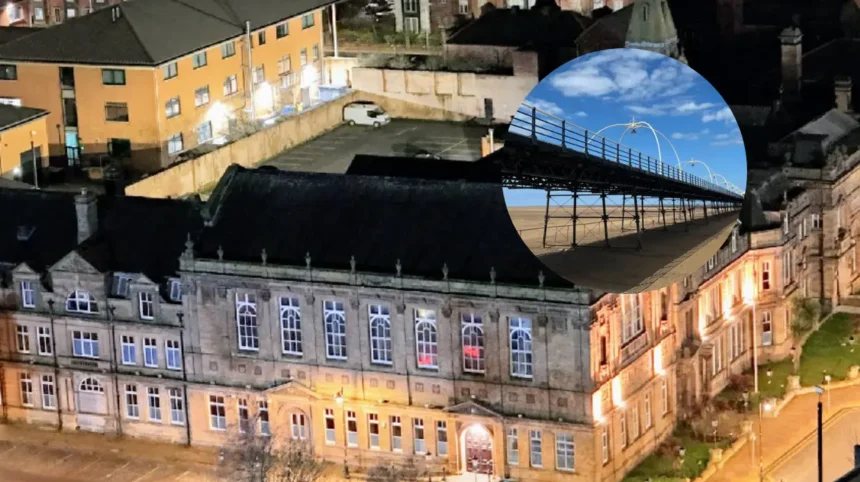
The Grade II-listed edifice, which opened in 1860 and stretches 1.1 kilometres (0.68 miles) into the Irish Sea, holds the distinction of being the oldest pleasure pier in the United Kingdom and the second longest in Britain. The pier has been shut to the public since December 2022 due to severe structural corrosion and health and safety concerns.
Earlier this year the government approved £20 million in funding for the comprehensive restoration project, which includes replacing decking boards and timber joists alongside extensive steelwork repairs. Cllr Marion Atkinson, Leader of Sefton Council, said the commencement of steel replacement work later this month “will be a particularly significant milestone” in the restoration timeline.
“This is excellent progress and it represents an important step forward in the restoration of Southport Pier,” Cllr Atkinson said, as reported by Sefton Council’s official news service on 8 September 2026. “Like all building projects of any scale, careful preparation needed to be undertaken to make way for new materials to be installed.”
Which preparatory works have been completed?
Main contractor AE Yates has made significant progress across the historic structure with extensive dismantling works forming the most recent focus of their efforts, according to the council’s update published on 8 September 2026.
Twenty-seven lighting arches have now been safely disconnected and removed from the pier structure. Two kiosks along with the halfway-house have also been taken down and are being removed for restoration off-site, with a third kiosk currently in the process of being dismantled.
In order to ensure contractor safety, access scaffolding has been erected across the landward section of the pier to allow for the timber decking and structural elements to be removed safely. Existing handrails, tramlines and mechanical and electrical services have also been taken away in preparation for the next stage of the restoration programme.
Elsewhere on the site, an access haul road and two large crane pads have been created to facilitate the installation of new British-made steel that will replace the corroded sections. These enabling works are essential to delivering the restoration safely and effectively, according to the project team.
What did the project manager say about progress?
Dale Cunniffe, project manager from AE Yates, the construction and engineering company overseeing the restoration, provided an update on the work completed to date.
“A great deal has been achieved on site over recent weeks, including the removal of decking, structural elements and services, as well as the creation of the specialist access and crane areas needed for the next phase,” Mr Cunniffe said, as quoted by both the BBC and Sefton Council.
“We are pleased with the progress made and are now preparing to begin replacing steelwork on the landward section of the pier,” he added.
As reported by the BBC’s North West correspondent on 14 September 2026, the start of steel replacement work represents a tangible milestone after years of the pier remaining closed to visitors. The contractor expressed satisfaction with the pace of work achieved during the initial phases of the restoration.
When will Southport Pier reopen to the public?
The pier remains closed to public access while the restoration works continue, with no confirmed reopening date announced by Sefton Council as of September 2026.
The Victorian structure underwent comprehensive repairs and repainting of its steel framework in 2018 to address corrosion caused by sea exposure, but was subsequently closed in December 2022 when further health and safety concerns were identified.
Sefton Council has indicated it will continue to provide regular updates as the restoration programme progresses through its various phases. The council has also launched a podcast series, with Episode 3 of the ‘MySefton News Podcast’ featuring a more detailed interview with AE Yates about the restoration works.
Tourism guidance currently advises visitors to check the official Visit Southport website for current reopening status, noting that the pier remains visible from the foreshore even while closed. The restoration of public access to the 1.1km walk out over the foreshore to the seaward end is one of Southport’s priority tourism investments.
Background of Southport Pier restoration development
Southport Pier was inaugurated in 1860, making it the oldest iron pleasure pier in the United Kingdom. At 1,108 metres in length, it is the second longest pier in Britain and has served as a defining feature of the Victorian-Edwardian seaside town’s skyline for more than 165 years.
The pier’s structural challenges stem from its exposed position on the Irish Sea coastline, where salt water corrosion has progressively degraded the steel framework over decades of service. Previous repair efforts in 2018 addressed some corrosion issues, but by December 2022 the deterioration had reached a point where the council deemed the structure unsafe for public access.
The £20 million restoration funding approved by the government earlier in 2026 represents one of the most significant investment programmes for the pier in its history. The scope of works encompasses replacement of decking boards, timber joists and extensive steelwork repairs across the landward and seaward sections of the structure.
The use of British-made steel for the replacement work has been highlighted by the council as part of the procurement strategy, with raw materials purchased ahead of market fluctuations in steel pricing. The restoration approach follows similar programmes at other UK piers, including ongoing work at North and South Shields Piers and Queen’s Pier in the Isle of Man.
Prediction: How will steelwork repairs affect Southport residents and visitors?
The commencement of steelwork repairs on Southport Pier is likely to have several measurable effects on local residents, businesses and visitors to the Merseyside seaside town.
For local residents, the restoration work represents both short-term disruption and long-term benefit. Construction activity, including crane operations and haul road usage, may cause temporary noise and access restrictions in the immediate pier vicinity during the steel installation phase. However, successful restoration would return a significant community asset to public use, providing recreational space and maintaining the town’s distinctive Victorian character that forms part of local identity.
Local businesses in Southport’s town centre and seafront area stand to gain considerably from the pier’s eventual reopening. Tourism data indicates that working piers function as primary visitor attractions that drive footfall to adjacent retail, hospitality and leisure establishments. The 1.1km pier walk, once restored, would enhance Southport’s competitiveness as a day-trip destination from Liverpool and greater Manchester, potentially increasing visitor spending across the local economy.
For visitors and tourists, the restoration addresses a notable gap in Southport’s tourism offering. Current guidance consistently notes the pier’s closure as a limitation on the visitor experience, despite the structure remaining visually prominent from the foreshore. Reopening would restore the unique 1.1km walk over the foreshore to the seaward end, which has been identified as one of the town’s priority tourism investments.
The successful completion of steelwork repairs may also influence restoration timelines for other UK seaside piers facing similar structural challenges. As one of several concurrent pier restoration projects nationally, the Southport programme’s progress and outcomes could inform best practices for managing corrosion, procurement of British steel, and phasing of works on comparable Victorian-era structures.
Sefton Council’s commitment to providing regular updates throughout the restoration suggests ongoing public communication will be maintained, allowing residents and stakeholders to track progress against milestones such as the current steelwork installation phase.